Artwork
The daughter of the king of the jinns bows before the King of Kings who has just undergone the ordeal of passing through the boiling oil to emerge as a youth, from a Tuti-nama (Tales of a Parrot): Seventh Night
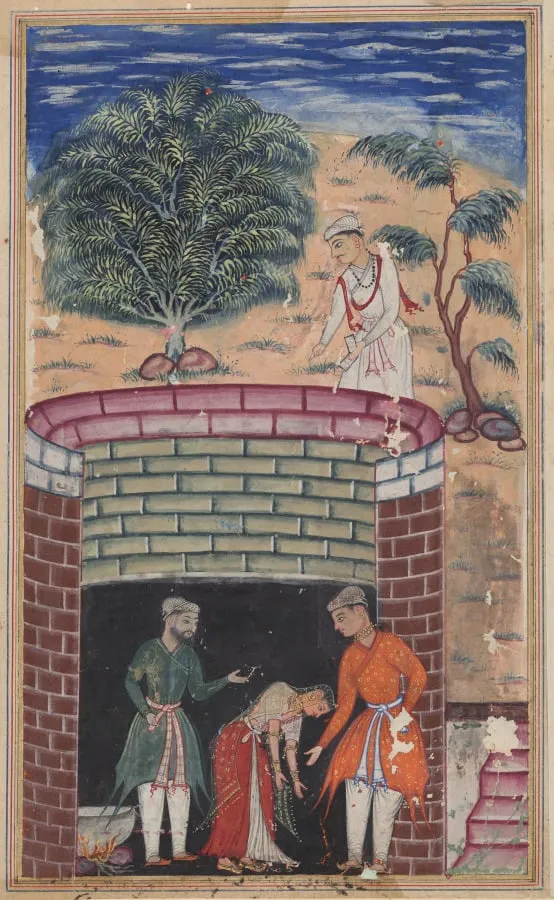
The daughter of the king of the jinns bows before the King of Kings who has just undergone the ordeal of passing through the boiling oil to emerge as a youth, from a Tuti-nama (Tales of a Parrot): Seventh Night is an unspecified painting by the Mughal Painting artist Unknown. It dates from 1560 and is held in the collection of the Cleveland Museum of Art. This painting illustrates a scene from the Tuti-nama, a collection of parrot tales created for Emperor Akbar's court.
About this work
You see a king in orange standing in a pit of boiling oil, while a young woman and an old man bow before him.
You see a king in orange standing in a pit of boiling oil, while a young woman and an old man bow before him.
This painting comes from a book of parrot tales made for Emperor Akbar’s court. The story shows the king proving his power by surviving fire—then using magic to restore the old man’s youth. The bright colors and tiny details are typical of Mughal art, where every brushstroke tells part of the tale.
To see more like this, look up Mughal India, court of Akbar (reigned 1556–1605).
Overview
This painting illustrates a scene from the Tuti-nama, a collection of parrot tales created for Emperor Akbar's court. It depicts a king rejuvenated after surviving boiling oil, surrounded by figures from the narrative.
Subject & Meaning
The scene shows the King of Kings, now youthful, standing in a pit with the daughter of the king of the jinns and her elderly lover, as a Brahman looks on. The king is about to restore the old man's youth using an elixir of life.
Technique & Style
The work is characterized by bright colors and intricate details, hallmarks of Mughal art. The level of detail suggests a high level of craftsmanship, with every brushstroke contributing to the narrative.
Context
The Tuti-nama was produced during Akbar's reign (1556–1605), a period significant for the development of Mughal art and culture. The painting reflects the artistic and storytelling traditions of the Mughal court.
Artist & collection

 Domestic Scene
 Giacomo and Cardinal Marco, investing Andrea, Abbot of San Zeno, with his Benefice
 The Nymph of Fontainebleau
 Portrait of a Woman
 Madonna and Child with Saints in the Enclosed Garden
 Venus and Minerva
 Family Group of Four on Sofa
 Wall painting from Room H of the Villa of P. Fannius Synistor at Boscoreale
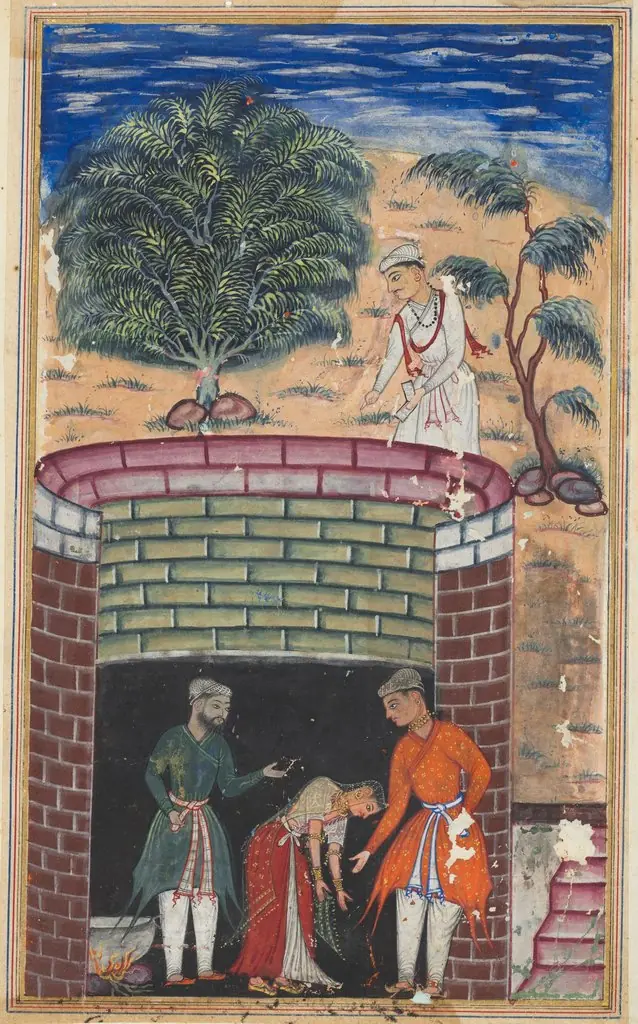 The daughter of the king of the jinns bows before the King of Kings who has just undergone the ordeal of passing through the boiling oil to emerge as a youth, from a Tuti-nama (Tales of a Parrot): Seventh Night
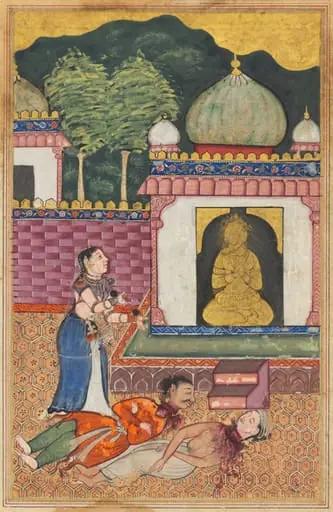 The princess discovers the dead bodies, with heads severed, of her husband and his Brahman friend, from a Tuti-nama (Tales of a Parrot): Thirty-fourth Night
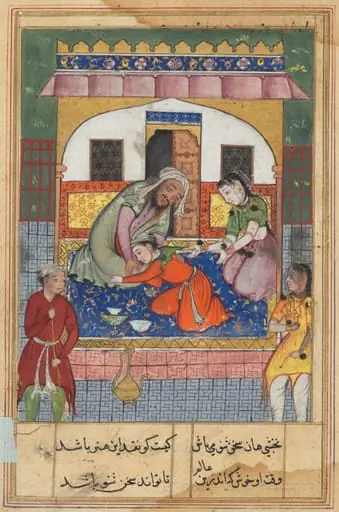 Repenting his conduct, ‘Ubaid falls at the feet of his parents, from a Tuti-nama (Tales of a Parrot): Forty-second Night
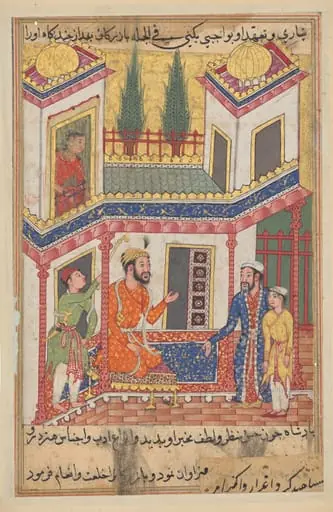 The merchant returns bringing a young slave who is really the son of the princess of Rum, now married to the king, from a Tuti-nama (Tales of a Parrot): Fiftieth Night
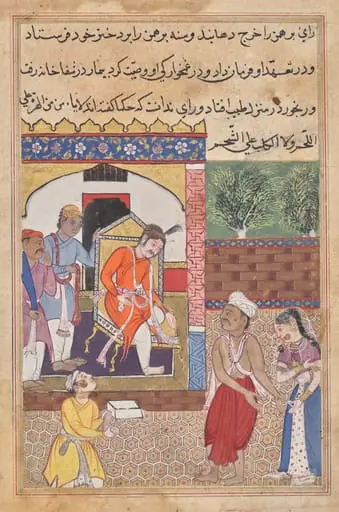 The magician, disguised as a Brahman, visits the king of Babylon, from a Tuti-nama (Tales of a Parrot): Thirty-fifth Night
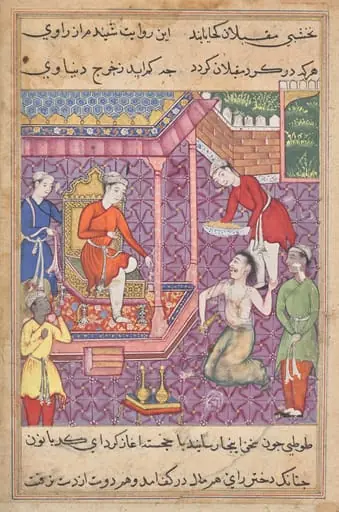 The magician disguised as a Brahman returns to claim his “daughter-in-law,” from a Tuti-nama (Tales of a Parrot): Thirty-fifth Night
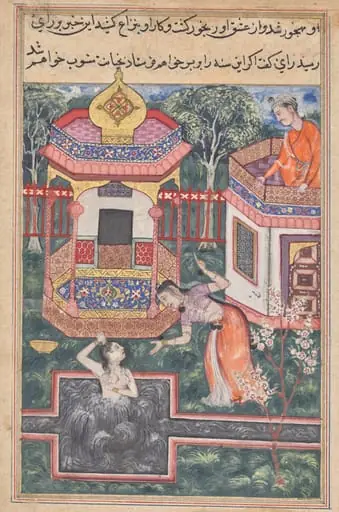 The son of the king of Babylon sees the Brahman transformed into a woman bathing and falls in love with her, from a Tuti-nama (Tales of a Parrot): Thirty-fifth Night
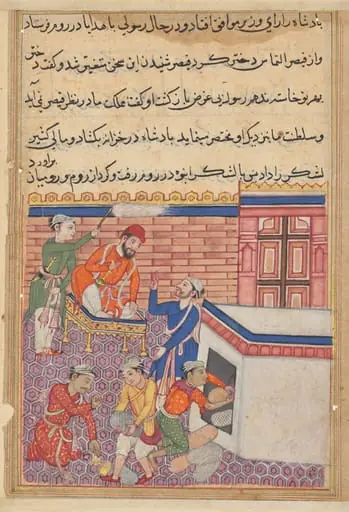 The king’s emissary being provided with gifts for his mission to Rum in order to seek the hand of the emperor’s daughter in marriage, from a Tuti-nama (Tales of a Parrot): Fiftieth Night
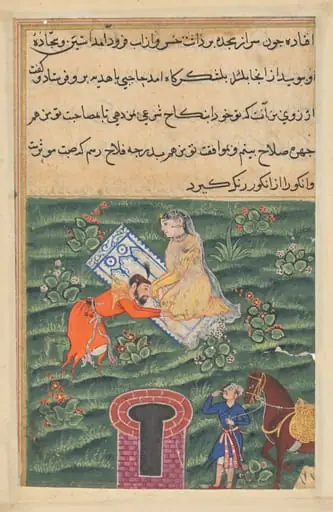 Khusrau, the King of Kings, pays homage to the pious daughter of Khassa, from a Tuti-nama (Tales of a Parrot): Fifty-first Night
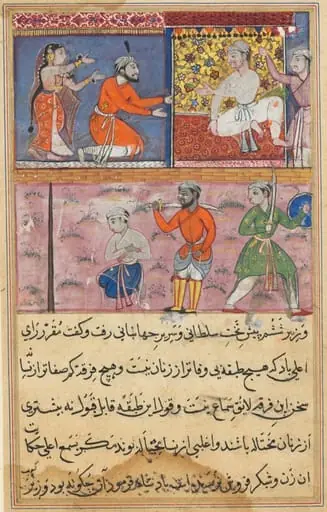 The prince sent back to the place of execution for the sixth time, from a Tuti-nama (Tales of a Parrot): Eighth Night