Artwork
The Dormition of the Virgin
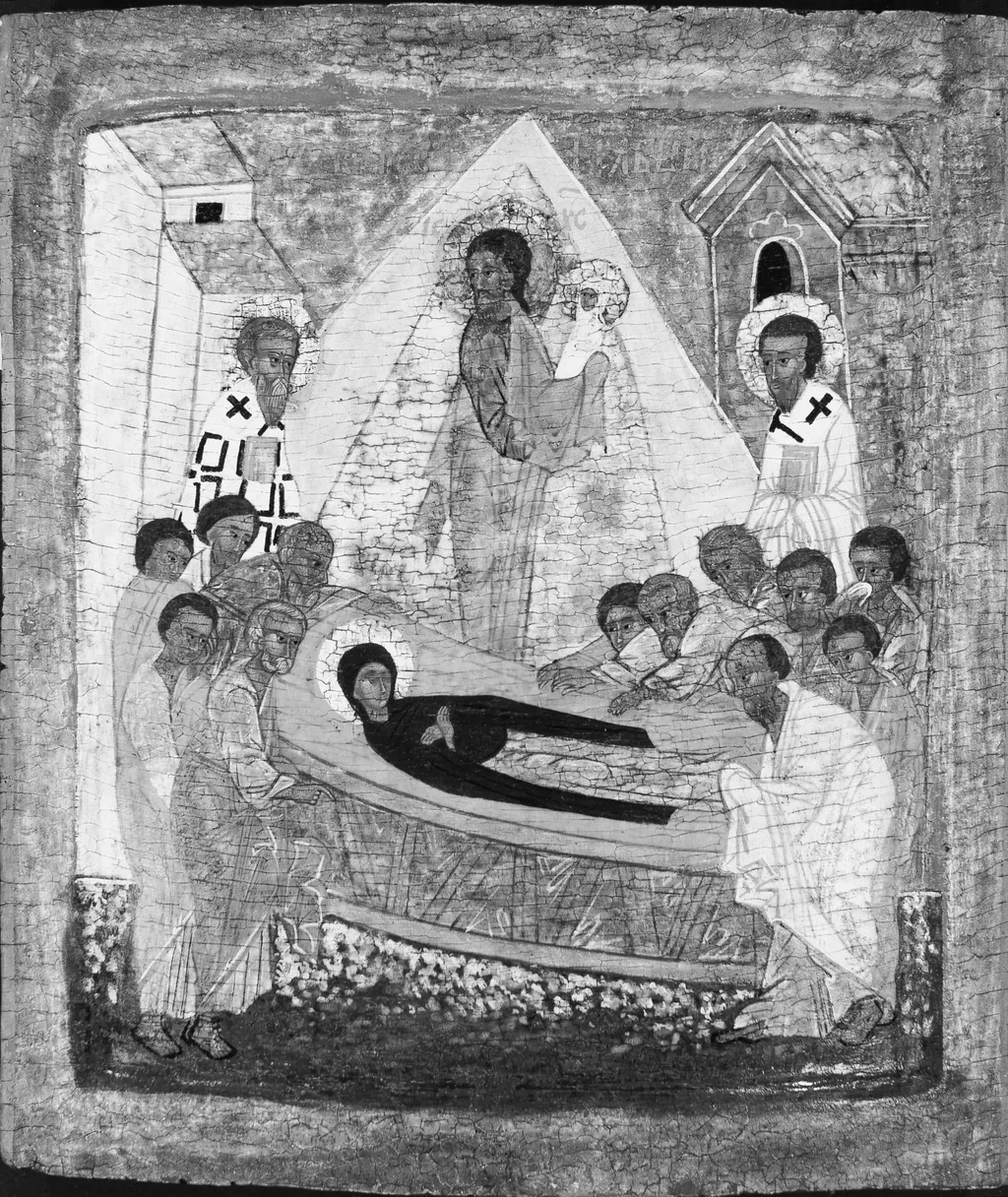
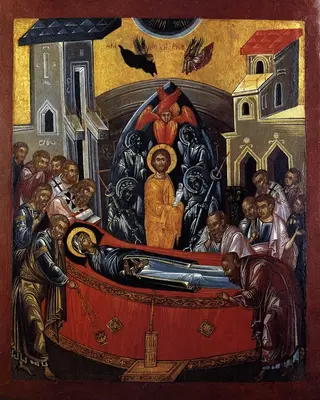
The Dormition of the Virgin is a tempera painting. It dates from 1500 and is held in the collection of the Metropolitan Museum of Art.
About this work
Subject & Meaning
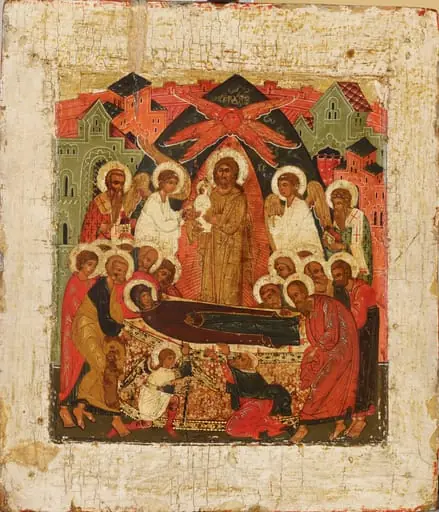
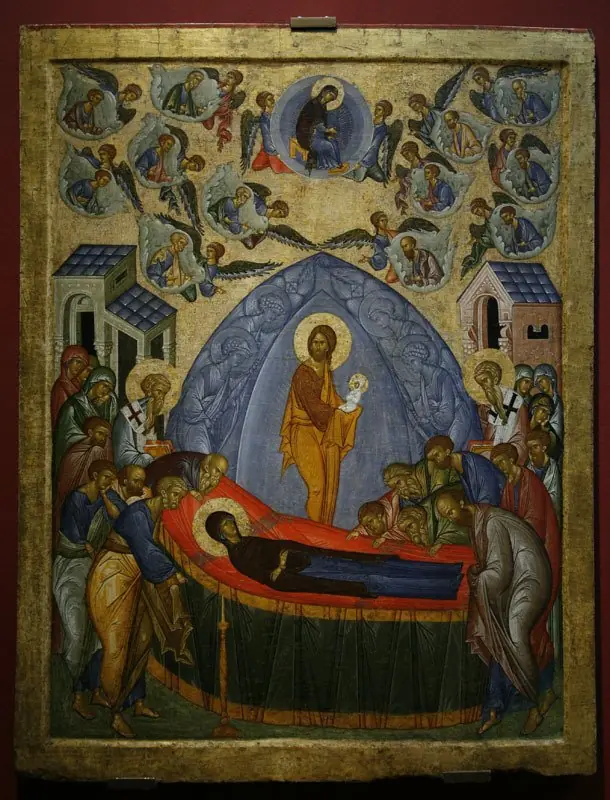
The subject depicted is the Dormition of the Virgin, an episode from Christian tradition in which the Virgin Mary dies and is assumed into heaven.
The subject depicted is the Dormition of the Virgin, an episode from Christian tradition in which the Virgin Mary dies and is assumed into heaven. The scene centers on Mary lying on a bier surrounded by the apostles, who witness her peaceful passing. Angels descend to receive her soul, often shown as a small child in a swaddling cloth above her head, symbolizing her immaculate departure.
The work's iconography underscores themes of divine election and the promise of resurrection. Mary's serene repose contrasts with the sorrow of the apostles, reflecting the tension between human loss and heavenly glory. The composition conveys the theological conviction that Mary, as the mother of Christ, is uniquely honored at death and assumed into eternal life.
Technique & Style
Created around 1500, The Dormition of the Virgin is executed in tempera on a wooden panel support. The painting measures 33.7 cm in height and 29.2 cm in width. Attributed to an unknown Russian painter, it depicts the death of the Virgin Mary.
The medium and support are characteristic of the period's iconographic traditions, utilizing the durable combination of pigment and wood typical of Russian panel painting.
History & Provenance
Created around 1500, The Dormition of the Virgin is a tempera painting on panel executed by an unidentified Russian artist. It is currently held in the collection of the Metropolitan Museum of Art in New York as part of the museum's permanent collection. No specific accession number or documented exhibition history is recorded in available sources.
Overview
The Dormition of the Virgin is a tempera painting depicting a religious scene in a stylized interior. The composition is divided into an upper arch where three robed figures support a luminous central figure, and a lower area showing a man on a bed surrounded by attendants. The background includes a simplified landscape with a boat and wavy lines suggesting water or a crowd.
Context
Created within the tradition of Byzantine‑influenced iconography, the composition reflects the theological emphasis on the Virgin’s transition from earthly life to heavenly glory. The inclusion of a boat in the background may allude to the passage of the soul across the waters of death, a motif common in medieval visual culture.
Legacy
While the painting’s authorship is unknown, it serves as a representative example of tempera’s role in conveying devotional narratives before the rise of oil painting. Its preserved elements continue to inform scholars about the visual language and liturgical concerns of its era.
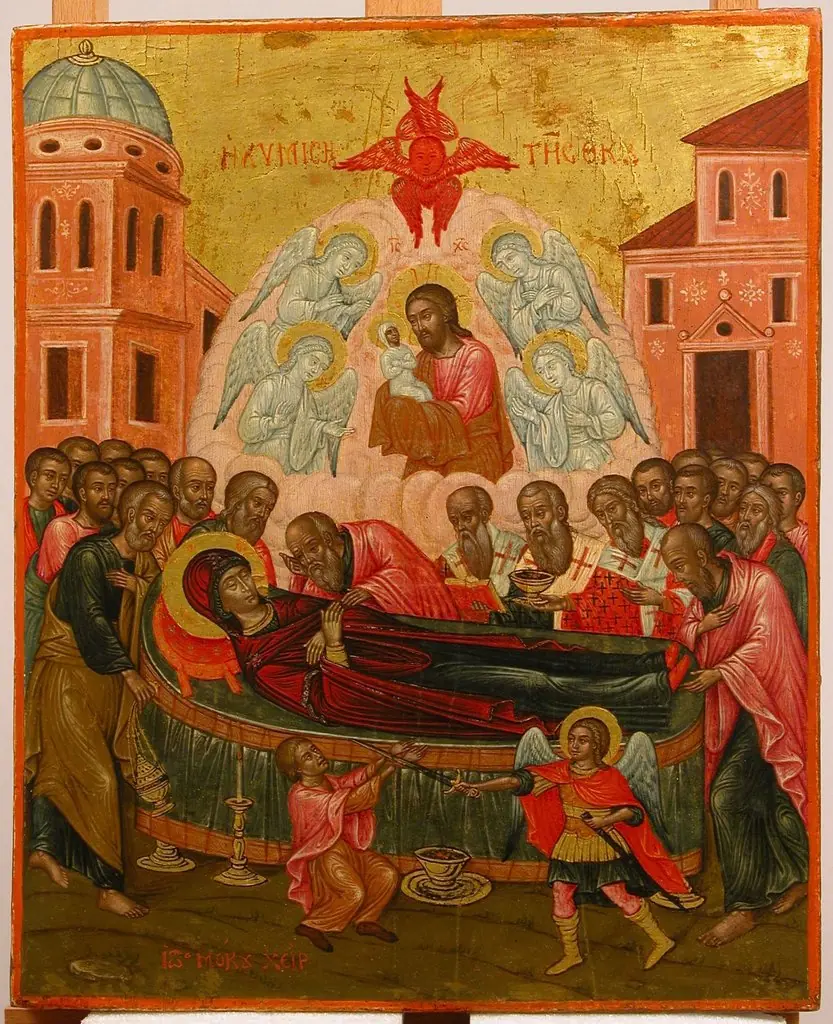
Artist & collection

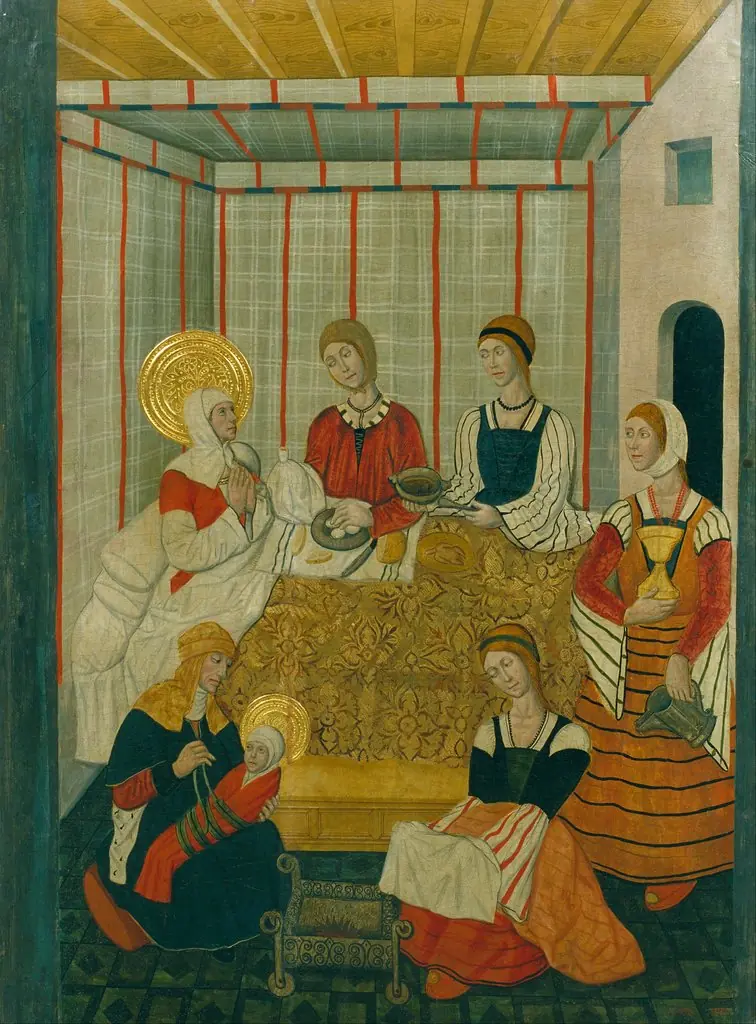 Birth of the Virgin
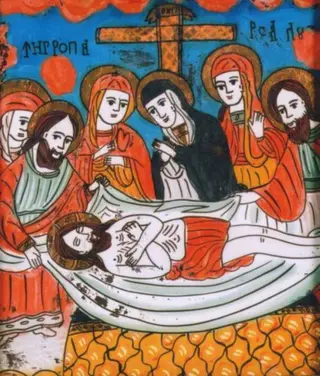 Îngroparea lui Iisus (Prohodul Domnului)
 Jumalanäidin kuolonuneen nukkuminen, venäläinen ikoni
 The Protection of the Mother of God
 Punerea în Mormânt a Mântuitorului Iisus Hristos, Prohodul Lui Iisus
 Blue dormition
 The Dormition of the Mother of God
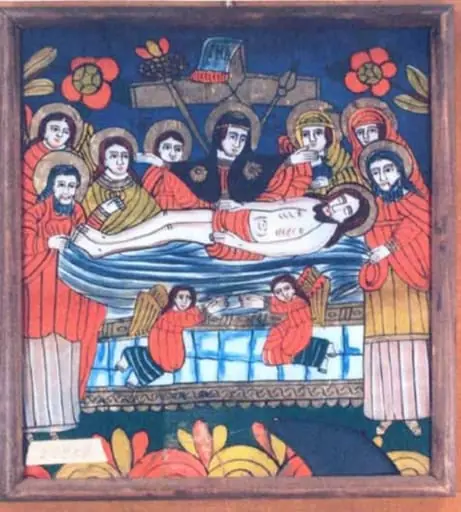 Punerea în mormânt
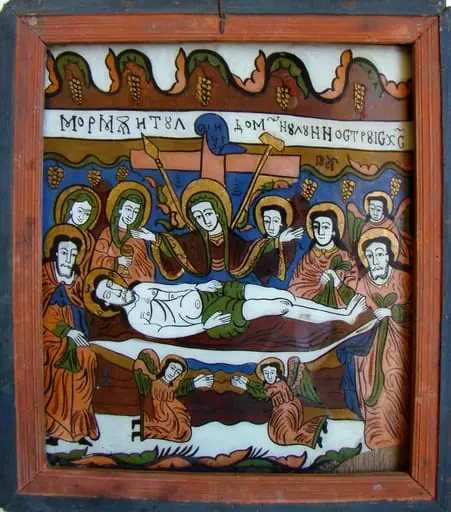 Prohodul lui Iisus
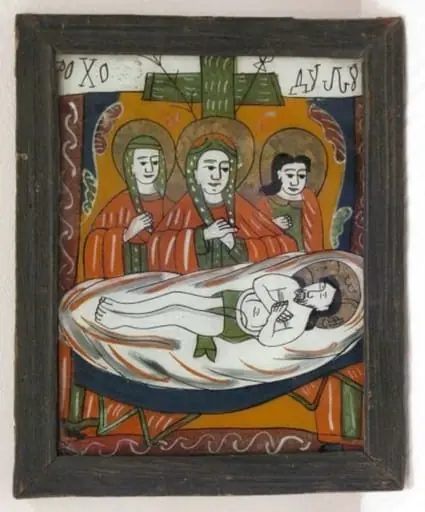 Plângerea lui Iisus
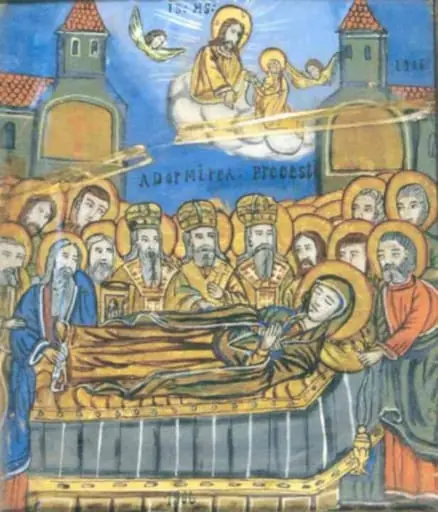 Adormirea Maicii Domnului
- The Dormition of the Virgin