Artwork
The Protection of the Mother of God
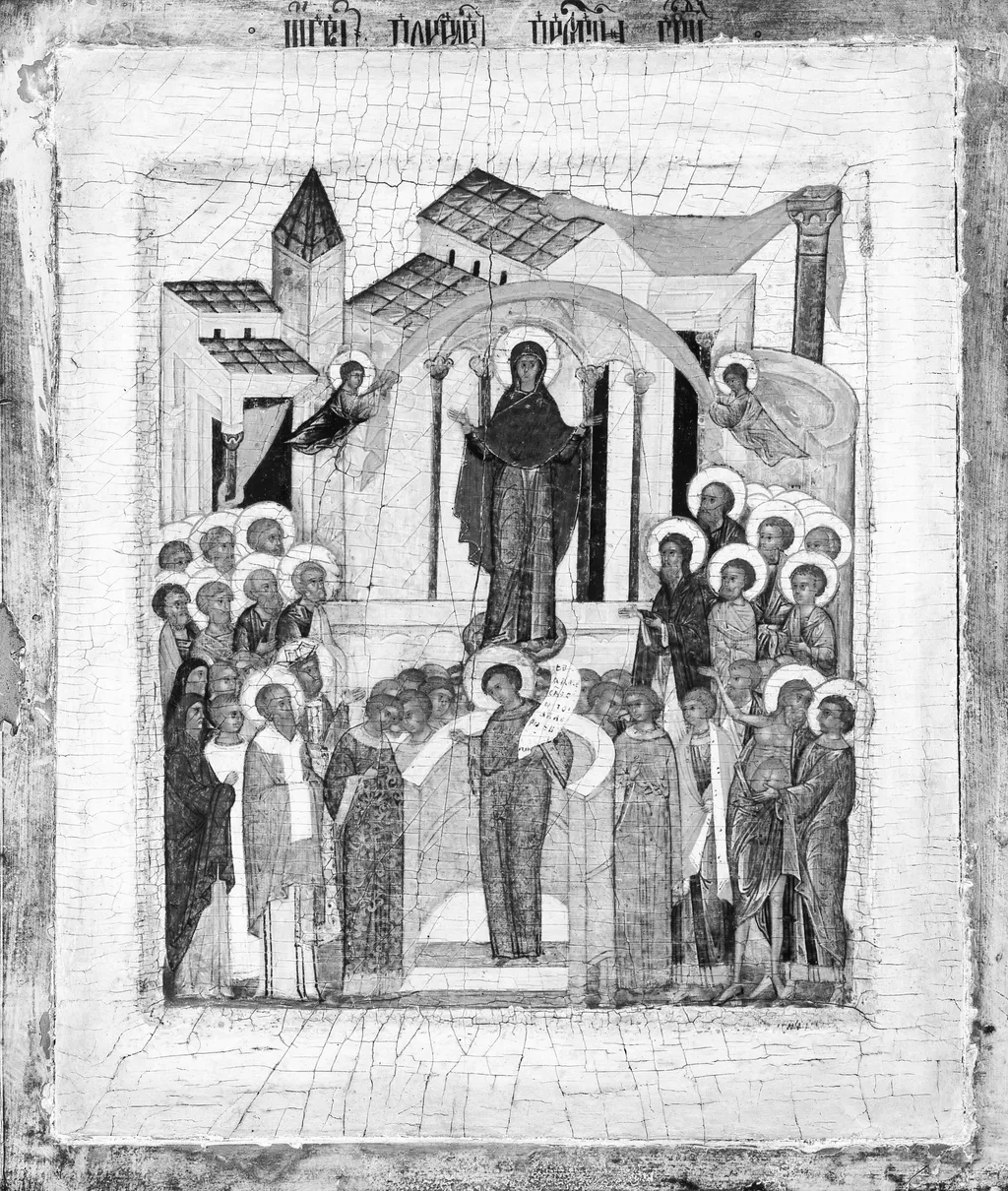
The Protection of the Mother of God is a tempera painting. It dates from 1600 and is held in the collection of the Metropolitan Museum of Art.
About this work
The use of tempera as the medium adds a sense of texture and depth to the painting, while the composition draws the viewer's eye to the central figure.
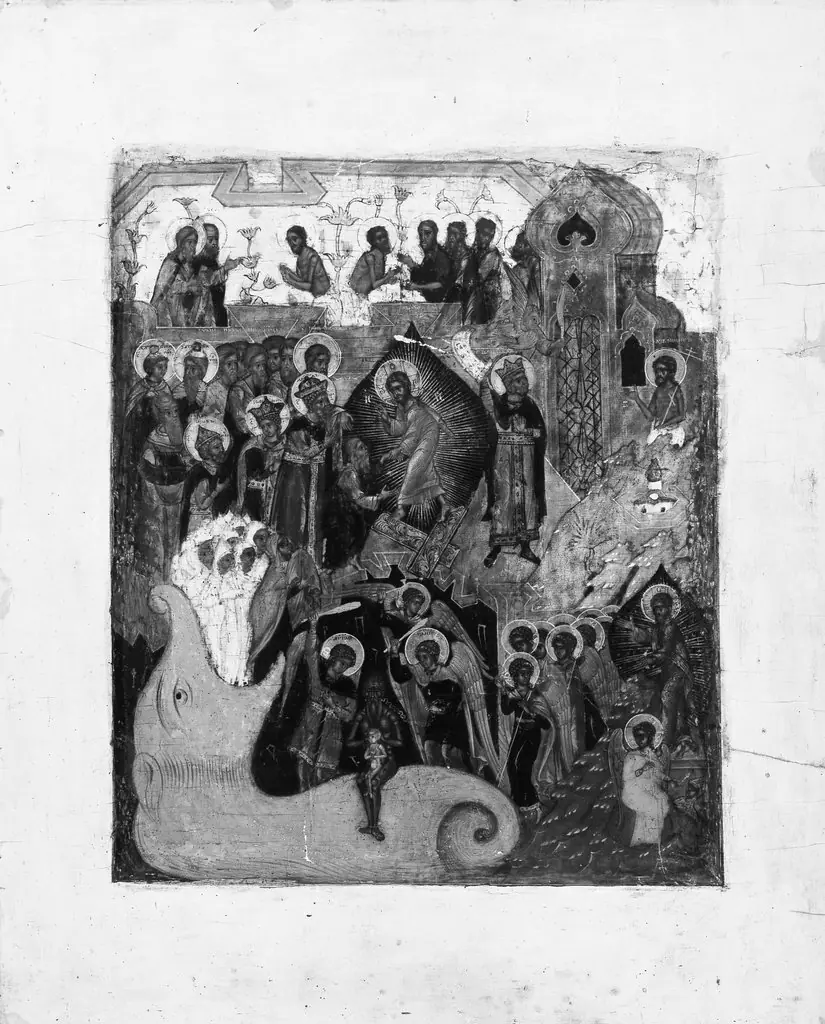
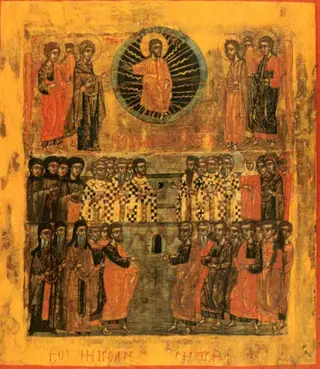
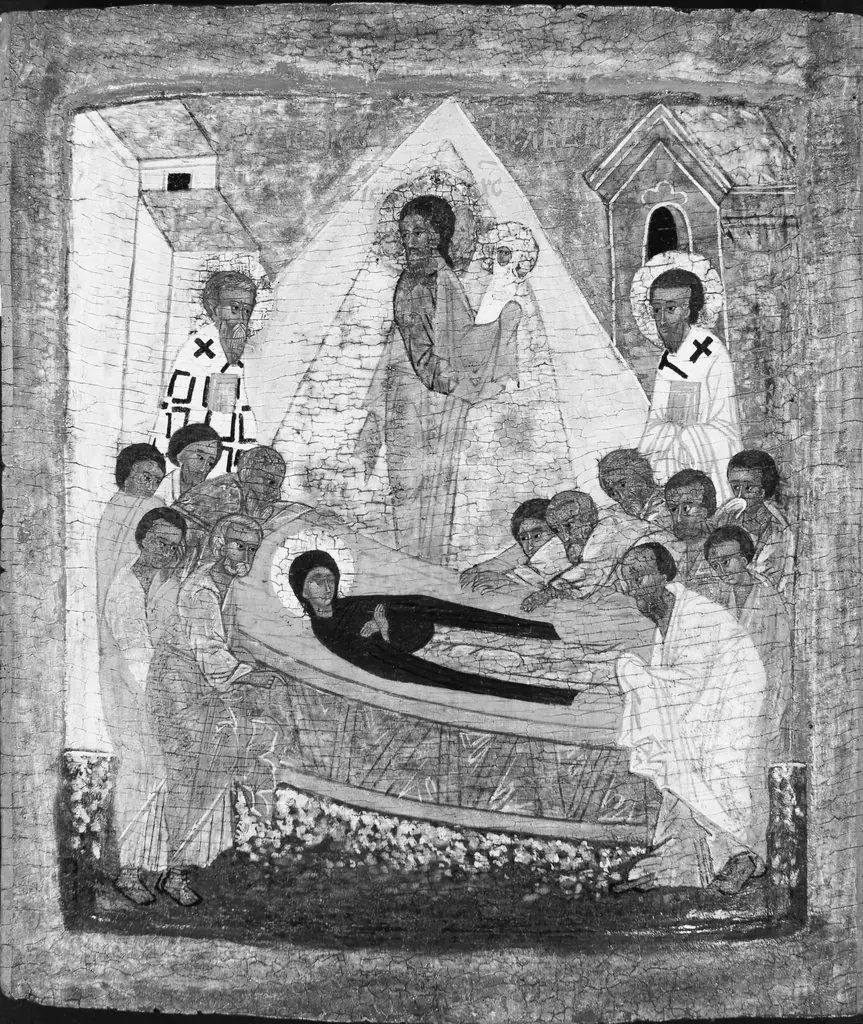
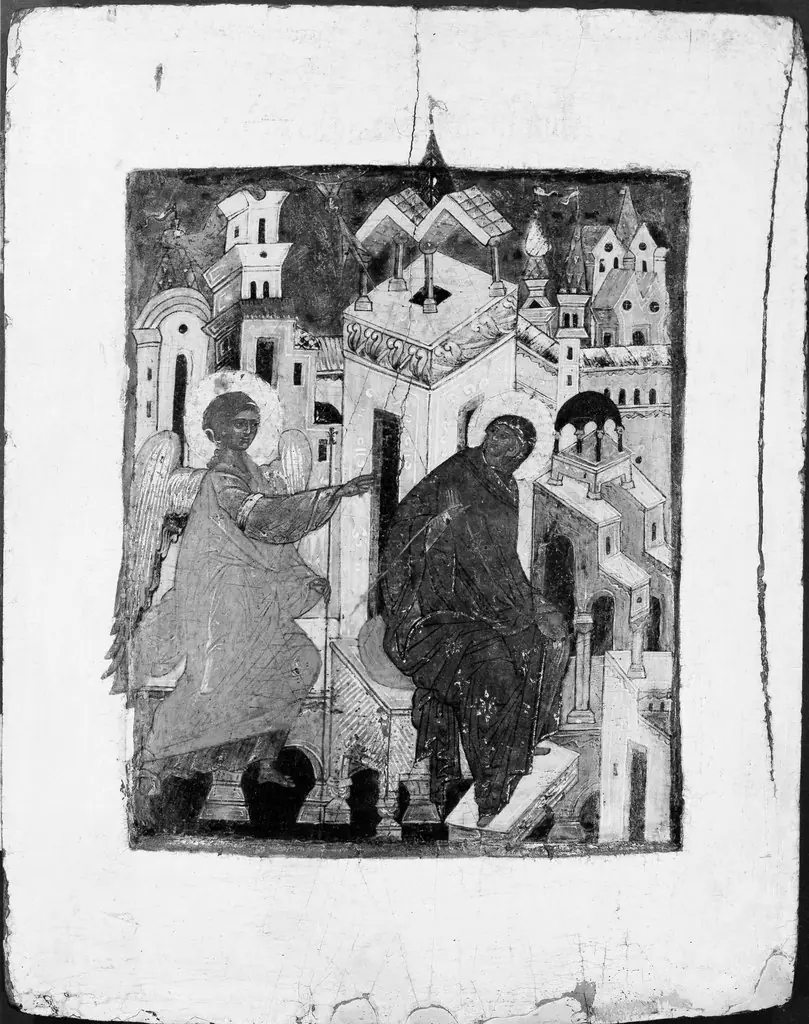
This painting, titled "The Protection of the Mother of God," is a tempera work created in 1600. It features a central figure, likely the Mother of God, surrounded by a crowd of people. The scene is set against a backdrop of buildings, with the Mother of God standing in front of an archway. The painting is rendered in a style that suggests a sense of reverence and devotion.
The use of tempera as the medium adds a sense of texture and depth to the painting, while the composition draws the viewer's eye to the central figure. The crowd of people surrounding the Mother of God adds a sense of community and shared devotion.
The painting is held at The Metropolitan Museum of Art, where it can be viewed by the public. For more information on tempera, a painting technique used in this artwork, look up the term "tempera".
Technique & Style
The Protection of the Mother of God is executed in tempera on panel, a traditional medium for Russian icon painting of the period. The work is classified as a religious painting and is dated to 1600. Its modest dimensions, 31.4 cm in height by 26.7 cm in width, place it within the small-scale format typical of devotional icons intended for private veneration.
History & Provenance
The Protection of the Mother of God is a Russian religious panel painting dated to 1600, executed in tempera on panel. It is attributed to an anonymous Russian painter rather than a documented named artist, and no specific commission or patron is recorded in the available records. The work measures 31.4 cm in height by 26.7 cm in width and is held in the collection of the Metropolitan Museum of Art in New York.
Details of its early ownership and chain of custody prior to acquisition are not documented, and the available sources do not provide a specific accession number or any exhibition history.
Overview
The tempera painting "The Protection of the Mother of God," created in 1600, presents a significant religious scene. It features a central figure, understood to be the Mother of God, encircled by a gathering of individuals. The setting includes architectural elements, with the main figure positioned before an archway.
The artwork's overall execution conveys a strong sense of spiritual reverence and collective piety, reflecting its devotional subject matter.
Subject & Meaning
The painting's title directly indicates its core theme: the divine intercession and safeguarding provided by the Mother of God. Her prominent placement among a crowd of figures suggests a narrative of communal faith, where believers seek or receive her spiritual protection. This depiction underscores a shared religious experience, uniting the congregation under her benevolent presence and fostering a sense of collective devotion within the sacred space.
Artist & collection