Artwork
The Dormition of the Virgin
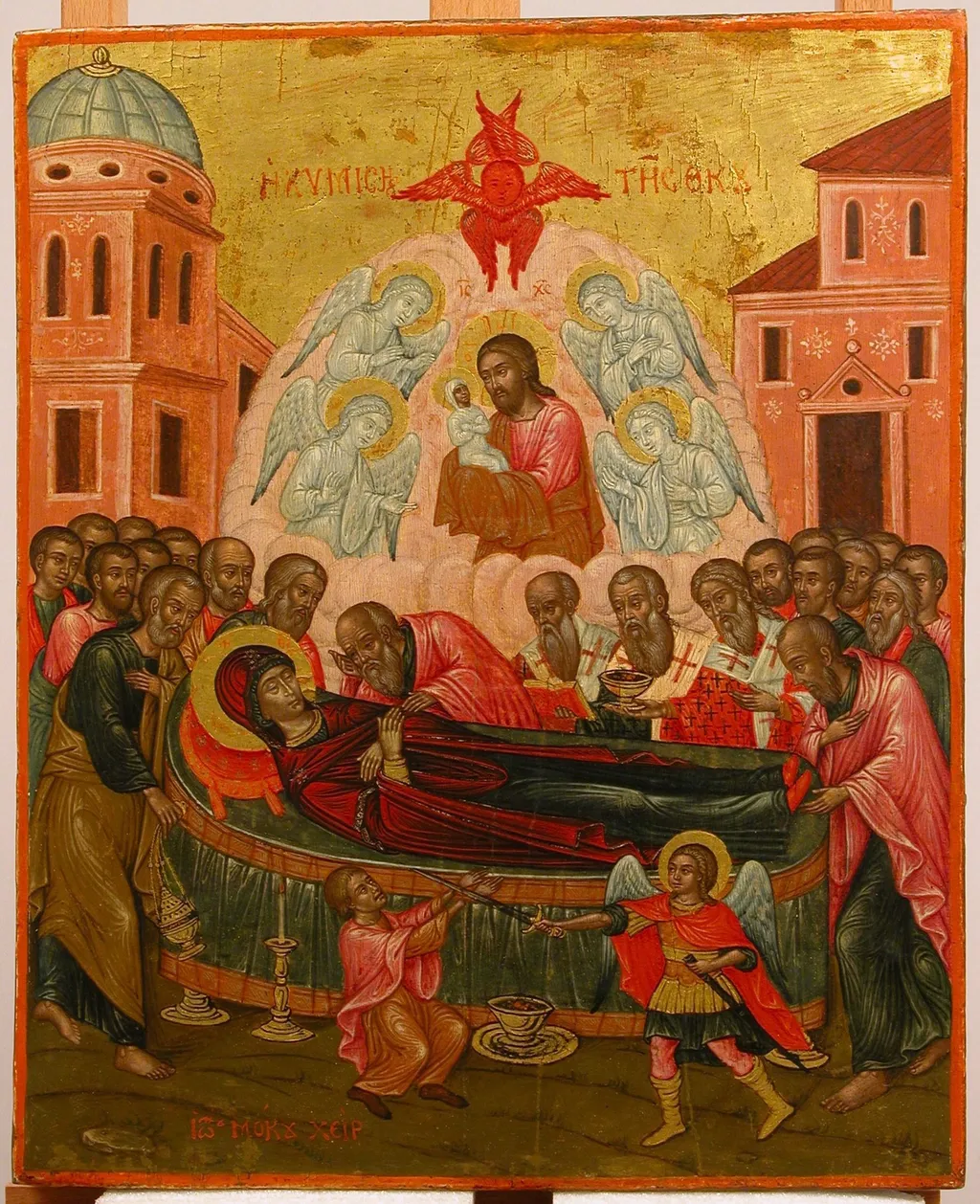
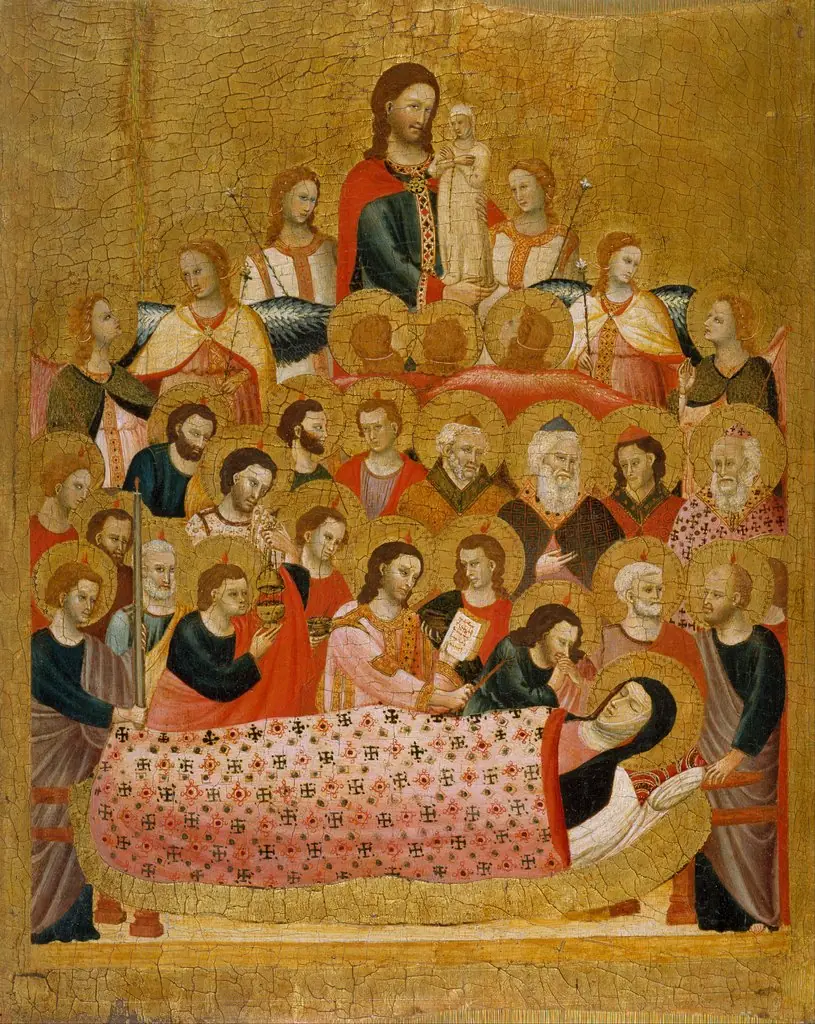
The Dormition of the Virgin is an oil painting by the Romanesque artist Ioannis Moschos. It is held in the collection of the Metropolitan Museum of Art.
About this work
Subject & Meaning
The painting depicts the Dormition (Death) of the Virgin Mary, showing her lifeless body on a funeral bier surrounded by mourning apostles and heavenly figures.
The painting depicts the Dormition (Death) of the Virgin Mary, showing her lifeless body on a funeral bier surrounded by mourning apostles and heavenly figures. In the foreground an angel with a sword stops Iefonia, a Sanhedrin priest who sought to disturb the Virgin’s corpse, while Saint Peter incenses the body from the left and Paul bows at her feet. John the Apostle stands at her head, flanked by four bishops, Dionysius the Areopagite, Hierotheos the Thesmothete, James the brother of Jesus, and Saint Timothy, who hold books or a chalice.
Above, Christ holds a swaddled infant symbolizing Mary’s soul, representing its purity and rebirth as it enters heaven. All apostles are present except Thomas.
Technique & Style
Executed in 1800, this small-scale work measures 34.3 by 28.6 centimeters and utilizes tempera and oil paint applied with gold leaf on a wood panel. The composition exemplifies the late Cretan School's synthesis of Venetian influences and the traditional maniera greca. Central to the iconography is Christ holding a swaddled, infant-like figure representing the Virgin's soul, symbolizing spiritual rebirth.
The scene includes specific narrative details such as the angel restraining Iefonia, who attempts to disturb the bier, while apostles and bishops surround the deceased. Notable figures include Saint Peter incensing the body, Saint Paul bowing at the feet, and Saint John the Apostle mourning at the head. The artist rendered the funeral bier's drapery with distinct, clear folds, and signed the piece at the bottom.
History & Provenance
The Dormition of the Virgin is attributed to the Greek painter Ioannis Moschos (also recorded as Ioannes Mokos), an artist active between 1650 and 1721 according to scholarly accounts, though some catalogues list an inception date of 1800. Executed in tempera with gold leaf on a wood panel, the work measures 34.3 cm high by 28.6 cm wide. Its provenance traces to a gift from Mrs. Henry Morgenthau, who donated the painting to the Metropolitan Museum of Art in New York City in 1933, where it remains in the museum’s collection. The sources do not record any specific commission or patronage for the piece.
The Dormition of the Virgin by Ioannis Moschos is held at the Metropolitan Museum of Art in New York City (accession no. 1975.1.128). The painting was donated to the museum in 1933 by Mrs. Henry Morgenthau. The work has been exhibited within the institution’s collection and remains part of its holdings as of the latest records.
Context
Ioannis Moschos’s Dormition of the Virgin (c. 1650–1721) exemplifies the late Cretan and Heptanese Schools, blending Venetian influences with the maniera greca tradition. Scholars situate the work within the broader corpus of Cretan post-Byzantine art, noting its technical refinement and thematic continuity with earlier depictions such as the 14th-century Koimesis mosaic in Chora Church and Gherardo Starnina’s early 15th-century version. The painting’s inclusion in the Metropolitan Museum of Art (gift of Mrs. Henry Morgenthau, 1933) anchors its place in global collections, where it is juxtaposed with contemporaneous works like Bartolomeo Vivarini’s Death of the Virgin (1484).
Moschos’s integration of Venetian spatiality and Cretan iconography, evident in his use of gold leaf, tempera, and layered figural composition, reflects the hybrid style that defined Greek ecclesiastical art under Venetian rule. The work’s emphasis on Mary’s resurrection and the symbolic swaddled infant (her soul) underscores its theological fidelity to Greek Orthodox tradition, aligning with contemporaneous depictions by relatives Elias Moskos and Victor.
Overview
The painting "The Dormition of the Virgin" is a tempera work by the Greek artist Ioannis Moskos, active from 1650 to 1721. It depicts the Virgin Mary's passing, a significant event in Christian tradition. Moskos was a figure within the late Cretan and Heptanese Schools, which were influenced by Venetian art. This piece showcases his detailed approach to a revered religious narrative, characteristic of the period's devotional art.
Own this work as a print
Artist & collection
Artist
Ioannis Moskos (Greek: Ιωάννης Μόσκος; born between 1635 and 1644; died 1721) was a Greek painter that migrated to Venice.

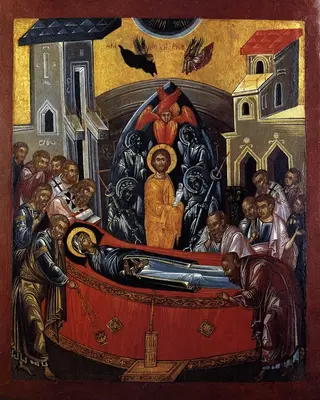 The Dormition of the Mother of God
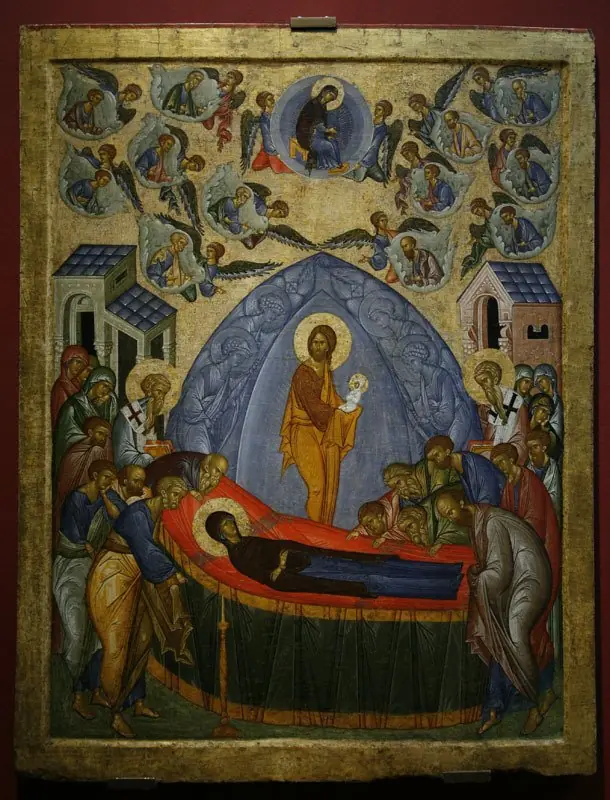 Blue dormition
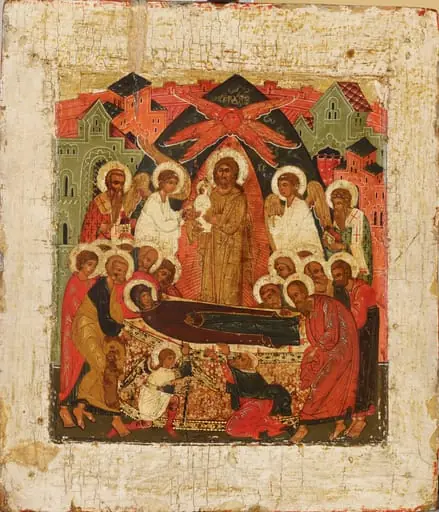 Jumalanäidin kuolonuneen nukkuminen, venäläinen ikoni
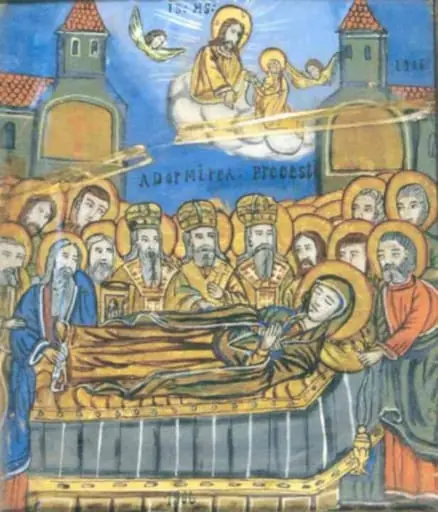 Adormirea Maicii Domnului
 Întâmpinarea Domnului în biserică; Stretenia
 Untitled
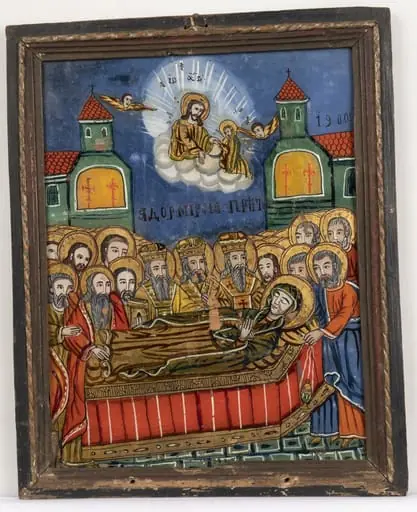 Adormirea Maicii Domnului
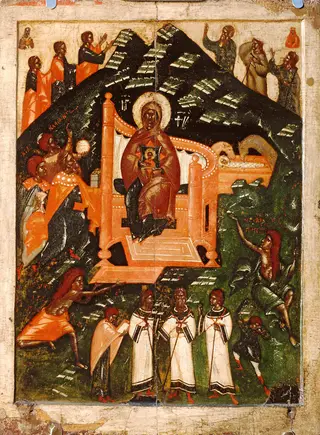 Celebration of Our Lady
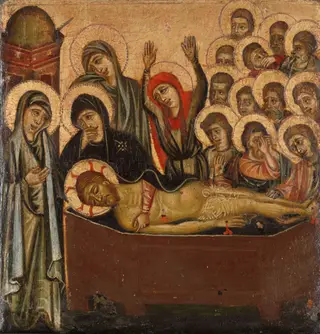 Grablege Christi
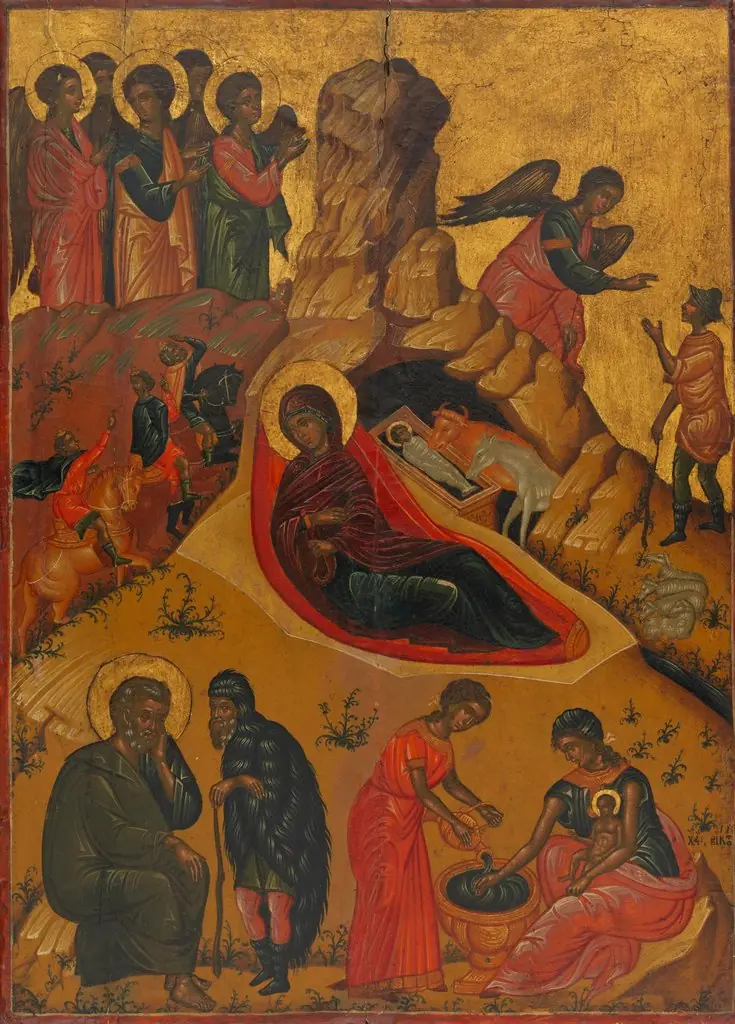 Nativity
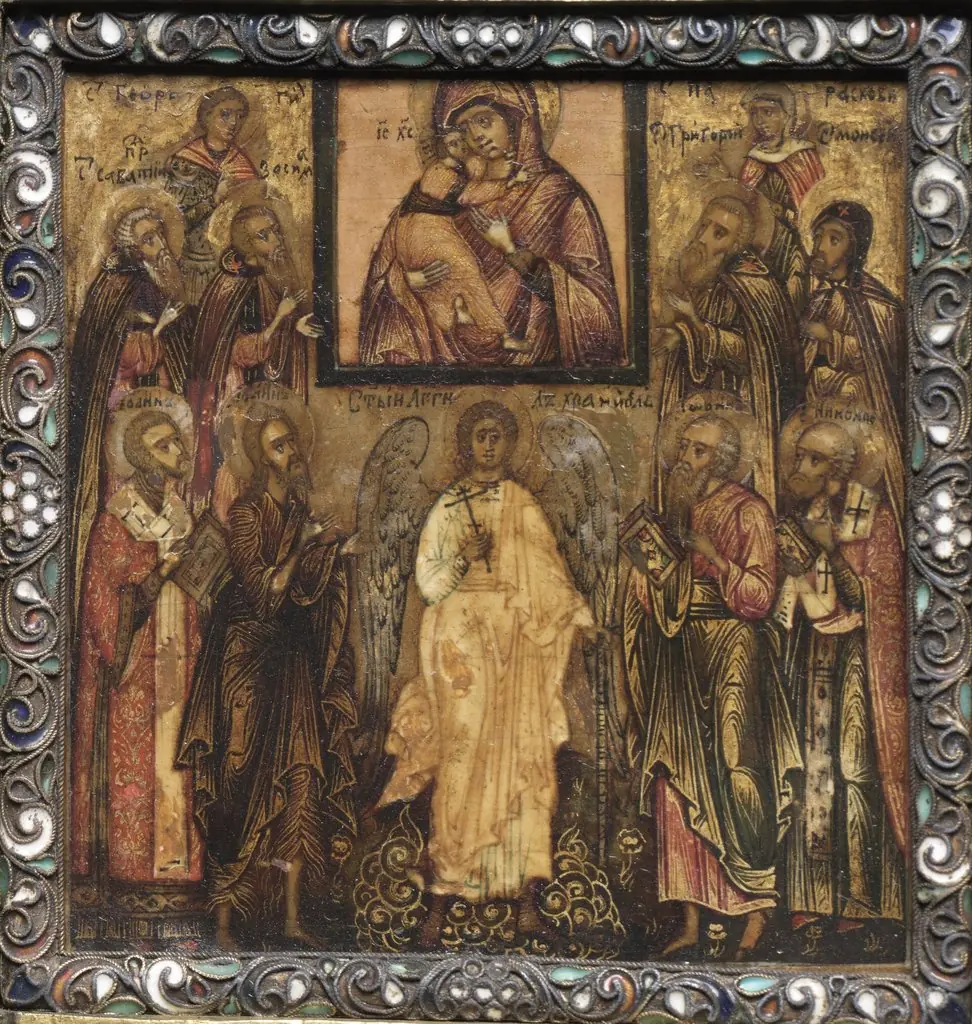 Portable Triptych Icon: Adoration of the Miracle-Working Icon of the Vladimir Mother of God
- Dormition of the Virgin