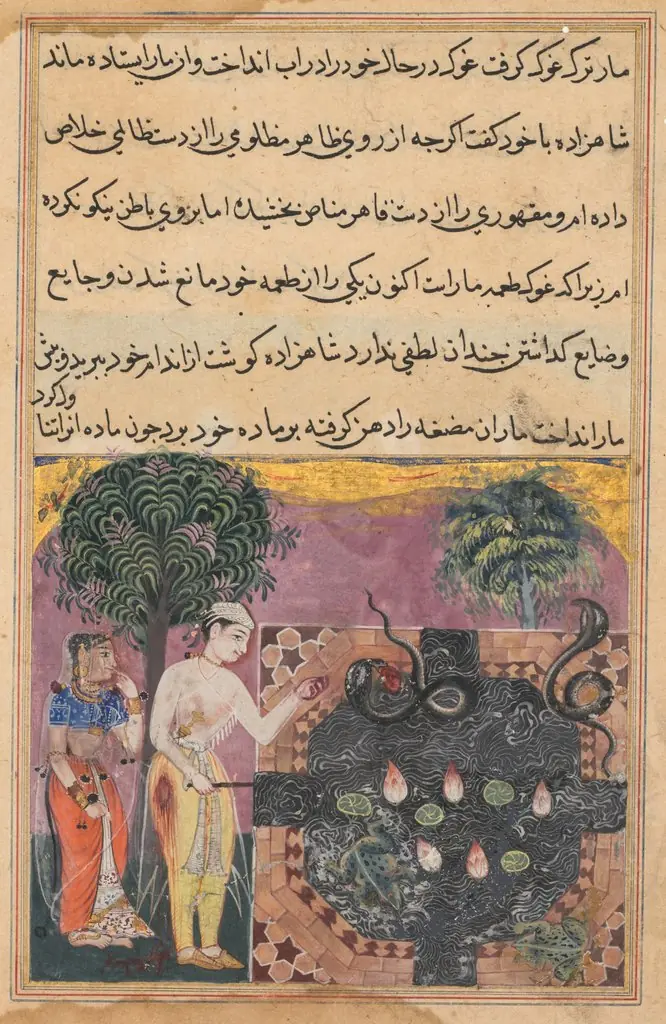
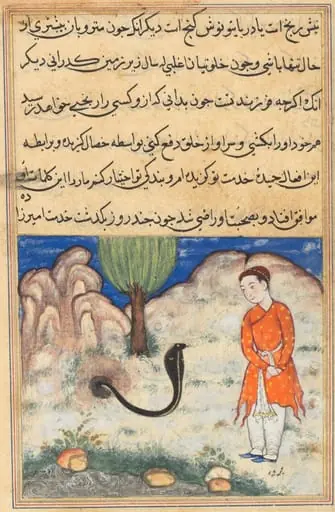
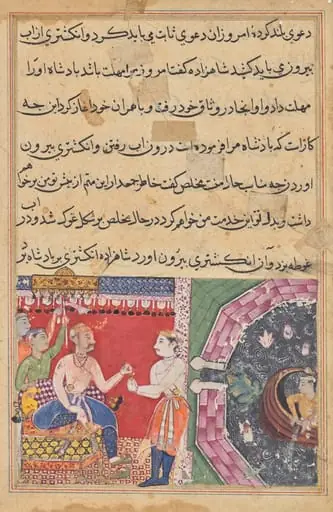
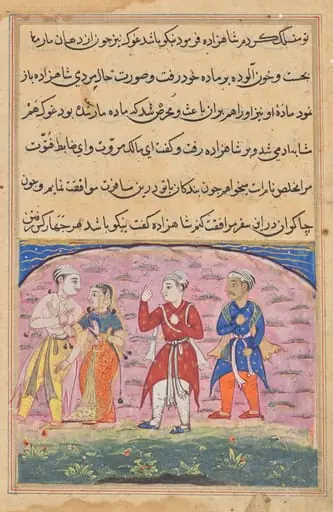
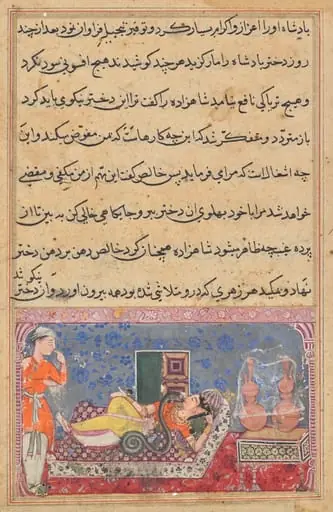
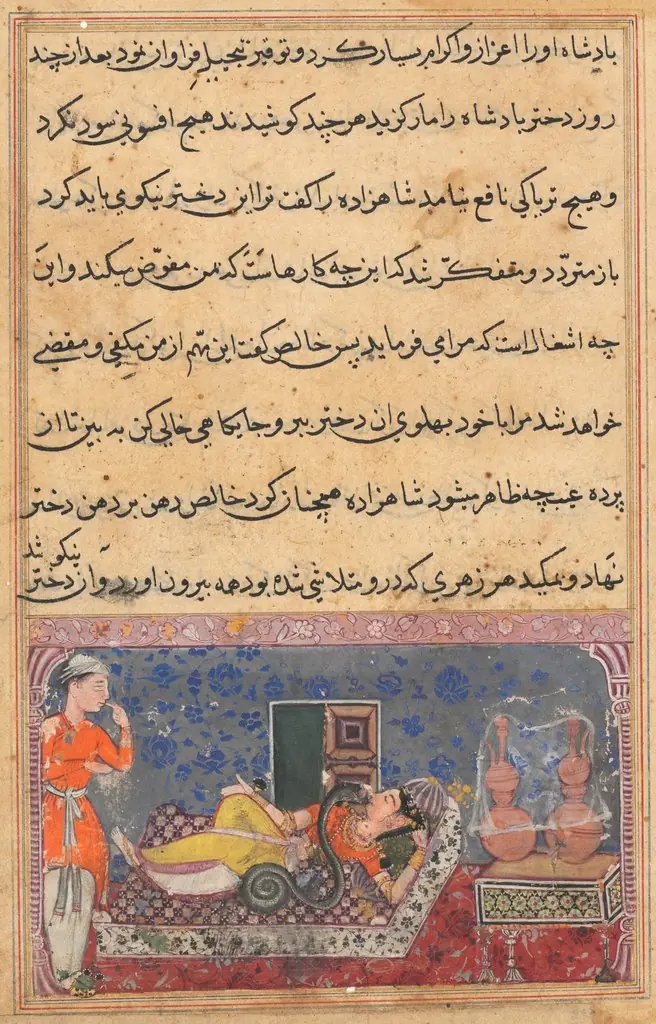
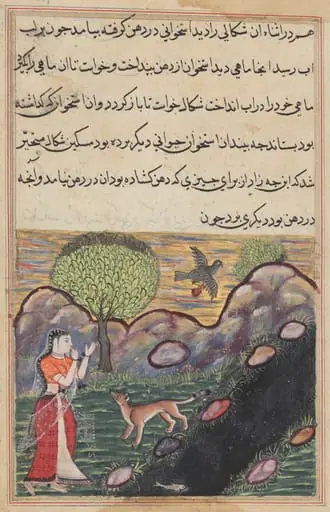
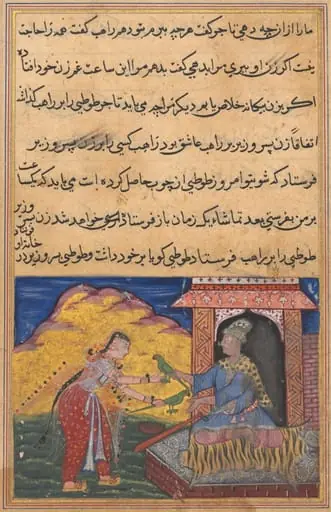
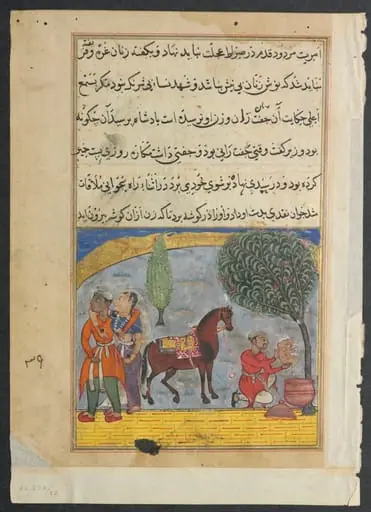
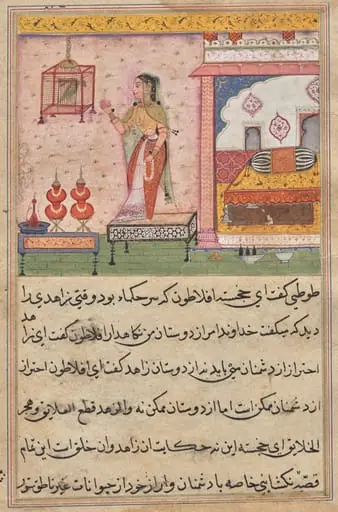
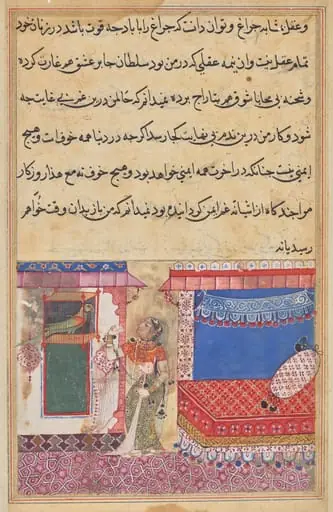
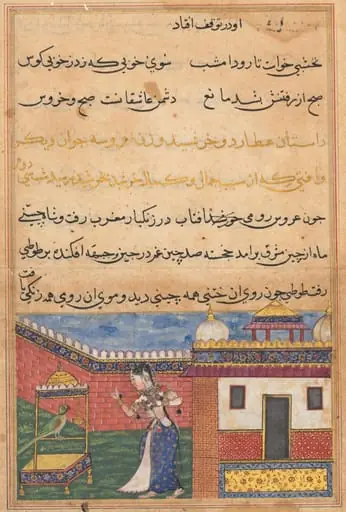
The prince, having deprived the snake of its natural food, a frog, feeds it with a piece of his own flesh, from a Tuti-nama (Tales of a Parrot): Eighteenth Night
1560
unspecified
From the collection of Cleveland Museum of Art
1560
unspecified
From the collection of Cleveland Museum of Art
The prince, having deprived the snake of its natural food, a frog, feeds it with a piece of his own flesh, from a Tuti-nama (Tales of a Parrot): Eighteenth Night is a 1560 unspecified by Unknown, a Mughal Painting work, held at Cleveland Museum of Art.
A prince kneels by a tiled pool, offering a piece of his own arm to a coiled cobra. The snake’s last meal, a frog, swims free in the water below. This painting tells a story from a 16th-century Indian book of parrot tales, meant to teach lessons about kindness and debt. The prince’s act is extreme—cutting his flesh to repay the snake—but the scene is calm, almost matter-of-fact, with bright colors and careful details. To see more stories like this, look up Mughal India, court of Akbar (reigned 1556–1605).
The prince and Good Fortune in the form of a woman came across a pool, here rendered with geometric tile work, tilted up so that the viewer can see it as though from above. A cobra had caught a frog, who cried out for help. The prince freed the frog, who jumped into the water and rejoined his mate. The prince then cut a piece of his own flesh for the snake to eat instead. The wives of the snake and frog then admonished their husbands to return the favor.
The tree with red-tipped leaves is a mango tree.
Read the full account in the museum source.
Your cart is empty
Explore artworks →