Artwork
The parrot addresses Khujasta at the beginning of the thirty-second night, from a Tuti-nama (Tales of a Parrot)
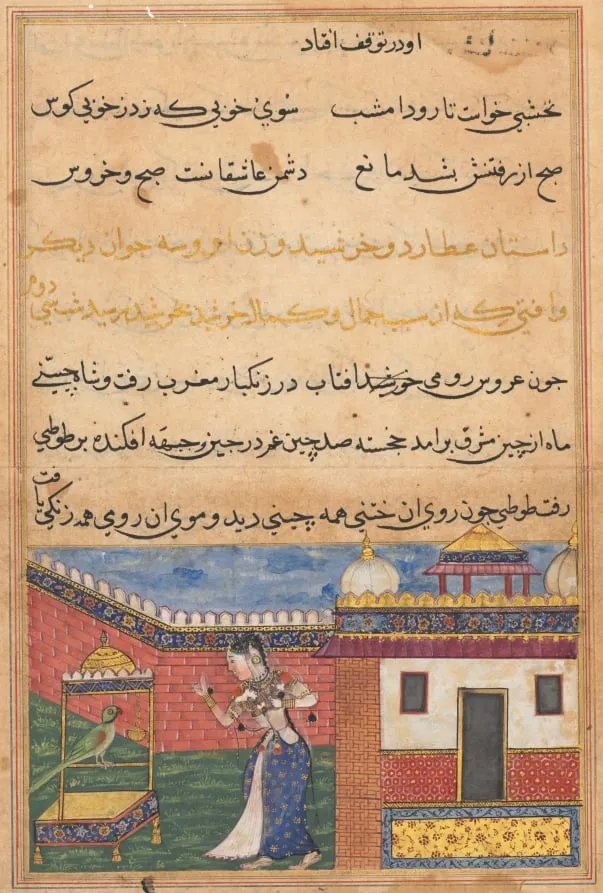
The parrot addresses Khujasta at the beginning of the thirty-second night, from a Tuti-nama (Tales of a Parrot) is an unspecified painting by the Mughal Painting artist Unknown. It dates from 1560 and is held in the collection of the Cleveland Museum of Art. This painting illustrates a scene from the Tuti-nama, a collection of tales told by a parrot.
- Accession no.
- 1962.279.208.a
- Credit line
- Gift of Mrs. A. Dean Perry
About this work
You see a woman in a gold-trimmed robe sitting on a carpet, a green parrot perched on her finger, talking to her.
You see a woman in a gold-trimmed robe sitting on a carpet, a green parrot perched on her finger, talking to her.
This painting is from a book of stories told by a parrot to delay a wife’s secret meeting. The bright colors and fine details show the luxury of the Mughal court. The parrot’s tale is meant to teach a lesson, beauty can bring trouble.
To see more like this, look up Mughal India, court of Akbar (reigned 1556–1605).
Overview
This painting illustrates a scene from the Tuti-nama, a collection of tales told by a parrot. It depicts a woman being addressed by the parrot as it begins to recount a story.
Subject & Meaning
The scene shows a woman, Khujasta, being entertained by the parrot, Tuti, who tells a tale about a couple, Utarid and Khurshid, whose misfortunes stem from her beauty. The story is meant to caution against the dangers of beauty.
Technique & Style
The painting is characterized by its use of bright colors and fine details, reflecting the opulence of the Mughal court. The artist's attention to luxury is evident in the depiction of the woman's gold-trimmed robe and the carpet.
Context
The Tuti-nama was a popular literary work in Mughal India, and this painting is part of a larger manuscript. The artwork is associated with the court of Akbar, who reigned from 1556 to 1605.
Artist & collection









- The parrot addresses Khujasta at the beginning of the thirty-third night, from a Tuti-nama (Tales of a Parrot)
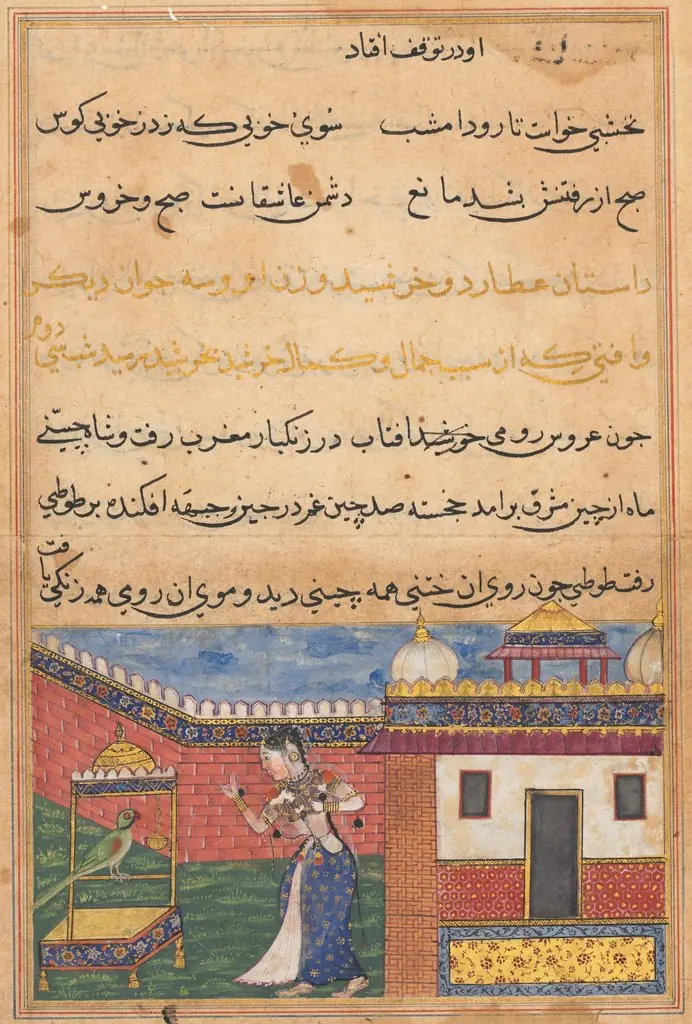 The parrot addresses Khujasta at the beginning of the thirty-second night, from a Tuti-nama (Tales of a Parrot)
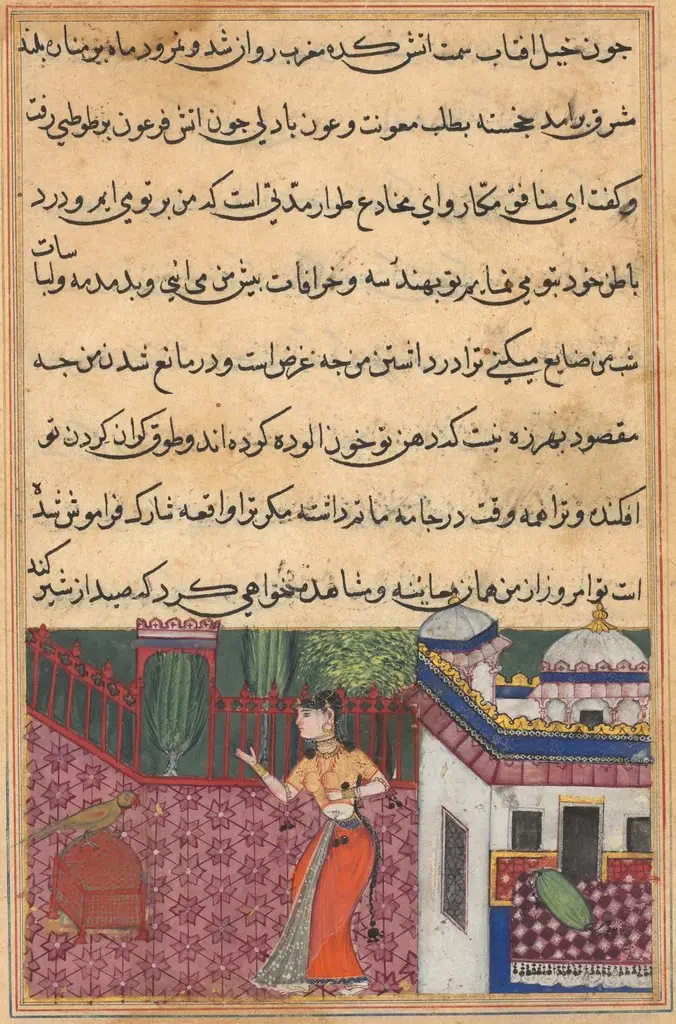 The parrot addresses Khujasta at the beginning of the thirty-third night, from a Tuti-nama (Tales of a Parrot)
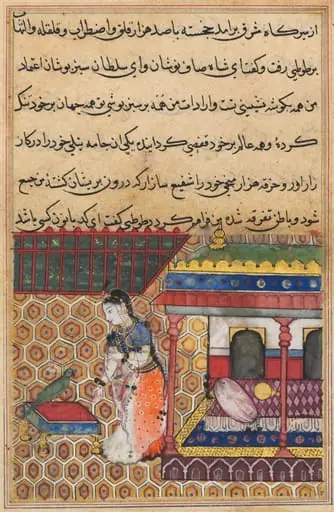 The parrot addresses Khujasta at the beginning of the thirty-eighth night, from a Tuti-nama (Tales of a Parrot)
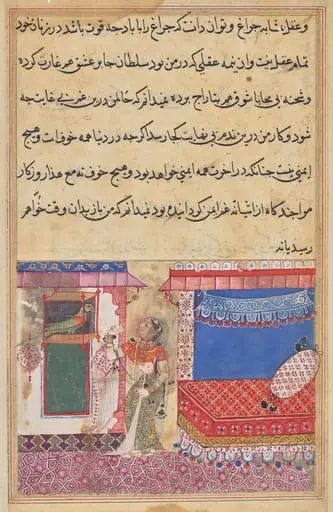 The Parrot Addresses Khujasta at the Beginning of the Eighteenth Night, from a Tuti-nama (Tales of a Parrot)
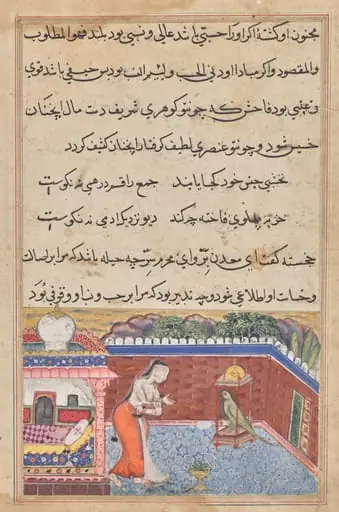 The parrot addresses Khujasta at the beginning of the thirty-first night, from a Tuti-nama (Tales of a Parrot)
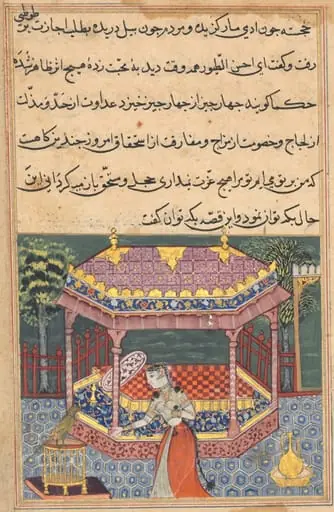 The parrot addresses Khujasta at the beginning of the thirty-seventh night, from a Tuti-nama (Tales of a Parrot)
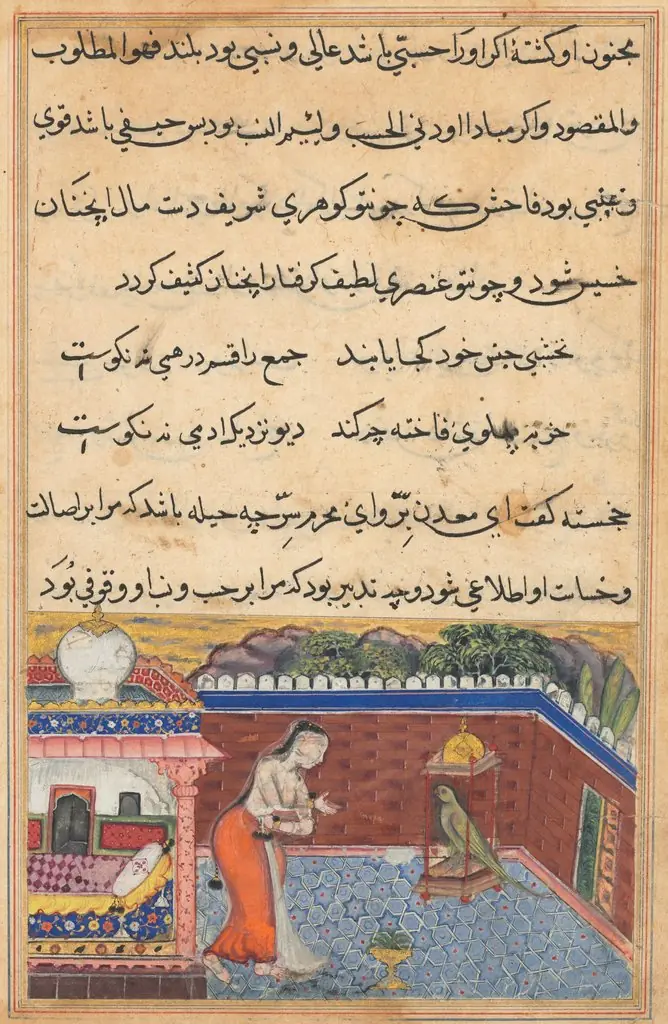 The parrot addresses Khujasta at the beginning of the thirty-first night, from a Tuti-nama (Tales of a Parrot)
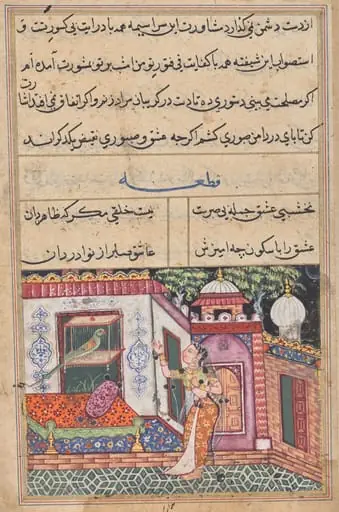 The Parrot Addresses Khujasta at the Beginning of the Eleventh Night, from a Tuti-nama (Tales of a Parrot)
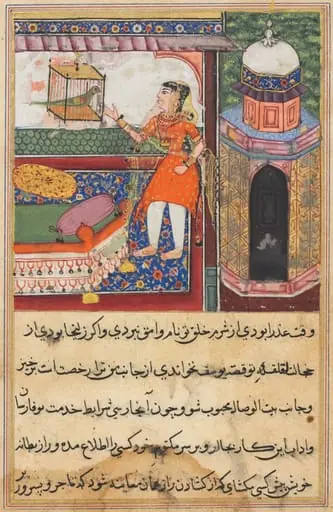 The Parrot Addresses Khujasta at the Beginning of the Tenth Night, from a Tuti-nama (Tales of a Parrot)
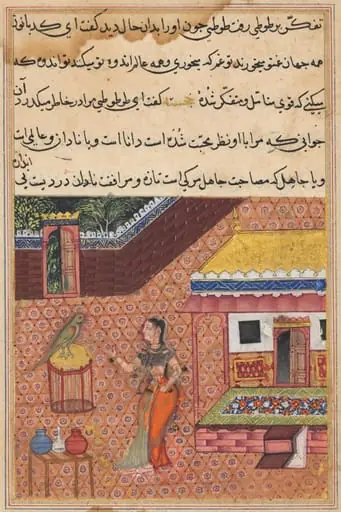 The parrot addresses Khujasta at the beginning of the thirty-fourth night, from a Tuti-nama (Tales of a Parrot)