Artwork
The Vision of St. Helen

The Vision of St. Helen is an oil painting. It dates from 1920 and is held in the collection of the Rijksmuseum. The work titled The Vision of St.
About this work
Subject & Meaning
The subject is drawn from the legend of Saint Helena's dream, in which she was guided to the location of the True Cross during her pilgrimage to the Holy Land.
The painting depicts Helena Augusta, the Roman emspress and mother of Constantine the Great, in a religious vision. As a work of religious art, it portrays a sacred episode from her hagiography, presenting her as a recipient of divine revelation. The subject is drawn from the legend of Saint Helena's dream, in which she was guided to the location of the True Cross during her pilgrimage to the Holy Land.
The composition is based on Paolo Veronese's "The Dream of Saint Helena," adapting the earlier Venetian master's treatment of the same visionary subject. By referencing Veronese's iconic composition, the work situates Helena within a long tradition of devotional imagery celebrating her role in the discovery of the Cross, while reinterpreting the theme in a twentieth-century idiom.
Technique & Style
The Vision of St. Helen is executed in oil paint on canvas, a medium and support consistent with early 20th-century academic practice. Measuring 162 by 91 centimeters, the work reflects a compositional reliance on Paolo Veronese’s The Dream of Saint Helena, suggesting a deliberate emulation of High Renaissance Venetian techniques.
Stylistically, the handling exhibits smooth, controlled brushwork, with an emphasis on chiaroscuro to model forms and drapery. The palette leans toward rich, harmonious tones, typical of religious works aiming to convey gravitas and divine illumination. As of its last recorded assessment, the painting remains part of the Rijksmuseum’s collection, though its precise condition, including potential restorations or surface alterations, is not detailed in available sources.
Overview
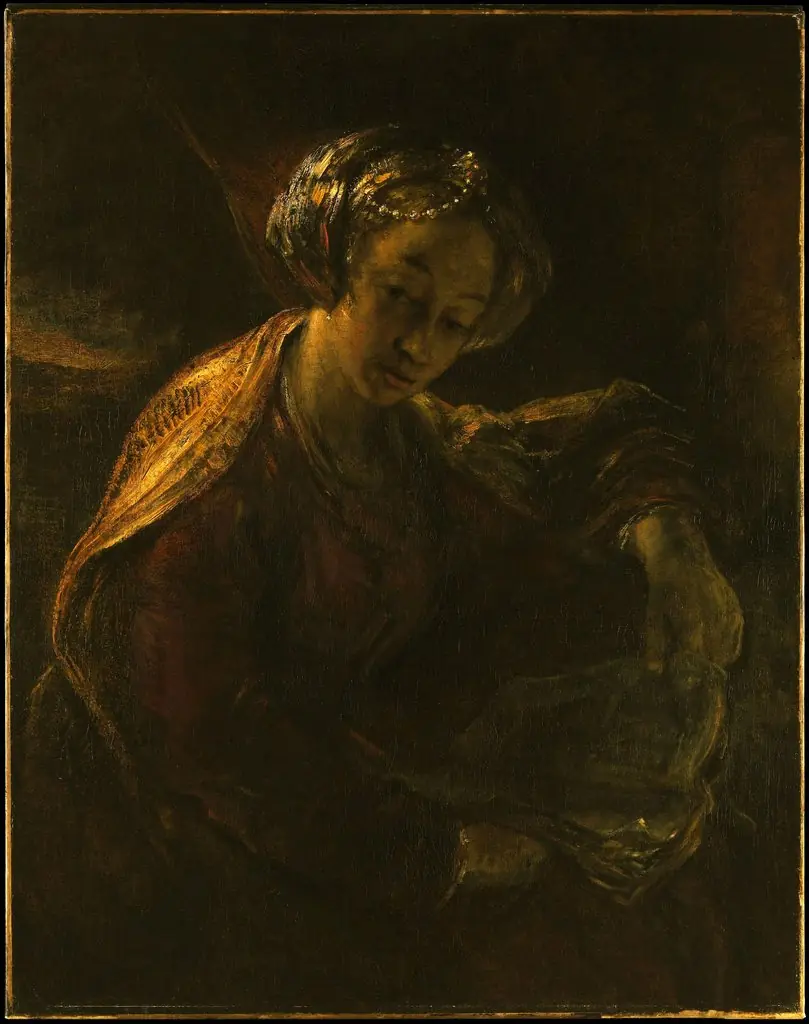
The work titled The Vision of St. Helen is an oil painting that portrays a solitary woman seated in a chair. She rests her head on a hand, eyes lifted upward, enveloped in flowing robes. The composition is set against a muted backdrop that conveys tranquility, while the lighting emphasizes her face and the contemplative mood of the scene.
History & Provenance
Details regarding the painting’s creation date, artist, and ownership history are not recorded in the available information. Consequently, its provenance remains uncertain, limiting scholarly assessment of its place within a broader collection or exhibition record.
Context
The title links the image to the legendary figure of St. Helen, traditionally associated with pilgrimage and the discovery of holy relics. By situating a contemporary‑looking woman in a timeless pose of reverence, the work bridges historical religious narratives with personal, modern spirituality.
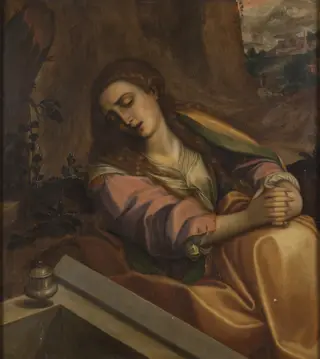
Artist & collection

- The Magdalen at the Tomb of Christ
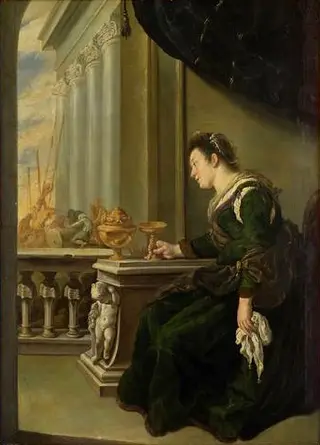 Artemisias Trauer um Mausolos
 St Agnes
 Mary Magdalene
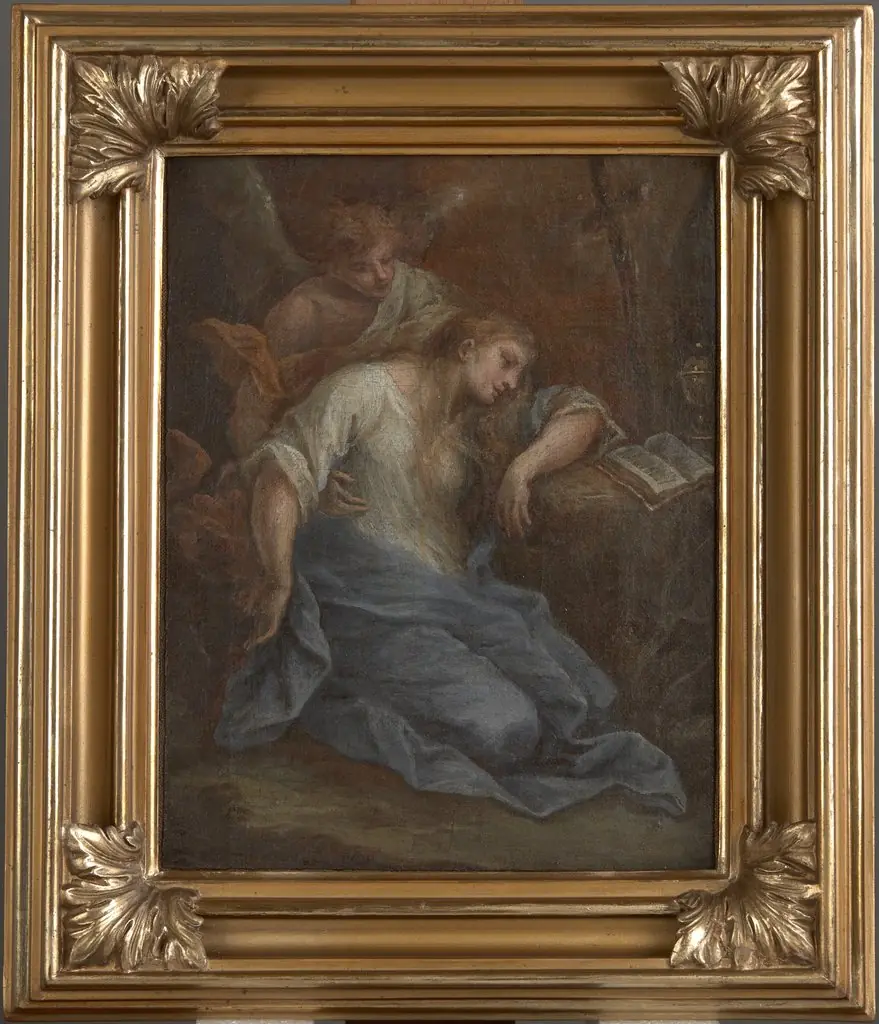 Saint Mary Magdalene in Ecstasy
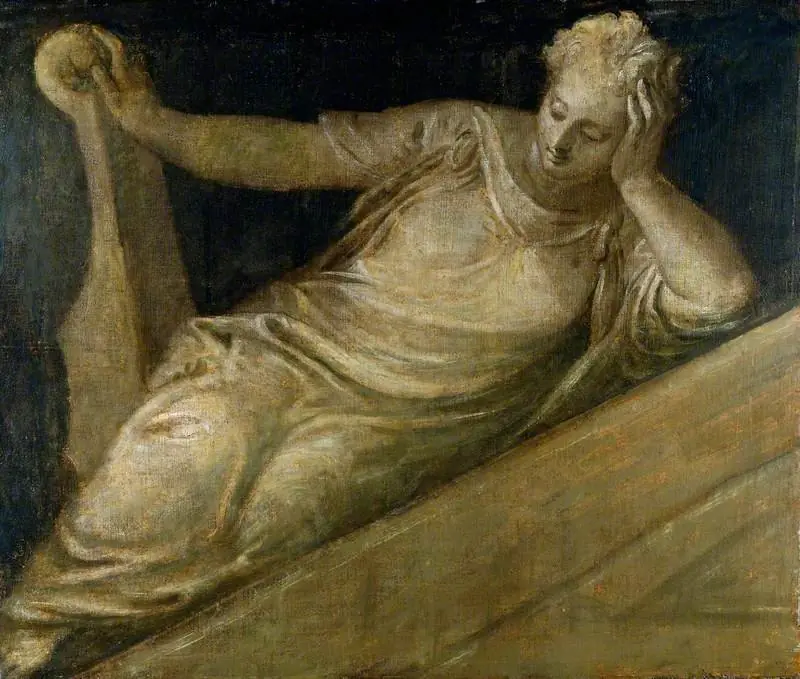 An Allegorical Female Figure: Music (?)
 An Allegorical Female Figure: Poetry (?)
 St Bartholomew
 The Velvet Cloak
 Vrouwenfiguur, misschien Erminia uit Torquato Tasso, La Gerusalemme Liberata
 The Sibyl
 Massacre of the Innocents