Artwork
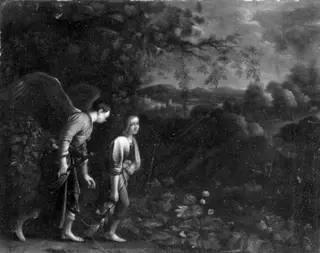
Tobias and the Angel
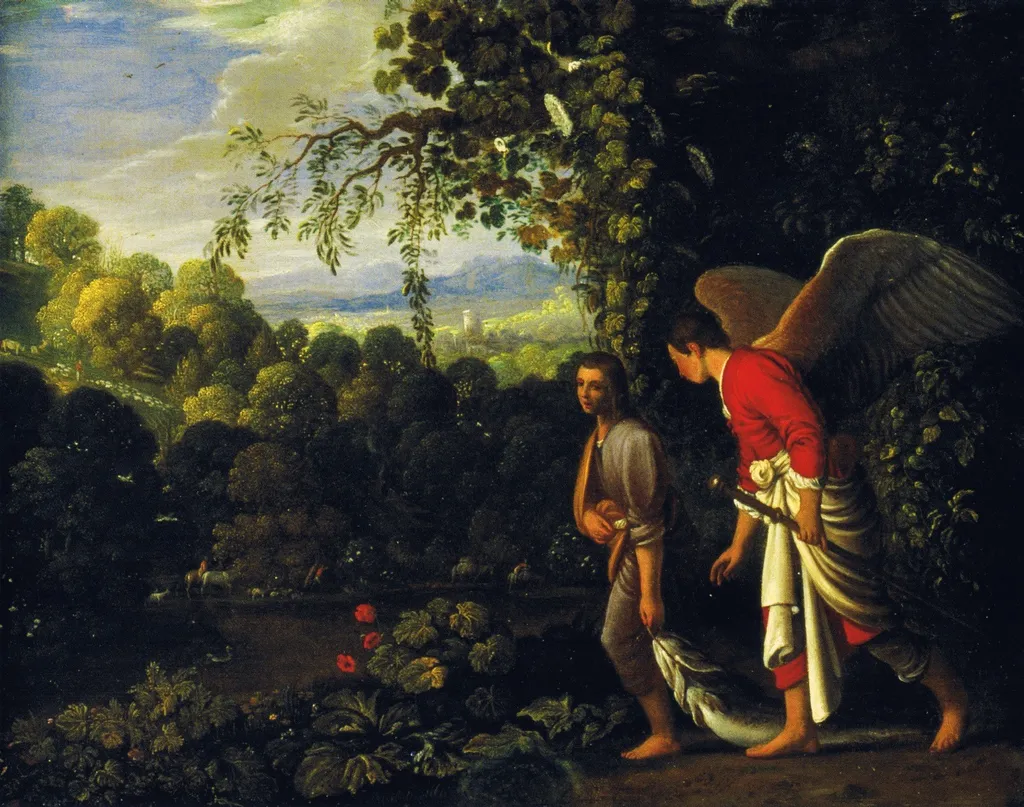
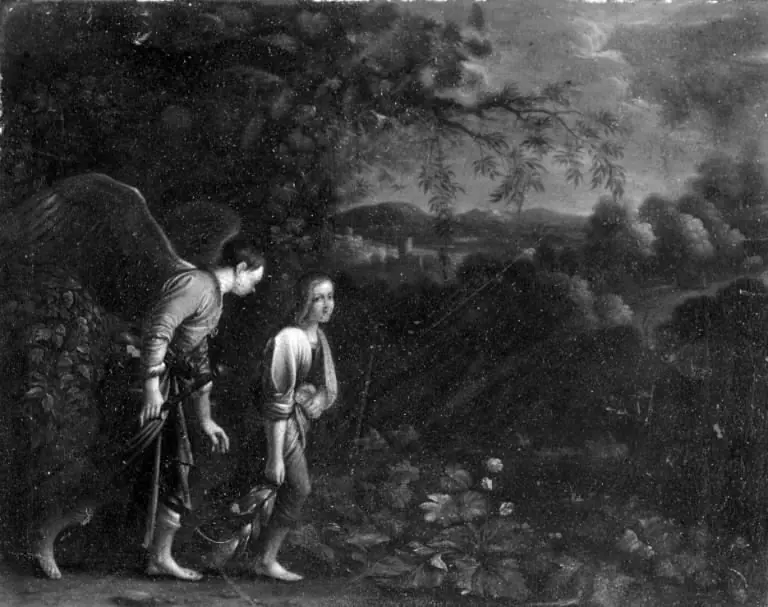
Tobias and the Angel is an oil painting. It dates from 1609 and is held in the collection of the Statens Museum for Kunst.
About this work
Subject & Meaning
The angel is understood to be the archangel Raphael, identifiable through his role as Tobias's divine companion and protector in the story.
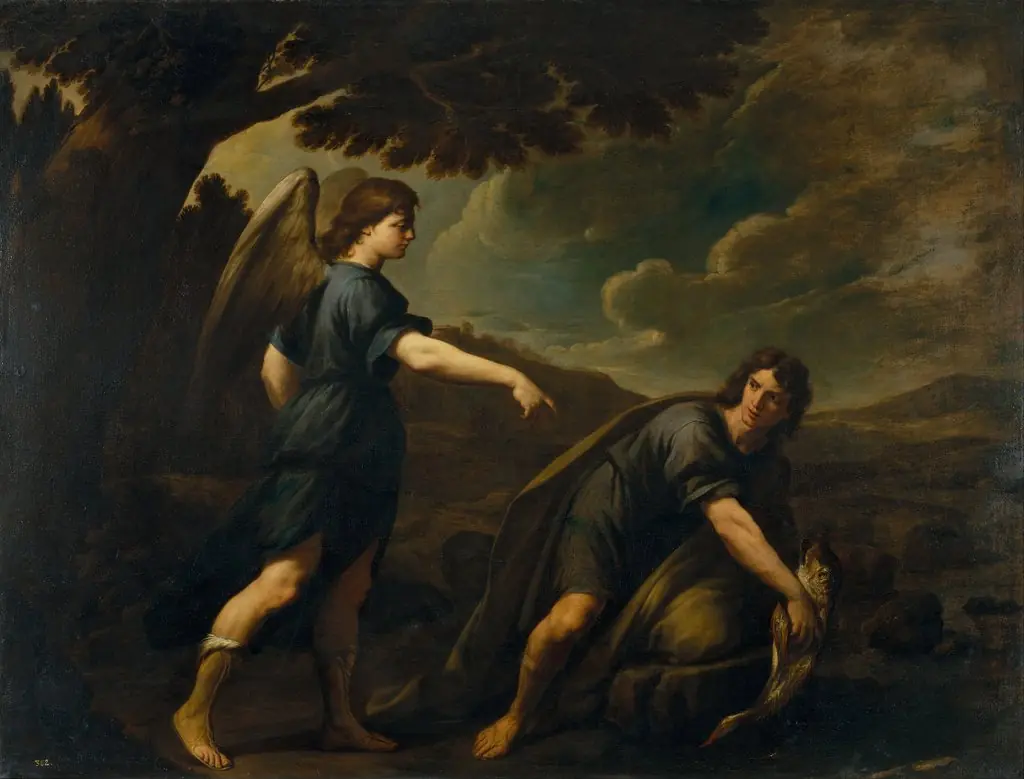
The painting portrays the Apocryphal narrative of Tobias guided and protected by a youthful angel, a scene drawn from the Book of Tobit and frequently rendered in Baroque religious art. The angel is understood to be the archangel Raphael, identifiable through his role as Tobias's divine companion and protector in the story. This subject embodies themes of divine guidance, filial obedience, and the intervention of heavenly beings in human affairs, reflecting Counter-Reformation ideals of spiritual vigilance and moral instruction.
Technique & Style
The work is executed in oil paint on a copper support, a technique that was employed by Adam Elsheimer and later followed by artists such as Rembrandt. The painting measures 21 cm in height and 27 cm in width and depicts the biblical scene of Tobias and the Angel. Its formal qualities include delicate modeling of light and a softly rendered angelic figure that interacts with the youthful Tobias, reflecting the influence of Elsheimer’s compositional intimacy.
The surface shows signs of handling consistent with its age, though the condition remains stable within the museum’s conservation records.
History & Provenance
The painting is held by the Statens Museum for Kunst, which is listed as both its collection and its location. It is catalogued as an oil-on-copper work dating to 1609, measuring 21 cm in height by 27 cm in width. No specific inventory or accession number is recorded in the available sources, and no exhibition history is documented beyond its presence in the museum's collection.
Context
According to scholarly assessment, the painting attributed to this artist demonstrates a close engagement with the compositional innovations of Adam Elsheimer, particularly in its handling of light and spatial depth. Executed in 1609 on copper, the work reflects the artist's mature synthesis of Northern European detail and Italianate landscape influence, situating it within the broader trajectory of religious painting in the early Baroque period. Its inclusion in a major national collection underscores its recognized significance within the canon of European religious art.
Overview
The work titled “Tobias and the Angel” is executed on copper and presents a tranquil outdoor setting. Two figures dominate the composition: a winged figure in a red‑white garment and a second, clothed in gray, standing beside him. A distant horizon of trees, rolling hills and a cloud‑dotted blue sky frames the scene, while a fish held by the winged figure adds a narrative detail.
Artist & collection