Artwork
Tuti-Nama (Tales of a Parrot)
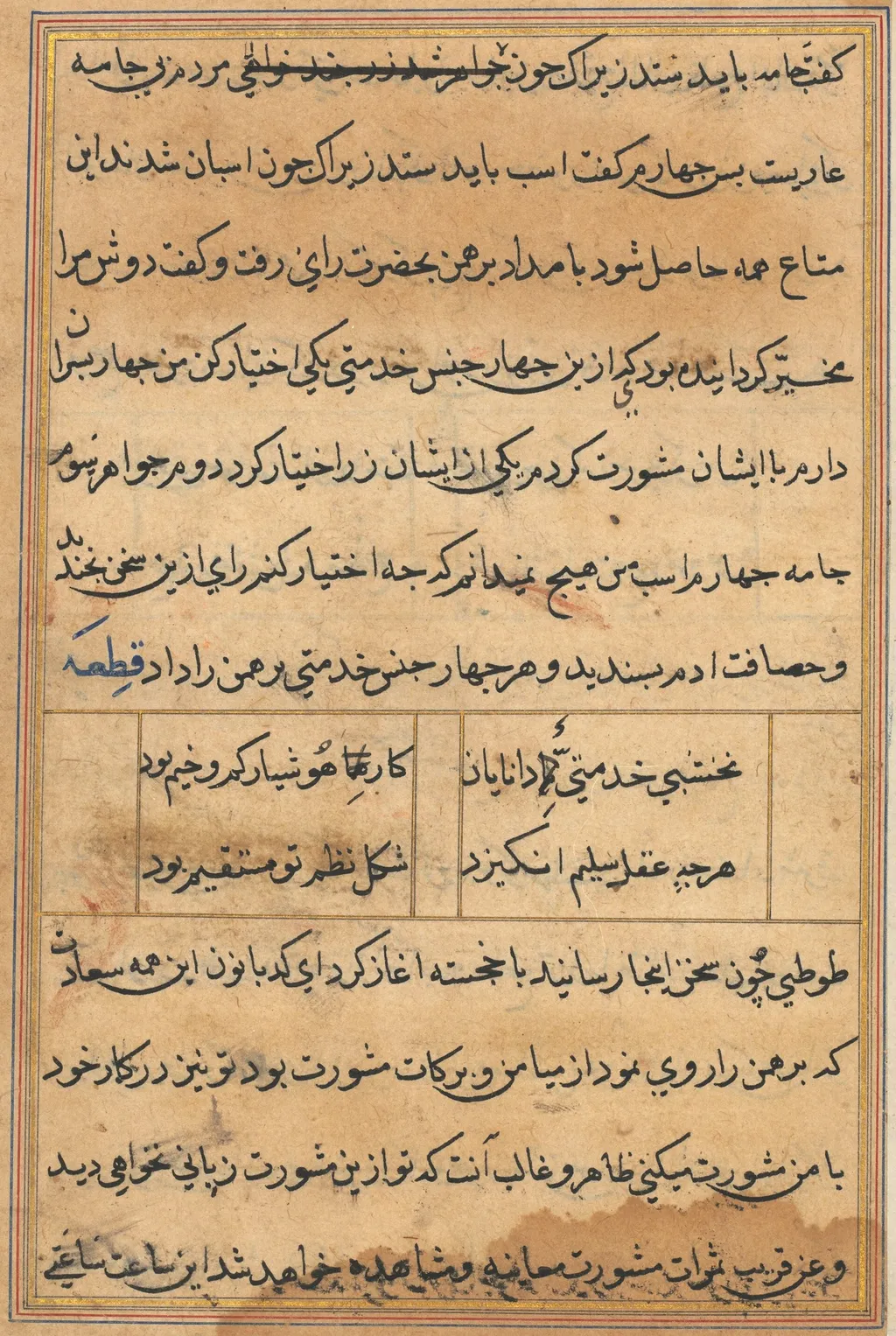
Tuti-Nama (Tales of a Parrot) is an unspecified painting. It dates from 1560 and is held in the collection of the Cleveland Museum of Art. Tuti‑Nama, meaning “Tales of a Parrot,” is a manuscript page composed entirely of black ink calligraphy.
About this work
History & Provenance
The Tuti-Nama is held in the collection of the Cleveland Museum of Art, where it is recorded as inventory number 1962.279.94.a. The work dates to circa 1560 and is associated with the Mughal Empire. As of the documented records, no exhibition history beyond its permanent collection display in Cleveland is specified in the cited sources.
Context
The work is held in the Cleveland Museum of Art collection, where it is cataloged as an example of Mughal painting from circa 1560.
The miniature from Tuti-Nama (Tales of a Parrot) exemplifies Mughal book arts of the 1560s, reflecting the imperial patronage that shaped courtly visual culture in the Mughal Empire. Its composition and narrative style align with scholarly studies of Mughal manuscript production, situating it within the broader trajectory of South Asian artistic traditions. The work is held in the Cleveland Museum of Art collection, where it is cataloged as an example of Mughal painting from circa 1560.
Legacy
The manuscript's vivid compositions and narrative sequences influenced later miniature painting traditions across Persian and Indian courts, shaping visual storytelling techniques in subsequent works.
Its legacy is documented through its inclusion in major museum collections such as the Cleveland Museum of Art, which preserves the manuscript and highlights its artistic significance.
The work's technical innovations in perspective and figure rendering have been cited in scholarly studies of Mughal artistic developments.
Overview
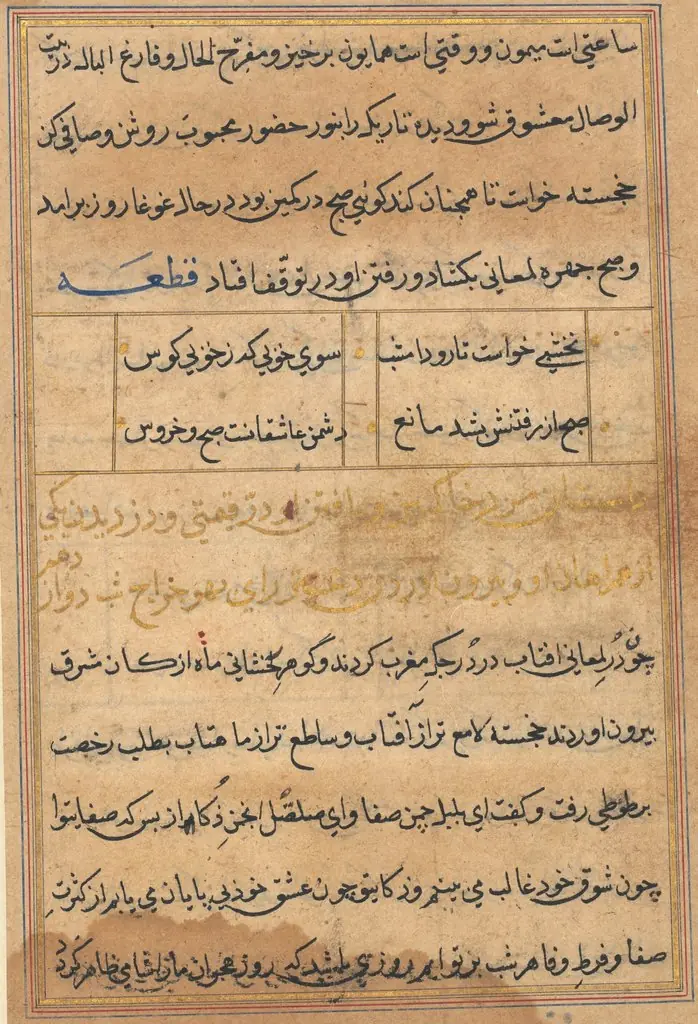
Tuti‑Nama, meaning “Tales of a Parrot,” is a manuscript page composed entirely of black ink calligraphy. The text is arranged in orderly rows within a light brown border, and occasional faint red and blue marks serve as decorative accents. No pictorial illustrations accompany the script, emphasizing the written narrative as the visual focus of the page.
Subject & Meaning
The manuscript forms part of a larger work addressed to Prince Salim, suggesting a didactic or entertainment purpose tailored for a royal audience. While the exact story is not depicted, the title implies a fable or anecdote involving a parrot, a common motif in Persian literature used to convey moral or philosophical lessons.
Technique & Style
The calligraphy is executed in a precise, flowing hand, with uniform black ink strokes that vary subtly in length to create visual rhythm. The faint red and blue touches function as marginal highlights, a typical feature in Persian manuscripts that adds a modest chromatic contrast without detracting from the textual emphasis.
Artist & collection

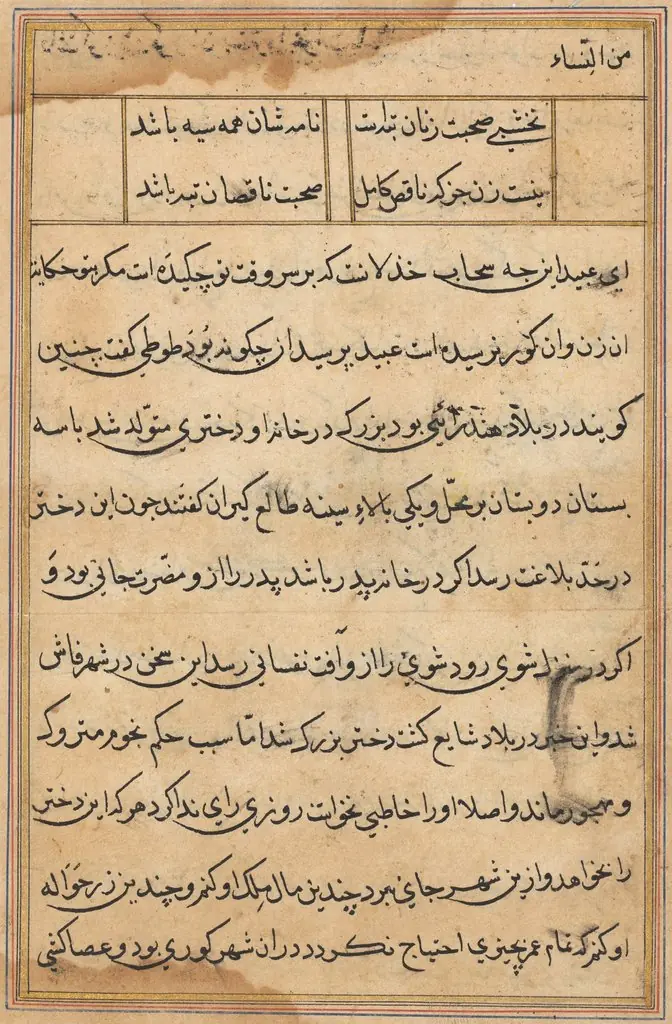 Page from Tales of a Parrot (Tuti-nama): text page
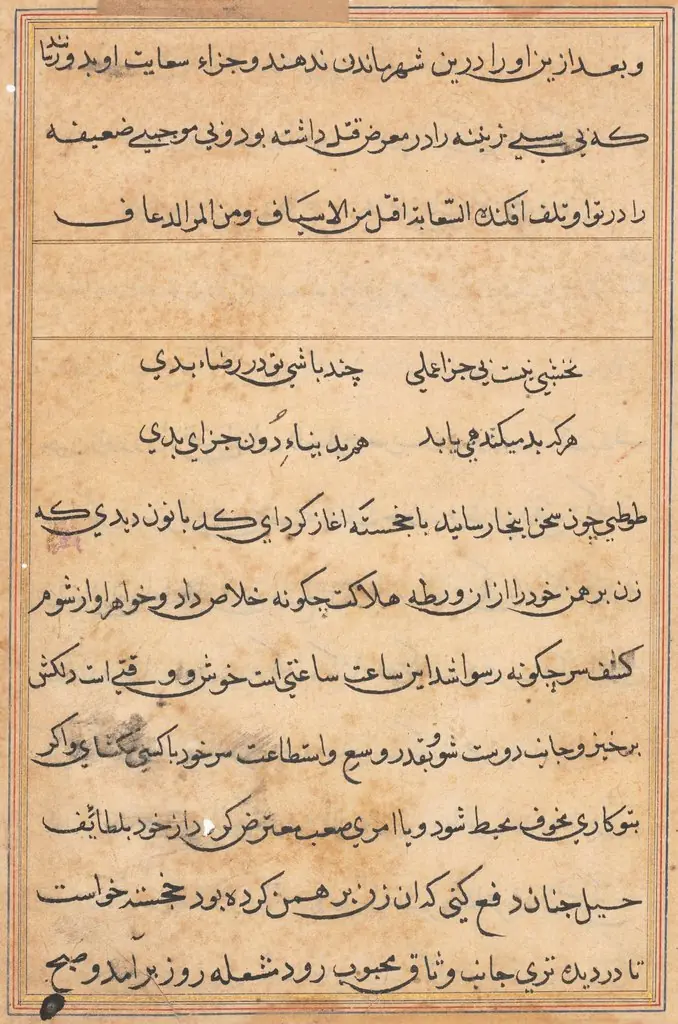 Page from Tales of a Parrot (Tuti-nama): text page
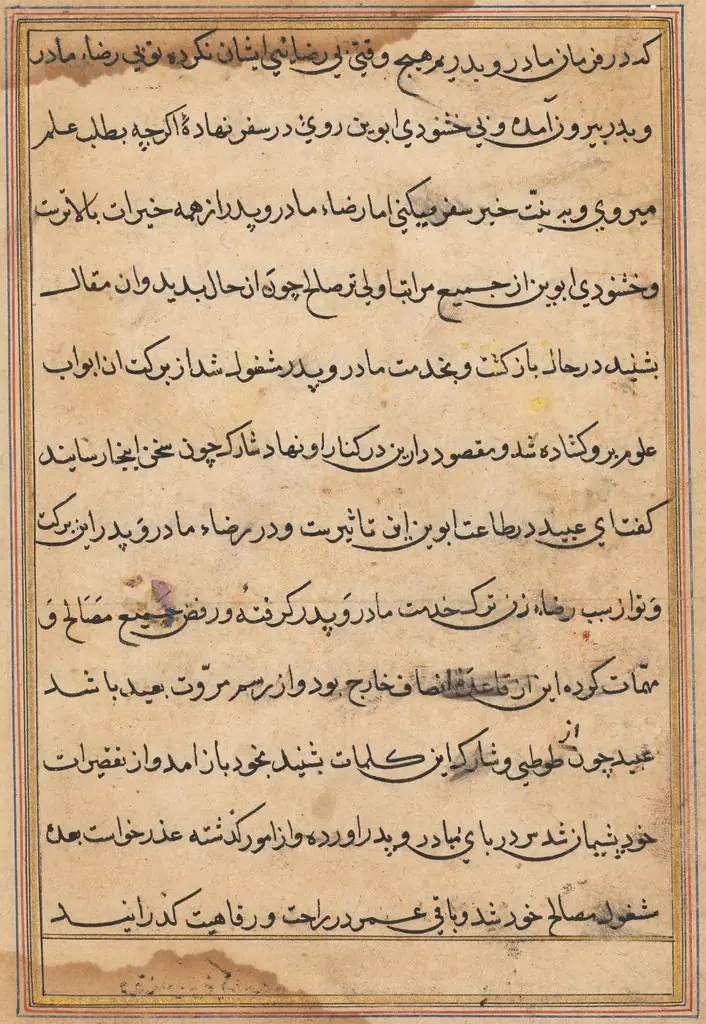 Page from Tales of a Parrot (Tuti-nama): text page
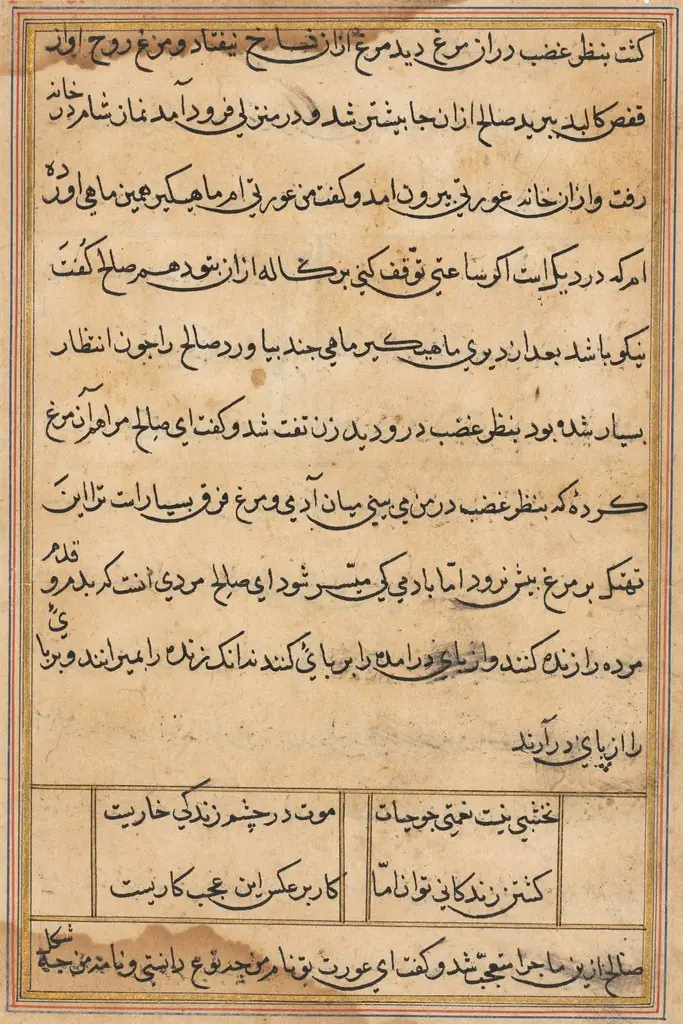 Page from Tales of a Parrot (Tuti-nama): text page
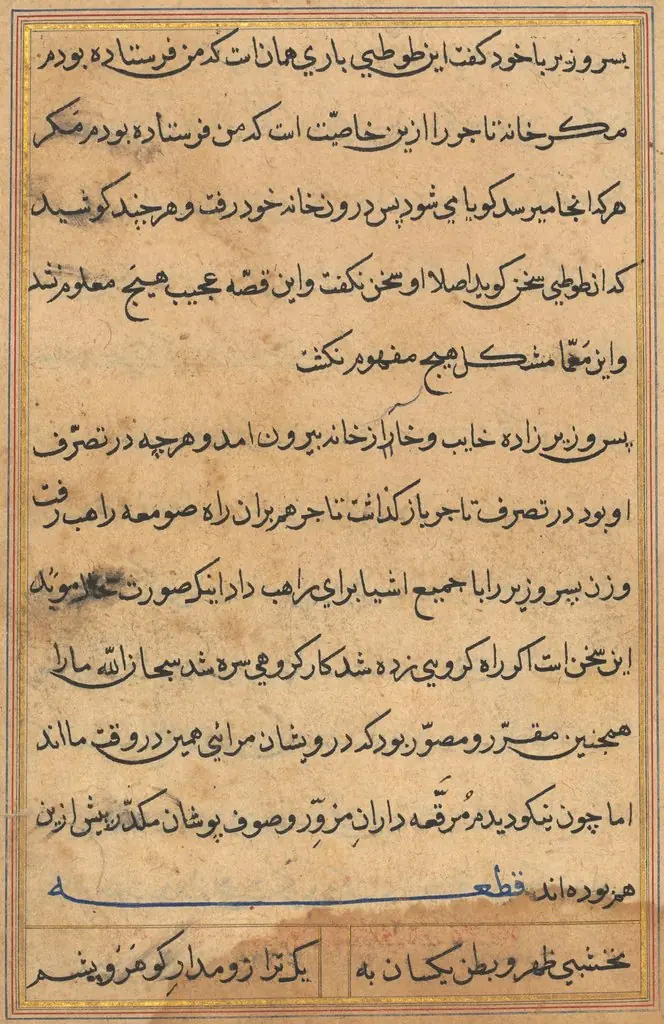 Page from Tales of a Parrot (Tuti-nama): text page
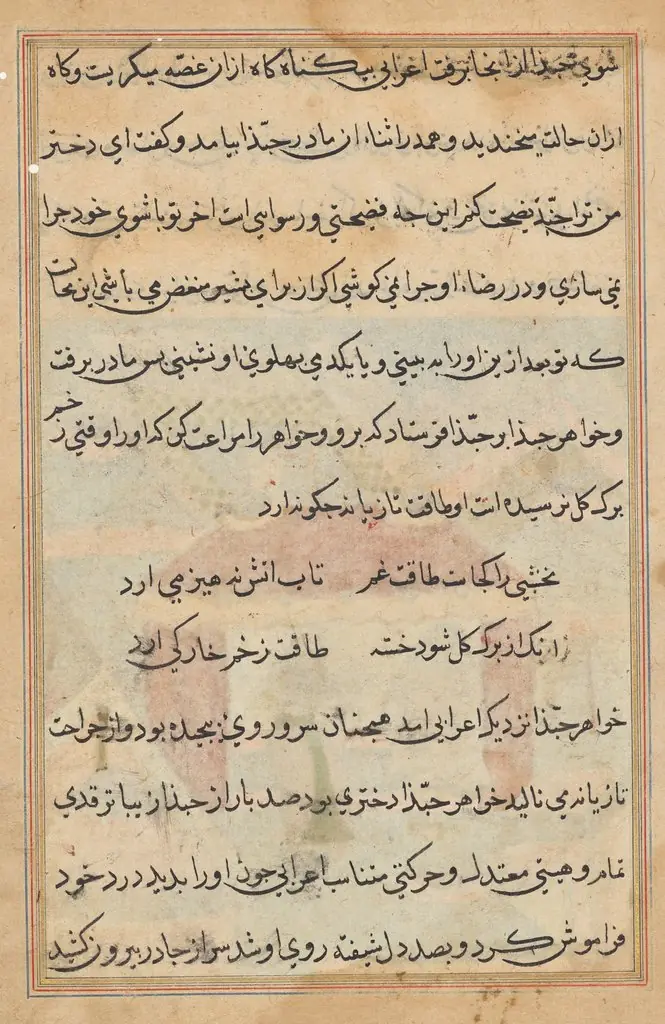 Page from Tales of a Parrot (Tuti-nama): text page
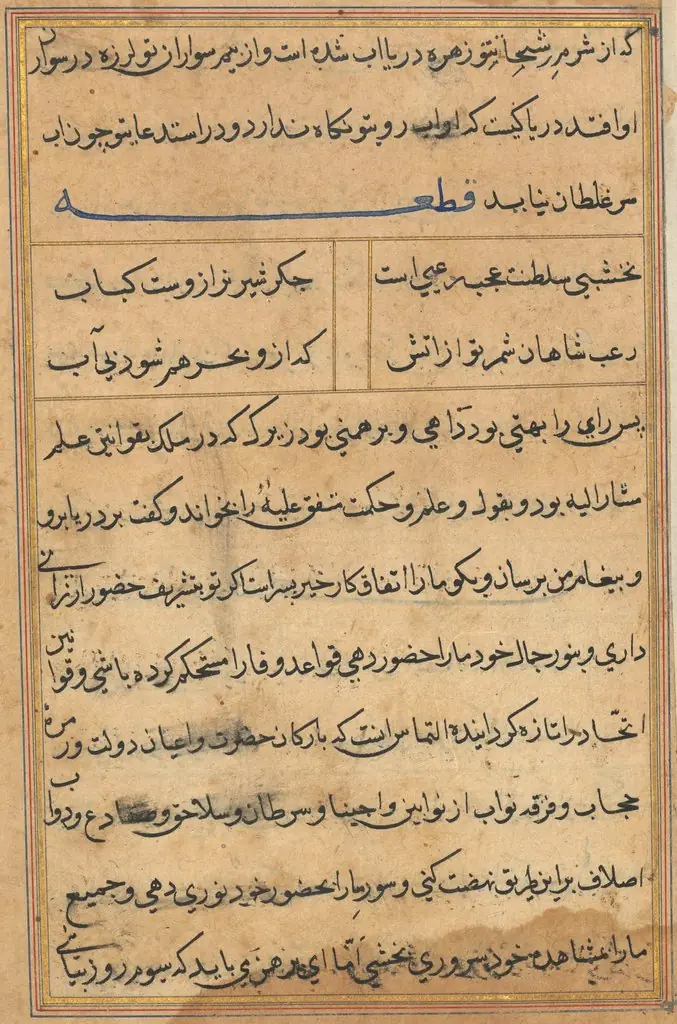 Page from Tales of a Parrot (Tuti-nama): text page
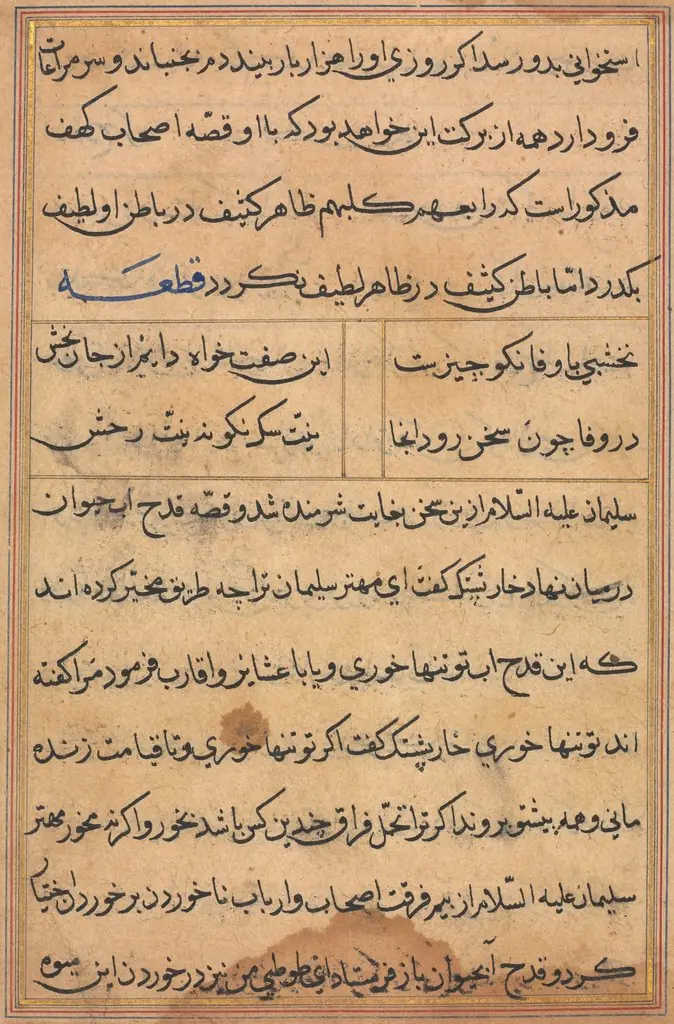 Page from Tales of a Parrot (Tuti-nama): text page
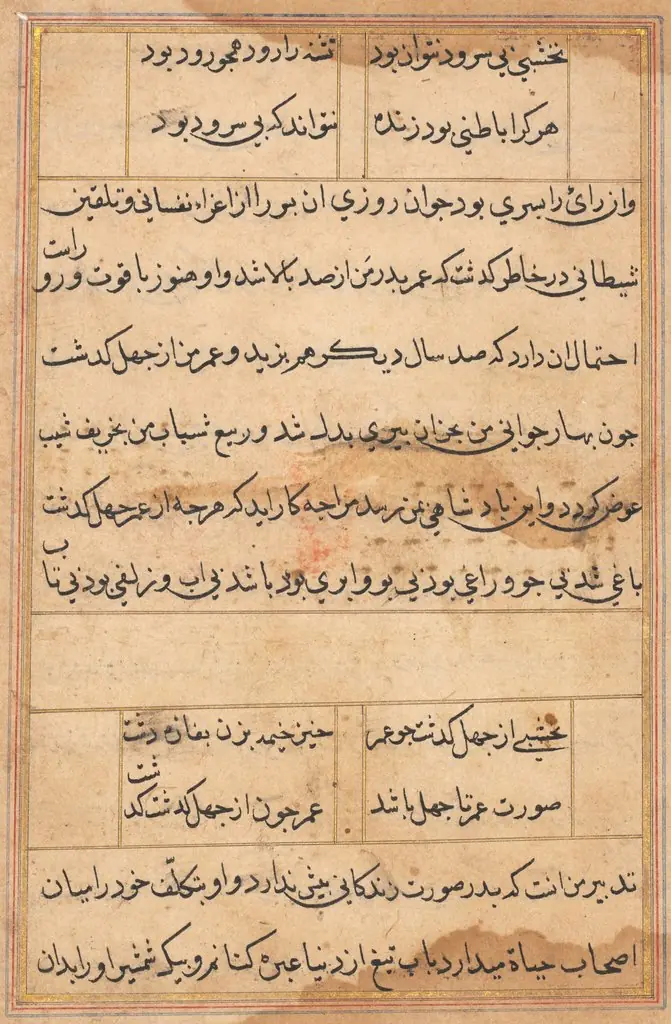 Page from Tales of a Parrot (Tuti-nama): text page
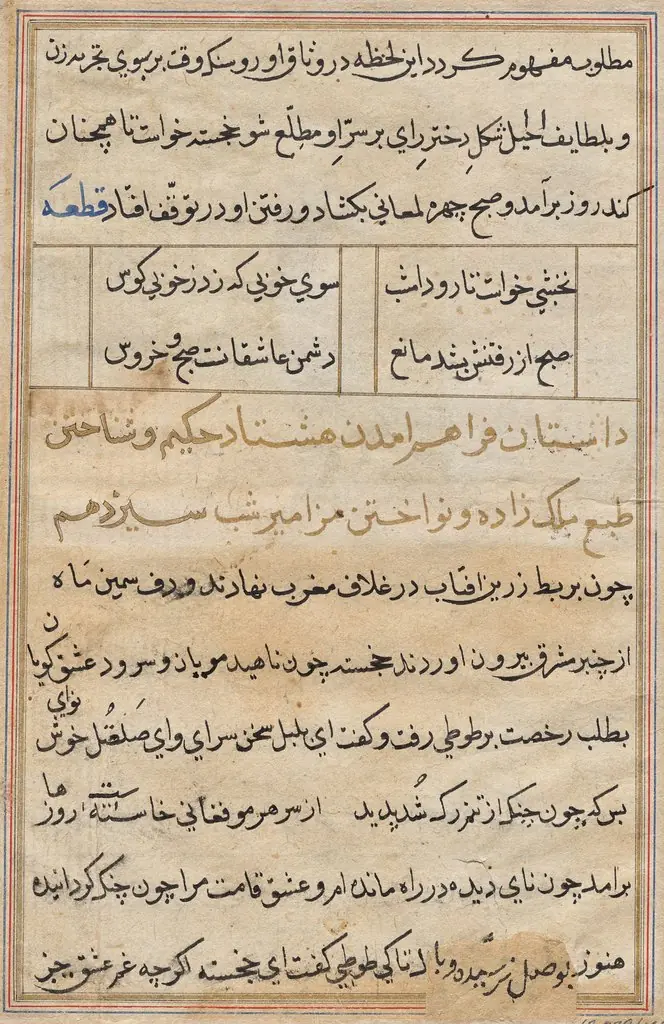 Page from Tales of a Parrot (Tuti-nama): text page