Artwork
Page from Tales of a Parrot (Tuti-nama): text page
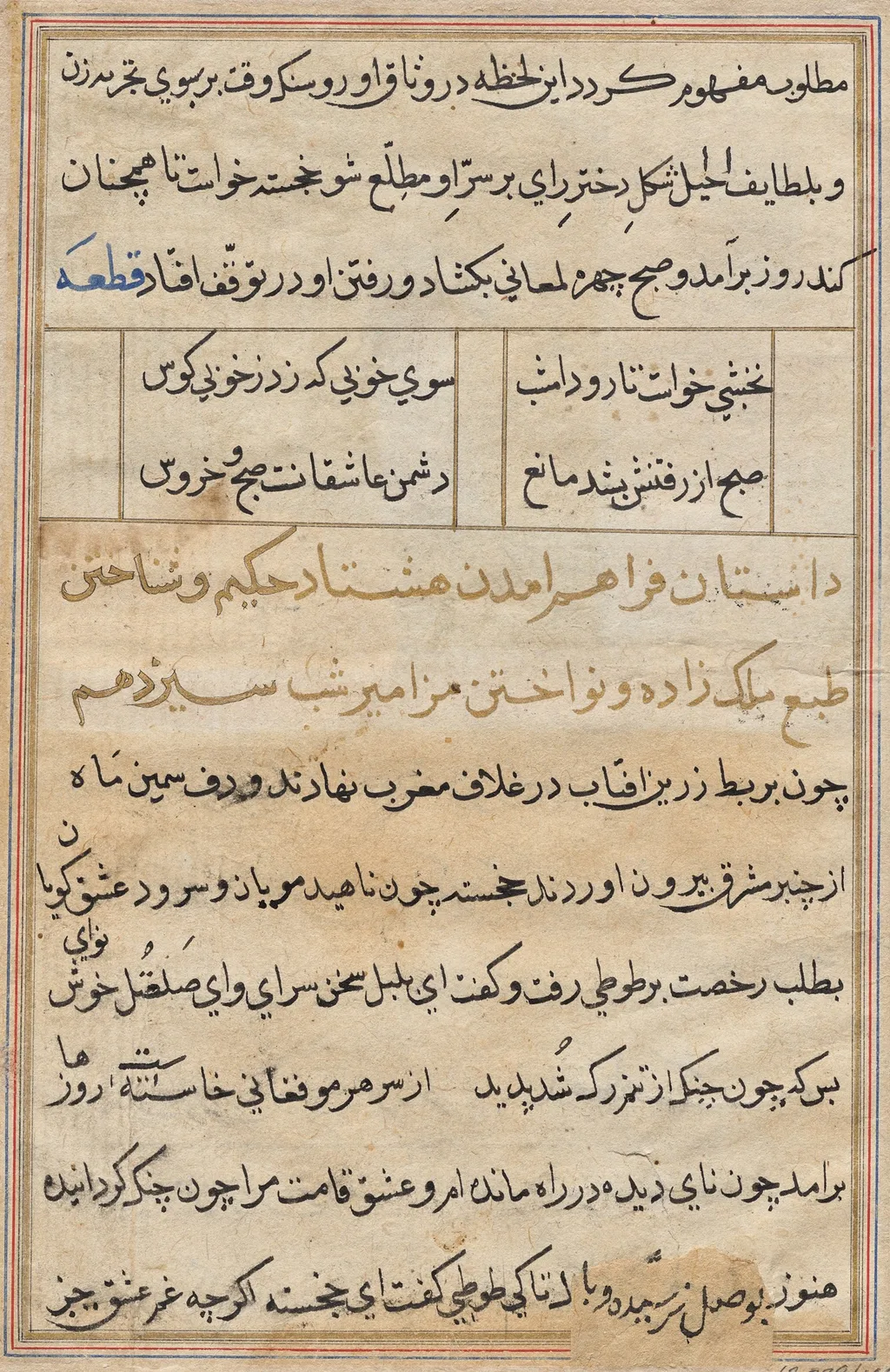
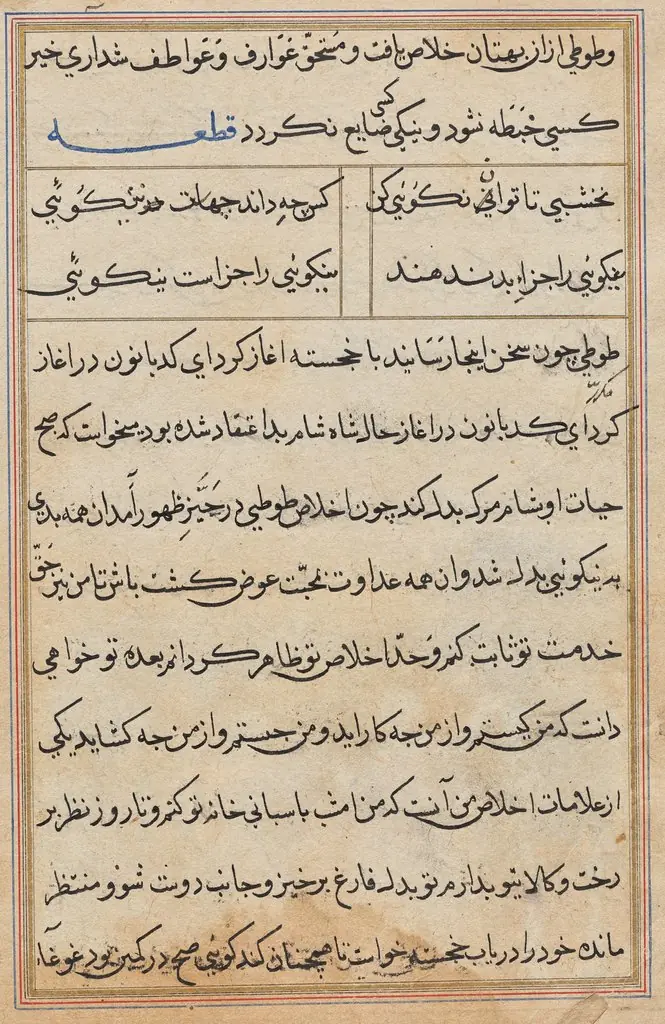
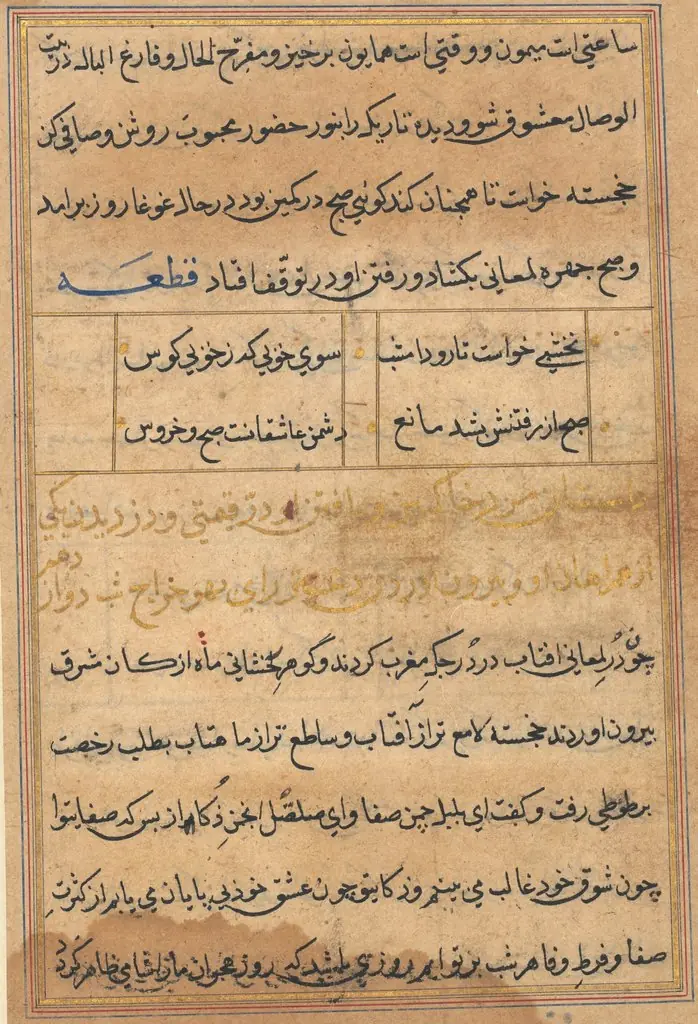
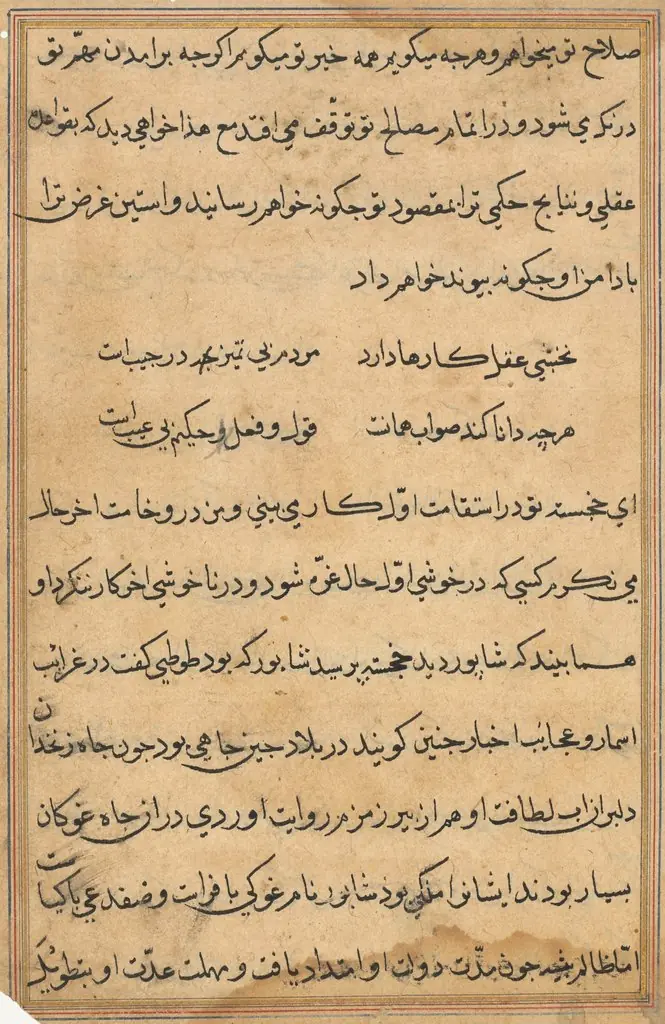
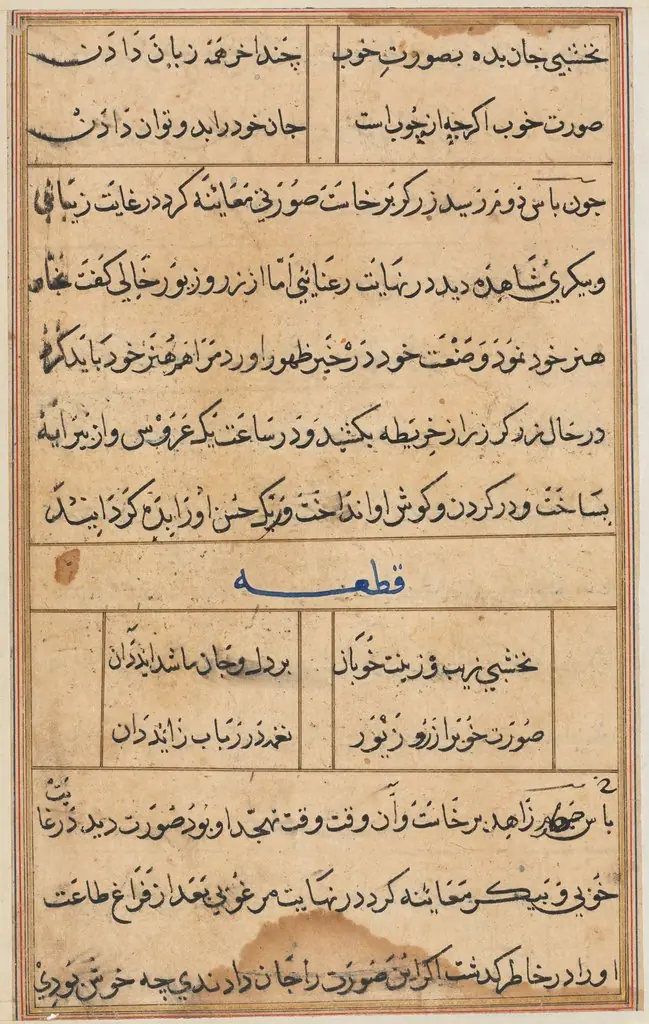
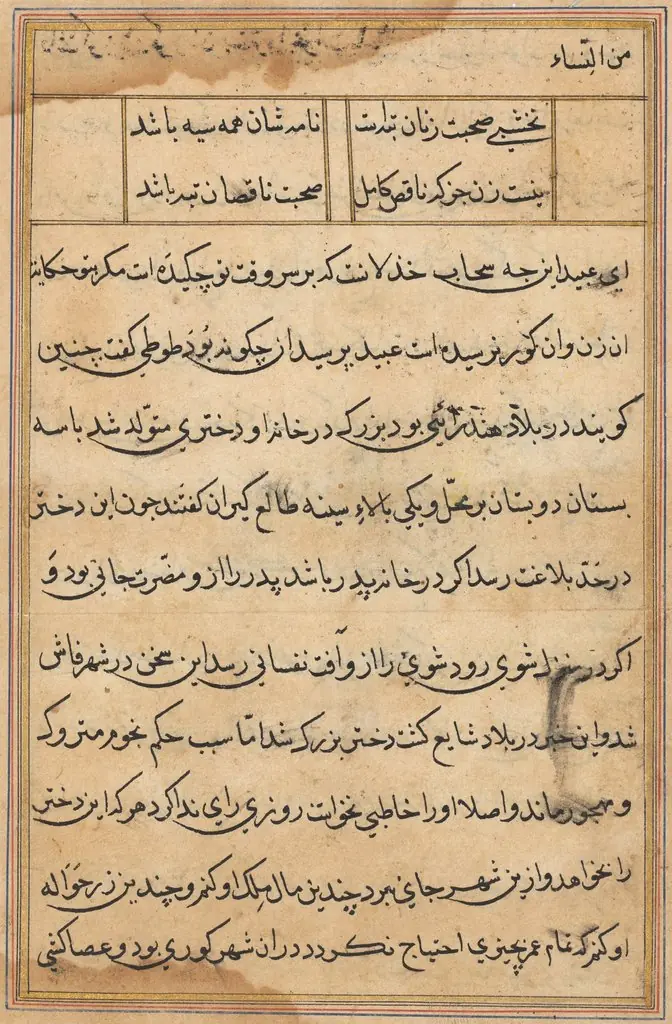
Page from Tales of a Parrot (Tuti-nama): text page is an unspecified painting. It dates from 1560 and is held in the collection of the Cleveland Museum of Art. The object is a single folio from the Persian illustrated manuscript known as the Tuti‑nama or Tales of a Parrot.
About this work
History & Provenance
The provided sources confirm its current location and inventory details but do not record any specific exhibition history for this particular folio.
The text page from the Tales of a Parrot (Tuti-nama) was created in 1560 within the Mughal Empire. The work is attributed to an unknown artist. It currently resides in the collection of the Cleveland Museum of Art, where it is cataloged under the accession number 1962.279.102.a.
The specific commission details and the full chain of ownership prior to its acquisition by the museum are not detailed in the available records.
The text page from the Tales of a Parrot (Tuti-nama), created in 1560 within the Mughal Empire, is held in the collection of the Cleveland Museum of Art in Cleveland. The work is cataloged under the accession number 1962.279.102.a. While the specific artist remains unknown, the piece is recognized as a painting from the mid-16th century.
The provided sources confirm its current location and inventory details but do not record any specific exhibition history for this particular folio.
Overview
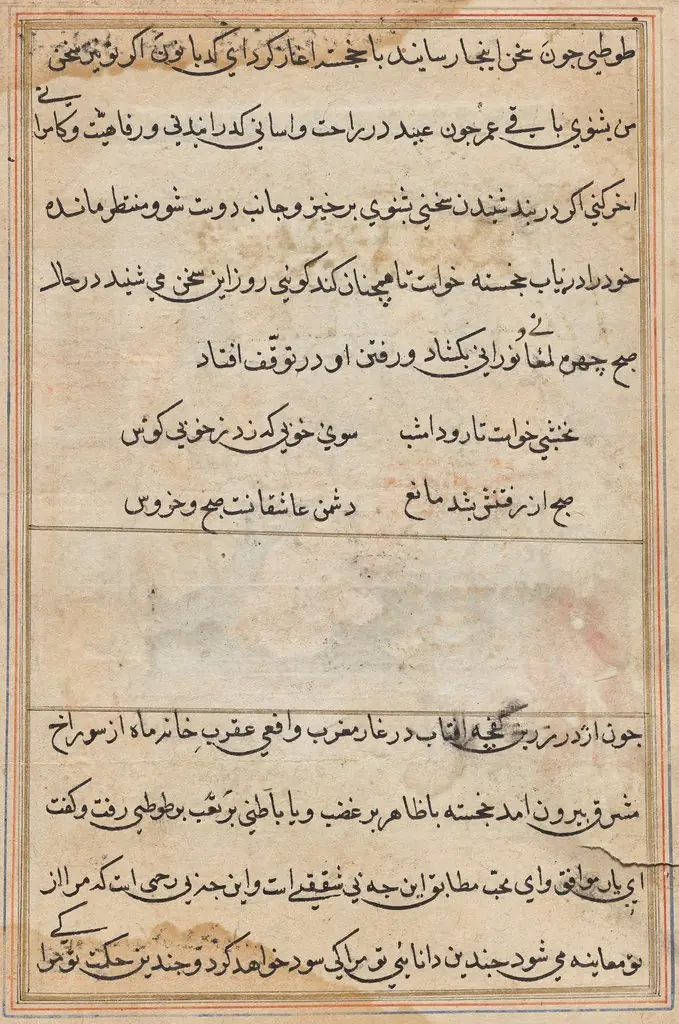
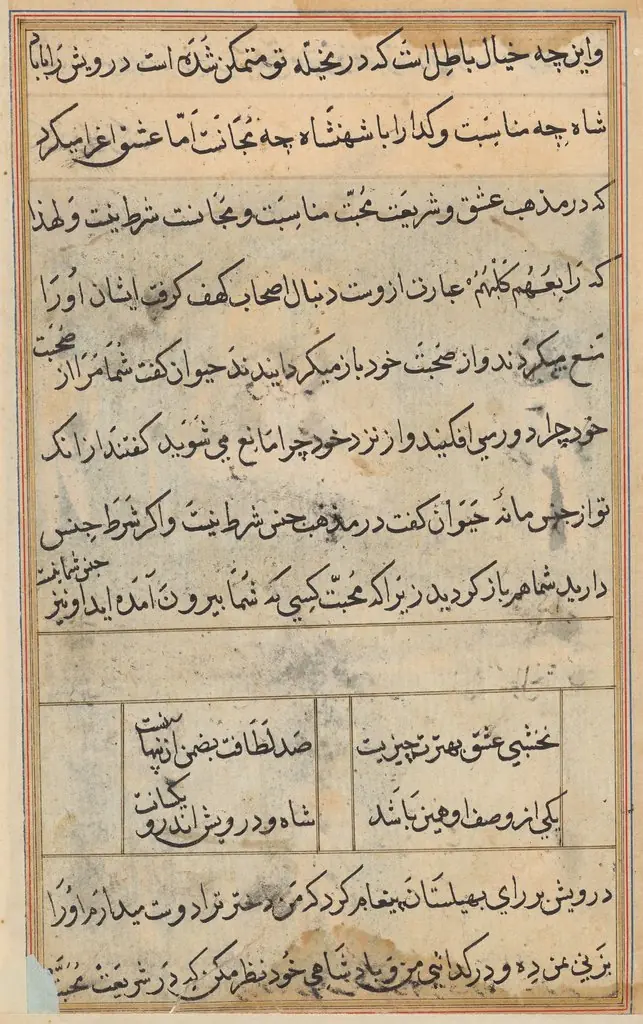
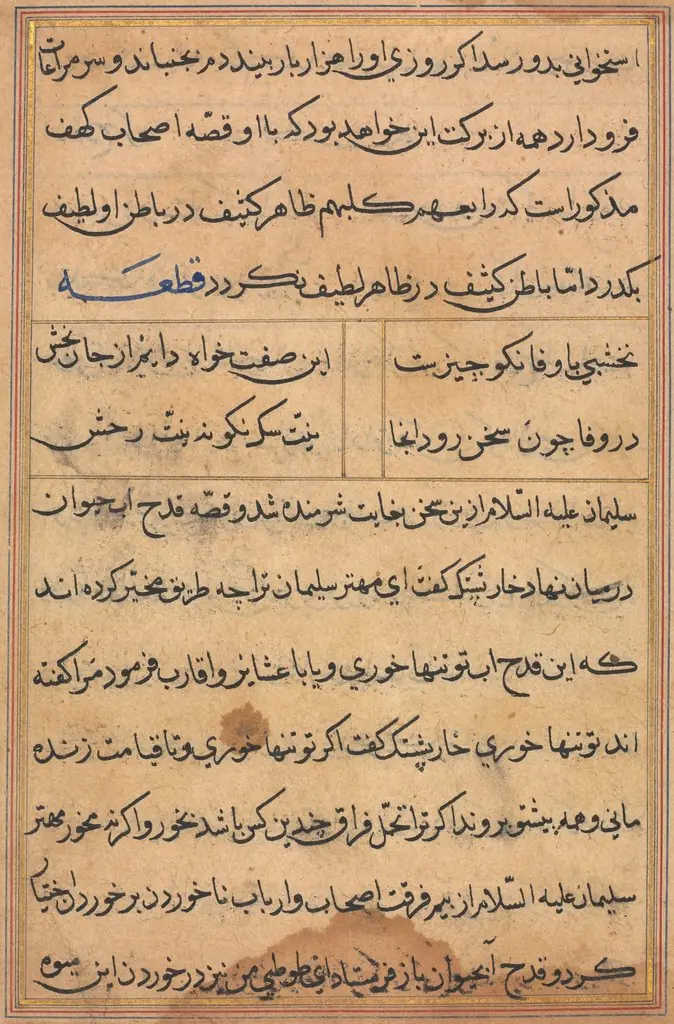
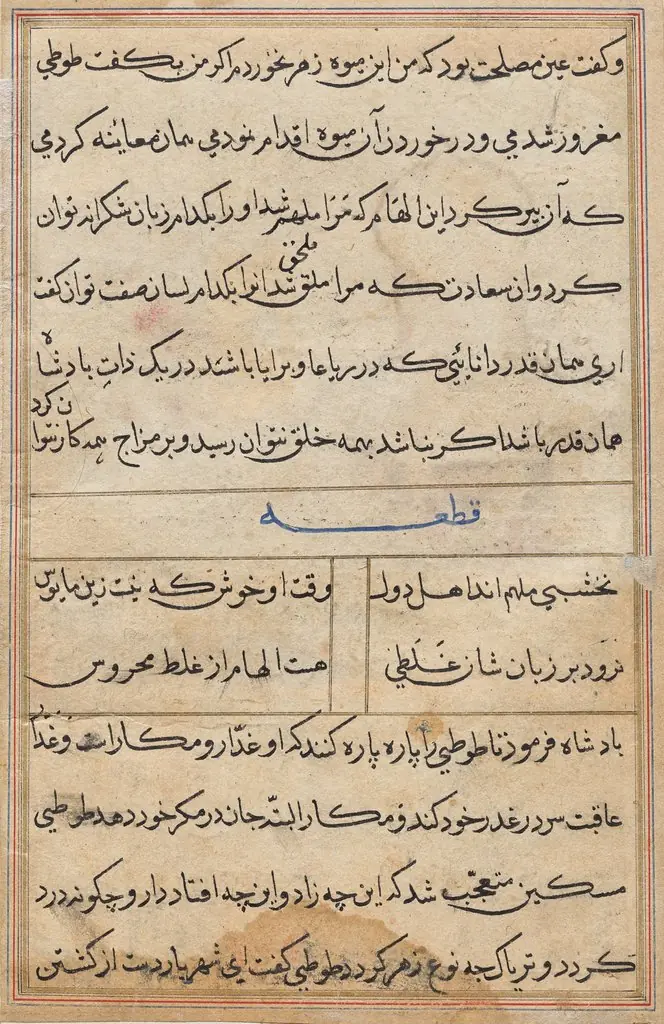
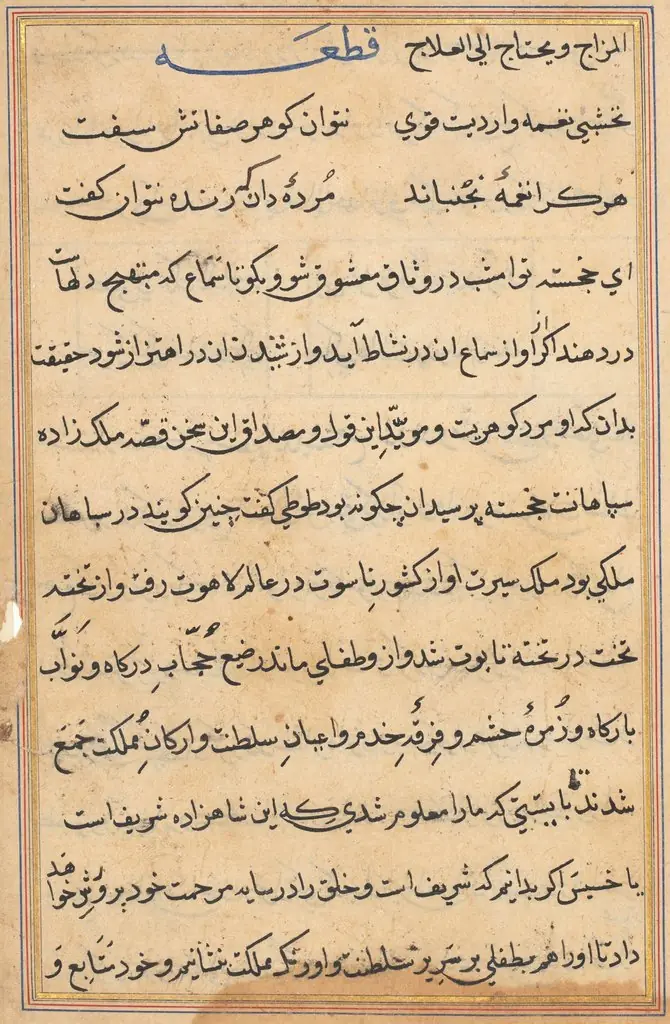
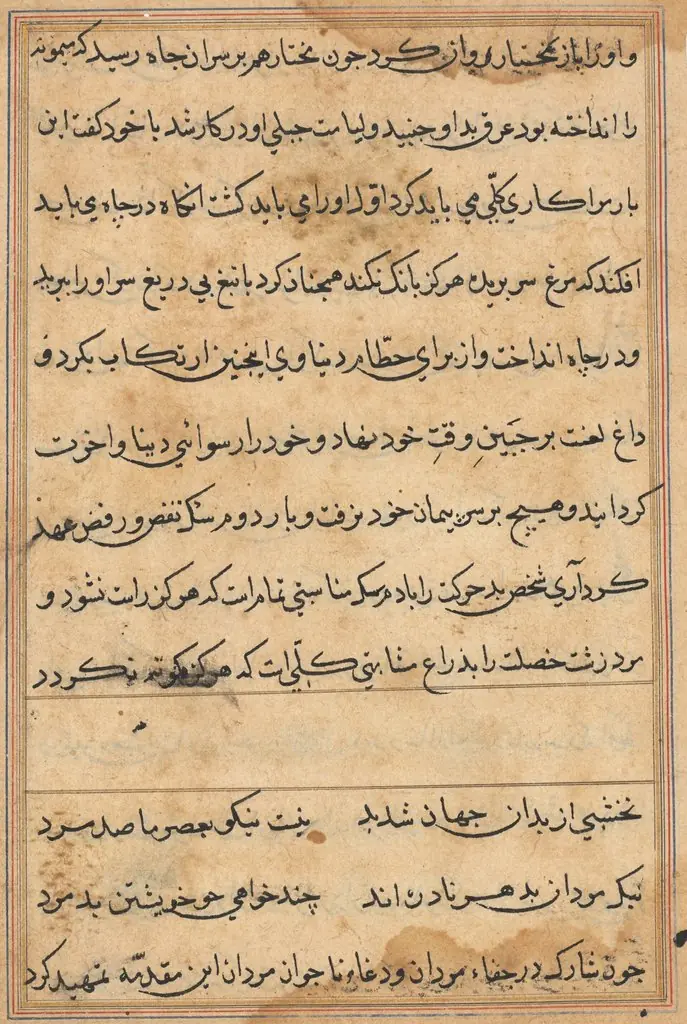
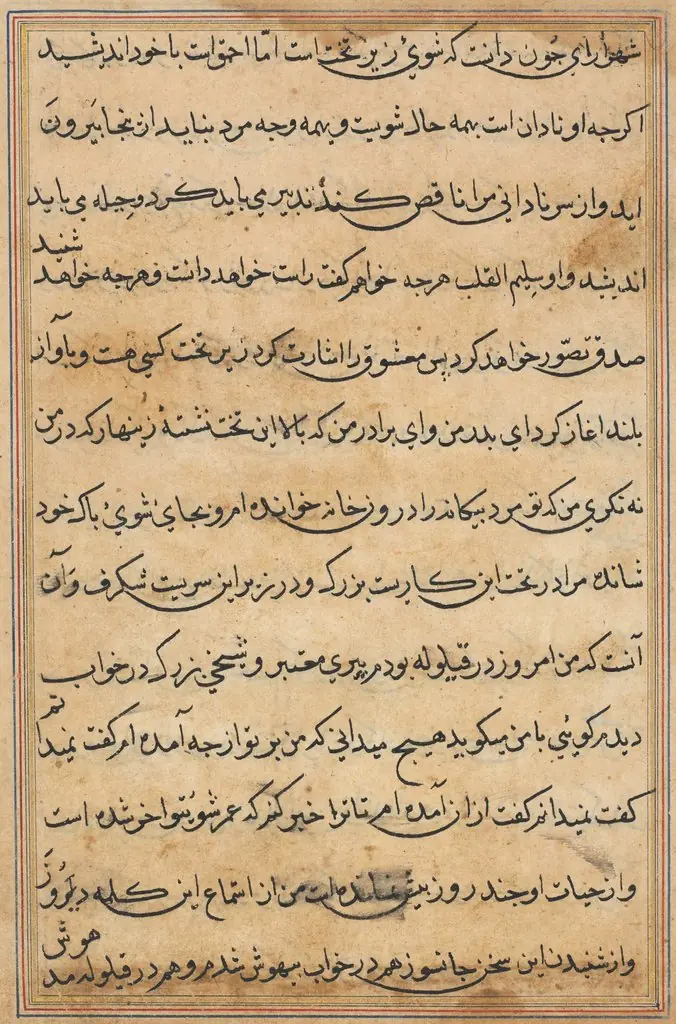
The object is a single folio from the Persian illustrated manuscript known as the Tuti‑nama or Tales of a Parrot. The page consists entirely of calligraphic text, arranged in a compact, columnar layout and bordered by a thin red line. The script is rendered in black ink, with occasional blue headings and red decorative accents that emphasize structural divisions.
Subject & Meaning
The written content presents a collection of moral anecdotes and fables traditionally attributed to a talking parrot, a literary device used in Persian storytelling to convey ethical lessons. Each narrative is intended for careful reading, reflecting the didactic purpose of the manuscript as a guide to proper conduct and courtly behavior.
Technique & Style
The calligraphy employs a dense, precise hand typical of 16th‑century Persian manuscript production, using iron‑gall black ink for the main body and indigo for headings. The red border and occasional red highlights are applied with a fine brush, creating a hand‑drawn frame that delineates the text without interrupting its flow. The layout balances readability with ornamental restraint.
Context
Manuscripts of the Tuti‑nama were often produced in royal workshops, where calligraphers and scribes collaborated to produce texts that combined literary merit with visual elegance. The emphasis on textual density rather than illustration reflects a tradition of didactic literature where the written word was paramount.
Artist & collection

- Page from Tales of a Parrot (Tuti-nama): text page
 Page from Tales of a Parrot (Tuti-nama): text page
 Page from Tales of a Parrot (Tuti-nama): text page
 Page from Tales of a Parrot (Tuti-nama): text page
 Tuti-Nama (Tales of a Parrot)
 Page from Tales of a Parrot (Tuti-nama): text page
 Page from Tales of a Parrot (Tuti-nama): text page
 Page from Tales of a Parrot (Tuti-nama): text page
 Page from Tales of a Parrot (Tuti-nama): text page
 Page from Tales of a Parrot (Tuti-nama): text page
 Page from Tales of a Parrot (Tuti-nama): text page
 Page from Tales of a Parrot (Tuti-nama): text page