Artwork
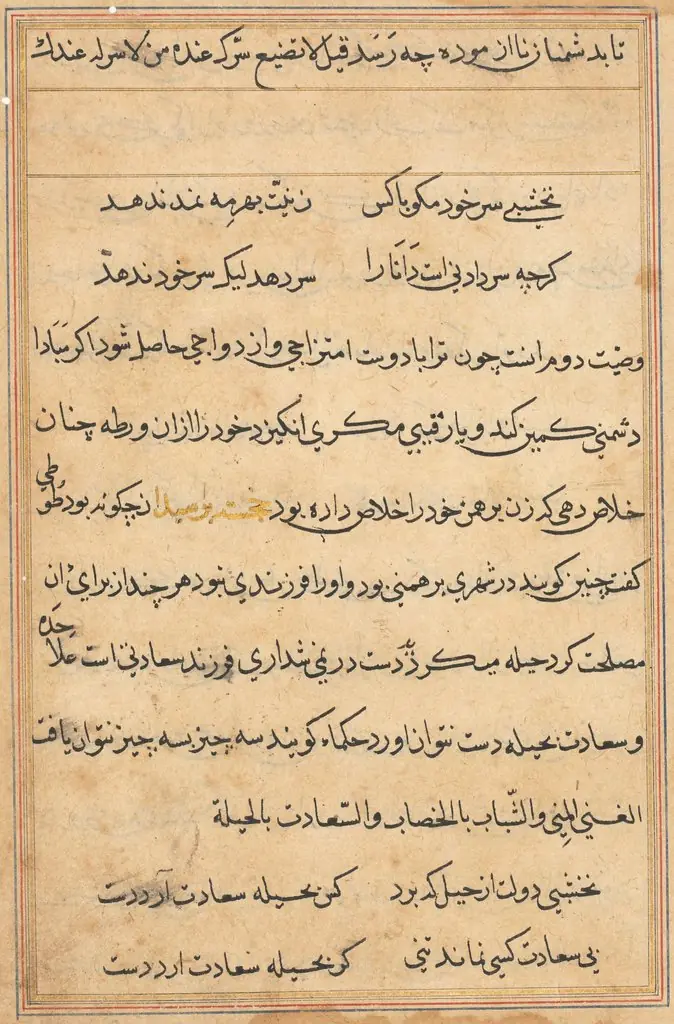
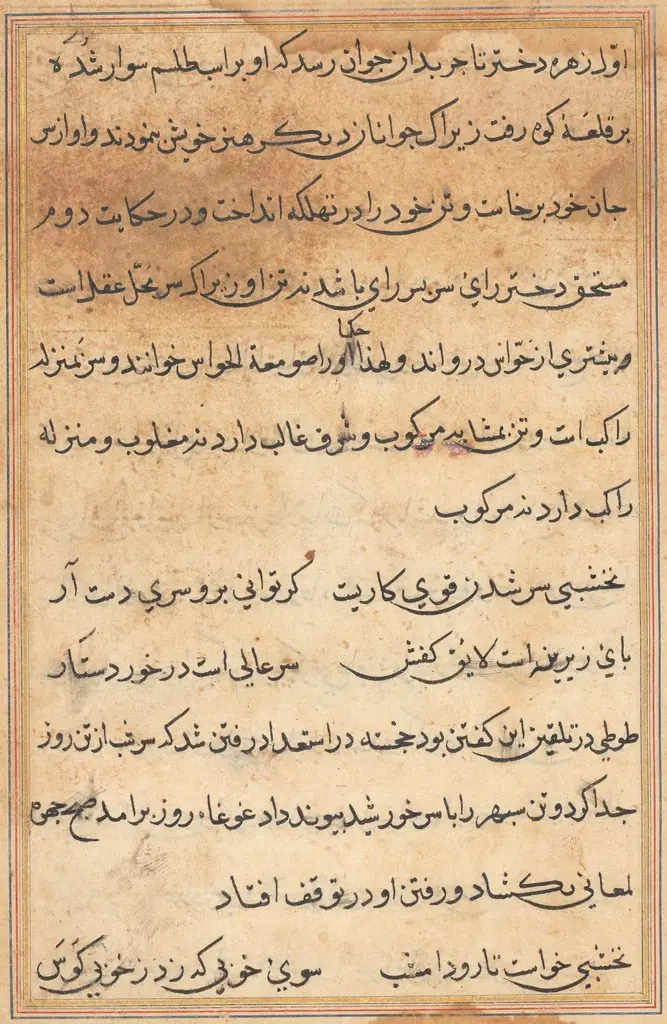
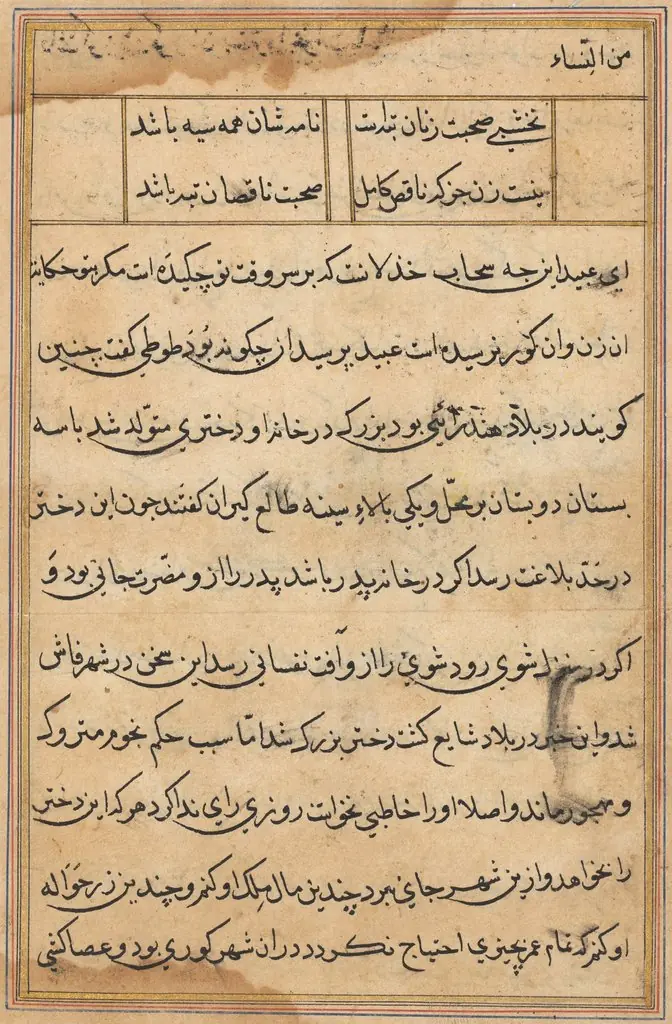
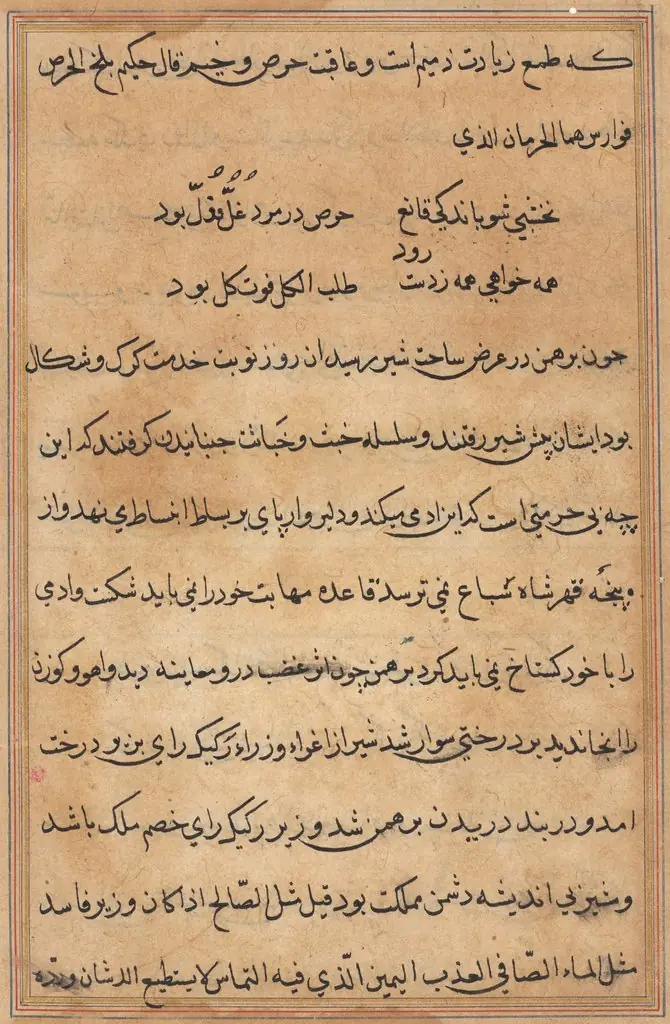
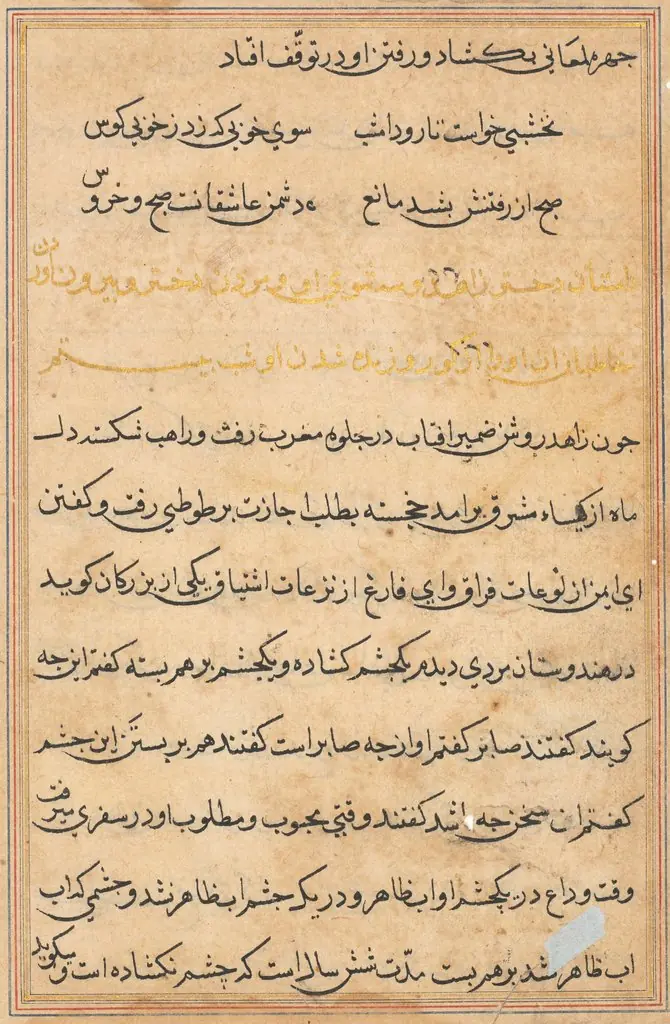
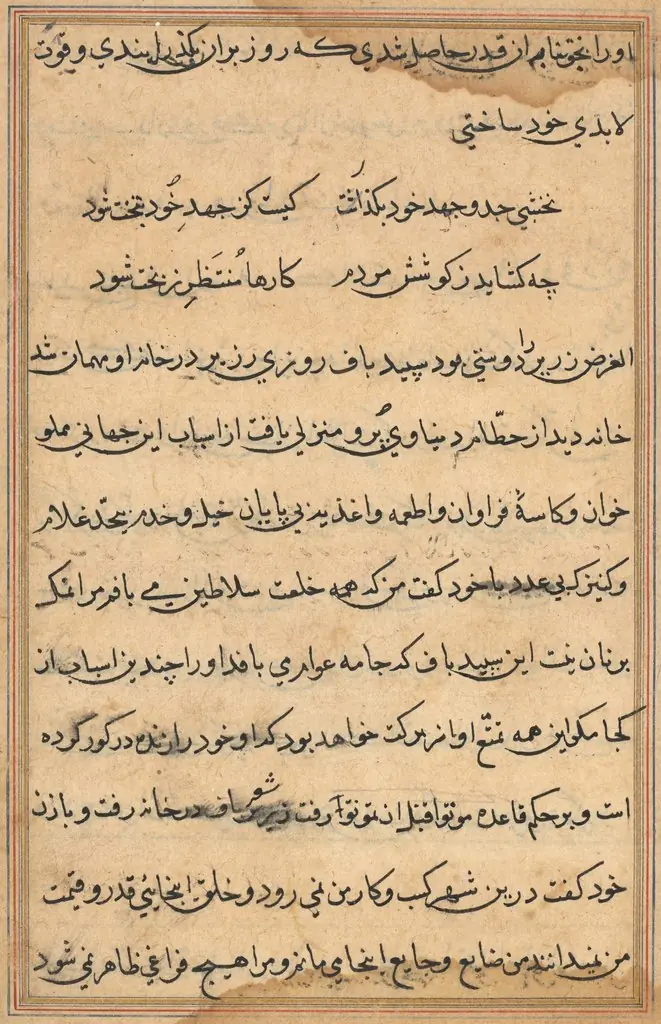
Page from Tales of a Parrot (Tuti-nama): text page
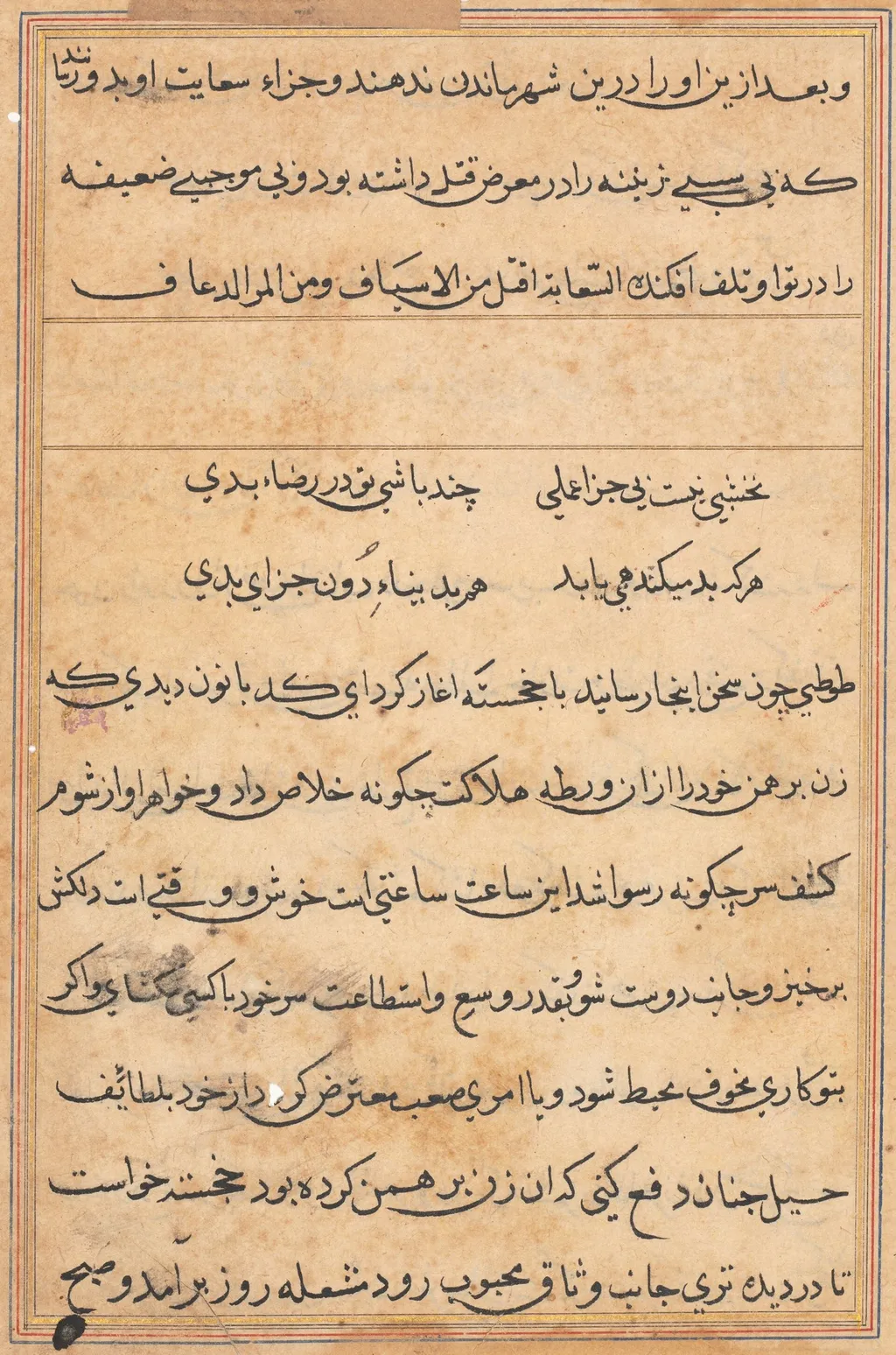
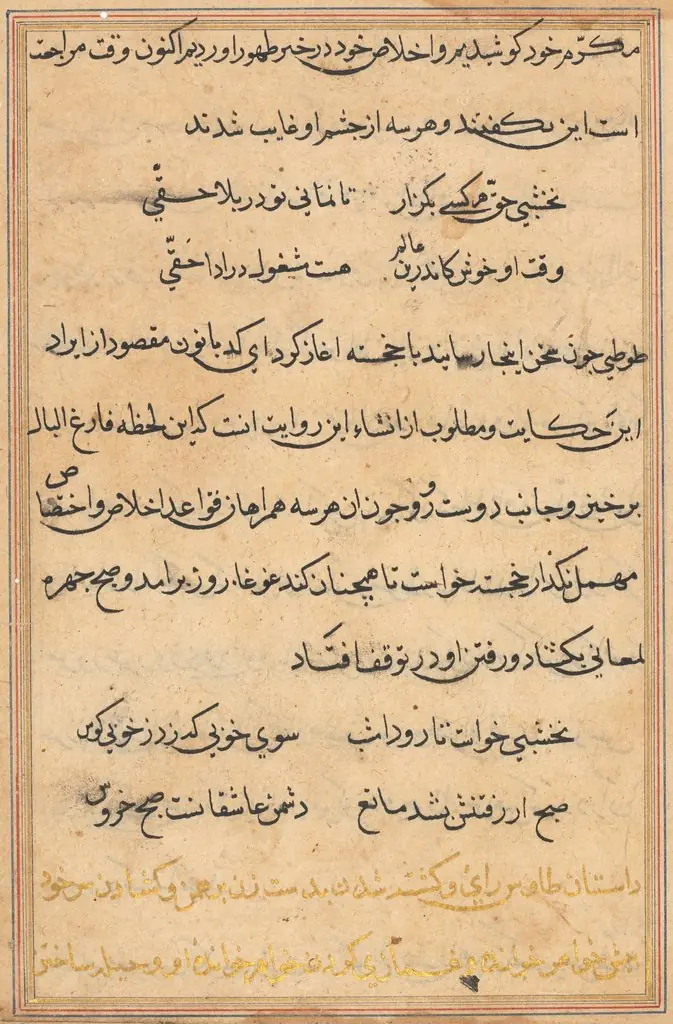
Page from Tales of a Parrot (Tuti-nama): text page is an unspecified painting. It dates from 1560 and is held in the collection of the Cleveland Museum of Art. The object is a single leaf from a historic manuscript titled Tales of a Parrot (Tuti‑nama).
About this work
History & Provenance
The work represents a surviving fragment of the larger illuminated manuscript tradition, serving as a textual page from the original volume.
This text page from the Tales of a Parrot (Tuti-nama) was created in 1560 within the Mughal Empire. The specific artist responsible for the work remains unidentified in the historical record. The manuscript was commissioned during the mid-sixteenth century, a period of significant artistic production under Mughal patronage.
It is currently held in the collection of the Cleveland Museum of Art, where it is cataloged under the accession number 1962.279.142.a. The work represents a surviving fragment of the larger illuminated manuscript tradition, serving as a textual page from the original volume.
The text page from the Tales of a Parrot (Tuti-nama), created in 1560, is held by the Cleveland Museum of Art in Cleveland. The institution acquired the work as part of its collection, assigning it the accession number 1962.279.142.a. This painting, originating from the Mughal Empire, remains part of the museum's holdings.
Overview
The object is a single leaf from a historic manuscript titled Tales of a Parrot (Tuti‑nama). The page consists of black ink script set upon a yellowed paper sheet, framed by an ornamental border. The calligraphy follows a flowing, cursive style typical of Persian or Arabic literary traditions, and certain passages are emphasized with larger lettering, suggesting a performative reading context.
Subject & Meaning
The text appears to belong to a narrative or poetic composition, likely recounting the adventures of a parrot, a common motif in Persian folklore used to convey moral lessons or courtly wit. The highlighted words may mark verses intended for vocal emphasis, indicating the page’s role in oral storytelling or recitation within a literary gathering.
Technique & Style
Ink is applied with a fine brush or reed pen, producing elegant, sweeping strokes and intricate flourishes that decorate both the main body and the marginal frame. The paper, now yellowed, reflects the natural fibers of handmade rag stock typical of pre‑modern Persian book production, while the decorative border incorporates geometric and vegetal motifs characteristic of Islamic manuscript art.
Context
Manuscripts of this type were often compiled for elite patrons, serving both as literary entertainment and as objects of aesthetic appreciation. The inclusion of elaborate borders and varied script sizes reflects a tradition that valued visual harmony alongside textual content, aligning the page with broader trends in Islamic book arts.
Artist & collection

 Page from Tales of a Parrot (Tuti-nama): text page
 Page from Tales of a Parrot (Tuti-nama): text page
 Page from Tales of a Parrot (Tuti-nama): text page
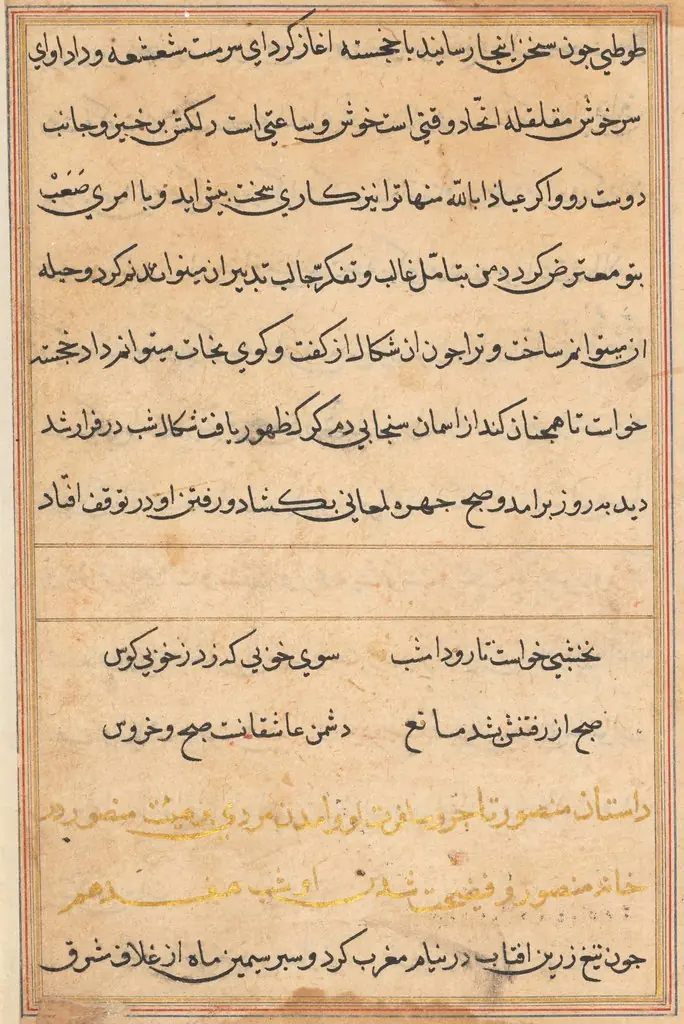 Page from Tales of a Parrot (Tuti-nama): text page
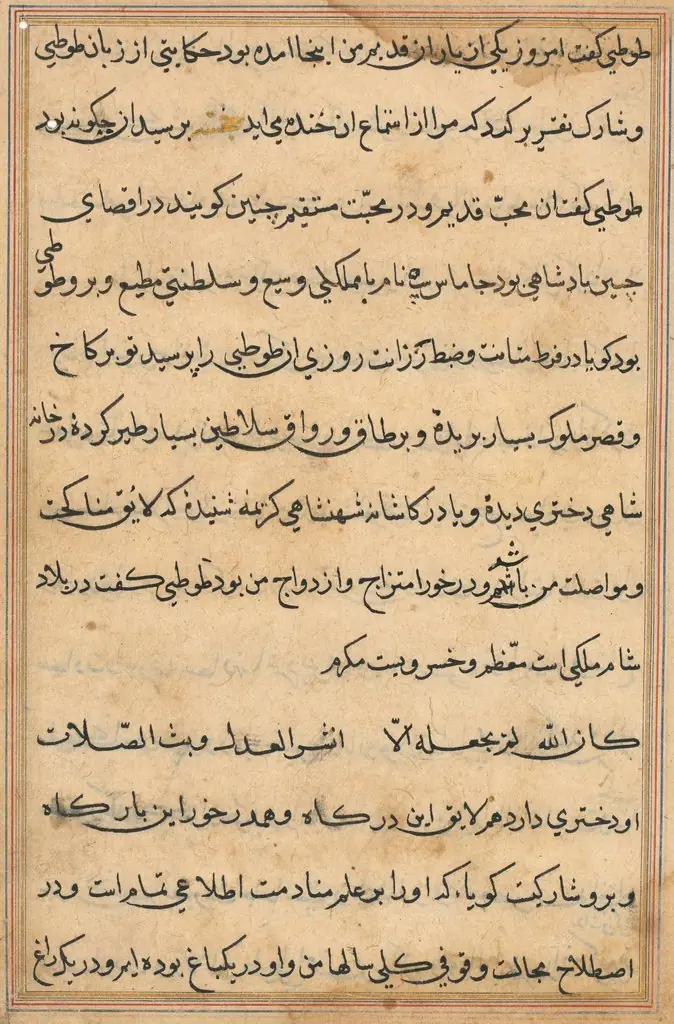 Page from Tales of a Parrot (Tuti-nama): text page
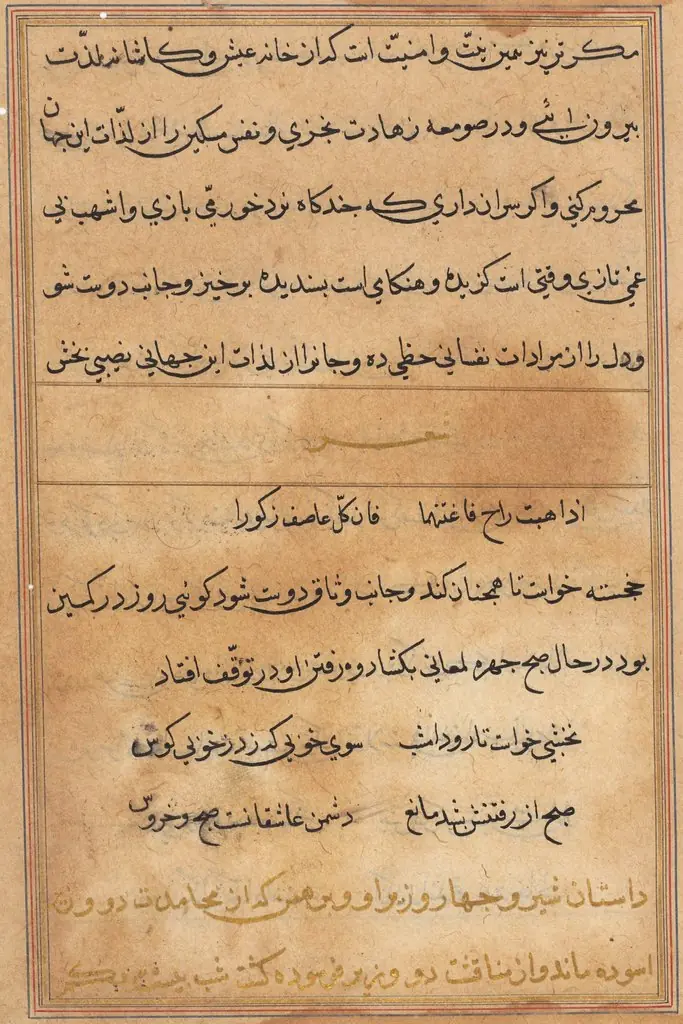 Page from Tales of a Parrot (Tuti-nama): text page
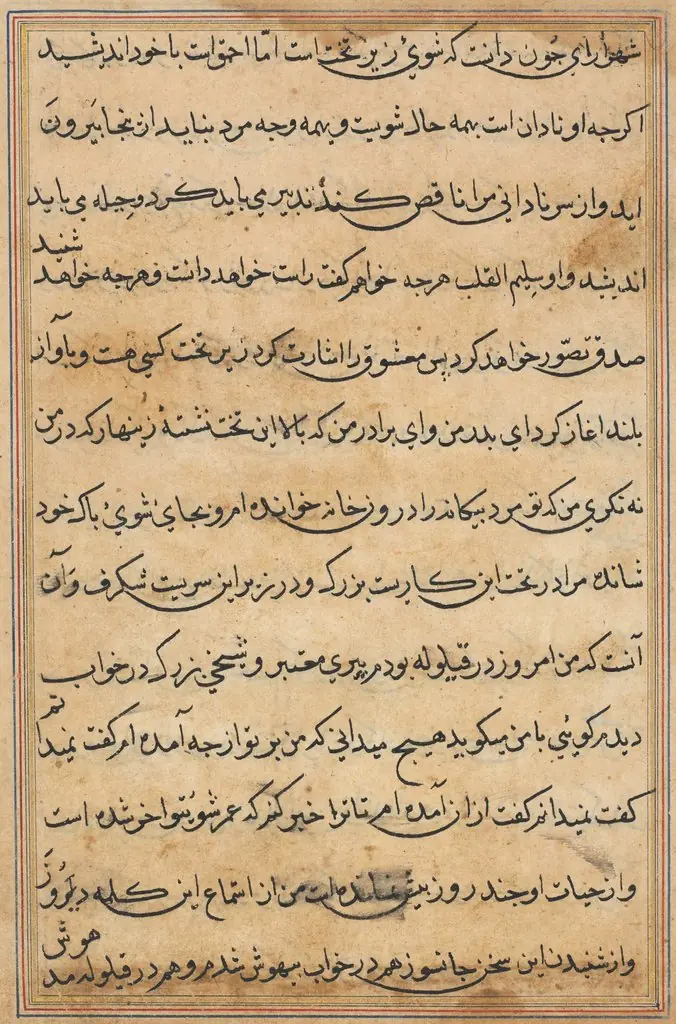 Page from Tales of a Parrot (Tuti-nama): text page
 Page from Tales of a Parrot (Tuti-nama): text page