Artwork
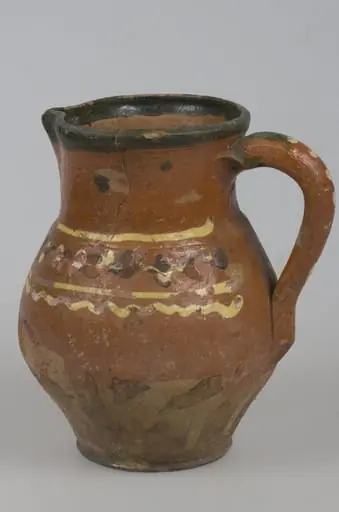
Ulcior bitronconic, cu pântec globular, cu gâtul scurt, buza dreaptă, gura tip strecurătoare, prevăzută cu șapte orificii, modelat, ars, pictat cu motive geometrice: linii drepte și valuri; nesmălțuit. Decorul este dispus pe jumătatea superioară a vasului, până pe gât, în registre formate de cercuri concentrice paralele și linii în valuri. Decorul de pe toartă este șters, se disting urmele de la linii în valuri. Vasul prezintă o "țâță"pe toartă. Cromatică: fond: cărămiziu; motive: roșu.
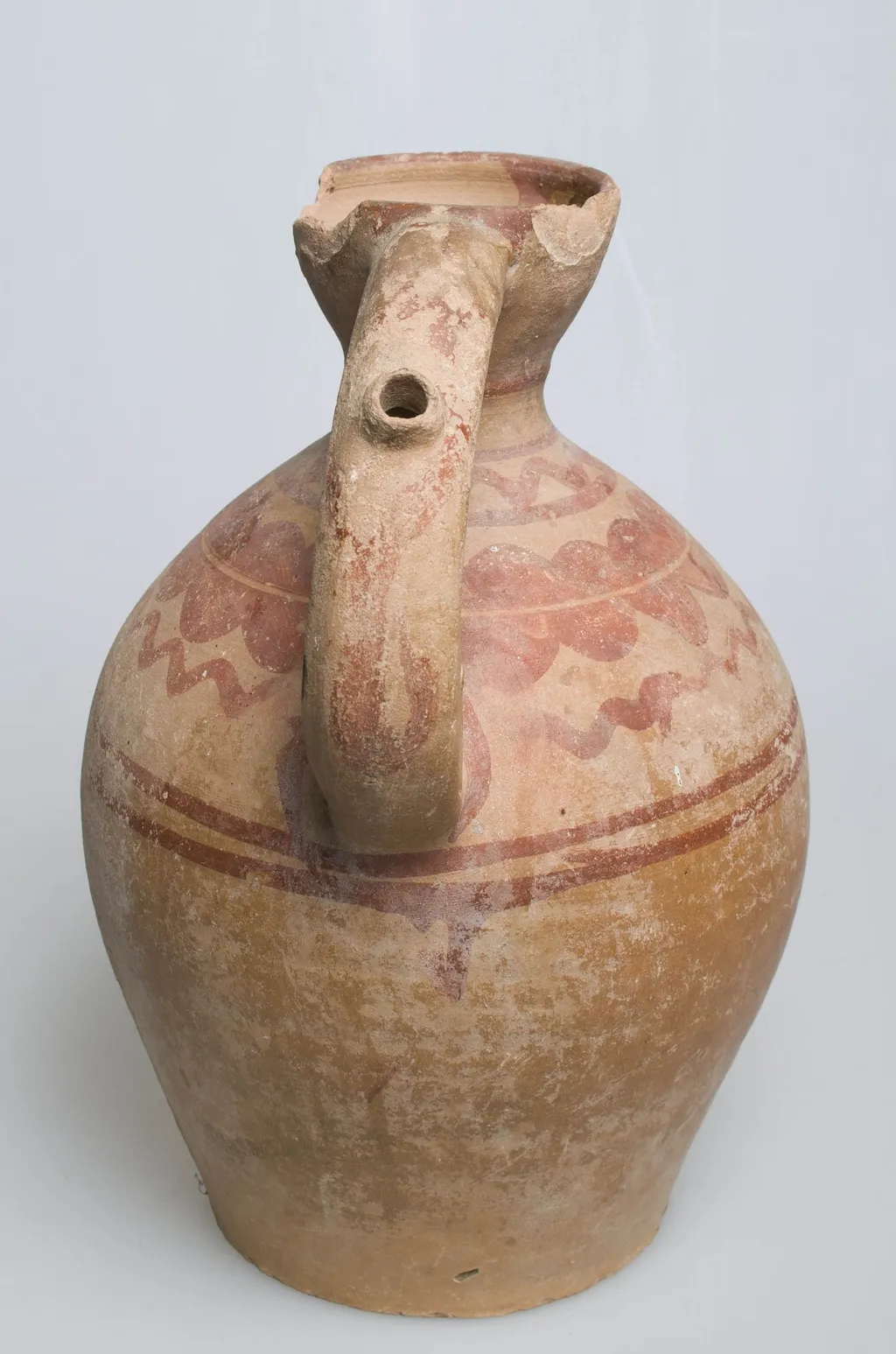
Ulcior bitronconic, cu pântec globular, cu gâtul scurt, buza dreaptă, gura tip strecurătoare, prevăzută cu șapte orificii, modelat, ars, pictat cu motive geometrice: linii drepte și valuri; nesmălțuit. Decorul este dispus pe jumătatea superioară a vasului, până pe gât, în registre formate de cercuri concentrice paralele și linii în valuri. Decorul de pe toartă este șters, se disting urmele de la linii în valuri. Vasul prezintă o "țâță"pe toartă. Cromatică: fond: cărămiziu; motive: roșu. is a photography by Unknown. It dates from 1850 and is held in the collection of the ASTRA National Museum Complex. This ceramic vessel is a late Neolithic urn with a globular body, short neck, and straight rim.
About this work
Overview
The form and decoration align with regional pottery traditions from the Carpathian Basin, dating to the 5th–4th millennium BCE.
This ceramic vessel is a late Neolithic urn with a globular body, short neck, and straight rim. Its spout-like opening features seven perforations, suggesting a specialized function, possibly for liquid dispensing. The surface is unglazed, fired to a reddish-brown hue, and decorated with red pigment in geometric patterns. The form and decoration align with regional pottery traditions from the Carpathian Basin, dating to the 5th–4th millennium BCE.
Subject & Meaning
The decoration consists of concentric circles and undulating lines, arranged in horizontal bands across the upper third of the vessel. These motifs lack figural representation, indicating an abstract or symbolic intent rather than narrative. The repetition of wave-like and linear patterns may reflect natural phenomena or ritual significance, though their precise meaning remains undocumented. The presence of a protruding nipple-like element on the shoulder may relate to functional or ceremonial use.
Technique & Style
The vessel was hand-modeled from coarse clay, then fired in an open kiln. Paint was applied in iron-rich red ochre before firing, adhering to the surface without glaze. Decorative bands were executed with precision, using tools to incise or stamp concentric rings and wavy lines. The paint has partially worn away, especially on the shoulder, revealing the underlying clay. The technique reflects a mature, localized ceramic tradition emphasizing rhythmic patterning over naturalism.
History & Provenance
This artifact originates from a Neolithic settlement in the eastern Carpathian region, likely associated with the Gumelnița or related cultures. It was excavated in the 20th century and entered the collection of the Museum of Ethnography in Bucharest. Its condition suggests prolonged use or burial exposure, with surface abrasion and pigment loss consistent with post-depositional environmental factors. No documented ownership history predates its archaeological recovery.
Context
Produced during the late Neolithic, this vessel reflects the material culture of agrarian communities in the Balkans and Carpathians. Similar pottery appears in contemporaneous sites across Romania and Moldova, often in domestic or funerary contexts. The geometric motifs align with broader Danubian traditions, distinguishing this group from contemporaneous cultures in Anatolia or the Aegean. The spout and perforations suggest specialized use, possibly in ritual libations or controlled pouring.
Legacy
This vessel contributes to the understanding of Neolithic ceramic standardization and symbolic expression in Eastern Europe. Its design elements appear in later regional pottery, indicating continuity in decorative conventions. While not unique, its preservation and clarity of decoration make it a representative example for comparative studies. It remains a key object in ethnographic collections illustrating prehistoric craftsmanship and aesthetic priorities.
Artist & collection

 Domestic Scene
 Giacomo and Cardinal Marco, investing Andrea, Abbot of San Zeno, with his Benefice
 The Nymph of Fontainebleau
 Portrait of a Woman
 Madonna and Child with Saints in the Enclosed Garden
 Venus and Minerva
 Family Group of Four on Sofa
 Wall painting from Room H of the Villa of P. Fannius Synistor at Boscoreale
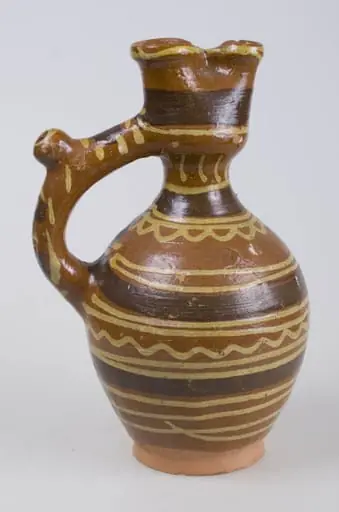 Recipientul este confecționat din lut, cu pântecul extins în zona mediană, cu gât îngust și gură bilobată. Acesta prezintă ciur la gură și în interior piatră sunătoare. Obiectul este prevăzut cu o toartă tubulară cu țâță pentru scurgerea lichidului, lipită de gât și de mijlocul diametrului maxim al corpului. Ulciorul este smălțuit până aproape de fundul vasului. Decorul este format din motive geometrice, pictate cu cornul, pe toată suprafața corpului, inclusiv pe mâner: linii circulare, linii vălurite, linii oblice dispuse vertical, semicercuri pe umeri. Cromatică: fond: cărămiziu; decor: galben; maro închis.
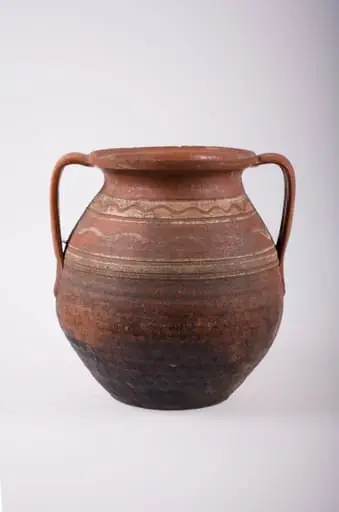 Oala bombată cu două toarte late, aplatizate, dispuse de o parte și de alta a gurii vasului; buză evazată; decorată în exterior cu motive geometrice: linii, linii vălurite pe un registru de cromatică albă. Cromatică: fond: maro; motive: alb-gălbui. Smălțuită pe gura vasului, interior și pe mânerul vasului.
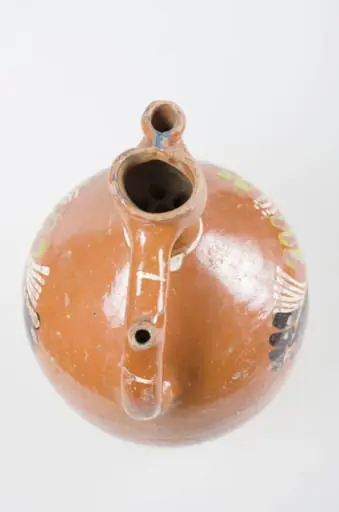 Ulcior mic cu corpul de formă sferică, smălțuit (80-85% din suprafața exterioară). Prezintă un orificiu lângă gură (pentru turnat) și unul pe mâner (pentru băut - ”țâță”). Este ornamentat cu motive geometrice: linii drepte și curbe și motive fitomorfe (flori și frunze). Cromatică: fond: maro deschis; motive: alb; negru; verde; albastru.
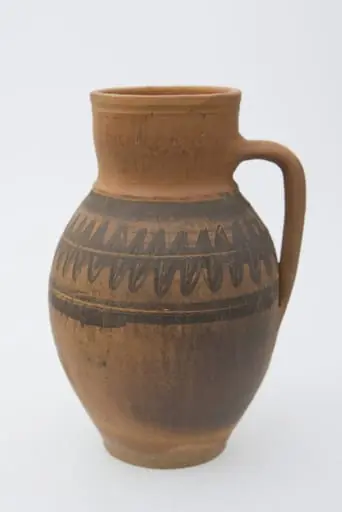 Recipient sferoidal, bombat în partea mediană, gât puțin adunat și gura largă. Prezintă toartă laterală ce leagă partea inferioară a gâtului cu partea de diametru maxim al ulciorului. Decor în partea superioară a vasului compus din linii orizontale dintr-o bandă zimțată neagră ce ilustrează motivul ”dintelui de lup'' (linie frântă în unghi ascuțit), încadratată de două linii dispuse circular. Peste linia zimțată se suprapune o linie trasată în humă, precum și incizii superficiale ce urmăresc conturul motivului decorativ. Cromatică: fond: rosu-cărămiziu; motive: negru.
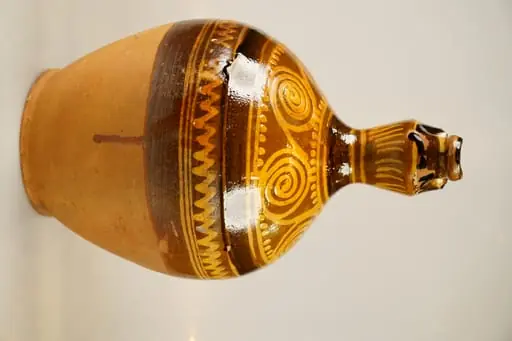 Ulcior cu corp tronconic, bombat în jumătatea sa superioară, gât subțire cu gură bilobată și cu ciur; este prevăzut cu o toartă laterală de prindere, cu țâță. Decorul este unul geometric, realizat prin pictare cu cornul și cu pensula, motivele fiind concentrate în jumătatea superioară a vasului și sunt formate din: linii circulare simple și ondulate de culoare albă, dungi de culoare maro dispuse circular, linii punctate, linii spiralate de culoare albă dispuse sub formă de brâu, linii drepte verticale ce decorează zona gâtului. Toarta vasului este decorată cu mici linii albe, iar buza cu linii maro. Suprafața ornamentată a vasului este acoperită cu un strat de smalț transparent. Cromatica: alb, maro, pe fondul roșu al lutului ars.
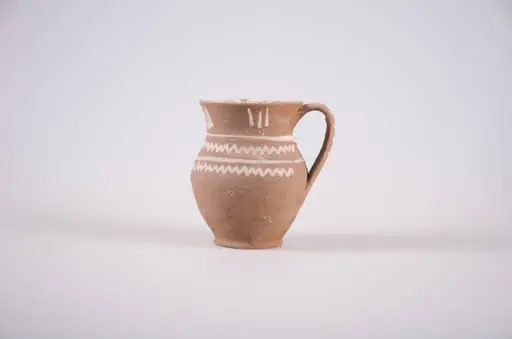 Recipient bitronconic cu gura largă. Are o toartă laterală care pleacă din buză până la diametrul maxim al vasului. Decor cu motive geometrice pe partea superioară a vasului și pe toartă: linii paralele, doua cercuri, linii ondulate. Cromatică: fond: cărămiziu; motive din angobă albă. Vasul este nesmălțuit.
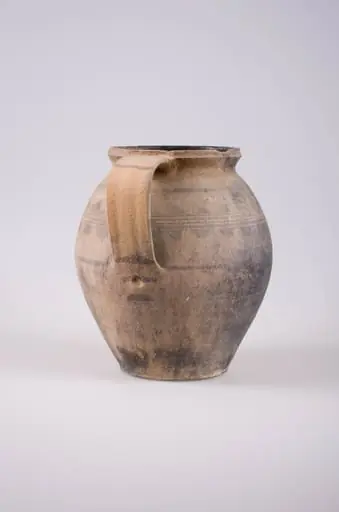 Oală borcan cu corp pântecos bombat cu gât profilat, cu buza evazată tăiată drept și toartă lată. Decorat în partea superioară cu cinci linii ușor adâncite realizate cu piaptănul care secționează un val pictat realizat cu degetul încadrate de două linii maro-roșcat. Toarta prezintă două caneluri este decorată cu o linie în partea superioară și trei linii în partea inferioară. Cromatică: fond: cărămiziu; motive: maro-roșcat. Prezintă urme de ardere secundară.
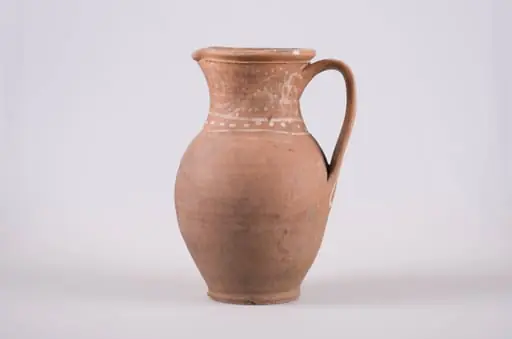 Recipient sferoidal cu gura largă și cioc. Prezintă toartă laterală. Decorul este floral și geometric pe toată suprafața gâtului format din linii, puncte, spirale. Decorat și pe toartă cu o linie de jur împrejur, iar pe buza vasului format din puncte. Cromatică: fond: cărămiziu; motive: alb.
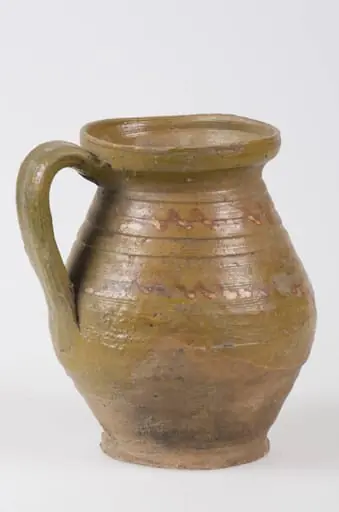 Vas bitronconic cu gât scurt și foarte profilat, cu gura înaltă și dreaptă. Prezintă o toartă care pleacă de sub buză și se unește cu corpul sub zona diametrului maxim. Este smălțuit în interior și la exterior (parțial nesmălțuit în partea de jos). În partea superioară prezintă un decor geometric realizat din cinci linii incizate și două linii în val pictate. Toarta este decorată cu puncte. Cromatică: fond: cărămiziu și pe alocuri verziu; motive: alb; maroniu. Prezintă uzură funcțională.
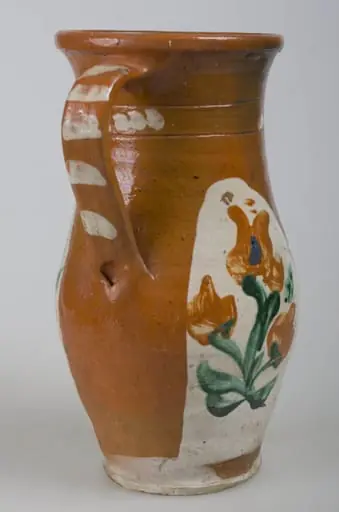 Cană de apă mare, bitronconică, cu gâtul înalt și buza evazată, modelată la roată, arsă, smălțuită, interior și exterior până aproape de bază, cu trei câmpuri ornamentale florale, pictate cu pensula. Aceasta prezintă un guler obținut la modelare format din două linii paralele aflate la o distanță de 1 cm printre ele, ce prezintă puncte albe pictate între ele. Toarta este ornamentată cu linii albe pictate în număr de cinci. Aceasta prezintă o impresiune cu degetul în pasta moale, sub toartă. Cromatică: fond: alb; cărămiziu; decor: verde; albastru; negru; cărămiziu.
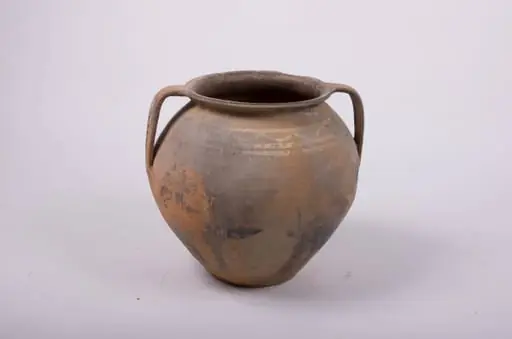 Vas sferoidal cu buza răsfrântă. Prezintă două torți care pornesc de la gura vasului și se unesc pe umăr cu corpul vasului. Decorat pe umăr cu o linie dreaptă urmată de una în val și alte două drepte. Cromatică: motive albe pe fondul cărămiziu al vasului.
 Vas de lut de mici dimensiuni, bombat, cu gât lung și puțin evazat, cu gură largă și cioc de scurgere. Toarta pornește de sub gură și coboară până în zona diametrului maxim al vasului. Este smălțuit în interior și exterior. Decorul dispus pe umărul vasului este format din: motive florale: o cunună din frunze încadrată de motive geometrice: o linie circulară în partea superioară și o linie circulară și una în val în partea inferioară. Buza vasului este vopsită în interior și exterior. Toarta este decorată cu puncte de culoare albă. Cromatică: fond: cărămiziu; motive: alb; verde; negru.