Artwork
Untitled
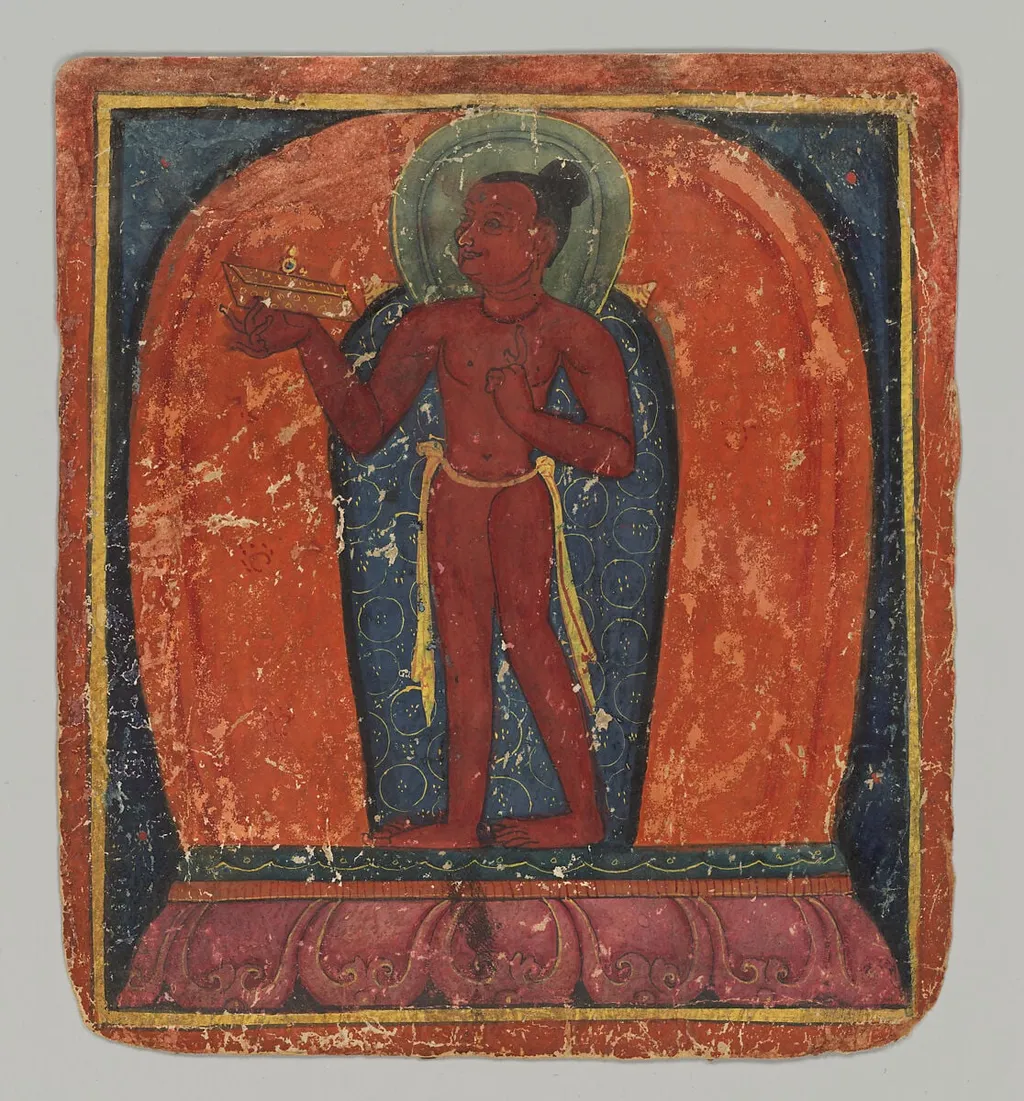
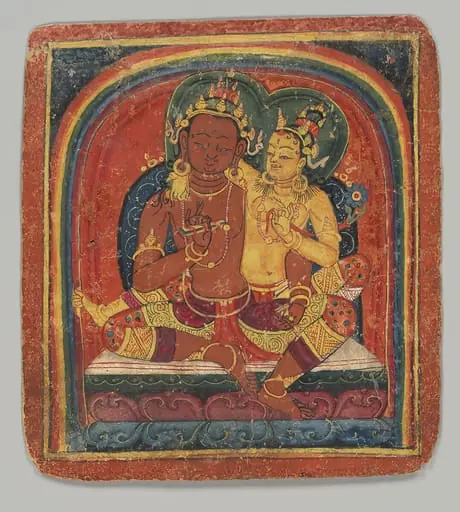
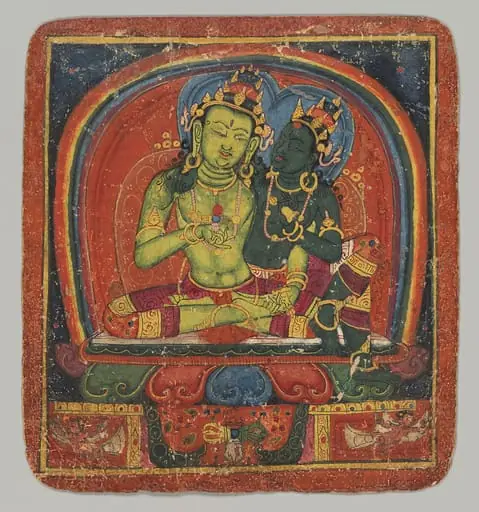
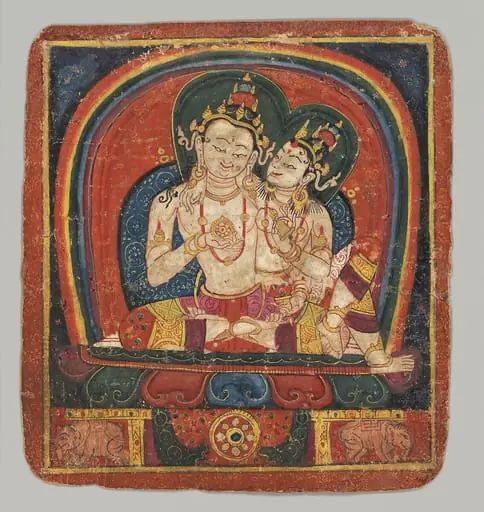
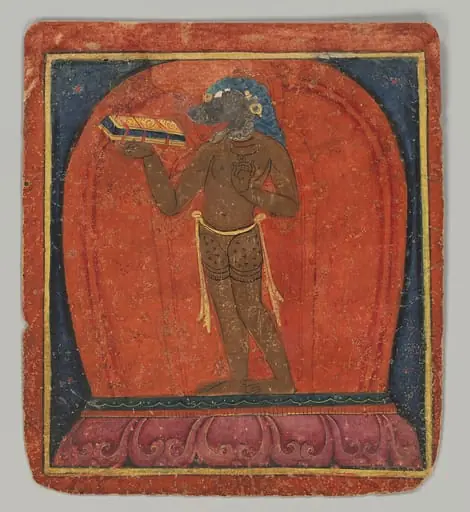
Untitled is a watercolor painting. It dates from 1416 and is held in the collection of the Metropolitan Museum of Art.
About this work
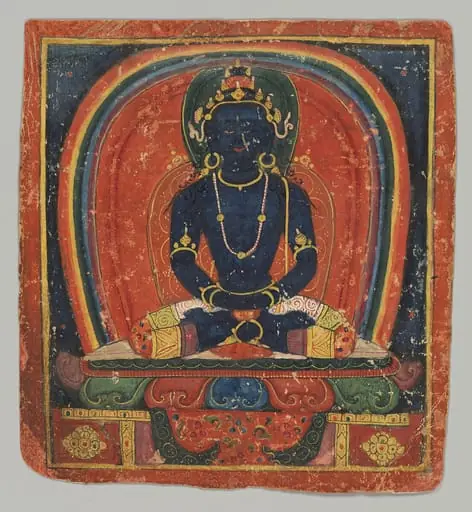
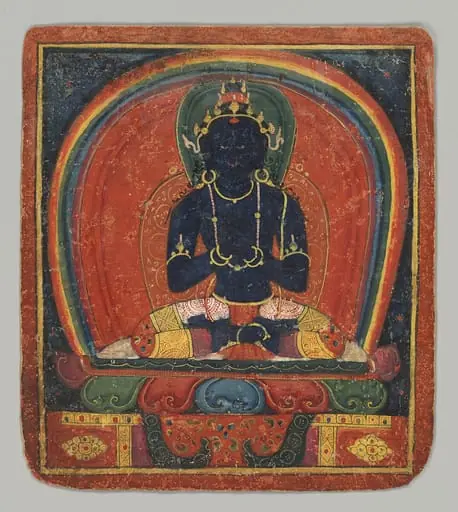
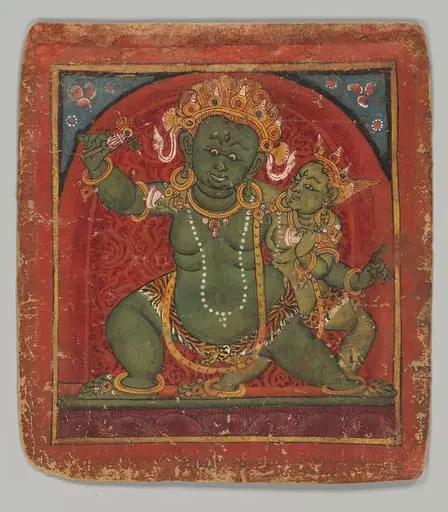
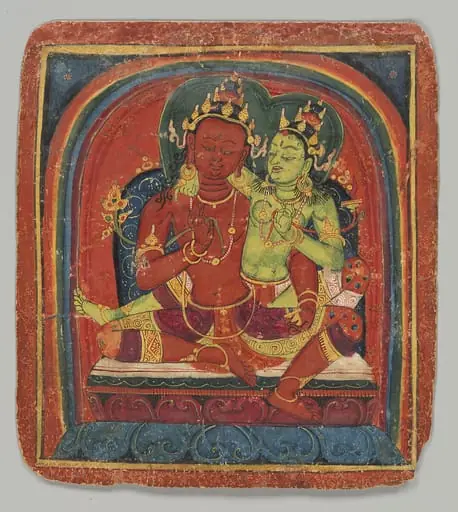
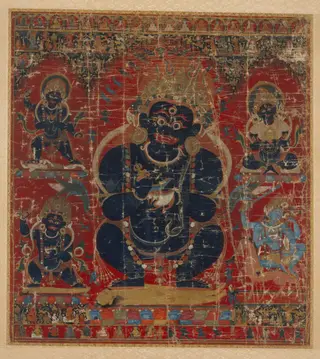
A blue-skinned, four-armed figure sits on a lotus, flames flickering around it, holding a sword, a lasso, a skull, and a small drum. Painted around 1416 for a Tibetan Buddhist monastery, its colors stay bright because the pigment was mixed with chalk so it covers like paint.
Subject & Meaning
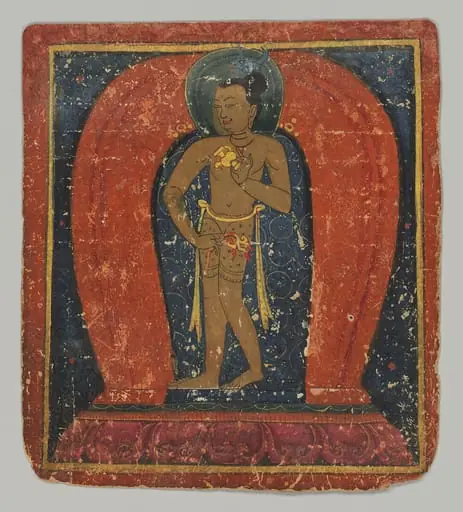
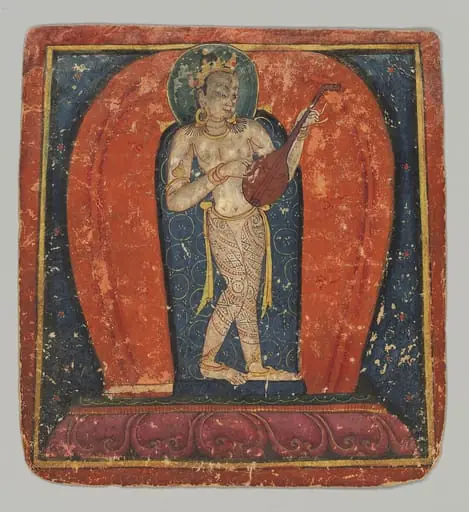
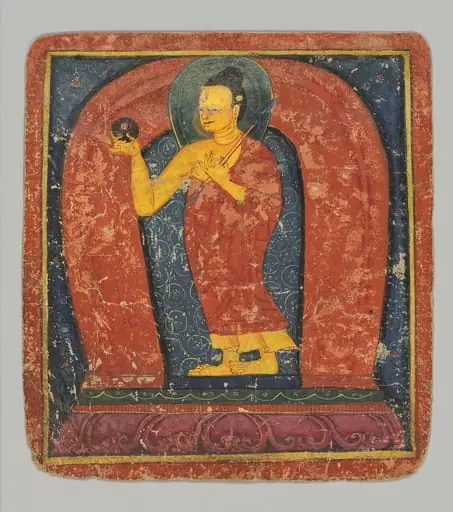
The work, titled Untitled, portrays a divine figure, identifying it as a representation of a deity within a religious context.
The work, titled Untitled, portrays a divine figure, identifying it as a representation of a deity within a religious context. Its iconography aligns with traditional depictions of sacred authority, though specific symbolic attributes are not recorded. The painting, executed in opaque watercolor on paper in 1416, functions as an example of early religious art, emphasizing the central role of the divine in the composition.
As part of the Metropolitan Museum of Art's collection, the piece underscores the anonymous production of devotional imagery during the period, suggesting a focus on spiritual contemplation rather than individual portraiture.
Technique & Style
Executed in opaque watercolor on paper, the work belongs to the medium tradition of devotional painting. Its modest dimensions, 16 centimeters in height and 14.5 centimeters in width, indicate an intimate, small-scale format consistent with manuscript-related or personal devotional objects. The paper support and watercolor handling situate the piece within a regional practice of opaque pigment work on a prepared ground, a technique well suited to detailed religious imagery.
Classified as a painting of religious genre depicting a deity, the small format and pigment-based handling would have permitted fine, controlled execution typical of early fifteenth-century devotional works.
History & Provenance
The work, titled Untitled, was created in 1416 by an anonymous artist. It is an opaque watercolor on paper depicting a deity within the religious genre. The piece is currently held in the collection of the Metropolitan Museum of Art, where it is cataloged under the accession number 2000.282.24.
The museum lists the location of the object as its own facilities. While the specific commission details and the full chain of ownership prior to its acquisition by the museum are not detailed in the available records, the work's inception is firmly dated to the year 1416. Its dimensions are recorded as 16 units in height and 14.5 units in width.
The work is held in the collection of the Metropolitan Museum of Art, where it is cataloged under the accession number 2000.282.24. Created in 1416, this opaque watercolor on paper depicts a deity and is classified as religious art. While the piece is part of the museum's permanent holdings, the available records do not list specific past exhibitions or loan history for this particular object.
Overview
This untitled painting, rendered in opaque watercolor on paper, depicts a multi-armed deity. Created for a Tibetan Buddhist monastery during the 15th century, the artwork features a central blue-skinned figure enthroned on a lotus, enveloped by flickering flames. The vibrant palette and detailed iconography are characteristic of religious art from the period, serving a devotional purpose within its original monastic setting.
Artist & collection