Artwork
Untitled
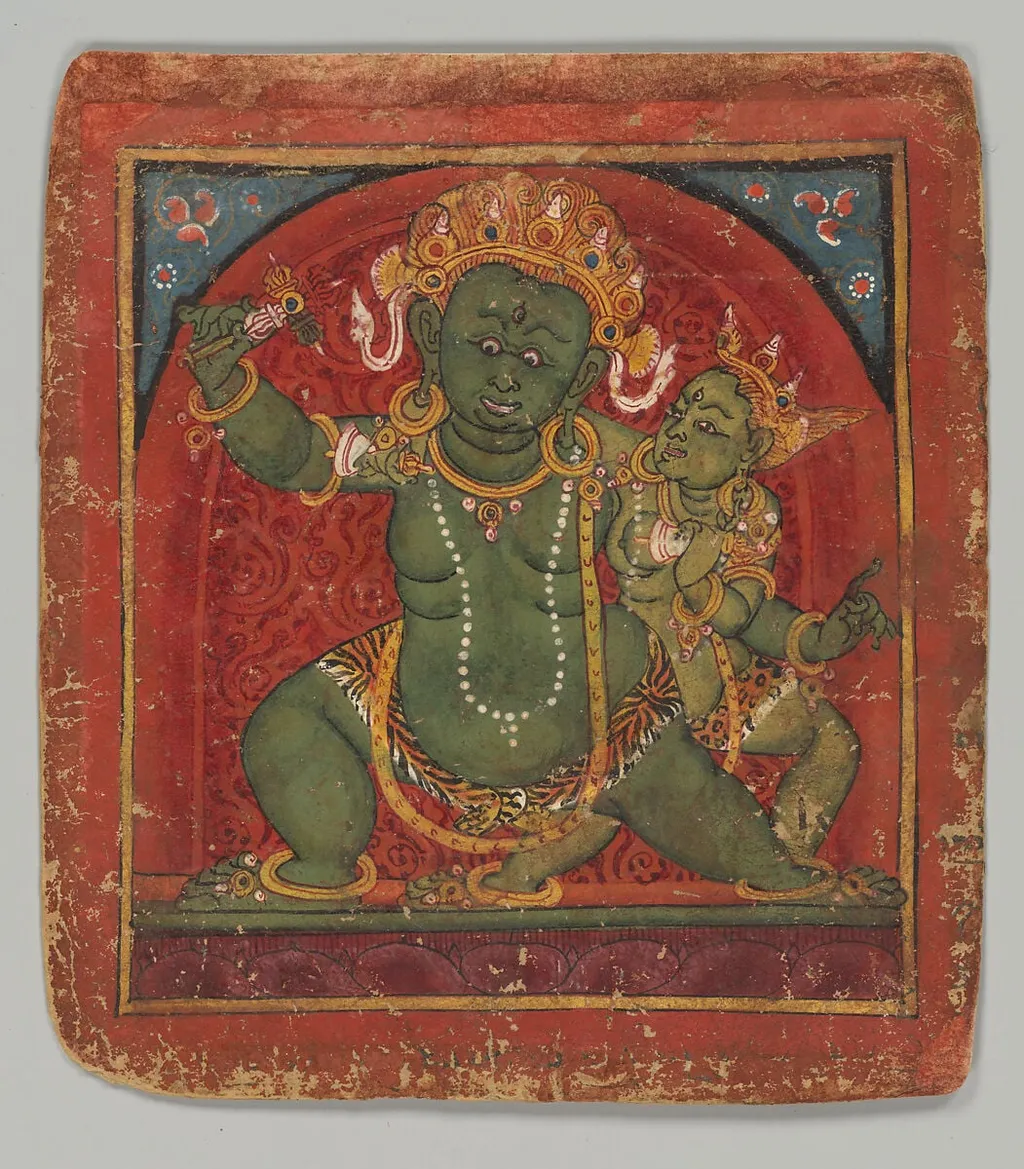
Untitled is a watercolor painting. It dates from 1416 and is held in the collection of the Metropolitan Museum of Art.
About this work
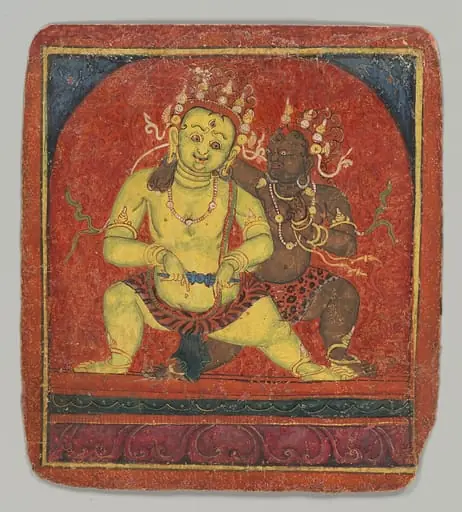
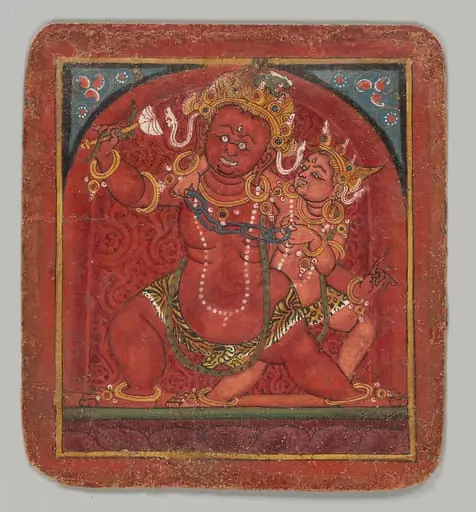
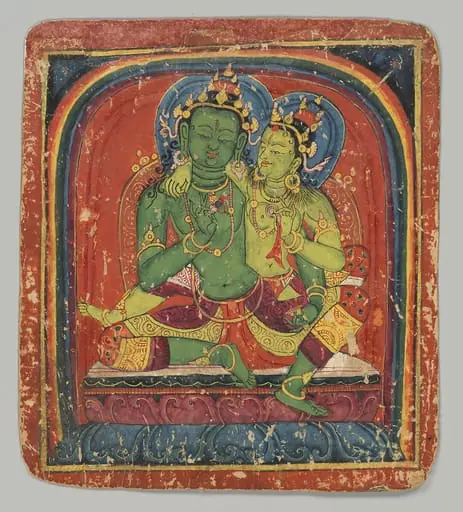
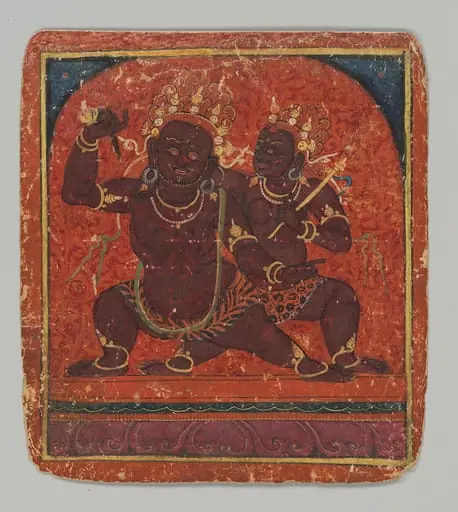
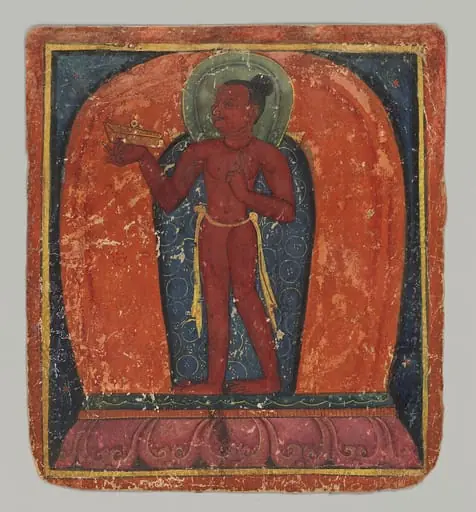
A blue-skinned deity with four arms sits on a lotus, flames rising behind, holding a sword, a bell, and perhaps a noose and skull cup. Gold details glow against deep red. Painted in 1416 in a Tibetan Buddhist tradition with strict rules of color and pose, where the flames stand for wisdom burning away ignorance. The artist is unknown.
History & Provenance
It is housed in the collection of the Metropolitan Museum of Art in New York, where it is listed under the museum’s catalog entries.
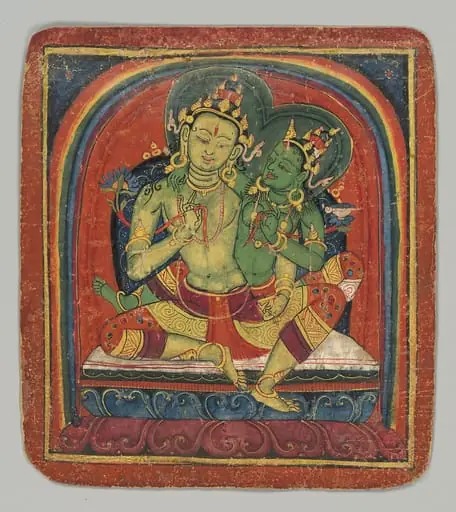
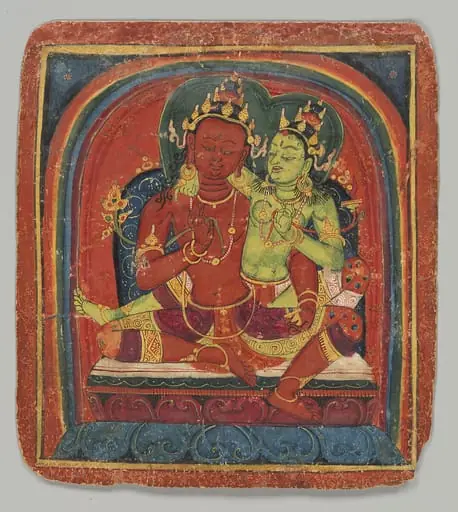
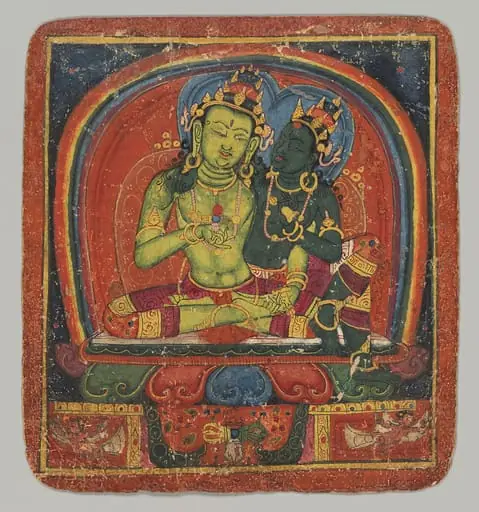
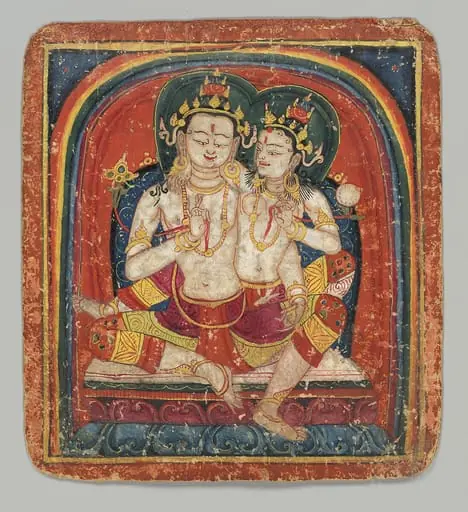
The work, titled Untitled, is a religious painting created in 1416 by an unknown artist. Executed in opaque watercolor on paper, the piece measures 16 units in height and 14.5 units in width. It depicts a deity and is classified within the genre of religious art.
The Metropolitan Museum of Art currently houses the painting in its collection. While the specific commissioning patron and detailed creation narrative remain unrecorded in the available documentation, the work is firmly dated to the early 15th century. The anonymous nature of the creator suggests it may have been produced within a workshop context or as part of a devotional tradition where individual attribution was secondary to the religious function of the image.
The work titled Untitled, dated 1416, is an opaque watercolor on paper attributed to an anonymous painter and classified as a religious painting depicting a deity. It is housed in the collection of the Metropolitan Museum of Art in New York, where it is listed under the museum’s catalog entries. No specific accession number is recorded in the available documentation, and the sources do not note any documented exhibition history for this piece beyond its inclusion in the museum’s permanent holdings.
Overview
This untitled painting, rendered in opaque watercolor on paper, depicts a multi-armed, blue-skinned deity seated upon a lotus. Flames emanate from behind the figure, whose hands hold various ritual objects including a sword, a bell, and possibly a noose and a skull cup. Gold accents illuminate the composition against a rich, deep red ground, characteristic of sacred art within the Tibetan Buddhist tradition.
Subject & Meaning
The central figure, a multi-limbed deity, is a common subject in Buddhist iconography, often representing specific aspects of enlightenment or protection. Its four arms and various implements, such as the sword for cutting through delusion and the bell for wisdom, convey its divine power. The vibrant, flickering flames surrounding the figure are not merely decorative; they serve as a potent symbol of wisdom actively consuming and dispelling ignorance.
Technique & Style
Executed with opaque watercolor on paper, this painting demonstrates a high degree of precision and control. The meticulous rendering of lines and forms reflects the extensive training and skill of its anonymous creator. Artists working within this tradition adhered to established iconographic guidelines, which dictated specific colors, postures, and attributes for each deity, ensuring consistency and spiritual accuracy in their representations.
Context
This artwork originates from a rich Tibetan Buddhist artistic tradition, where the creation of sacred images followed stringent conventions. These guidelines governed every aspect of the painting, from the precise color palette to the specific gestures and attributes of the depicted deities. Such works were not merely aesthetic objects but served as aids for meditation and devotion, embodying profound spiritual principles for practitioners.
Artist & collection