Artwork
Untitled
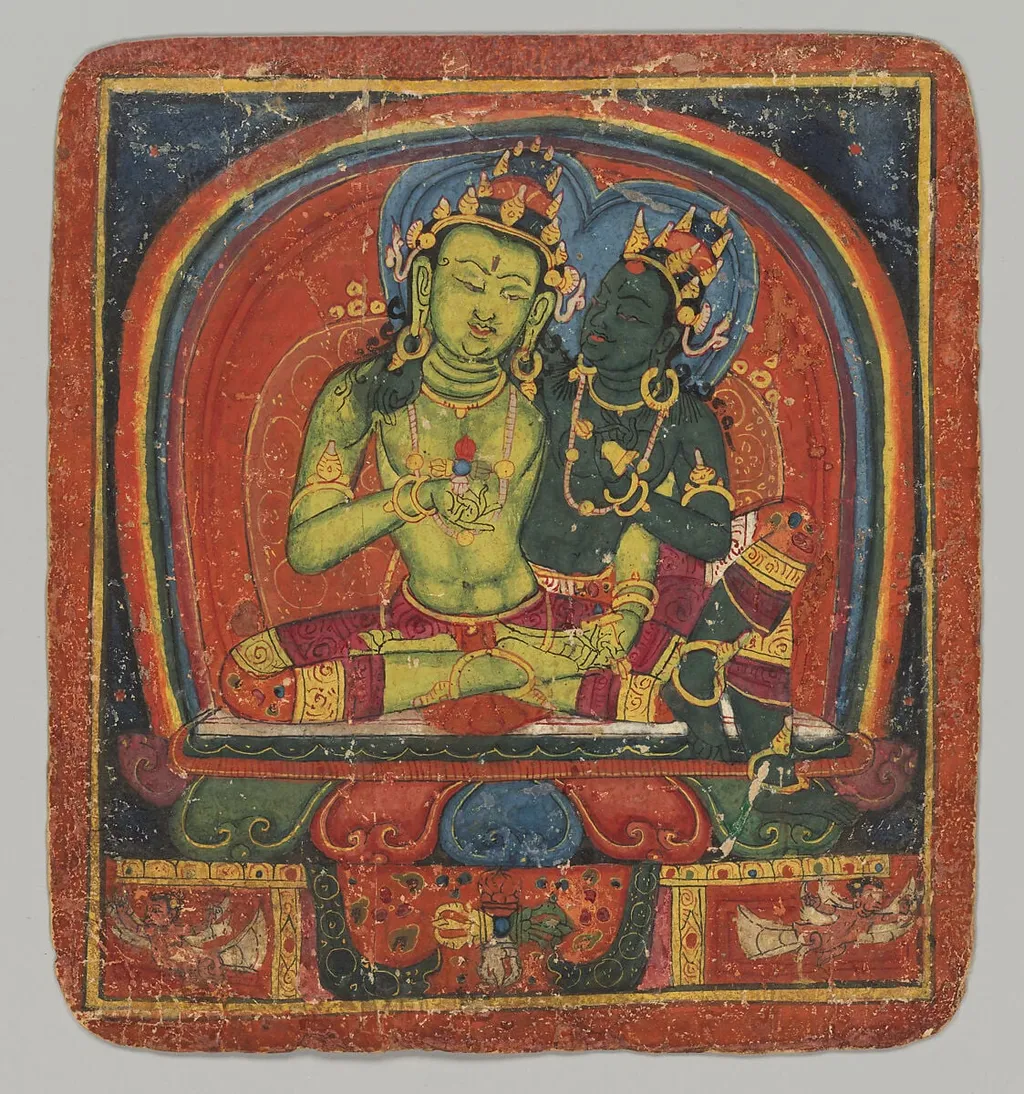
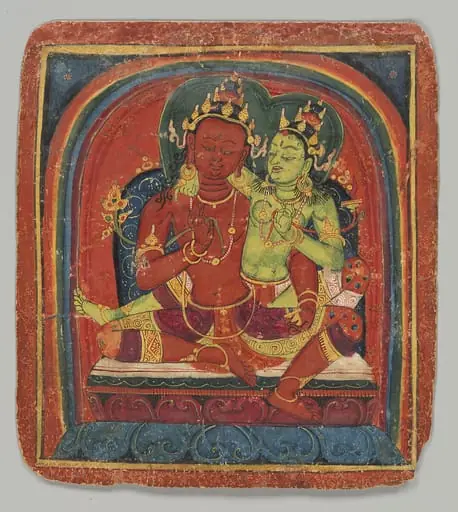
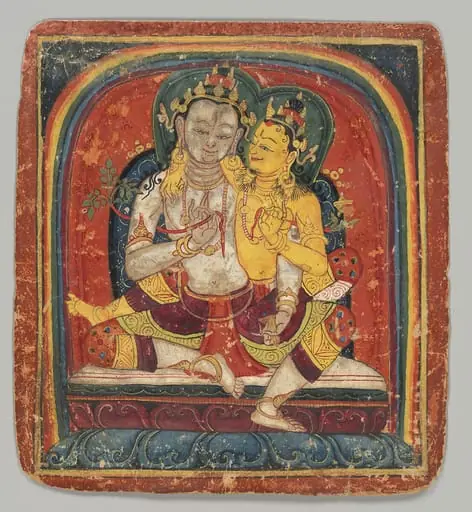
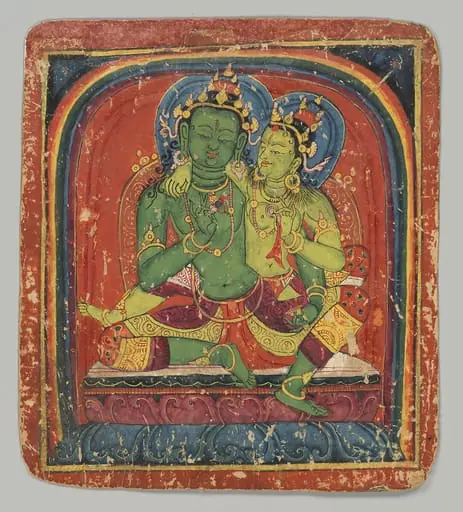
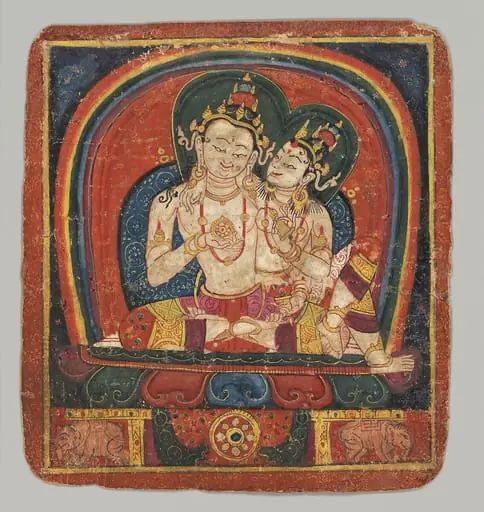
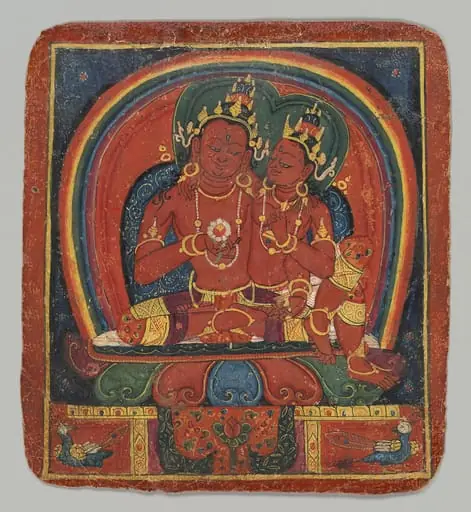
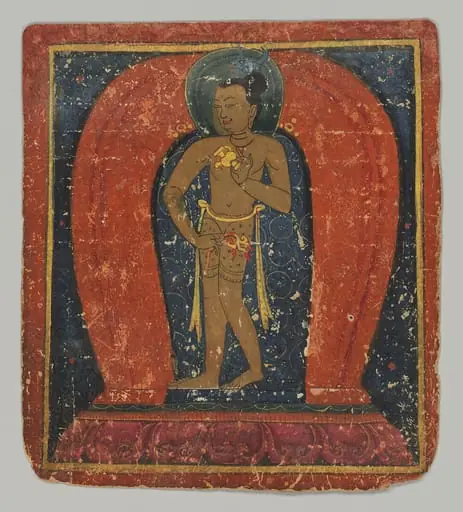
Untitled is a watercolor painting. It dates from 1416 and is held in the collection of the Metropolitan Museum of Art. This painting, rendered in opaque watercolor on paper, portrays a green-skinned deity seated upon a lotus.
About this work
Subject & Meaning
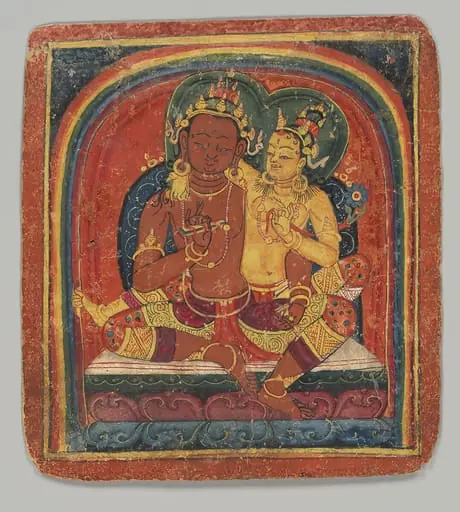
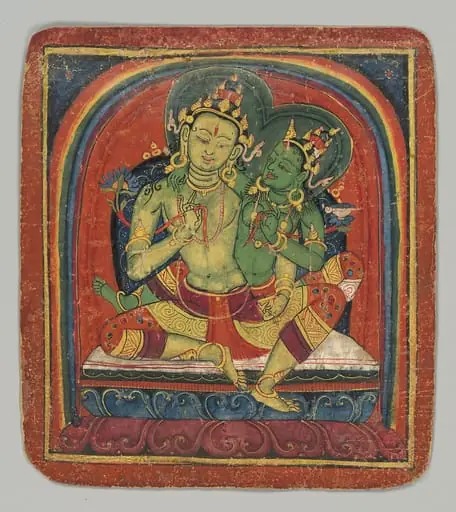
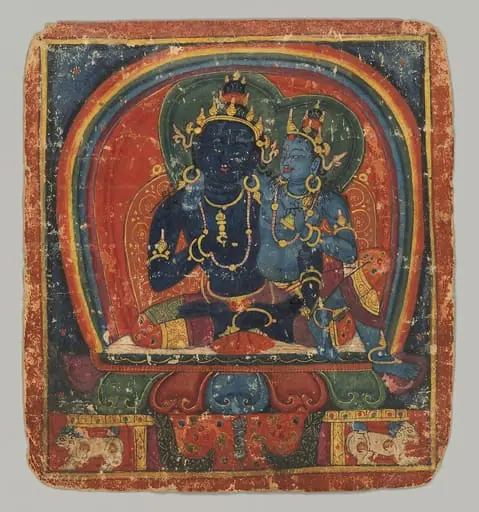
The painting portrays Amoghasiddhi, a Buddhist deity identified as the subject of this work.
The painting portrays Amoghasiddhi, a Buddhist deity identified as the subject of this work. According to the catalog entry, the piece is classified as religious art and depicts the deity in a manner consistent with traditional iconography, wherein Amoghasiddhi is associated with the accomplishment of all actions and the quality of wisdom. As a 15th‑century opaque watercolor on paper, the composition functions as a devotional image, embodying spiritual themes characteristic of Himalayan Buddhist painting.
The attribution to an anonymous painter and its presence in the Metropolitan Museum of Art underscore its significance as a representative example of early religious painting in the region.
Technique & Style
The painting is an opaque watercolor on paper, created in the early 15th century (dated 1416) and measures roughly 16 cm in height by 14.5 cm in width. It belongs to the genre of religious art and is classified as a painting, portraying the Buddhist deity Amoghasiddhi. The work’s formal qualities reflect a devotional visual language typical of Himalayan Buddhist manuscripts, with a flat compositional space and restrained coloration suited to its ritual function. As a paper support, it requires careful handling to preserve the delicate pigment layer.
History & Provenance
The work titled Untitled, created in 1416 by an anonymous artist, is held in the collection of the Metropolitan Museum of Art. While the provided sources confirm the museum as the current location and the work's religious genre depicting the deity Amoghasiddhi, they do not list a specific accession or inventory number for this piece. Furthermore, the available documentation contains no record of the artwork's exhibition history, leaving its display chronology unverified within these texts.
The painting, classified as opaque watercolor on paper, measures 16 by 14.5 units, though the specific units of measurement are not explicitly defined in the source material.
Overview
This painting, rendered in opaque watercolor on paper, portrays a green-skinned deity seated upon a lotus. It exemplifies the rigorous iconographic traditions of Tibetan Buddhist art, where every element, from color to pose, carries specific meaning. The work's creation underscores a devotional craft, valuing the precise execution of sacred forms rather than individual artistic innovation.
Context
Within the Tibetan Buddhist tradition, artists adhered to established visual canons, ensuring that artworks served their spiritual function effectively. This approach meant that the identity of the individual artist was often secondary to the accurate and skilled representation of sacred subjects. Consequently, this untitled work is appreciated for its expert craftsmanship and its faithful embodiment of traditional forms, rather than for a named creator.
Artist & collection