Artwork
Untitled
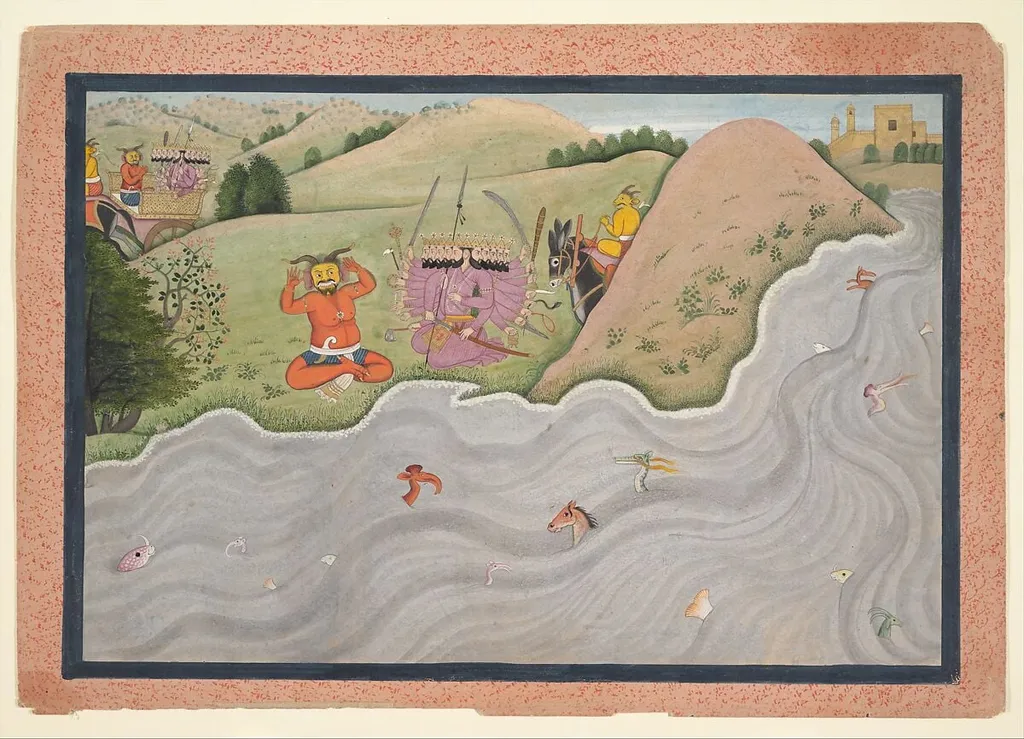
Untitled is a watercolor painting. It dates from 1780 and is held in the collection of the Metropolitan Museum of Art.
About this work
Subject & Meaning
Classified as a mythological work, the painting depicts a demon and a mythical creature rendered in ink, opaque watercolor, silver, and gold on paper.
Classified as a mythological work, the painting depicts a demon and a mythical creature rendered in ink, opaque watercolor, silver, and gold on paper. Produced in India in 1780, the imagery draws on the South Asian tradition of representing supernatural entities, in which demons and composite mythical beings often embody cosmic forces, moral opposition, or tutelary powers. The use of silver and gold leaf, together with opaque watercolor, is characteristic of devotional and courtly manuscripts and paintings from the period, materials that carry symbolic weight by evoking divinity, luminosity, and the sacred.
Although the specific narrative or deity context is not identified in the available records, the pairing of a demon with a mythical creature suggests a confrontation or hierarchical relationship typical of mythological iconography, in which such figures serve as vehicles for allegory, cosmology, and the visualization of unseen powers.
Technique & Style
Created in India around 1780, this anonymous work is executed on a paper support using a complex mixture of ink, opaque watercolor, and precious metals. The artist incorporated both silver and gold into the composition, layering these materials to depict mythological subjects, specifically demons and other fantastical creatures. The painting measures approximately 24.8 by 35.6 centimeters.
Stylistically, the piece functions as a mythological genre painting, utilizing the reflective qualities of the metallic pigments alongside flat areas of opaque color to define the supernatural figures. The combination of drawing media with luxurious metal leaf suggests a specific regional approach to illustrating folklore during the late eighteenth century.
History & Provenance
Untitled is an anonymous Indian painting dated to 1780, executed in ink, opaque watercolor, silver and gold on paper and classified as a mythological work depicting a demon. The artwork was created in India and is part of the Metropolitan Museum of Art collection, where it is displayed. Its authorship is unknown, and the museum records an inception date of 1780‑01‑01 with dimensions of 24.8 cm by 35.6 cm. The piece’s provenance is presently limited to its ownership by the Met, with no earlier ownership details recorded.
Overview
This untitled painting on paper depicts a vivid scene: a blue-skinned demon with prominent teeth rides a tiger amidst turbulent clouds. Rendered with ink, opaque watercolor, silver, and gold, the artwork is characterized by its small scale and vibrant palette. It exemplifies the artistic traditions of northern India, where such works frequently illustrated narrative themes.
Context
This painting originates from Kangra, a region situated in northern India renowned for its distinct artistic output. Workshops in this area frequently produced illustrated manuscripts and individual paintings that explored themes from Hindu mythology and local narratives. These works served to visualize epic tales and devotional stories, contributing to a vibrant cultural tradition.
Artist & collection

- Untitled
 The Demon Sambar Throws the Infant Pradyumna into the River, page from a manuscript of the Bhagavata Purana
 Battle between Lava and Rama's brother, Shatrughna, near the hermitage of Valmiki
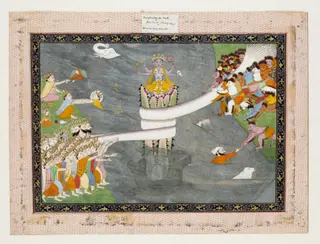 Vishnu as Kurma
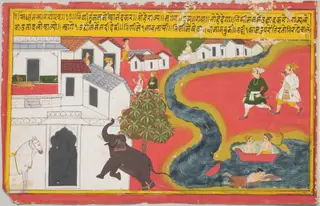 Worship of the Gods (16 of 17)
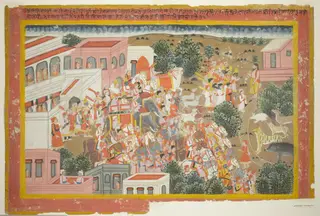 Four Princes in Procession Visit a Sage, page from a copy of the Ramayana
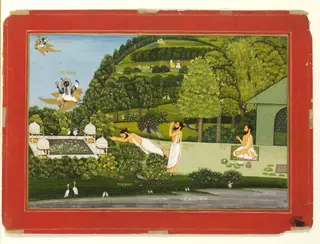 A yogi worshipping Vishnu on Garuda
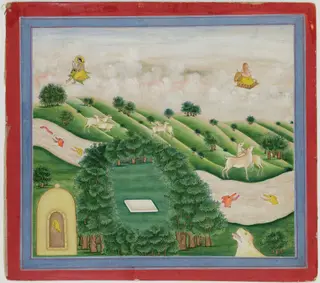 Illustrations to Life of Dhurva Maharaj: #21 Dhurva is shown flying on his throne, and on another, the greatest power in the world, Vishnu
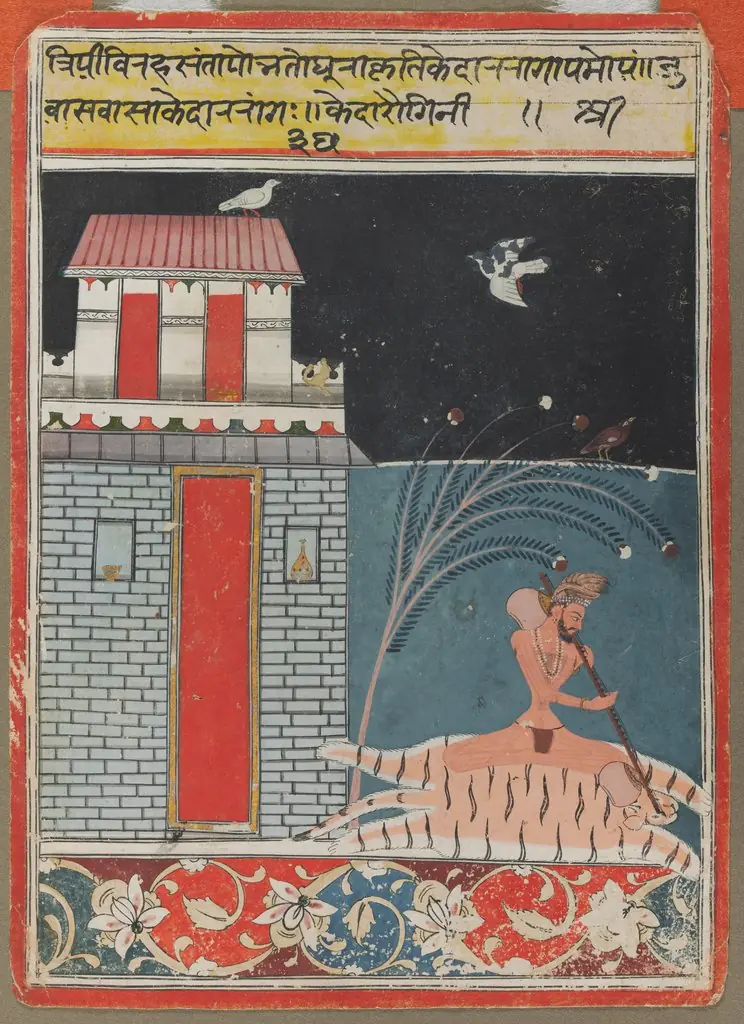 Kedara Ragini
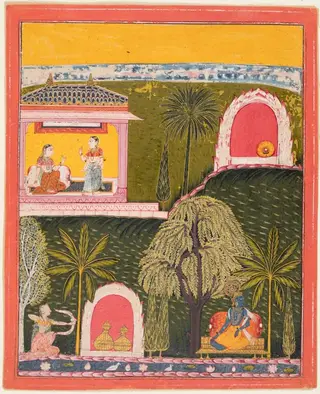 Rati, the Goddess of Erotic Love, Takes Aim at Krishna, from a Rasikapriya
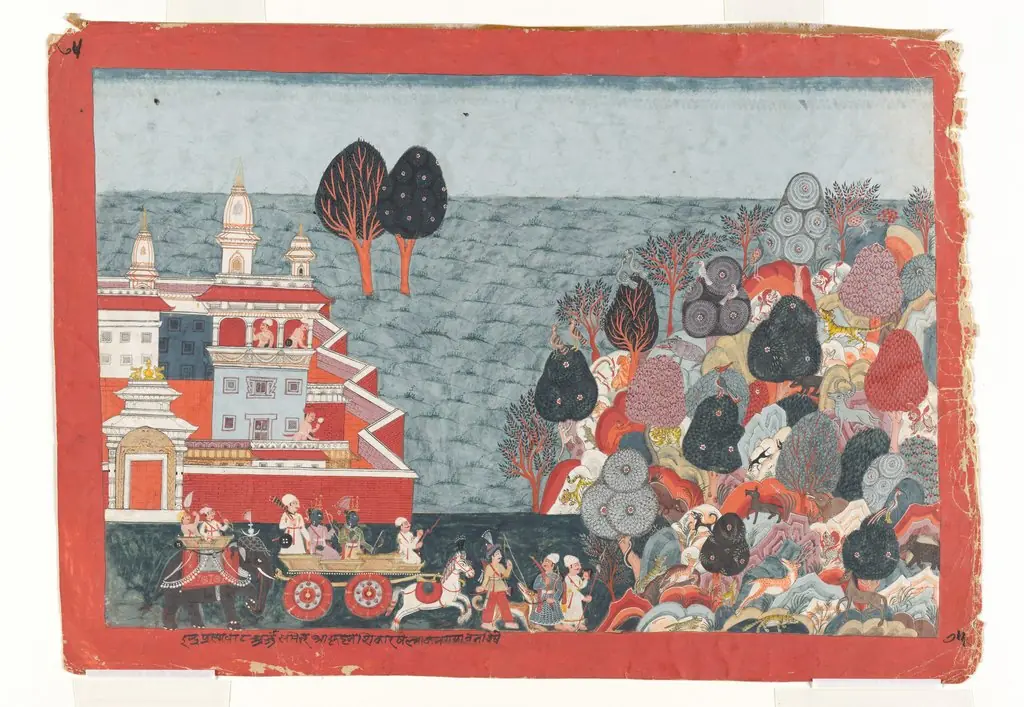 Folio from a Bhagavata Purana series
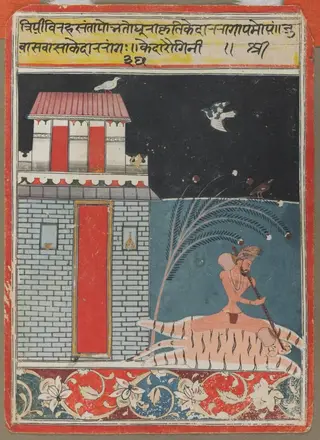 Kedara Ragini