Artwork
Kedara Ragini
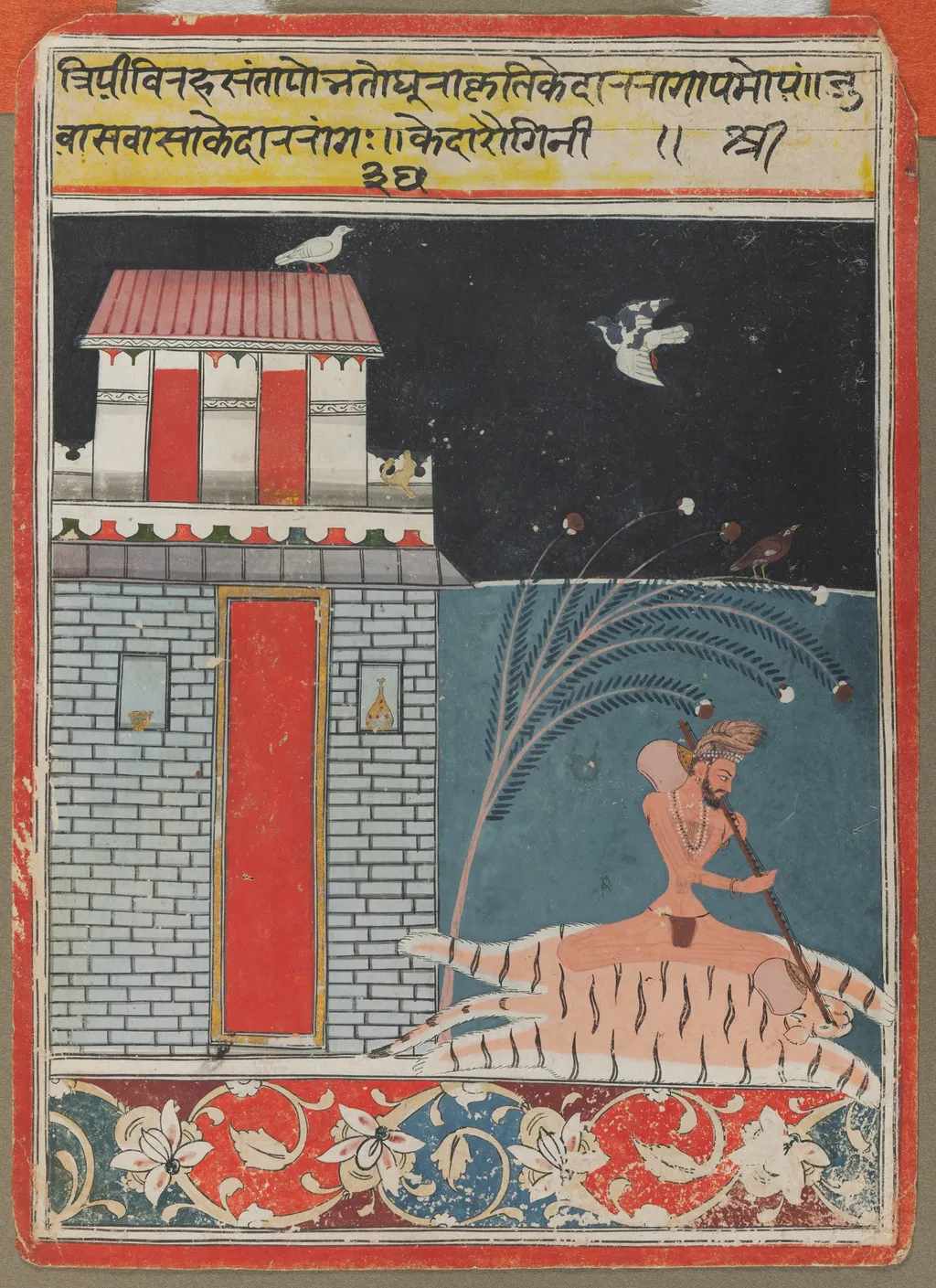
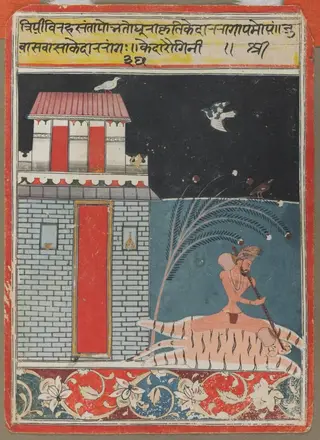
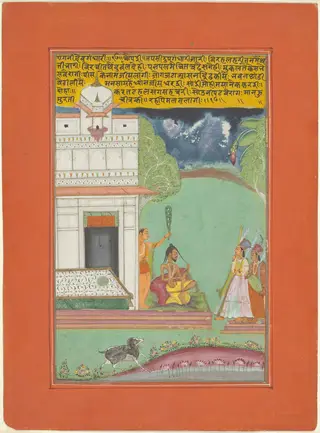
Kedara Ragini is an unspecified painting. It dates from 1665 and is held in the collection of the Cleveland Museum of Art.
About this work
Technique & Style
It is attributed to an unknown artist and represents a Baroque-era composition characterized by dramatic chiaroscuro and emotive coloration.
Kedara Ragini is an oil painting on canvas created in 1665. The work measures 122.2 cm by 91.4 cm and is housed in the collection of the Cleveland Museum of Art in Cleveland, Ohio. It is attributed to an unknown artist and represents a Baroque-era composition characterized by dramatic chiaroscuro and emotive coloration.
The painting's handling reflects contemporary 17th-century techniques, with layered glazes contributing to its luminous surface. Its stylistic qualities include dynamic movement and expressive brushwork, aligning with the aesthetic principles of the period.
History & Provenance
Kedara Ragini is dated to 1665, a date recorded as its inception in the associated catalogue and Wikidata records. The painting is held in the collection of the Cleveland Museum of Art, where it is accessioned under the number 1960.116. No further details concerning its commission, earlier ownership, or chain of custody prior to its acquisition by the museum are documented in the available sources.
The painting Kedara Ragini, dated to 1665, is held in the collection of the Cleveland Museum of Art in Cleveland. The work is cataloged under the accession number 1960.116. No specific exhibition history is recorded in the provided sources for this artwork.
Overview
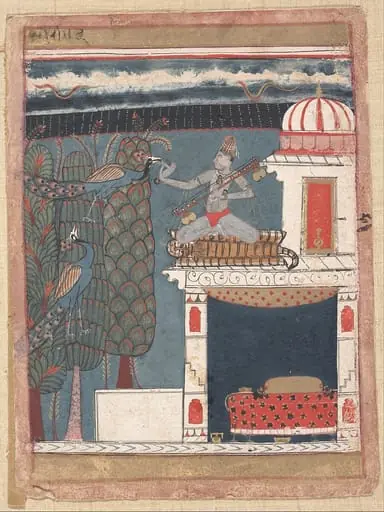
Kedara Ragini is a painted composition that presents a seated figure on the back of a tiger beneath a tree. The man, adorned with a turban and jewelry, holds a flute while a vivid red building with white trim rises behind him, topped by a pigeon. Darkened sky and flying birds frame the scene, and the lower edge is bordered by stylized flowers and foliage in red, blue and white.
Subject & Meaning
The central figure appears to be a musician or deity, suggested by the flute and regal attire, positioned on a tiger, a symbol of power and protection. The juxtaposition of the bright architecture and the ominous sky may convey a balance between earthly splendor and cosmic forces, while the pigeon on the roof adds a subtle note of peace or messenger.
Context
Kedara Ragini belongs to a tradition of narrative paintings that blend courtly or mythological subjects with ornamental design. The inclusion of architectural elements, animal companions, and musical instruments aligns with visual conventions found in South Asian courtly art, where storytelling and decorative motifs coexist.
Artist & collection

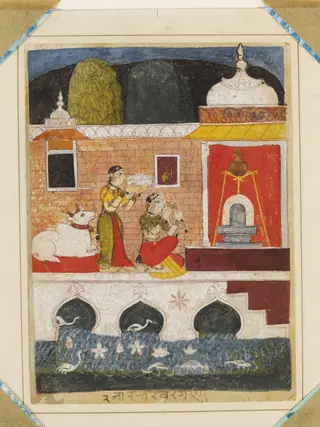 Bhairavi Ragini
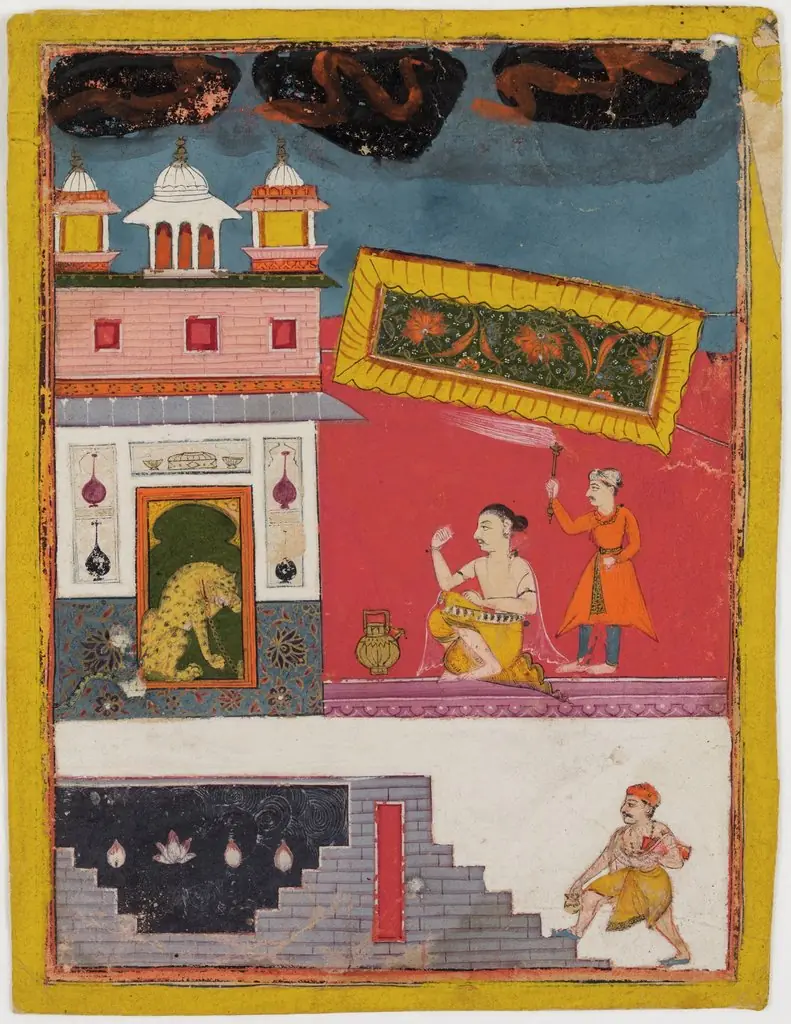 Palace Scene with Cheetah on Chain, Prince and Attendant
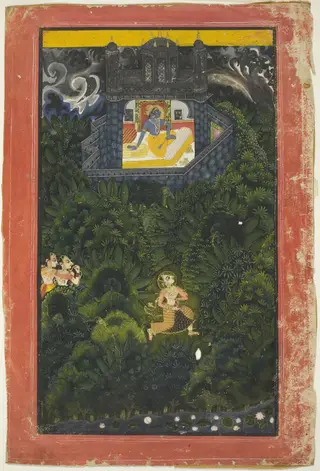 Abhisarika Nayika (Heroine Running to Meet her Lover)
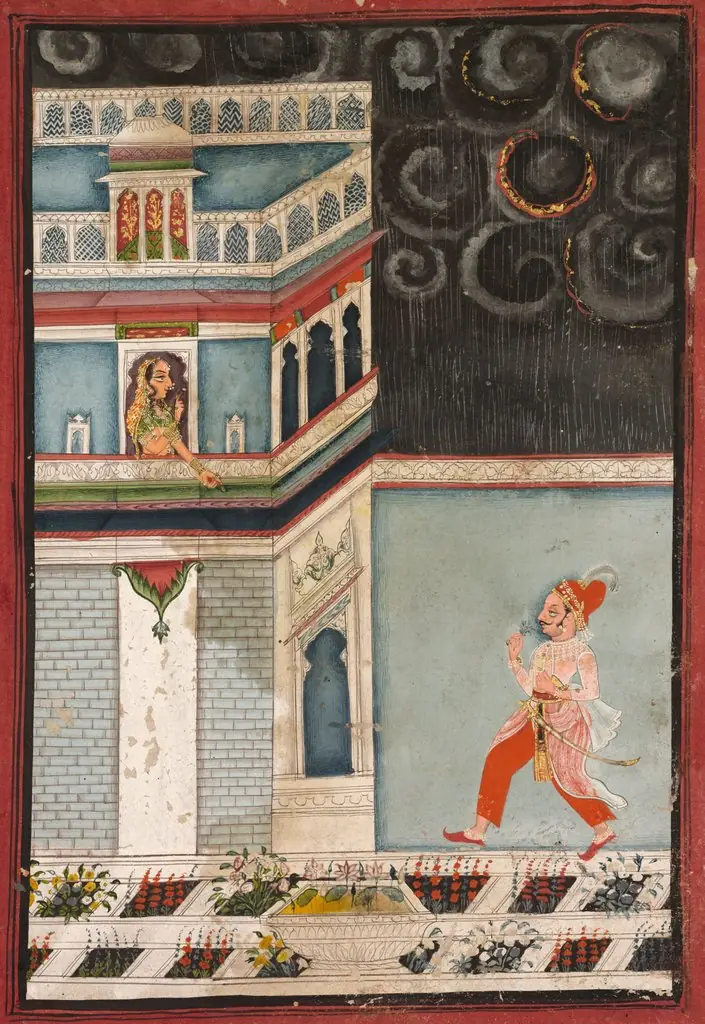 Lover's Tryst
 Rama and Ravana
 Untitled
 Untitled
 Battle of Ravana and Jatayu, from Chapters 50 and 51 of the Aranya Kanda (Book of the Forest) of Valmiki's Ramayana (Rama’s Journey); folio from the "Burnt" Ramayana
 Ragini Devagandhari, Page from a Jaipur Ragamala Set