Artwork
Untitled
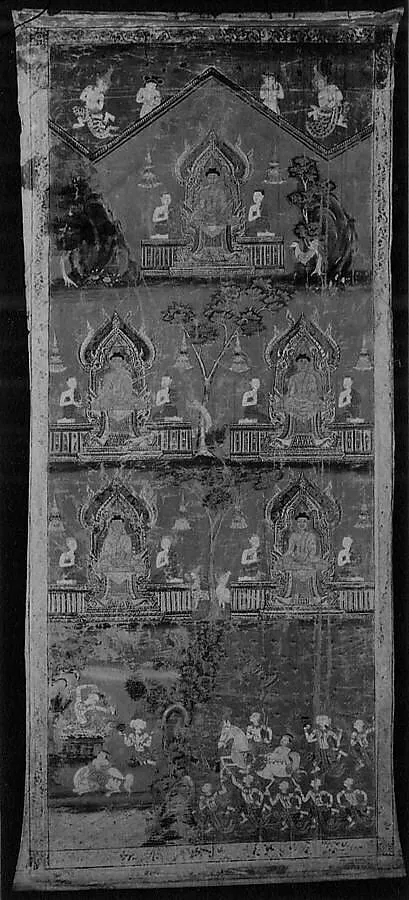
Untitled is a paint painting. It dates from 1749 and is held in the collection of the Metropolitan Museum of Art.
About this work
Subject & Meaning
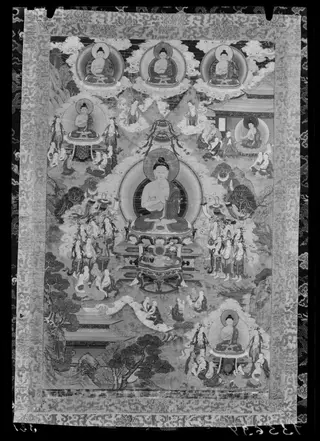
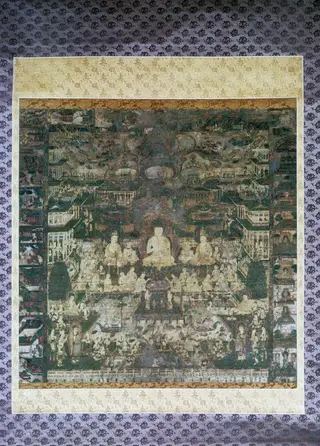
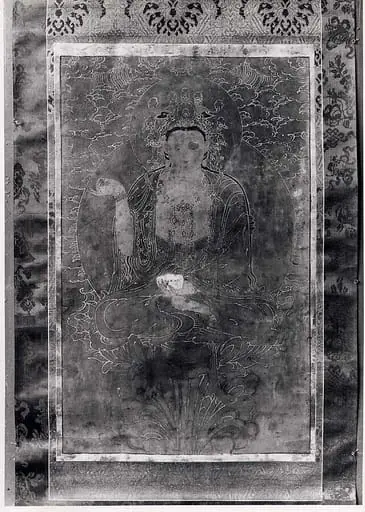
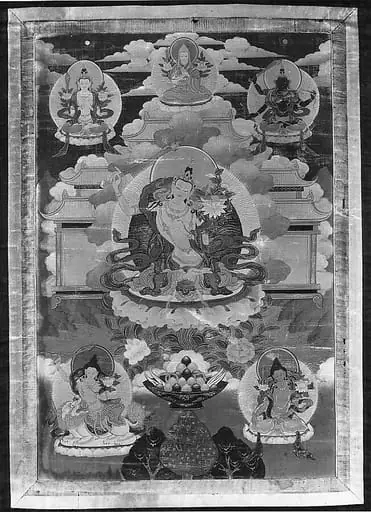
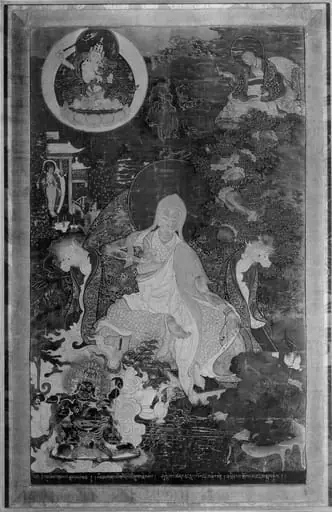
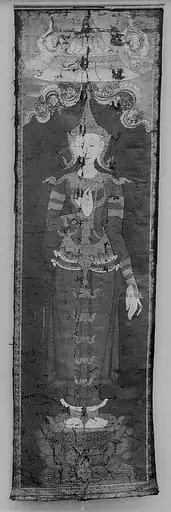
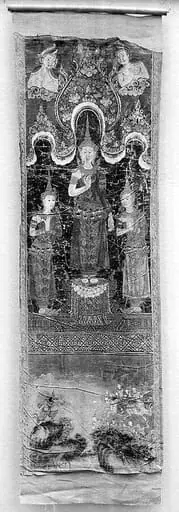
Created in 1749 by an anonymous artist, this hanging scroll serves as a religious work centered on the figure of the Buddha.
Created in 1749 by an anonymous artist, this hanging scroll serves as a religious work centered on the figure of the Buddha. The composition functions as a devotional image within the Buddhist tradition, explicitly depicting the founder of the religion to facilitate spiritual contemplation. As a piece classified under religious painting, its primary iconographic focus is the singular representation of the Buddha, embodying core tenets of Buddhist faith.
The work's meaning is derived directly from its genre and subject matter, presenting the enlightened being as the central object of veneration without additional narrative complexity noted in the available records. This straightforward depiction aligns with the function of hanging scrolls in religious contexts, where the visual presence of the figure is intended to inspire reverence and mindfulness among viewers.
Technique & Style
The work Untitled is recorded as a hanging scroll dated 1749, executed in color on canvas and classified as a religious painting depicting Buddha. Its support is a rectangular canvas strip intended for vertical suspension, a format typical of Buddhist scrolls. Pigments were applied directly onto the canvas surface, producing broad tonal washes and fine linear detailing.
The scroll's dimensions, as documented by the Metropolitan Museum of Art, measure approximately 223.5 cm in height by 97.2 cm in width. No condition report is included in the available records, and the formal qualities are defined by the central iconography of the Buddha figure and the restrained, devotional aesthetic characteristic of mid‑18th‑century Buddhist painting.
History & Provenance
The work titled Untitled is dated to 1749 and is executed as a hanging scroll in color on canvas, a format used for Buddhist paintings of the period. The subject depicts the Buddha and related Buddhist iconography, placing it in the religious genre. The artist is anonymous.
The painting is held in the collection of the Metropolitan Museum of Art in New York, where it is catalogued under the accession number 59.179.1, with physical dimensions of approximately 223.5 cm in height and 97.2 cm in width. The available sources do not document any exhibition history, prior loans, or public showings.
Overview
This untitled painting depicts a golden Buddha figure seated in a meditative posture, cross-legged upon a lotus blossom, with hands resting in his lap. Executed on a hanging scroll, likely using color on canvas, the artwork was designed for portability. Its format suggests it served a devotional or instructional purpose, intended for display and then rolled for storage or transport.
Context
Given its portable scroll format and religious subject matter, this painting likely functioned as a tool for devotion or instruction within Buddhist communities. Monks or practitioners would have utilized such scrolls during prayer, meditation, or as visual aids in teaching the principles of Buddhism. Its design allowed for its use in various settings, from temples to private study spaces.
Artist & collection