Artwork
Untitled
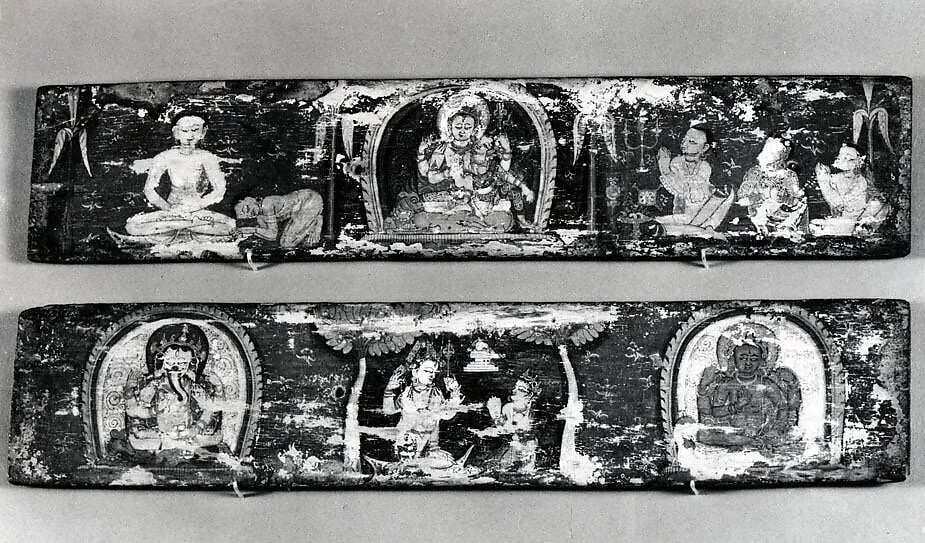
Untitled is a distemper painting. It dates from 1149 and is held in the collection of the Metropolitan Museum of Art.
About this work
Technique & Style
Created in 1149 in Nepal, this religious painting utilizes ink and distemper applied to a wood support.
Created in 1149 in Nepal, this religious painting utilizes ink and distemper applied to a wood support. The work is characterized by its elongated horizontal format, measuring 6.4 cm in height and 33.5 cm in width. Executed by an anonymous artist, the piece represents a specific tradition of devotional imagery from the region, defined by its compact vertical scale relative to its extensive length.
History & Provenance
Untitled is a religious painting produced in 1149 in Nepal using ink and distemper on wood. The work, attributed to an anonymous painter, measures 6.4 cm in height and 33.5 cm in width. Its creation date is recorded as 1149‑01‑01.
The piece entered the collection of the Metropolitan Museum of Art, where it remains on view. It is classified as a Paintings genre work within the museum's religious art holdings. No earlier owners or commissioning details are documented in the sources.
The work is held in the collection of the Metropolitan Museum of Art. Its dimensions, as recorded in the museum's documentation, are 6.4 by 33.5 units, consistent with a small horizontal devotional panel executed in ink and distemper on wood.
No accession number or specific gallery location is provided in the available sources, and no exhibition history is documented.
Overview
This untitled work comprises two elongated wooden panels, executed with ink and distemper. The muted palette and visible signs of age, including cracks and flaking paint, attest to its antiquity. Each panel presents a composition centered around a primary figure, surrounded by additional seated figures, suggesting a narrative or devotional purpose.
Subject & Meaning
Each panel features a prominent central figure, with the upper panel's main subject framed within a rounded archway. Surrounding these focal points are multiple seated figures, depicted with varied hand gestures. This hierarchical arrangement, emphasizing the central characters, suggests a structured narrative or a representation of deities and their attendants, common in devotional art.
Context
These panels represent an example of early Nepalese artistic production. Their style and medium align with other works originating from the region during a similar period, providing insight into the visual culture and artistic traditions prevalent in Nepal. Such pieces often served religious or didactic functions within temples or private devotional settings.
Artist & collection

- Untitled
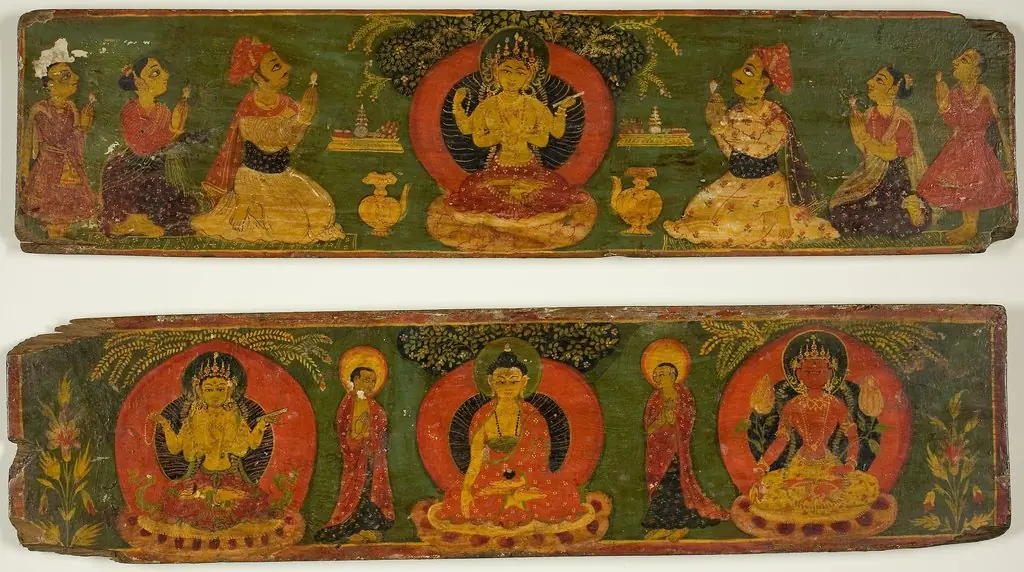 Pair of Buddhist Manuscript Covers
 Folio 348 from a Gandavyuha-sutra (Scripture of the Supreme Array): Bodhisattva Manjushri with two forms of Avalokiteshvara (recto); Bodhisattva Samantabhadra purifies the path to enlightenment, with Manjushri (verso)
 Untitled
 Bodhisattva Manjushri with two forms of Avalokiteshvara, folio 348 (recto) from a Gandavyuha-sutra (Scripture of the Supreme Array)
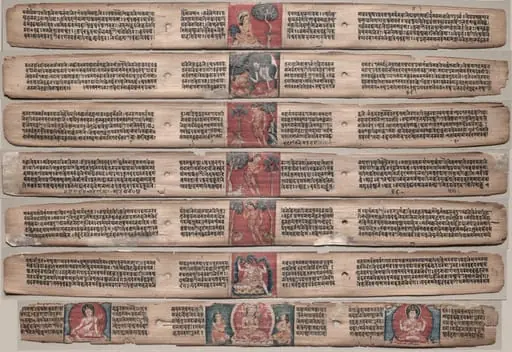 Seven Leaves from a Manuscript of the Gandavyuha-sutra (Scripture of the Supreme Array)
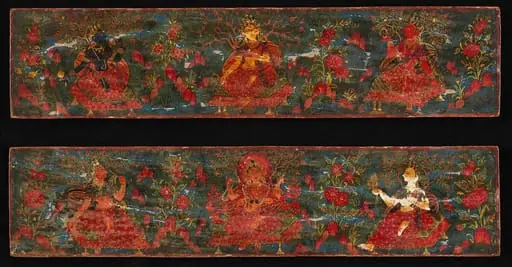 Untitled
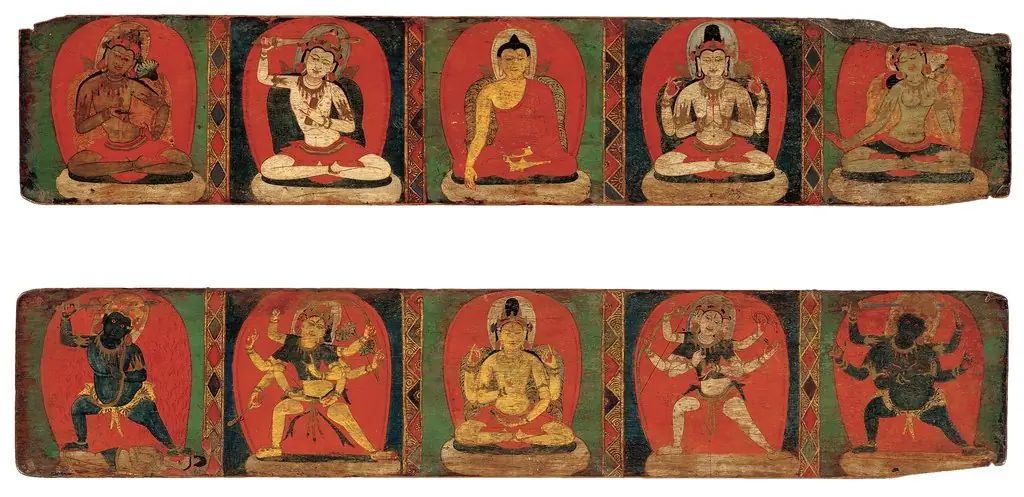 Pair of book covers with Buddhist deities
 Manuscript of the Perfection of Wisdom in Eight Thousand Lines (Ashtasahasrika Prajnaparamita-sutra)
 Perfection of Wisdom in Eight Thousand Lines: Ashtasahasrika Prajnaparamita: Back Cover
 Folio 20 from a Gandavyuha-sutra (Scripture of the Supreme Array): Sudhana and a parrot (recto); Text (verso)
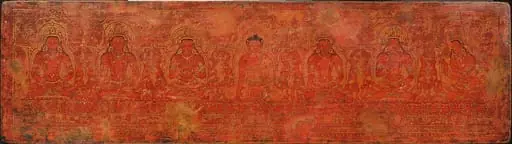 Untitled