Artwork
Vas ceramic smălțuit de mici dimensiuni, piriform, cu baza plată și bombat în zona „pântecelui”. Prezintă o toartă ce pornește din zona gâtului redus ca dimensiuni și se termină în zona diametrul maxim al vasului. Decorul vasului este compus din trei registre picturale. În primul registru au fost pictate două flori albe pe fundal verde și o a treia pe fundal maro, fiind despărțite prin linii de culoare galbenă. Cel de-al doilea registru a fost decorat cu motive geometrice stilizate, linii și triunghiuri afrontate de culoare galbenă, pe fundal de culoare verde. Ultimul registru a fost decorat cu linii de culoare maro și galben, asemenea cu trei brazi și înconjurate de câte două frunze de culoare verde. Toate cele trei registre picturale sunt încadrate de câte trei linii concentrice (două subțiri și una lată) de culoare maro-închis și maro-roșcat. Pe toartă este decorat cu linii paralele orizontale. Cromatică: fond alb; motive: galben; verde; maro.
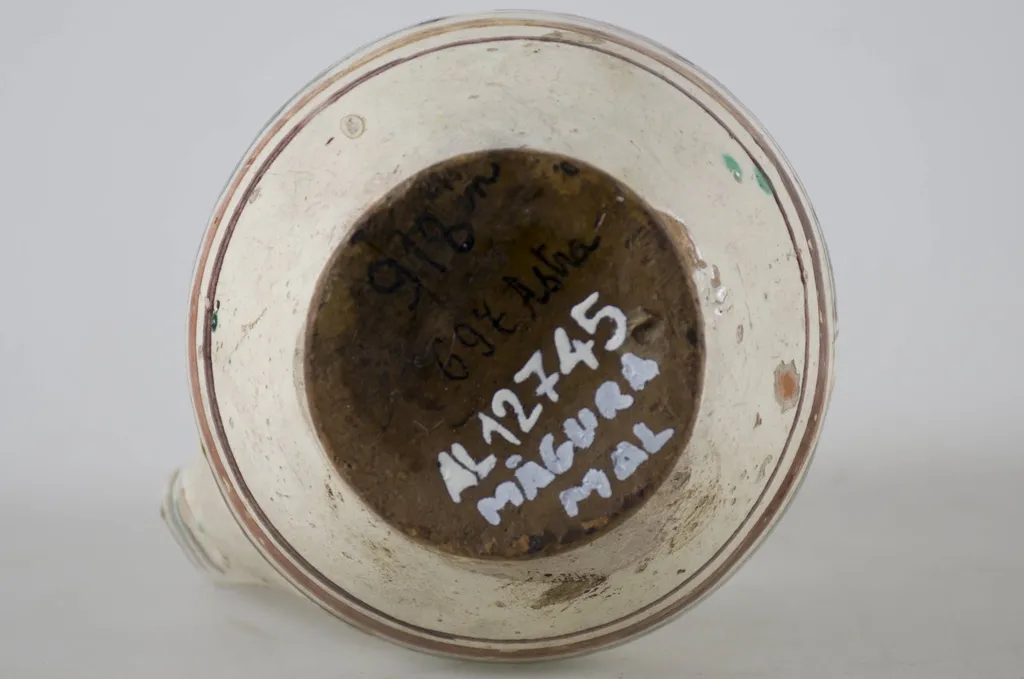
Vas ceramic smălțuit de mici dimensiuni, piriform, cu baza plată și bombat în zona „pântecelui”. Prezintă o toartă ce pornește din zona gâtului redus ca dimensiuni și se termină în zona diametrul maxim al vasului. Decorul vasului este compus din trei registre picturale. În primul registru au fost pictate două flori albe pe fundal verde și o a treia pe fundal maro, fiind despărțite prin linii de culoare galbenă. Cel de-al doilea registru a fost decorat cu motive geometrice stilizate, linii și triunghiuri afrontate de culoare galbenă, pe fundal de culoare verde. Ultimul registru a fost decorat cu linii de culoare maro și galben, asemenea cu trei brazi și înconjurate de câte două frunze de culoare verde. Toate cele trei registre picturale sunt încadrate de câte trei linii concentrice (două subțiri și una lată) de culoare maro-închis și maro-roșcat. Pe toartă este decorat cu linii paralele orizontale. Cromatică: fond alb; motive: galben; verde; maro. is an unspecified painting by Unknown. It dates from 1850 and is held in the collection of the ASTRA National Museum Complex. A modestly sized, pear‑shaped ceramic vessel with a flat base and a swollen belly.
About this work
Overview
A modestly sized, pear‑shaped ceramic vessel with a flat base and a swollen belly. The jar features a narrow neck that expands to its maximum diameter at the body, and its exterior is predominantly white. Concentric bands of dark brown‑red and deep brown encircle the piece, framing three distinct decorative zones.
Subject & Meaning
The lowest register displays two white flowers on a green background and a third flower on a brown ground, separated by thin yellow lines.
The decorative program is organized into three horizontal registers. The lowest register displays two white flowers on a green background and a third flower on a brown ground, separated by thin yellow lines. The middle register presents stylized geometric motifs—yellow lines and opposing triangles—set against green. The upper register shows three stylized fir trees outlined in brown and yellow, each flanked by two green leaves.
Technique & Style
The vessel is glazed and painted with mineral pigments, employing a limited palette of white, yellow, green, and brown tones. The concentric framing consists of two narrow and one broader line, applied in dark brown‑red hues. Horizontal parallel lines decorate the neck, adding a subtle rhythmic texture to the overall composition.
History & Provenance
The jar bears faint, multicolored inscriptions on its interior, suggesting it was marked for identification or inventory purposes. The wear and patina indicate prolonged use, typical of functional household ceramics in traditional settings. Its provenance is linked to ethnographic collections, where similar forms are documented.
Context
Such pear‑shaped, glazed containers are characteristic of regional folk pottery, often used for storing foodstuffs or liquids. The decorative motifs—floral, geometric, and arboreal—reflect a synthesis of symbolic imagery common in rural decorative traditions.
Artist & collection

 Domestic Scene
 Giacomo and Cardinal Marco, investing Andrea, Abbot of San Zeno, with his Benefice
 The Nymph of Fontainebleau
 Portrait of a Woman
 Madonna and Child with Saints in the Enclosed Garden
 Venus and Minerva
 Family Group of Four on Sofa
 Wall painting from Room H of the Villa of P. Fannius Synistor at Boscoreale
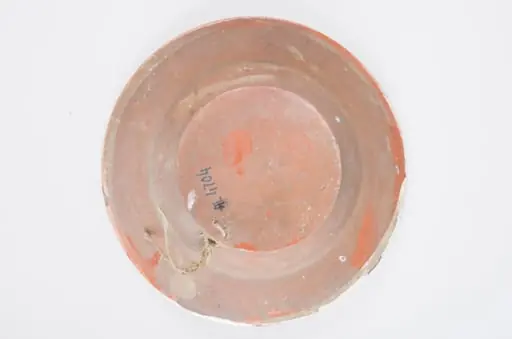 Farfurie cu fundul adâncit și buza evazată. Smălțuită numai în interior și cu scurgeri de smalț sub buză. Prezintă găuri pentru prinderea aței în vederea agățării. Decorată cu motive florale și geometrice: central un buchet de trei flori; pe margine trei linii frânte concentrice. Cromatică: fond: alb; motive: maro; portocaliu; verde; albastru.
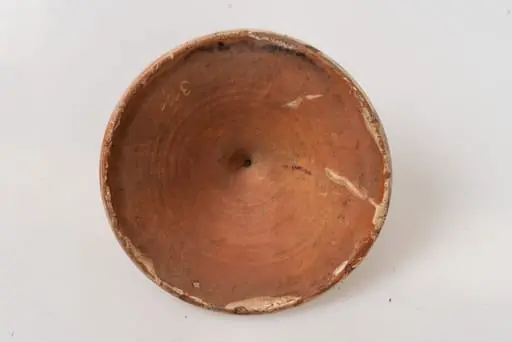 Capac din lut, de formă conică, prevăzut cu un mâner de prindere sub formă de buton în partea superioară. Este acoperit cu un strat de humă albă pe fața exterioară, peste care este pictat cu cornul și cu pensula decorul format din motive florale stilizate și geometrice: patru flori cu petale desenate cu contur albastru, având câte un punct maro înăuntru, separate de linii subțiri albastre și dungi colorate verticale (albastre și galben-ocru închis), dispuse median pe corpul piesei. Decorul este completat cu linii circulare subțiri, de culoare albastră și dungi circulare de culoare verde și maro. Vârful mânerului este marcat cu culoare galben-ocru. Suprafața ornamentată a piesei este acoperită cu un start de smalț transparent. Cromatica: alb, albastru, verde, galben-ocru, maro.
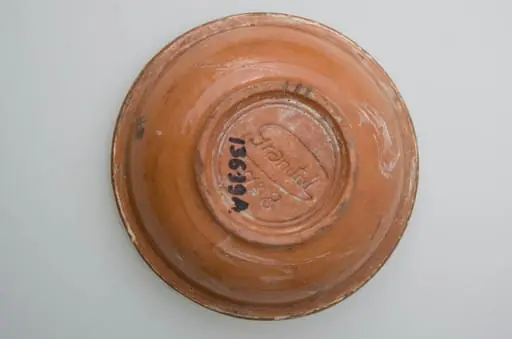 Vas ceramic smălțuit, de formă circulară cu profil tronconic, având pereții ușor evazați, baza plată și buza circulară. Decorat cu motive vegetal-florale și cordiforme pe fundul vasului (două rânduri de frunze, o lalea și o inimă), pictate cu pensula. Fundul vasului este delimitat de pereți printr-o linie subțire, circulară. Gura este pictată în alb și la exterior.Pe fundul vasului găsim marca Granitul No 8 și două cercuri concentrice, incizate. Cromatică: fond alb interior, cărămiziu și alb exterior; motive: albastru, cărămiziu, verde, maro.
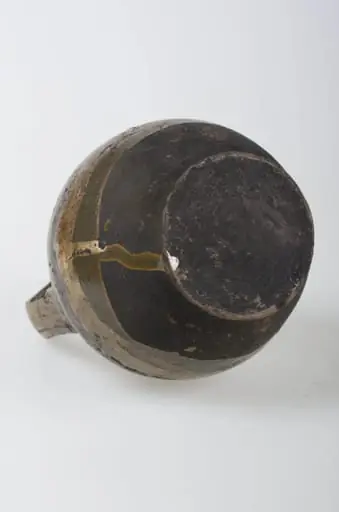 Recipient ceramic de formă sferică cu o toartă ce pornește de la baza buzei, printr-un inel, și se prinde de corp deasupra diametrului maxim. Buza este înaltă și relativ îngustă. Decorul este compus din motive geometrice (liniare, curbilinii) pictate, plasate pe toată suprafața obiectului. Pe alocuri sunt prezente pete de smalț. Vasul este smălțuit la exterior. Cromatică: fond: maron; bej; motive: maron închis, verde, galben.
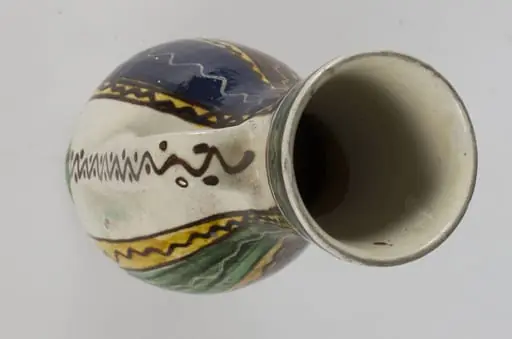 Vas piriform cu gât foarte înalt și gura largă și evazată, cu o toartă care pleacă din zona gâtului și se unește cu corpul deasupra diametrului maxim. Smălțuit în interior și exterior. Decorul este realizat din două registre orizontale ce încadrează unul vertical. Registrele orizontale prezintă un decor geometric format din două linii concentrice ce încadrează o linie în val toată de culoare maro pe un fond verde. Registrul vertical este împărțit în mai multe benzi cu fond verde, galben, maro, albastru alternante separate de linii drepte de culoare maro. Pe fondurile de culoare maro, verde, albastru sunt trasate linii în val de culoare albă dispuse vertical, iar pe cele de culoare galbenă linii în val de culoare maro. În dreptul torții corpul vasului nu este decorat. Toarta este decorată cu o linie în val dispusă vertical încadrată de două șiruri de puncte. În partea superioară și inferioară registrul vertical este încadrat de câte o linie maro. Baza vasului este pictată cu verde și mărginită în partea superioară tot cu o linie maro. Cromatică: fond: alb: motive: verde; maron; albastru; galben; alb.
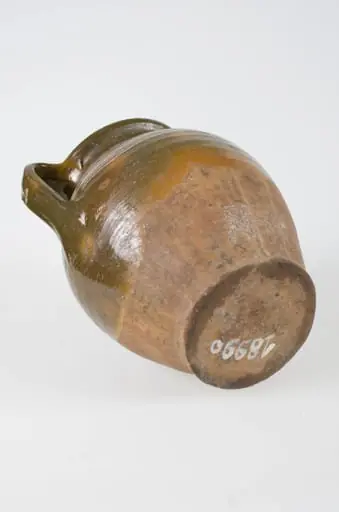 Vas de formă ovoidală, cu gât scurt, cu buza ușor înălțată și evazată, cu o toartă care pleacă din buză și se unește cu corpul în zona diametrului maxim. Este smălțuit în interior și exterior (partial) . Este decorat pe umăr cu motive geometrice: trei linii (pe alocuri patru), suprapuse parțial de motive florale stilizate: două flori realizate din puncte și pete albe și verzui. Toartă este decorată cu trei linii orizontale late. Cromatica: fond: maro și cărămiziu; motive: alb, verde.