Artwork
Vas mare de lut, de forma unei amfore cu gura și fundul înguste. Prezintă două toarte dispuse orizontal în partea maximă a vasului pentru manevrare și capac de formă semisferică, prevăzut cu buton. Atât vasul cât și capacul sunt ornamentate prin stropire: pete verzi scurse pe fundal alb. Chiupul mai prezintă și un brâu împletit, în relief, sub gură și pe umăr. Cromatică: fond: alb; motive: verde.
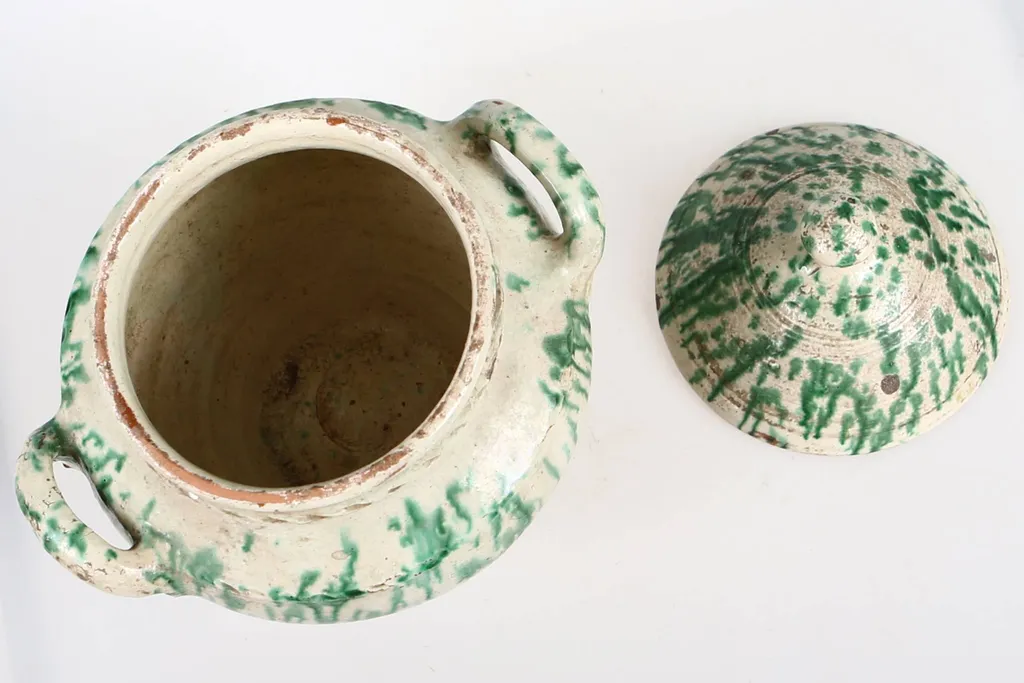
Vas mare de lut, de forma unei amfore cu gura și fundul înguste. Prezintă două toarte dispuse orizontal în partea maximă a vasului pentru manevrare și capac de formă semisferică, prevăzut cu buton. Atât vasul cât și capacul sunt ornamentate prin stropire: pete verzi scurse pe fundal alb. Chiupul mai prezintă și un brâu împletit, în relief, sub gură și pe umăr. Cromatică: fond: alb; motive: verde. is a photography by Unknown. It dates from 1850 and is held in the collection of the ASTRA National Museum Complex. This ceramic vessel is shaped like an amphora with narrow neck and base, suggesting a functional design for storage or transport.
About this work
Overview
This ceramic vessel is shaped like an amphora with narrow neck and base, suggesting a functional design for storage or transport.
This ceramic vessel is shaped like an amphora with narrow neck and base, suggesting a functional design for storage or transport. It includes two horizontal handles for ease of handling and a hemispherical lid with a central knob. Both vessel and lid are decorated with a simple yet distinct technique: green splatters applied over a white slip. A woven-band relief encircles the shoulder and lower neck, adding tactile texture to the surface.
Subject & Meaning
The vessel’s form and decoration do not depict figural scenes but rely on abstract ornamentation. The green splatters may reference natural pigments or symbolic gestures tied to earth or fertility, while the woven band evokes textile patterns common in domestic crafts. Its design prioritizes utility and subtle aesthetic harmony, reflecting a cultural emphasis on everyday beauty rather than ceremonial display.
Technique & Style
The vessel was formed from clay and fired to create a durable, slip-coated surface. Decoration was achieved through splattering—likely by flicking or spraying liquid pigment—to produce irregular green spots on a white ground. Relief bands were modeled by hand before firing, giving the woven pattern a tactile presence. The palette is limited to two colors, emphasizing restraint and material authenticity.
History & Provenance
Though exact origins are unrecorded, the vessel’s form and decoration align with regional ceramic traditions from Eastern Europe, possibly dating to the late 19th or early 20th century. Similar pieces appear in ethnographic collections from rural communities where utilitarian pottery retained decorative elements rooted in local craft practices. Its survival suggests it was valued beyond mere function.
Context
In rural households of the region, such vessels were likely used for storing grains, liquids, or preserved foods. The lid’s snug fit and knob facilitated sealing and lifting, while the handles allowed safe carrying. Decoration, though non-figural, distinguished household items from plain wares, signaling care in domestic life and continuity of artisanal methods passed through generations.
Legacy
This vessel represents a quiet continuity in folk ceramic traditions, where form and minimal ornament served both practical and cultural needs. It stands as an example of how everyday objects carried identity through subtle design choices. Today, it contributes to broader understandings of non-elite material culture and the aesthetic values embedded in utilitarian crafts.
Artist & collection

 Domestic Scene
 Giacomo and Cardinal Marco, investing Andrea, Abbot of San Zeno, with his Benefice
 The Nymph of Fontainebleau
 Portrait of a Woman
 Madonna and Child with Saints in the Enclosed Garden
 Venus and Minerva
 Family Group of Four on Sofa
 Wall painting from Room H of the Villa of P. Fannius Synistor at Boscoreale
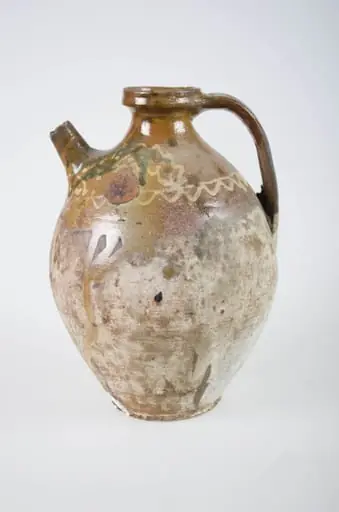 Vas de formă ovoidală cu gât lung, cu gura largă și buza înălțată. Prezintă o toartă care pleacă din gura vasului și se unește cu corpul în zona diametrului maxim. Din umăr, în partea opusă torții pleacă o țâță scurtă (burciuc). Vasul este smălțuit pe exterior în partea superioară unde prezintă și un decor format din motive geometrice: linie și linie în val deasupra cărora se regăsesc motive florale. Cromatica: fond: cărămiziu; motiver: alb-gălbui, verde. Prezintă uzură funcțională.
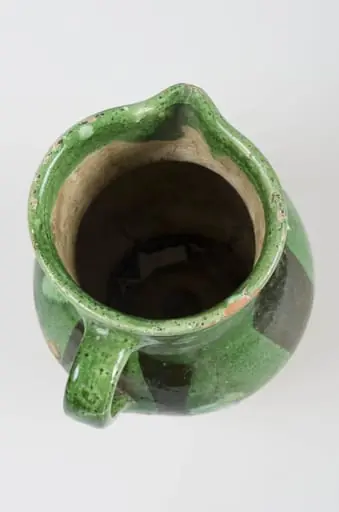 Cană modelată la roată, arsă și smălțuită. Ornamentată cu puncte, picățele, interior nesmălțuit. Vasul prezintă un cioc la buză și o toartă ce pleacă de sub gât și se uneste cu corpul aproape de zona diametrului maxim. Cromatică: verde; maro; roșu-cărămiziu.
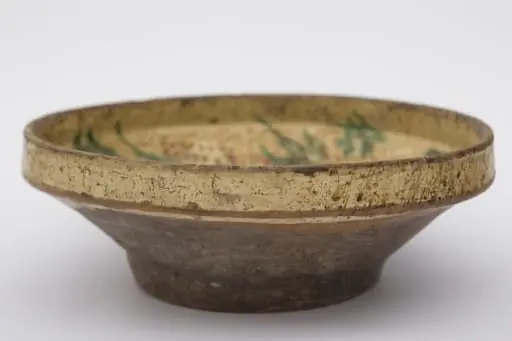 Vas din lut de formă circulară cu profil tronconic, smălțuit la interior, cu buza rotunjită. Decorat cu motive vegetal-florale pictate cu pensula pe suprafața interioară: pe fundul vasului, central, este pictată o floare cu frunze iar pe pereții vasului un șir de flori cu frunze multiple, lunguiețe si punctate. Rol decorativ. Prezintă urme de uzură funcțională. Cromatică: fundal exterior cărămiziu , fundal interior galben; motive: verde, cărămiziu, maro.
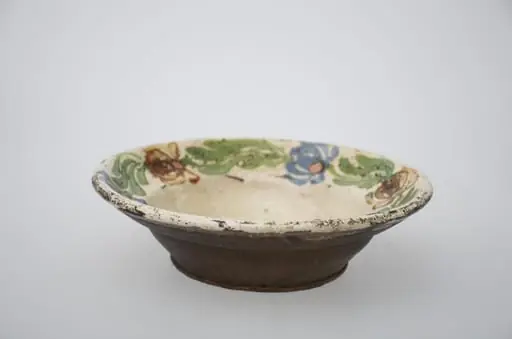 Farfurie de formă tronconică adâncă cu buza largă și decor pe fund, spre margini. Ornamentat cu motive florale. Cromatică: fond: alb; motive: maro; verde; albastru.
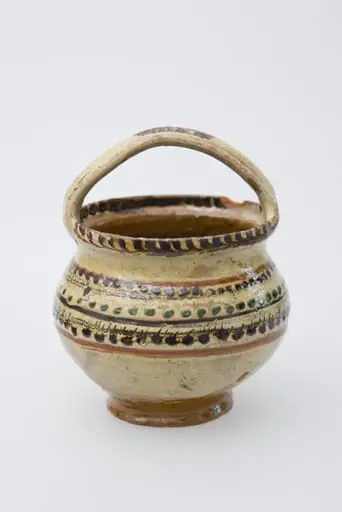 Vas ceramic de mici dimensiuni, pe bază inelară, pântecos, cu fundul și gura late. Deasupra gurii vasului a fost pusă o toartă de prindere. Buza vasului a fost pictată printr-un brâu de crenguțe. Pe pântecul vasului brâuri de puncte și două benzi subțiri jirăvite. Smălțuit în interior și exterior. Cromatică: fond: crem; motive: verde; maro; bej.
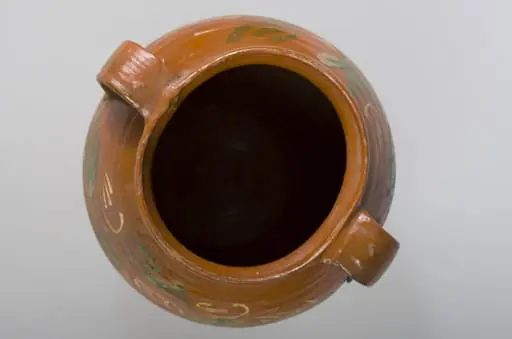 Vas de formă bitronconică, cu gât scurt cu buză rotunjită și evazată. Oala este smălțuită interior și pe 2/3 din exterior. Prezintă două toarte late ce unesc buza vasului de zona diametrului maxim. Decorații în registru floral-vegetal, dispuse concentric, în partea superioară a vasului, compuse din linii ondulate și palmate. Cromatică: fond: cărămiziu; motive: alb, verde.
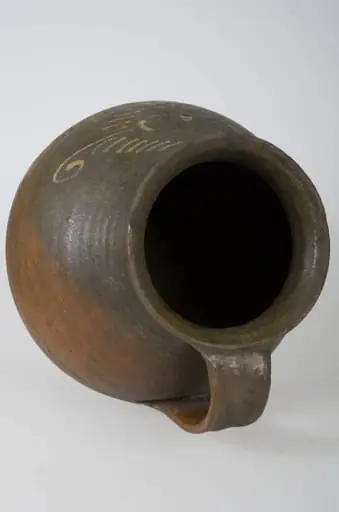 Vas de formă ovoidală bombat în partea mediană, cu buză dreaptă și ieșită ușor în afară, smălțuit. Prezintă o toartă lată ce unește gura vasului cu partea de diametru maxim. Decorații în plan frontal, ilustând o floare cu petale sugerate de linii verzi, ce radiază dintr-un punct alb. Motivul central este încadrat de linii albe paralele orizontale, ce crează forma unui romb. Cromatică: fond: brun; motive; alb; verde.
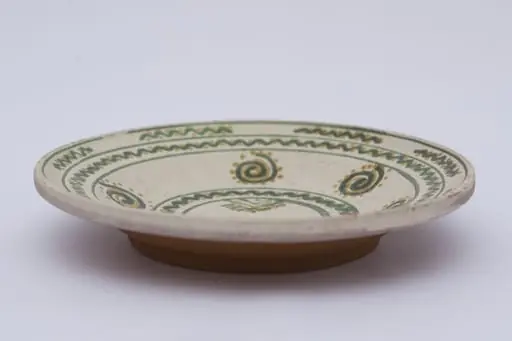 Vas ceramic de formă discoidală pe bază puțin înălțată. Fața farfuriei a fost introdusă în angobă albă, decorația a fost făcută cu pensula. Pe fundul vasului sunt două cercuri concentrice: în primul sunt doi brăduți, iar în al doilea valul punctat. Pe pereți sunt șase spirale punctate. Marginea vasului a fost împărțită în două registre, primul cu val punctat, în al doilea sunt șapte valuri întrerupte. La posterior, pe fund, semătura ”D Șchiopu ''. Pentru atârnare baza este perforată. Cromatică: fond: alb; motive; verde; galben.
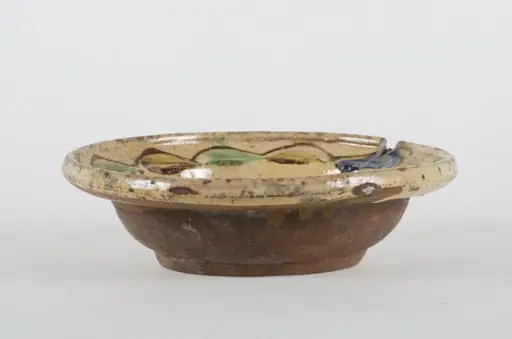 Vasul din lut de formă tronconică este lucrat la roata rapidă; prezintă buza puternic îngroșată, pereții abrupți, blidul fiind foarte adâncit. Este smălțuit în interior iar decorul este împărțit după cum urmează: pe interiorul buzei se identifică motive vegetale dispuse într-un registru continuu iar pe fundul vasului se regăsesc decorațiuni floral-vegetale. Cromatică: crem; verde; albastru; maro; galben.
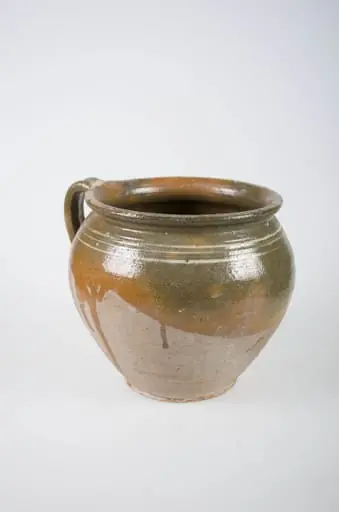 Vas cu corpul foarte bombat în partea superioară, cu un gât scurt și profilat, cu gura foarte lată, buza evazată și rotunjită. Din buză pornește o toartă care se unește cu corpul sub diametrul maxim. Vasul este smălțuit în interior și exterior (doar partea superioară). Este decorat cu motive geometrice: trei linii concentrice pe umăr și o linie scurtă orizontală pe toartă. Cromatica: fond: cărămiziu; motive: alb,.