Artwork
Venus Discovering the Dead Adonis
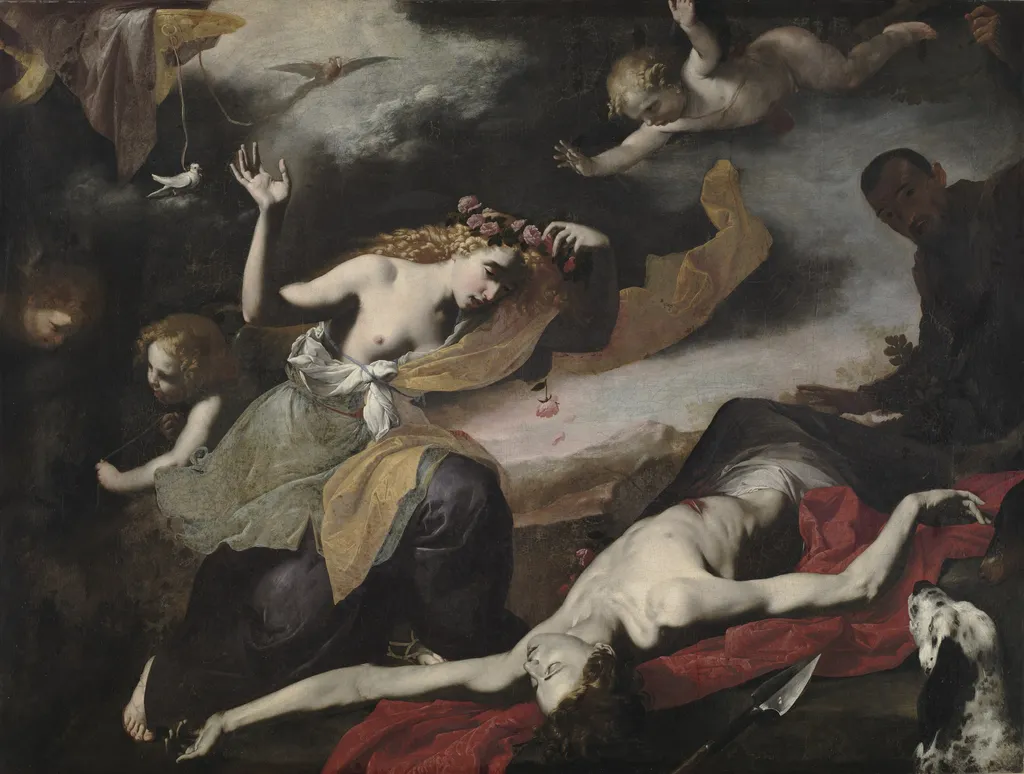
Venus Discovering the Dead Adonis is an oil painting. It dates from 1650 and is held in the collection of the Cleveland Museum of Art.
About this work
Subject & Meaning
This iconography represents the tragic intersection of divine love and mortal violence, rooted in Neapolitan artistic traditions of the mid-seventeenth century.
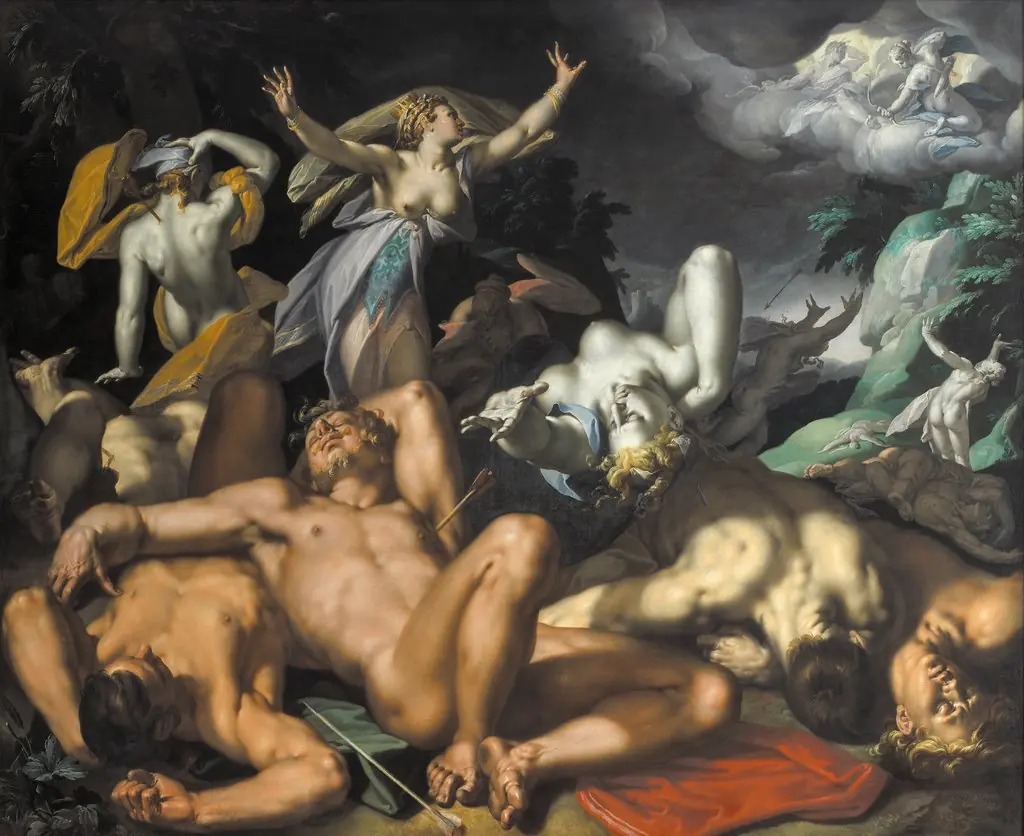
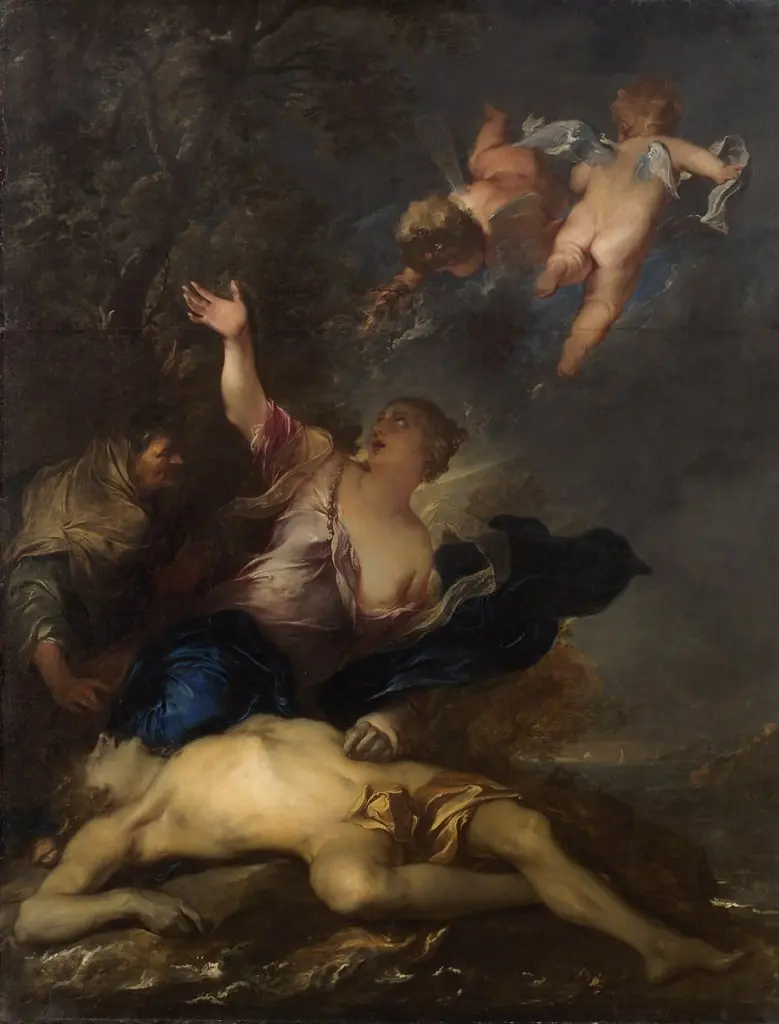
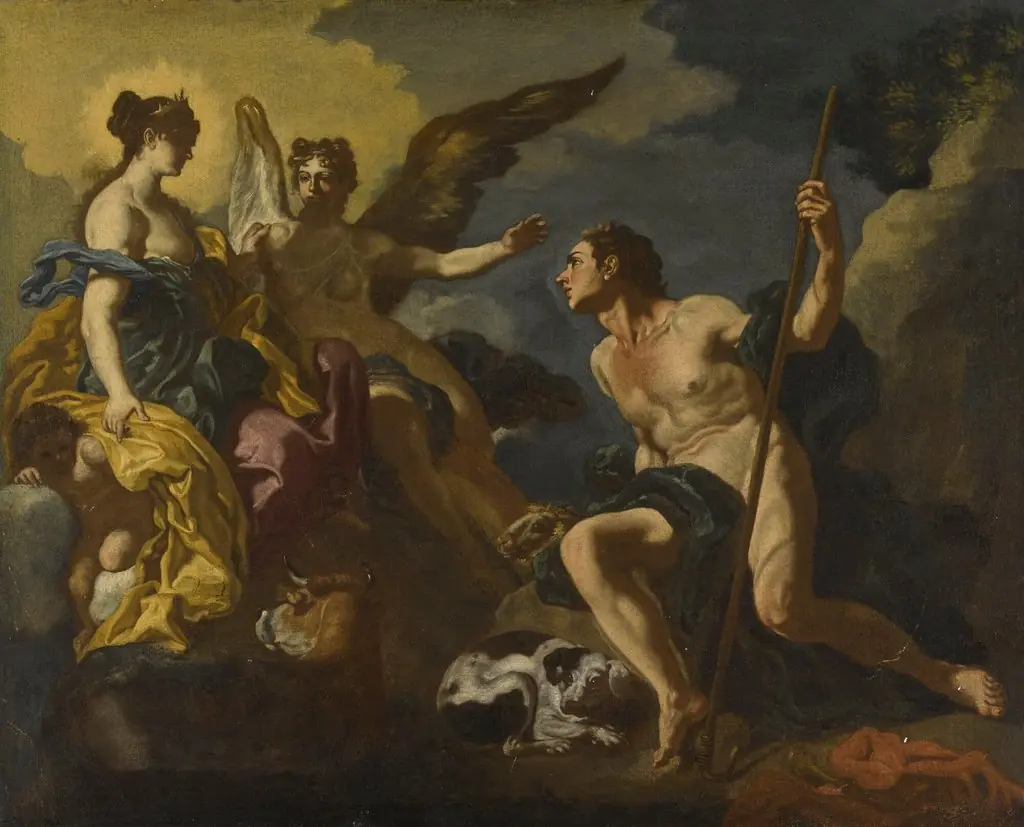
The painting depicts the mythological moment Venus discovers the lifeless body of her lover, Adonis, following his fatal attack by a wild boar. Drawing specifically from Giovanni Battista Marino's poem L'Adone, the composition shows the goddess in anguish, tearing roses from her hair to scatter over Adonis's corpse, an act also linked to verses by Bion of Smyrna. Adonis lies supine on a red tunic with a visible wound, accompanied by his dog, while the shepherd Clitio looks on in consternation.
Symbolically, the narrative alludes to Adonis's heart transforming into a red anemone. The scene includes Cupids restraining the boar and doves pulling Venus's chariot against a stormy backdrop. This iconography represents the tragic intersection of divine love and mortal violence, rooted in Neapolitan artistic traditions of the mid-seventeenth century.
History & Provenance
Venus Discovering the Dead Adonis is an oil on canvas painting dated to 1650, with dimensions of 184.4 by 238.8 cm. The work was acquired by the Cleveland Museum of Art in 1965 in connection with the museum's 50th anniversary celebration, at which point it was attributed to the Spanish painter José Ribera. Following its acquisition, the attribution was contested, and scholars have proposed alternative candidates including Luca Giordano, Mattia Preti, and Francisco Pérez Sierra, leaving the painting today catalogued as anonymous within the Italian school.
A photograph of the canvas relates it to a work copied onto the walls of a residence purchased in 1660 by the Marqués de Heliche, which was destroyed in 1936. Thematic links to Giovanni Battista Marino's poem L'Adone, together with handling of light and color, have led researchers to situate the painting's production in Naples in the mid-seventeenth century.
The painting is held by the Cleveland Museum of Art in Cleveland, Ohio, and has been displayed in the museum's permanent galleries devoted to European art since its 1965 acquisition.
Context
Venus Discovering the Dead Adonis is held by the Cleveland Museum of Art as an anonymous work of the Italian school, dated to the mid-seventeenth century. It was acquired in 1965 for the museum's fiftieth anniversary, at which point it was attributed to the Spanish painter José de Ribera, active in Naples; the attribution has since been questioned, with Luca Giordano, Mattia Preti, and Francisco Pérez Sierra proposed as alternative authors. A photograph of a painting copied onto the walls of the Marqués de Heliche's house, purchased in 1660 and destroyed in 1936, has been cited as evidence linking the canvas to Ribera.
The subject is thought to derive from Giovanni Battista Marino's poem L'Adone, and the handling of light and colour has been used to situate the work in Naples around the mid-1600s. The Adonis-and-Venus theme was Ribera's most frequently treated mythological subject, documented in several Spanish collections, and a signed version dated 1637 survives in Rome's Galleria Nazionale d'Arte Antica at Palazzo Corsini.
Legacy
The painting's legacy rests on its contested authorship and role in the transmission of Ribera's mythological program. After its 1965 acquisition, scholars questioned the original attribution to José Ribera, proposing alternatives such as Giordano, Preti, or Pérez Sierra, a debate documented in the museum's records. The work's iconography, derived from Marino's L'Adone, has been studied alongside the signed Ribera version dated 1637 in the Galleria Nazionale d'Arte Antica at Palazzo Corsini in Rome.
Its inclusion in the Cleveland Museum of Art's holdings has kept the subject visible in modern scholarship, reinforcing the painting's reputation as a key example of 17th-century mythological narrative.
Overview
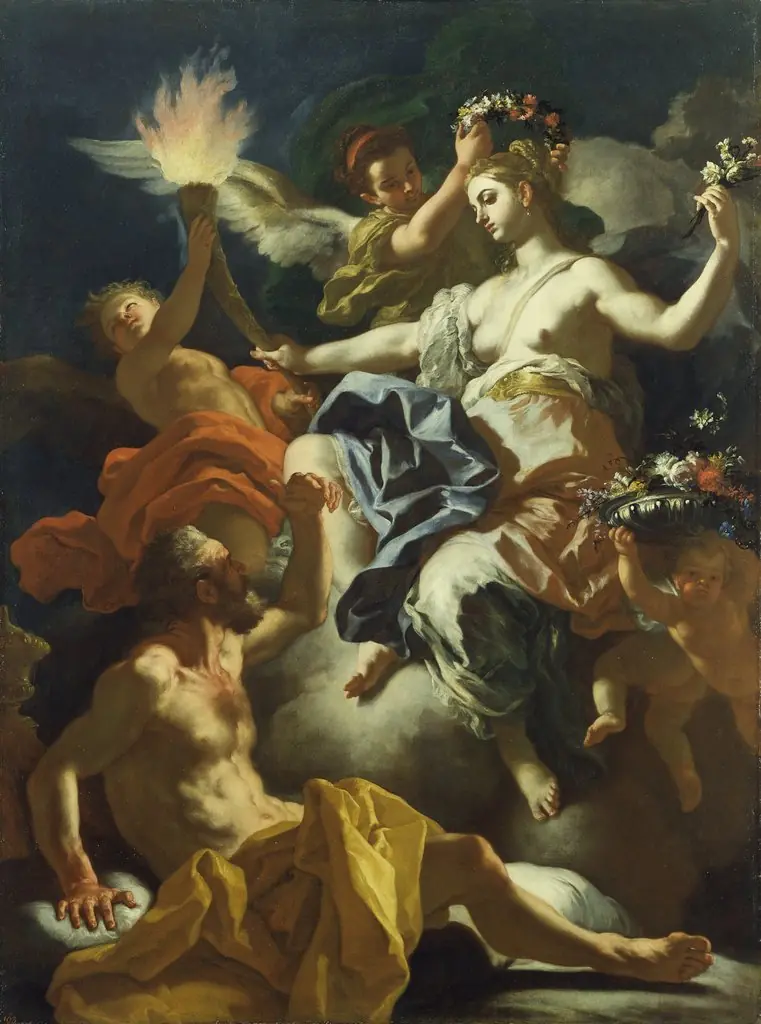
This oil painting, titled Venus Discovering the Dead Adonis, depicts a poignant mythological moment. The composition centers on two nude figures, Venus and Adonis, set against a somber backdrop. The goddess, positioned on a cloud, encounters the lifeless body of her beloved, sprawled on the ground below. Small cherubic figures populate the surrounding space, underscoring the dramatic and emotional nature of the scene.
Technique & Style
The artist employs chiaroscuro, a technique characterized by strong contrasts between light and dark, to heighten the painting's dramatic impact. The figures of Venus and Adonis are illuminated, making them prominent against the deep, dark background. This strategic use of light and shadow draws the viewer's eye to the central narrative, emphasizing the textures of skin and drapery while enhancing the overall emotional intensity of the composition.
Artist & collection