Artwork
Penitent Magdalene
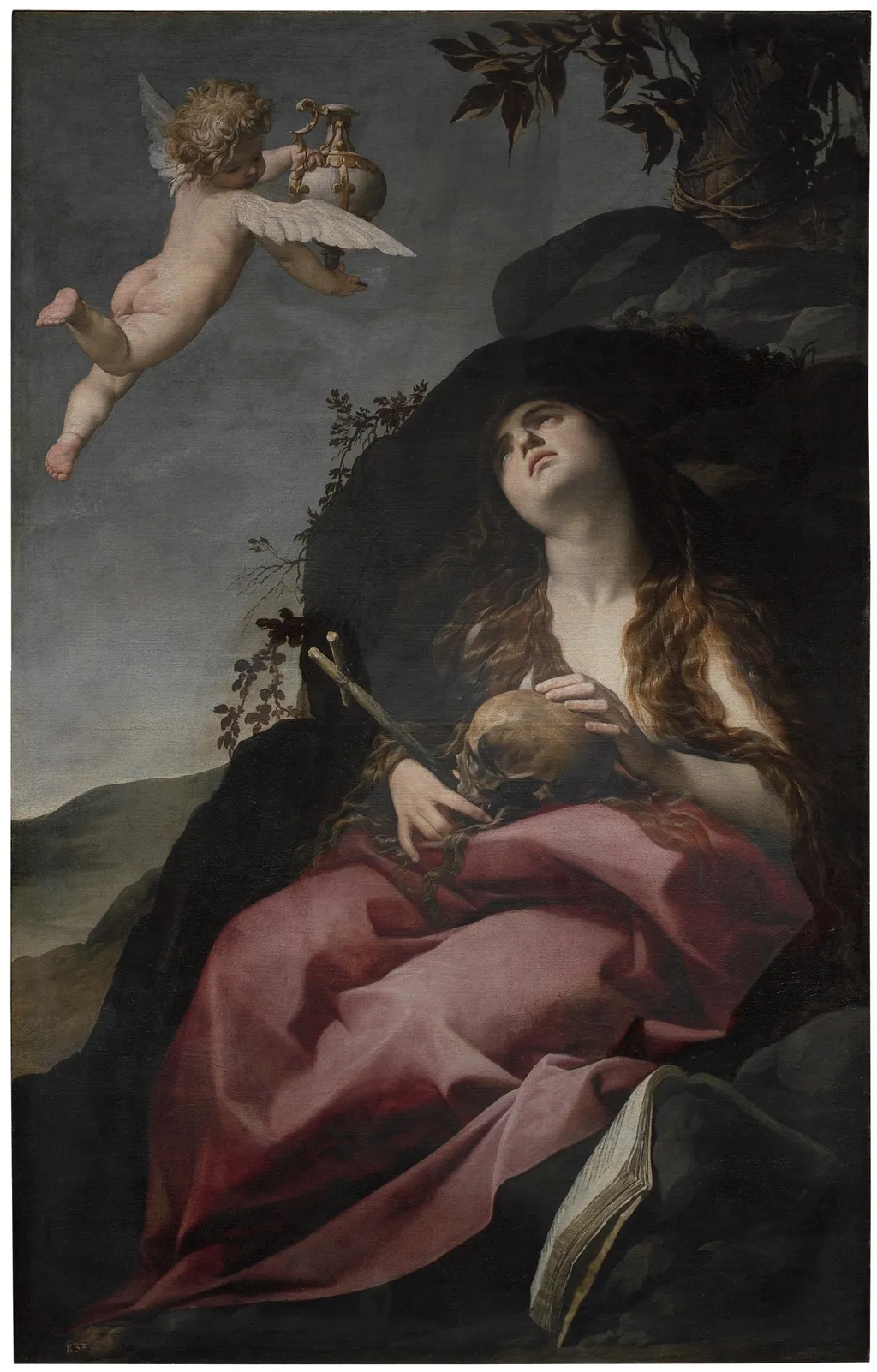
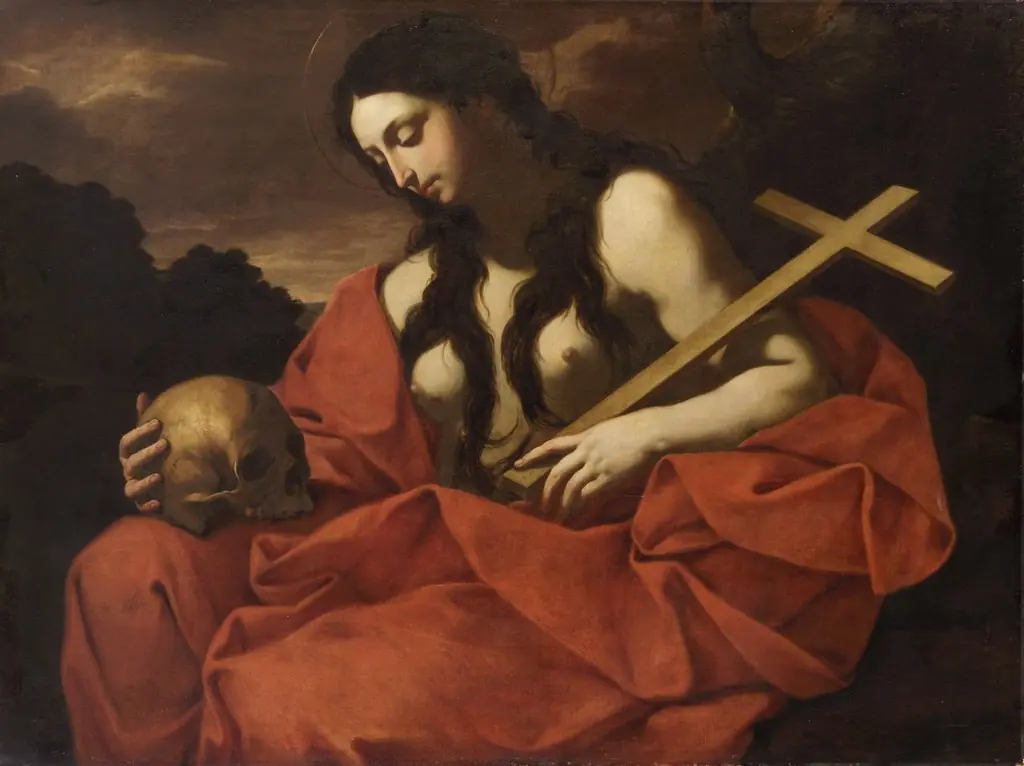
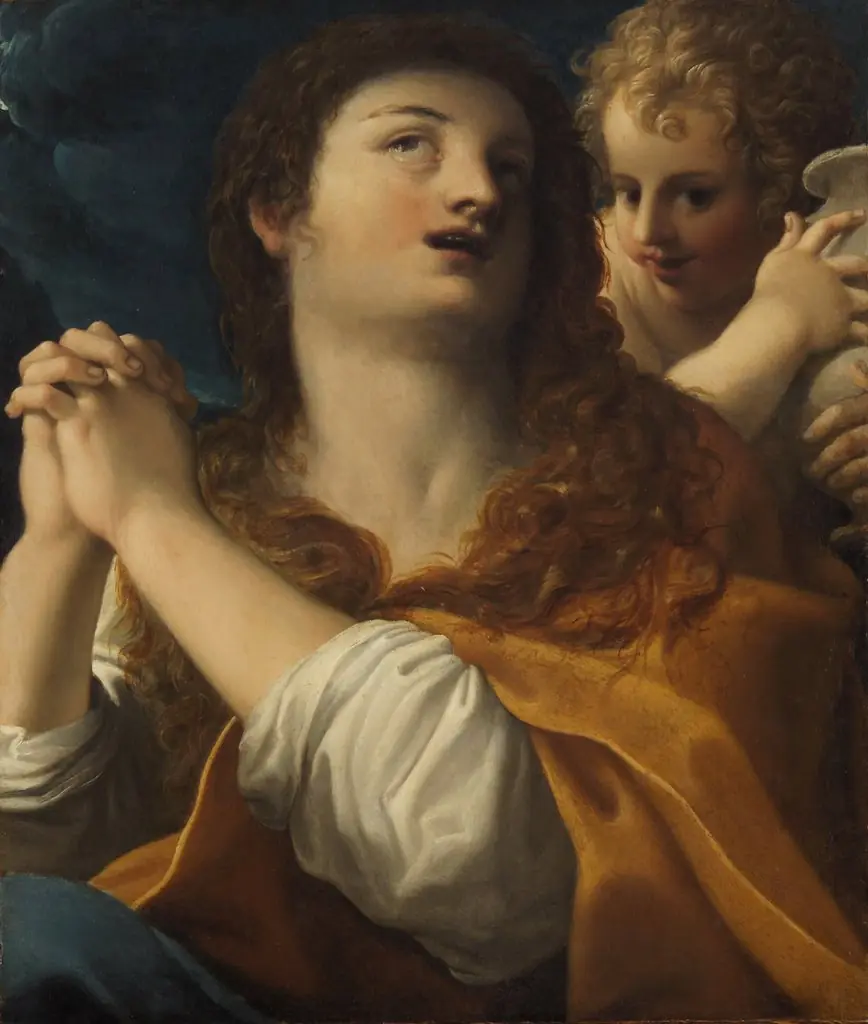
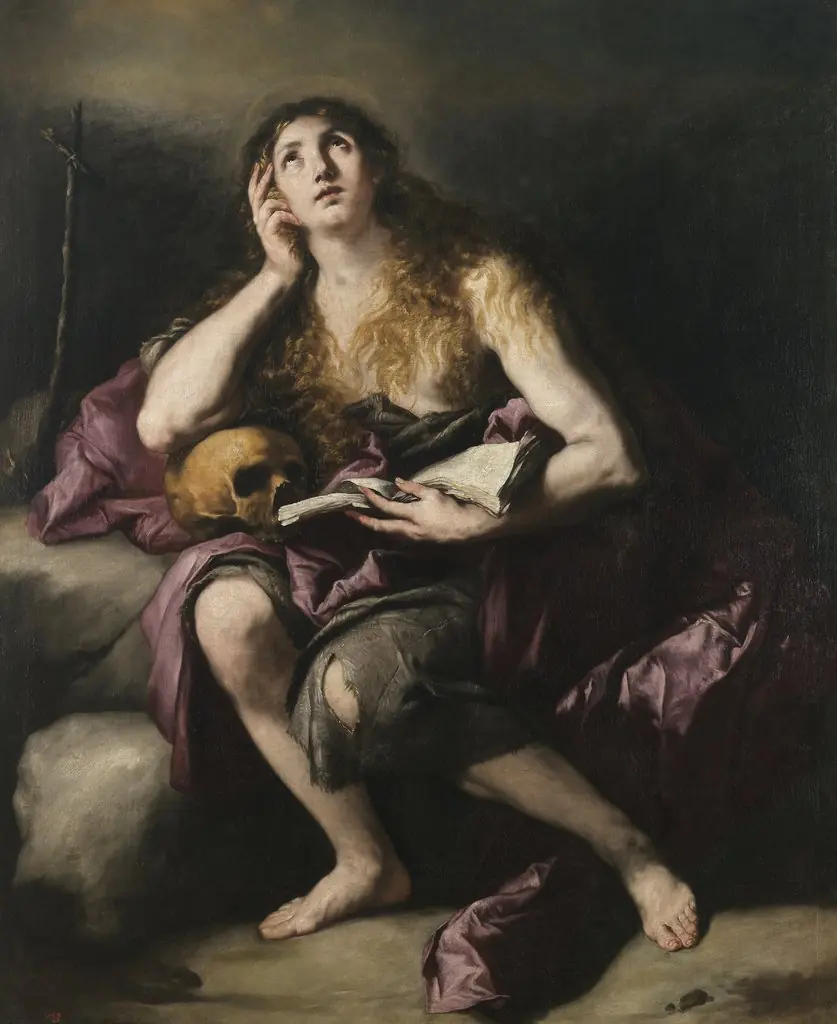
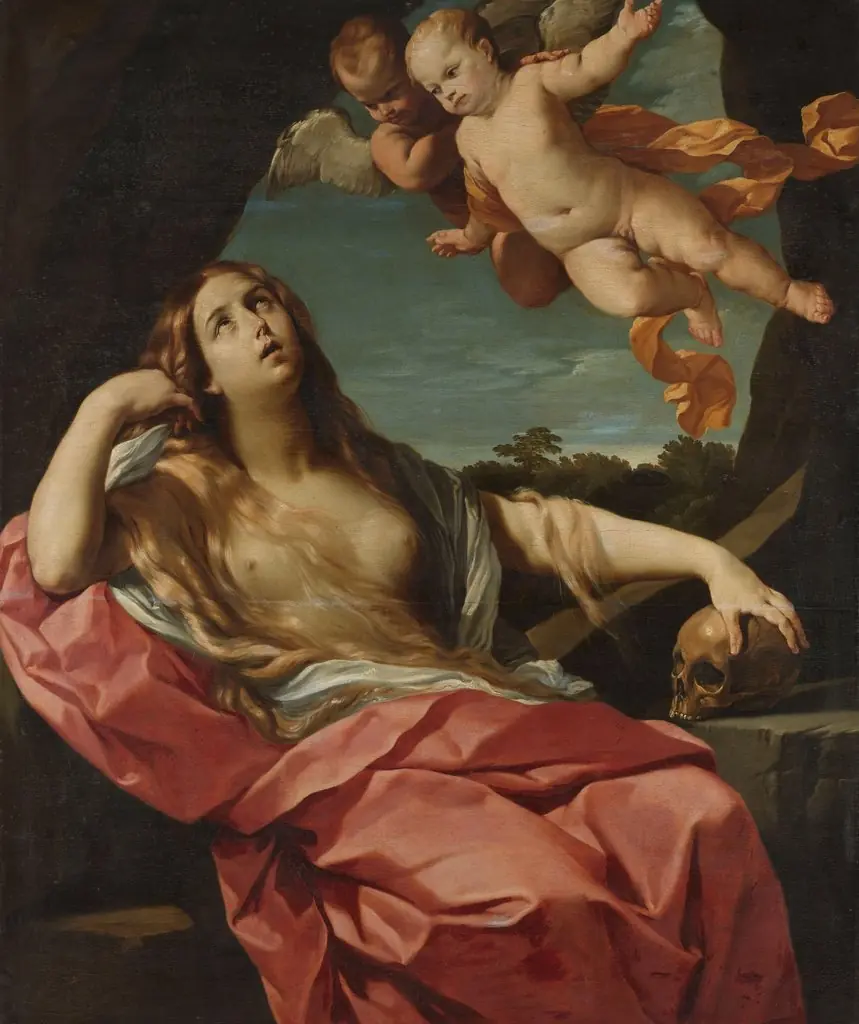
Penitent Magdalene is an oil painting. It dates from 1601 and is held in the collection of the Museo del Prado. The work depicts a solitary woman with flowing red hair, seated and enveloped in a pinkish drapery.
About this work
Subject & Meaning
Together, these elements transform the image from a simple portrait into a theological statement on forgiveness and the soul's journey toward God.
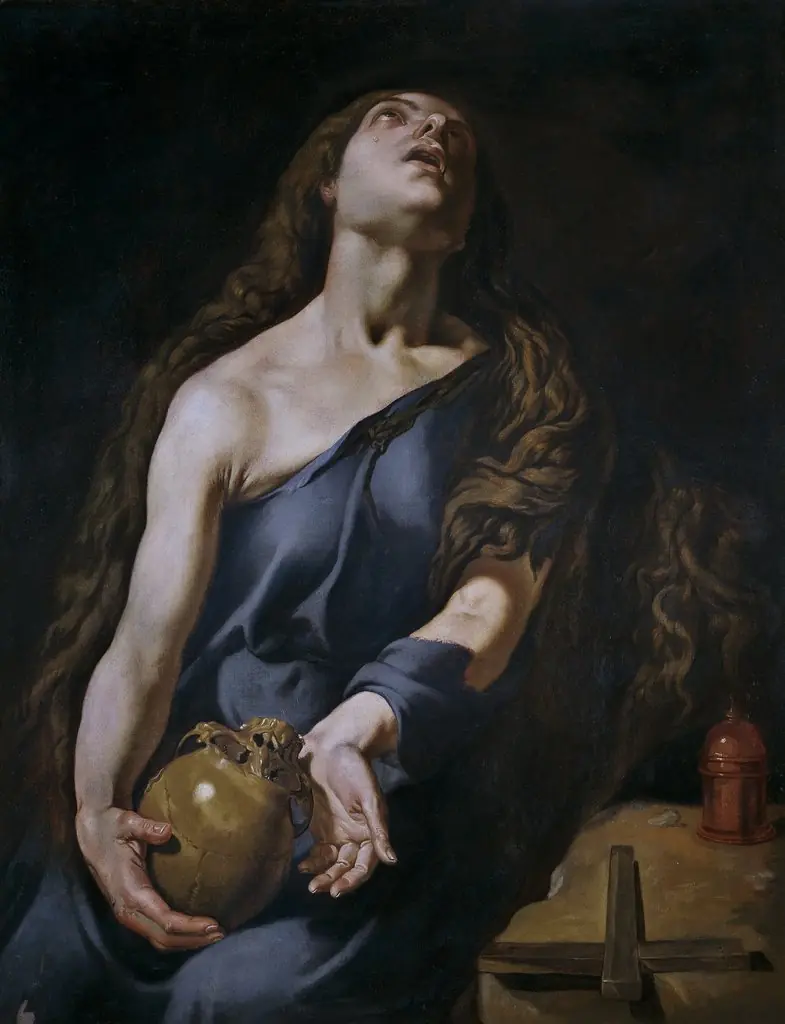
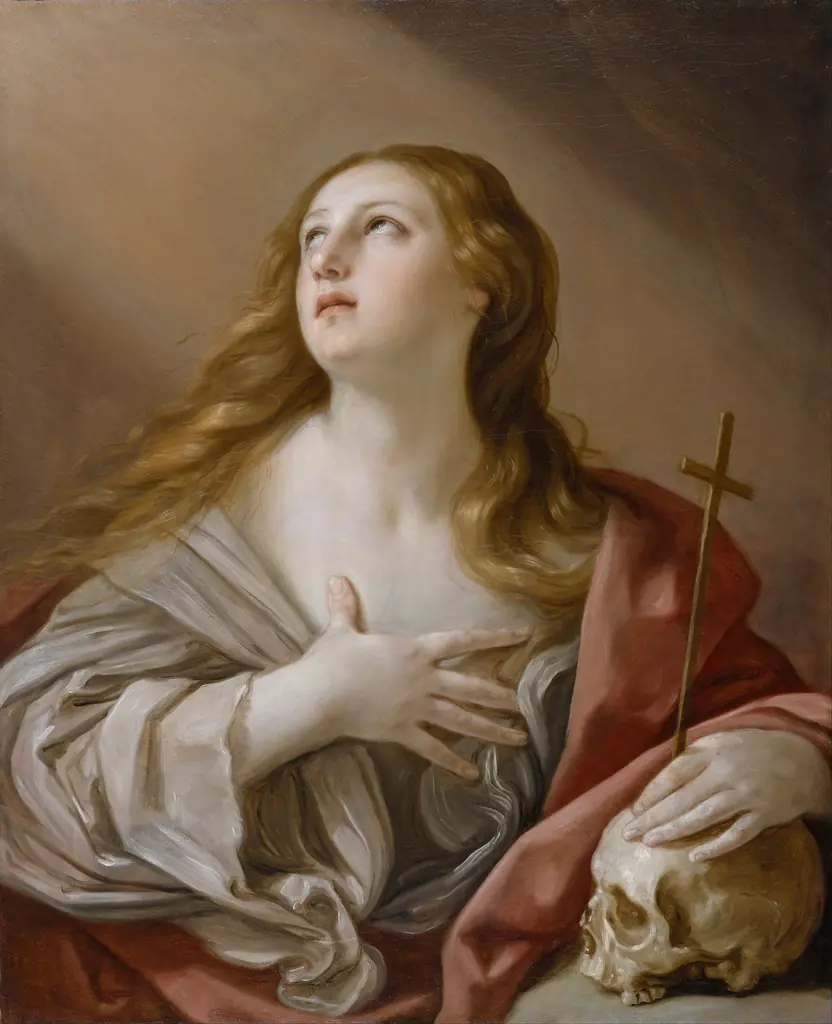
Created in 1601, this religious painting depicts Mary Magdalene in her penitent phase, a common subject in Counter-Reformation art emphasizing repentance and spiritual redemption. The composition relies on specific iconographic attributes to identify the figure and convey her narrative: a skull, a book, and a cross.
The skull serves as a memento mori, reminding the viewer of mortality and the vanity of earthly life, while the book likely represents the scriptures she studied during her years of solitude in the wilderness. The cross symbolizes her devotion to Christ and her focus on divine salvation over worldly concerns. Together, these elements transform the image from a simple portrait into a theological statement on forgiveness and the soul's journey toward God.
Technique & Style
Executed in 1601, this religious painting is rendered in oil paint on a canvas support. The work measures 191 cm in height and 121 cm in width. Its composition focuses on the figure of the Penitent Magdalene, accompanied by traditional iconographic attributes including a skull, a book, and a cross. These elements define the piece's devotional character within the religious genre.
History & Provenance
The Penitent Magdalene is held in the collection of the Museo del Prado, Madrid, where it is inventoried as accession P00725.
It was exhibited in 2016 as part of the Prado’s display of anonymous Spanish works from the late 16th and early 17th centuries in Gallery 08B.
Overview
The work depicts a solitary woman with flowing red hair, seated and enveloped in a pinkish drapery. She gazes upward with her eyes closed, her hand resting on a small skull placed against her chest. A diminutive winged child appears behind her, clutching a golden cup, while the surrounding space is dominated by deep shadows punctuated by faint green foliage and rocky forms.
Context
The work aligns with a tradition of Baroque religious imagery that emphasizes personal piety and the contemplation of death. Its use of dramatic lighting and symbolic objects reflects the period’s interest in evoking spiritual experience through visual means.
Legacy
While specific details of the painting’s provenance remain undocumented, its thematic focus on penitence and the interplay of light and shadow continue to inform scholarly discussions of devotional art and its role in conveying moral instruction.
Artist & collection