Artwork
Weaving and Spinning
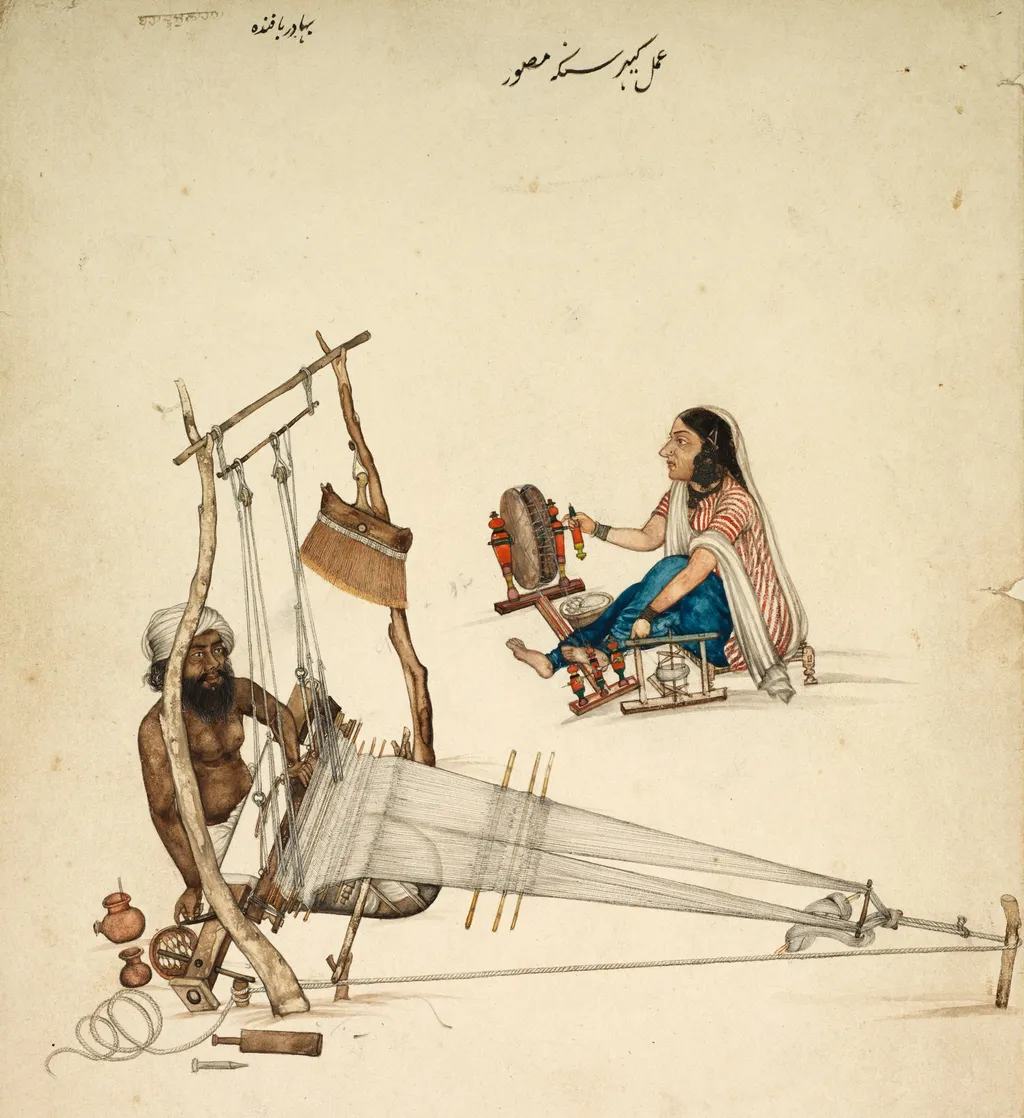
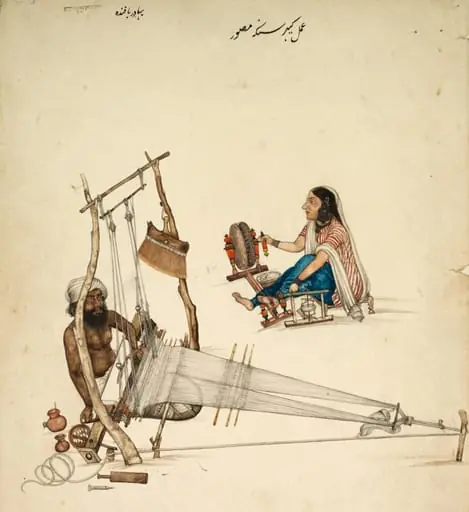
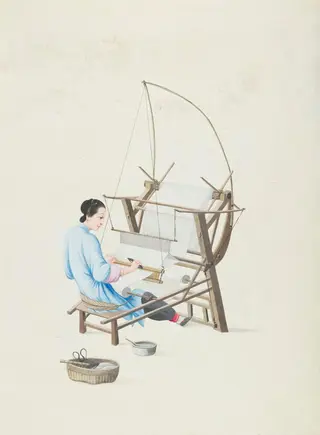
Weaving and Spinning is an unspecified painting. It dates from 1860 and is held in the collection of the Cleveland Museum of Art. The canvas presents a domestic interior where two figures are occupied with textile production.
About this work
Subject & Meaning
The work is attributed to Kehar Singh, an Indian artist, and is housed in the Cleveland Museum of Art, where it has been part of the collection since 1860.
The painting Weaving and Spinning depicts labor associated with textile production, symbolizing the economic and cultural significance of weaving in 19th-century contexts. Its subject reflects themes of industry and domestic work, rendered through the medium of painting.
The work is attributed to Kehar Singh, an Indian artist, and is housed in the Cleveland Museum of Art, where it has been part of the collection since 1860.
The painting's creation date of 1860 aligns with historical developments in industrialization and labor, reinforcing its representation of material culture and artistic engagement with social conditions.
History & Provenance
Weaving and Spinning is attributed to an unknown artist and dated to 1860. The Wikidata record associates the work with Kehar Singh, an Indian artist, and identifies it by the museum accession number 1987.162. The painting is held in the collection of the Cleveland Museum of Art, where it remains on location.
Overview
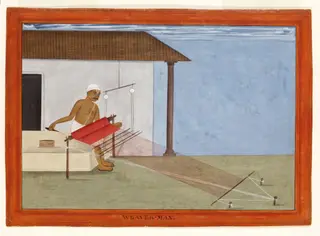
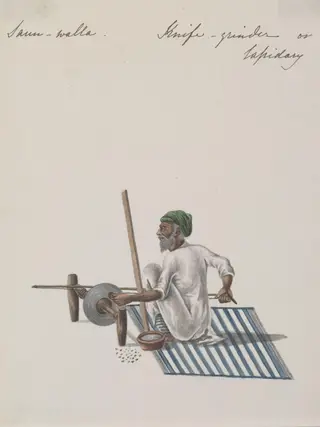
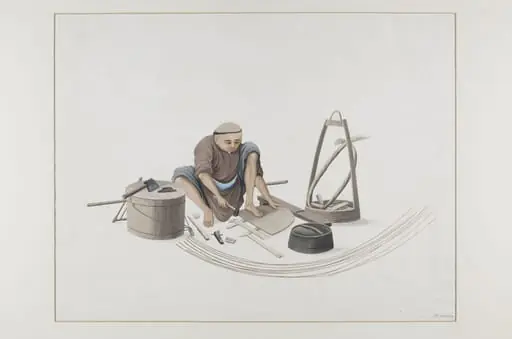
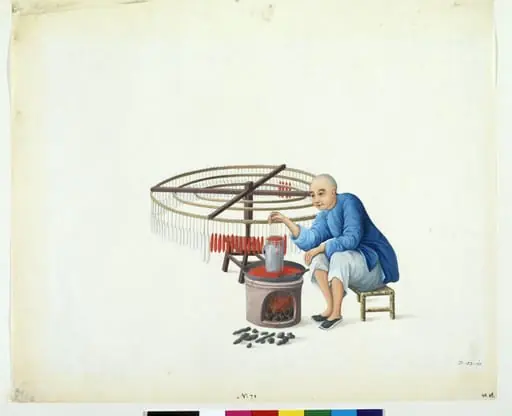
The canvas presents a domestic interior where two figures are occupied with textile production. A bearded man, seated on the floor and wrapped only in a white cloth around his waist, operates a loom. Opposite him, a woman on a low stool, dressed in a striped shirt, blue trousers and a white headscarf, works a spinning wheel. The plain backdrop isolates the activity, emphasizing the manual processes of weaving and spinning.
Technique & Style
The artist employs a restrained palette, allowing the vivid reds, whites and blues of the woman's clothing to stand out against the subdued surroundings. Careful rendering of the loom’s mechanisms and the spinning wheel’s spokes demonstrates a focus on material detail, while the simplified background creates a clear visual hierarchy that directs the viewer’s attention to the hands and tools.
Context
Depictions of textile work have long served as visual records of cultural practices, especially in societies where weaving and spinning are communal or familial tasks. This image aligns with that tradition, offering insight into attire, equipment and the spatial arrangement of a workshop, thereby contributing to the visual anthropology of domestic labor.
Artist & collection