Artwork
Seki, from the series The Fifty-Three Stations of the Tōkaidō
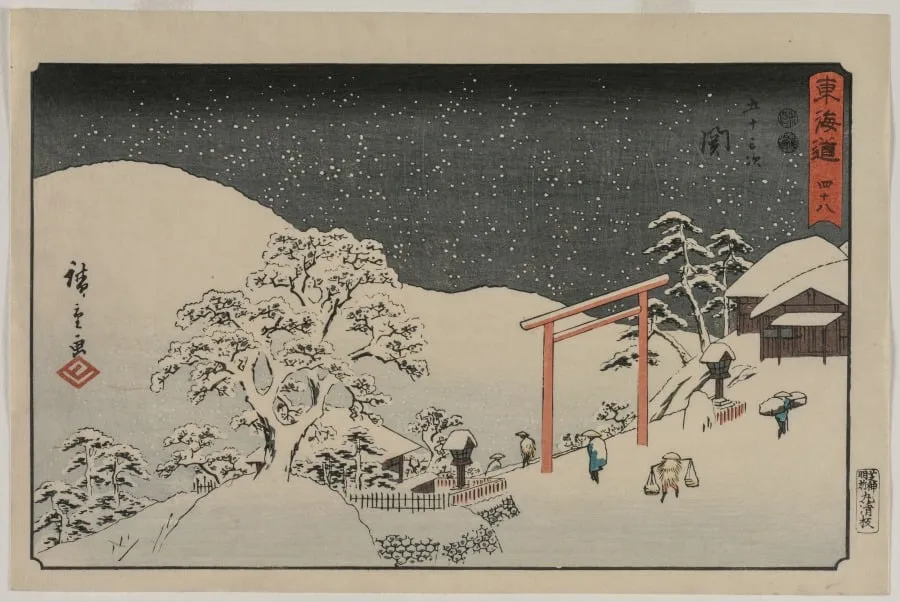
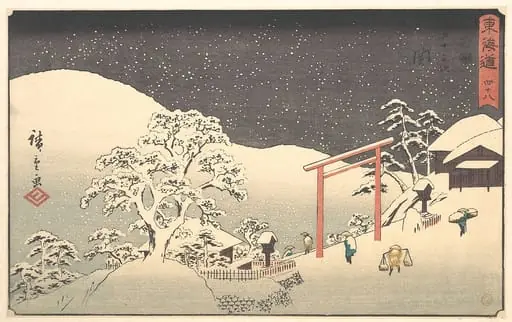
Seki, from the series The Fifty-Three Stations of the Tōkaidō is a print by the Romanticist artist Utagawa Hiroshige. It dates from 1848 and is held in the collection of the Cleveland Museum of Art. This print is part of Hiroshige's series The Fifty-Three Stations of the Tōkaidō, depicting a snowy village at Seki at night.
- Accession no.
- 1930.186
- Credit line
- Bequest of Edward L. Whittemore
About this work
Overview
This print is part of Hiroshige's series The Fifty-Three Stations of the Tōkaidō, depicting a snowy village at Seki at night. The scene is characterized by bare trees, dark roofs, and a single distant lantern.
Subject & Meaning
The image shows a deserted winter landscape, diverging from earlier depictions of Seki that featured a daimyō's entourage. The presence of a red gate suggests a connection to the Ise Shrine pilgrimage route.
Technique & Style
The print employs chiaroscuro, a technique that uses strong contrasts between light and dark to create a sense of depth and atmosphere, evident in the glowing lantern amidst the dark surroundings.
Context
The Tōkaidō was a major route during Japan's Edo period, used by daimyō traveling between their regional domains and the capital, Edo. The series captures various moments along this highway.
Artist & collection
Artist
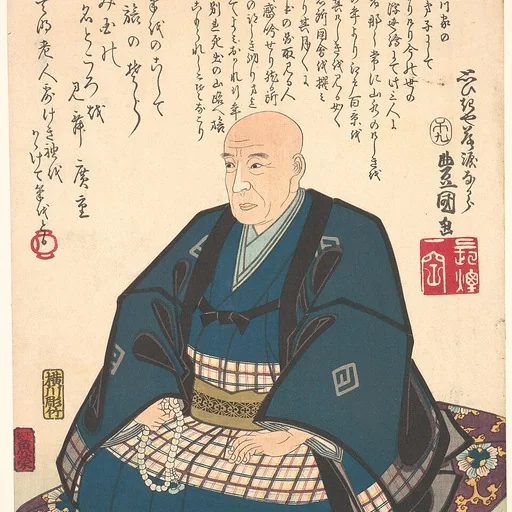
Utagawa Hiroshige (歌川 広重) or Andō Hiroshige (安藤 広重), born Andō Tokutarō (安藤 徳太郎; 1797 – 12 October 1858), was a Japanese ukiyo-e artist, considered the last great master of that tradition.


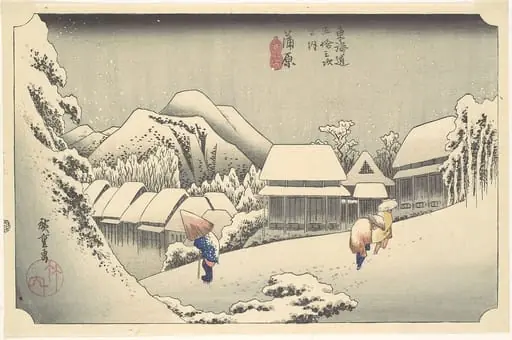 東海道五十三次之内 蒲原 夜の雪|Evening Snow at Kanbara, from the series "Fifty-three Stations of the Tōkaidō"
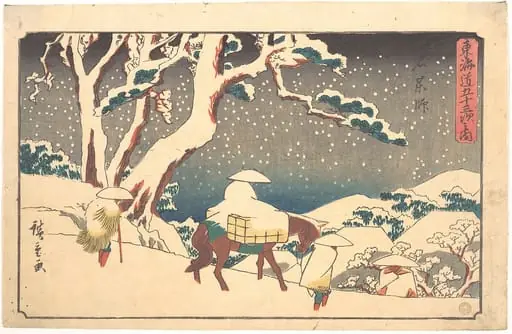 東海道五十三次之内 石薬師|Gyosho Tokaido: Ishikushi
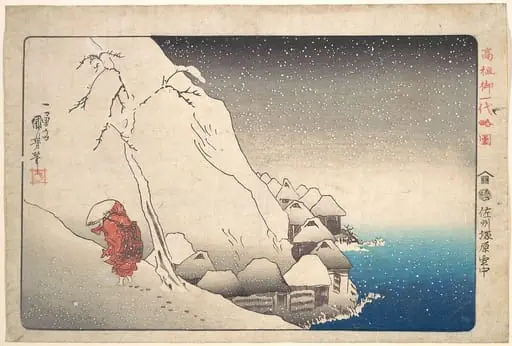 Sashu Tsukahara setchu|Nichiren in Snow at Tsukahara, Sodo Province
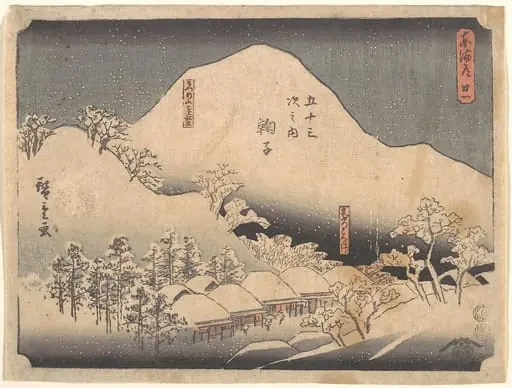 Untitled
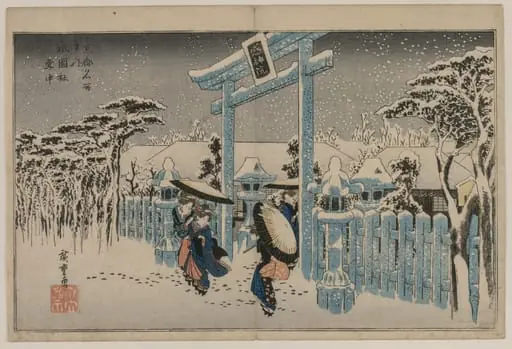 Snow at the Gion Shrine, from the series Famous Places in Kyoto
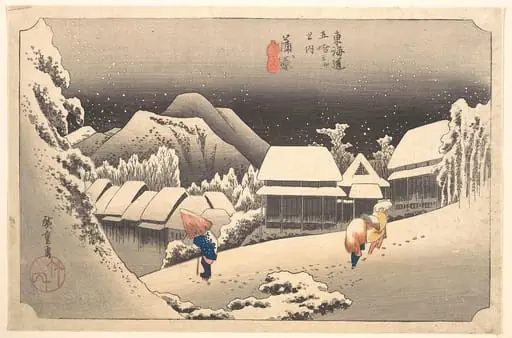 東海道五十三次之内 蒲原 夜の雪|Evening Snow
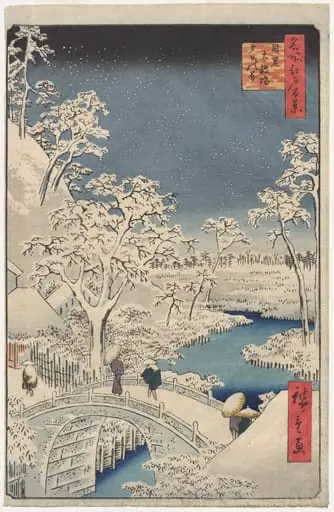 Meguro Drum Bridge and Sunset Hill, from One Hundred Views of Famous Places in Edo
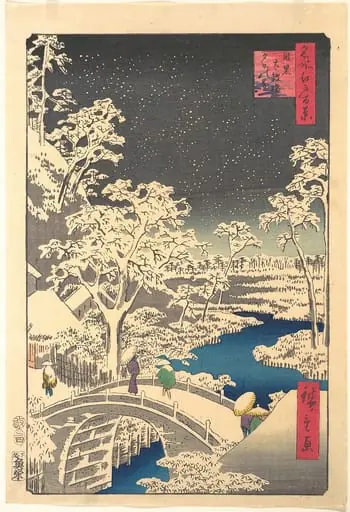 名所江戸百景 目黒太鼓橋夕ひの岡|Ochanomizu