Artwork
Snow in Flanders
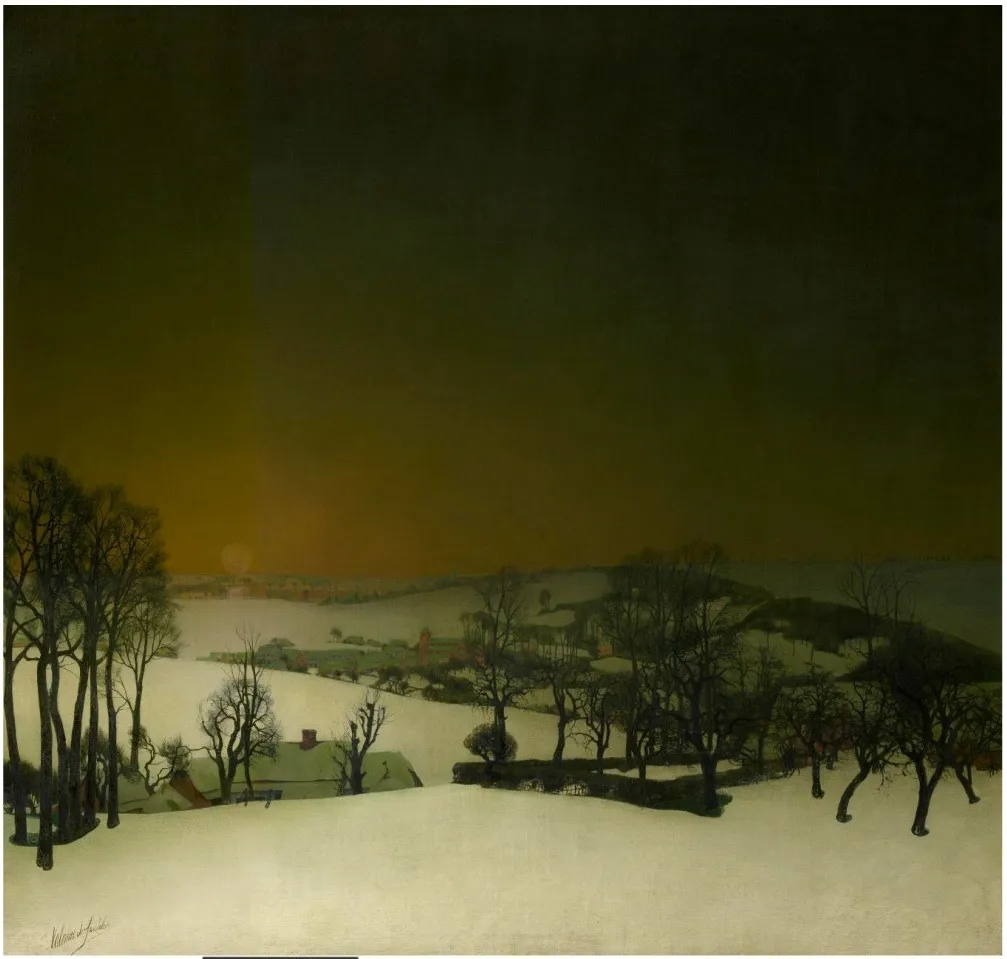
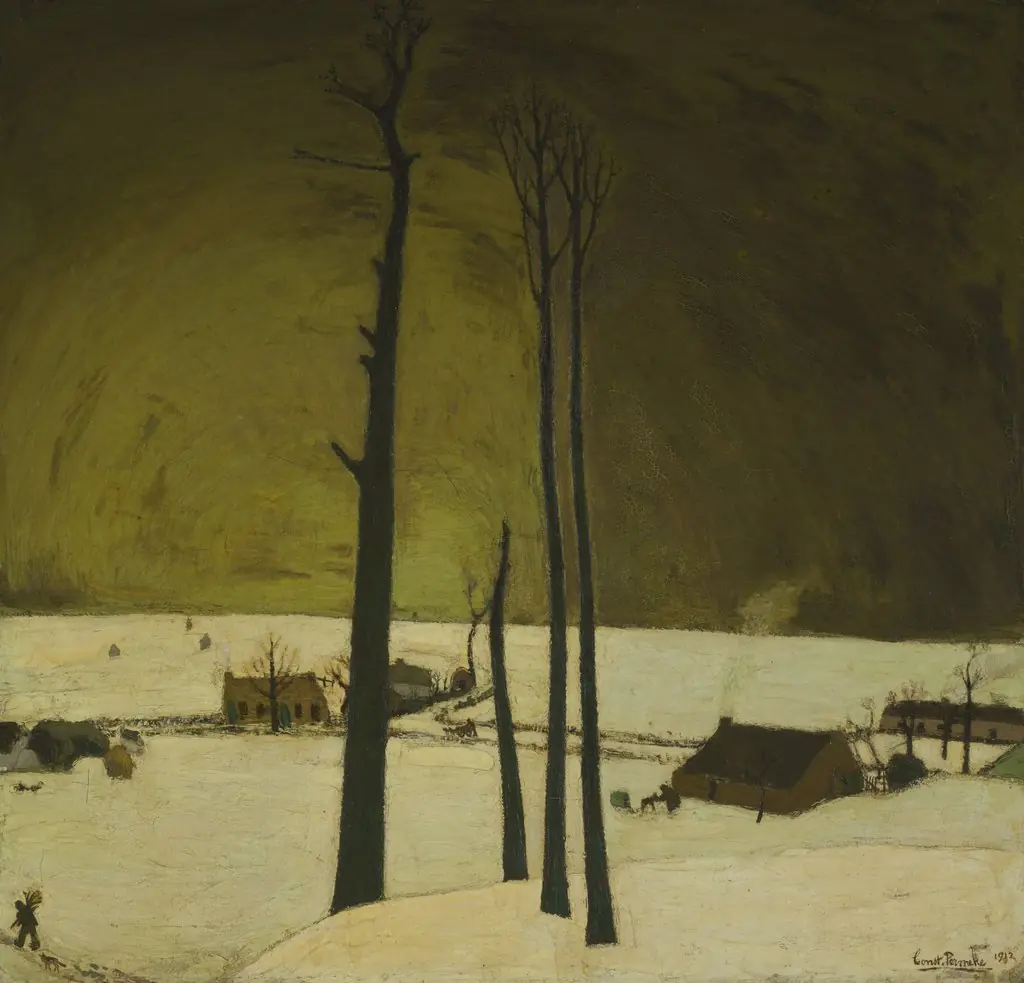
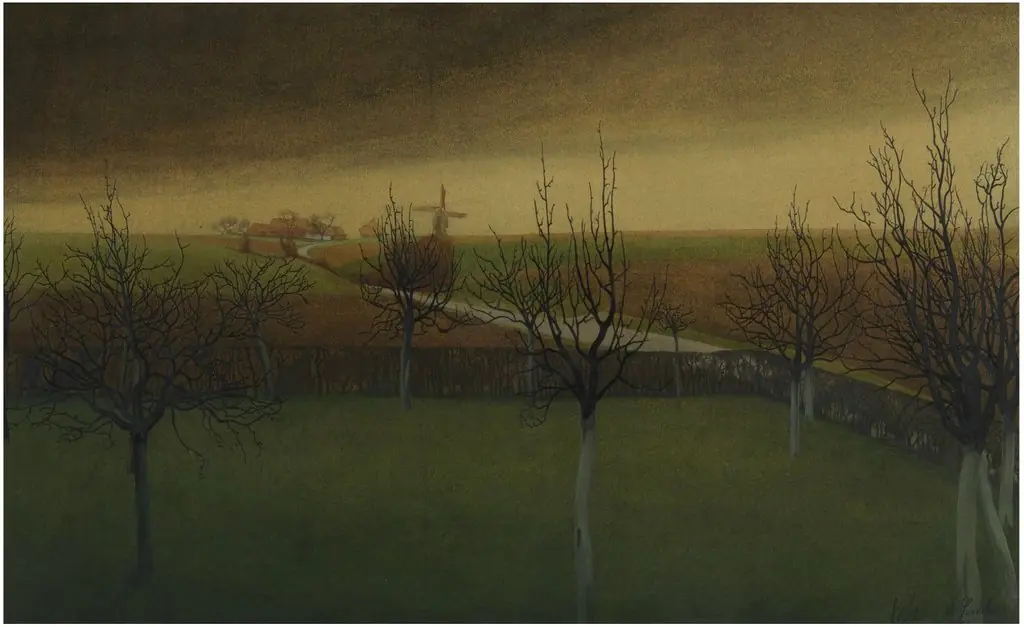
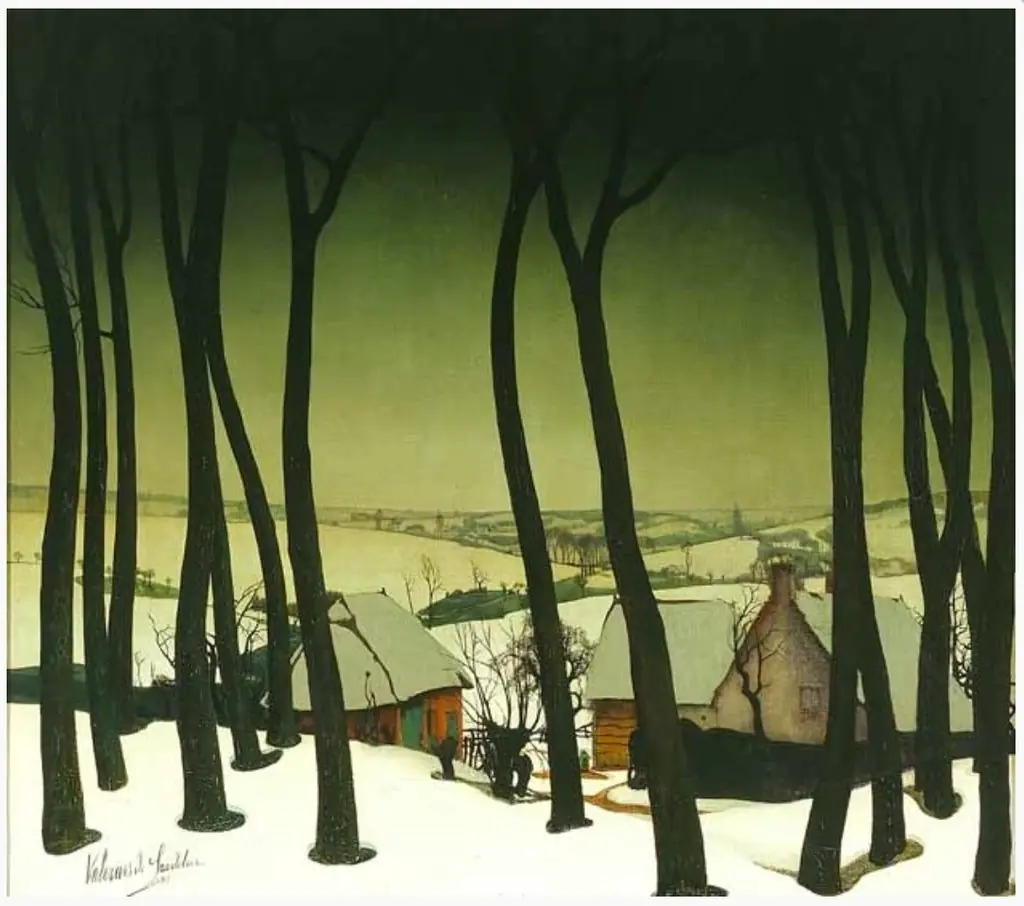
Snow in Flanders is an oil painting by the Northern Renaissance artist Valerius de Saedeleer. It dates from 1928 and is held in the collection of the Royal Museum of Fine Arts Antwerp. Created in 1928, this oil on canvas portrays a quiet winter landscape in the Flemish countryside.
About this work
Subject & Meaning
The composition emphasizes vastness by placing the horizon low, granting the sky equal importance to the land, which creates a feeling of infinite space.
The painting depicts a winter landscape featuring snow, trees, hills, roofs, houses, and a sun. Created in Etikhove around 1928, the work is characterized by a prevailing sense of stillness and a timeless, unreal atmosphere. This mood is achieved through a palette dominated by white and green tones, fine drawing, and a thin, smooth facture.
The composition emphasizes vastness by placing the horizon low, granting the sky equal importance to the land, which creates a feeling of infinite space. The imagery recalls the expansive views of Pieter Bruegel the Elder, particularly the low sun casting an orange glow on snow and dark, bare trees contrasting with the undulating terrain. However, unlike Bruegel's works, this landscape is devoid of human figures, focusing entirely on the quiet interaction between the elements and the architecture.
Technique & Style
Snow in Flanders is an oil painting on canvas, executed in or around 1928. The support measures 125 × 132 cm (sight size), with the framed dimensions recorded as 135.5 × 142 × 7 cm. The work is classified as a landscape painting and is held in the Royal Museum of Fine Arts Antwerp under inventory number 2104.
Stylistically, the painting is characterized by a prevailing stillness. Against an expansive landscape beneath an immense sky, small houses, sheds, hedges, and trees are delineated, with built structures and rows of trees zigzagging across successive planes to guide the viewer's eye horizontally. A timeless, unreal atmosphere is created through the distinctive palette of predominantly white and green tones, fine draftsmanship, and a thin, smooth facture. The high sky, which darkens as it recedes from the horizon, intensifies the sense of spatial infinity.
The composition recalls the panoramic landscapes of Pieter Bruegel the Elder, with a low sun casting an orange glow over the snow and bare dark trees standing out against the rolling land. Unlike Bruegel, however, De Saedeleer lowered the horizon to give the sky equal weight to the land and omitted human figures. The signature, in lowercase with initial capital, is handwritten by the artist in the lower left of the recto.
History & Provenance
Snow in Flanders is an oil painting on canvas created by Valerius de Saedeleer in 1928. The work entered the collection of the Royal Museum of Fine Arts Antwerp following its acquisition through the mediation of the Driejaarlijkse Tentoonstelling Antwerpen in 1928, and it is recorded under inventory number 2104. The painting was executed in or around 1928, as indicated by its inception date of 1928-01-01 and contemporary references that place its creation shortly after the First World War while the artist was based in Etikhove.
Its dimensions measure 125 × 132 cm in the original format, with the framed size extending to 135.5 × 142 × 7 cm.
Snow in Flanders has been part of the collection of the Royal Museum of Fine Arts Antwerp since it was purchased from an unknown owner with the mediation of the Triennial Exhibition Antwerp (1928). It carries the inventory number 2104 at the museum.
Context
Snow in Flanders (1928) by Valerius de Saedeleer is a significant work within the tradition of the first generation of Sint-Martens-Latem artists. Created after the artist relocated to Etikhove following World War I, the painting continues his pre-war and post-1908 exploration of snow-covered landscapes from Sint-Martens-Latem and Tiegem. The work is characterized by a profound sense of stillness and a timeless, unreal atmosphere achieved through a palette dominated by white and green tones.
Art historical analysis by Nanny Schrijvers of the Royal Museum of Fine Arts Antrooms highlights the painting's unique spatial composition, noting that the sky is treated with equal importance to the land. This high vantage point and the expansive sky recall the wide landscapes of Pieter Bruegel the Elder, though De Saedeleer distinguishes his work through a lower horizon line and a complete absence of human figures.
Legacy
The painting's legacy rests on its role as a mature expression of De Saedeleer's post‑war landscape vision, linking his early Symbolist roots in Sint‑Martens‑Latem to later Flemish winter scenes. It is held in the Royal Museum of Fine Arts Antwerp and was acquired through the 1928 Driejaarlijkse Tentoonstelling, underscoring its contemporary recognition. Critics have noted its expansive sky and low horizon, a compositional choice that distinguishes it from Bruegelian vistas and emphasizes atmospheric space over narrative detail.
The work's quiet, timeless mood and restrained palette have influenced subsequent Belgian artists who explored solitary winter landscapes, cementing its reputation as a pivotal piece in early 20th‑century Flemish art.
Overview
Created in 1928, this oil on canvas portrays a quiet winter landscape in the Flemish countryside. A low hill catches the weak winter sun, while modest dwellings with green-tiled roofs sit amid bare trees dusted with snow. The sky is overcast, its dark clouds softened by a pale light that hints at sunrise, giving the scene a hushed, contemplative tone.
Artist & collection
Artist
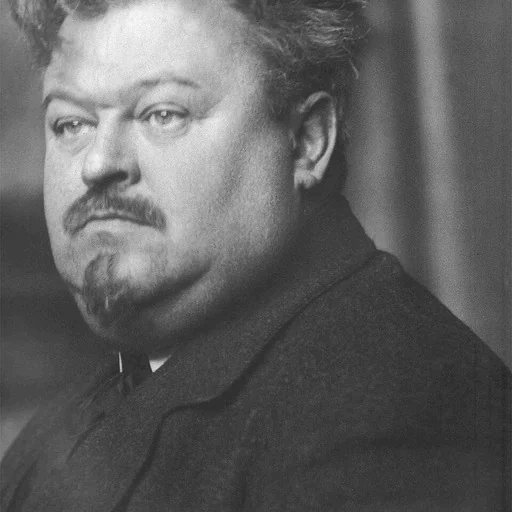
Valerius de Saedeleer or Valerius De Saedeleer (4 August 1867 – 16 September 1941) was a Belgian landscape painter, whose works are informed by a Symbolist and mystic-religious sensitivity and the traditions of 16th-century Flemish…