Artwork
Don Quixote at the Inn
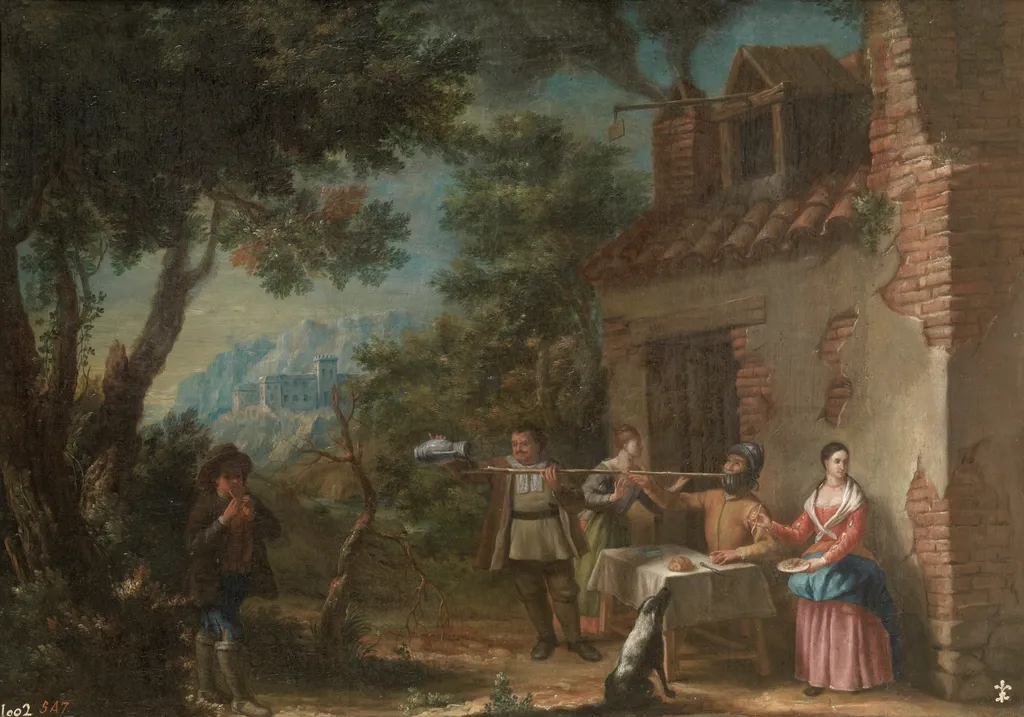
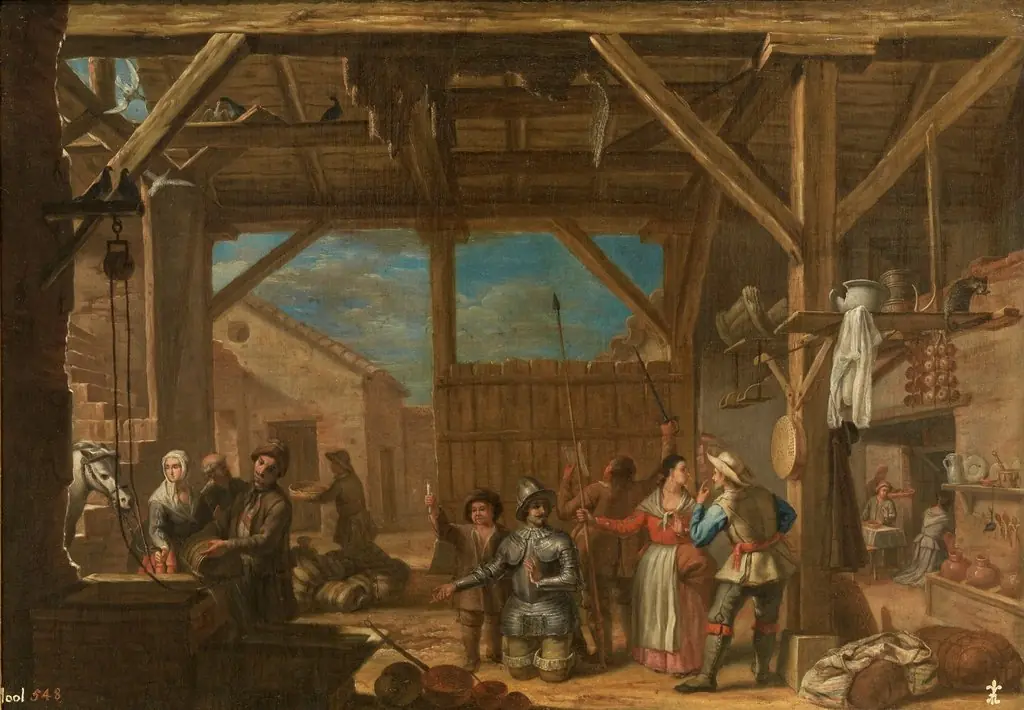
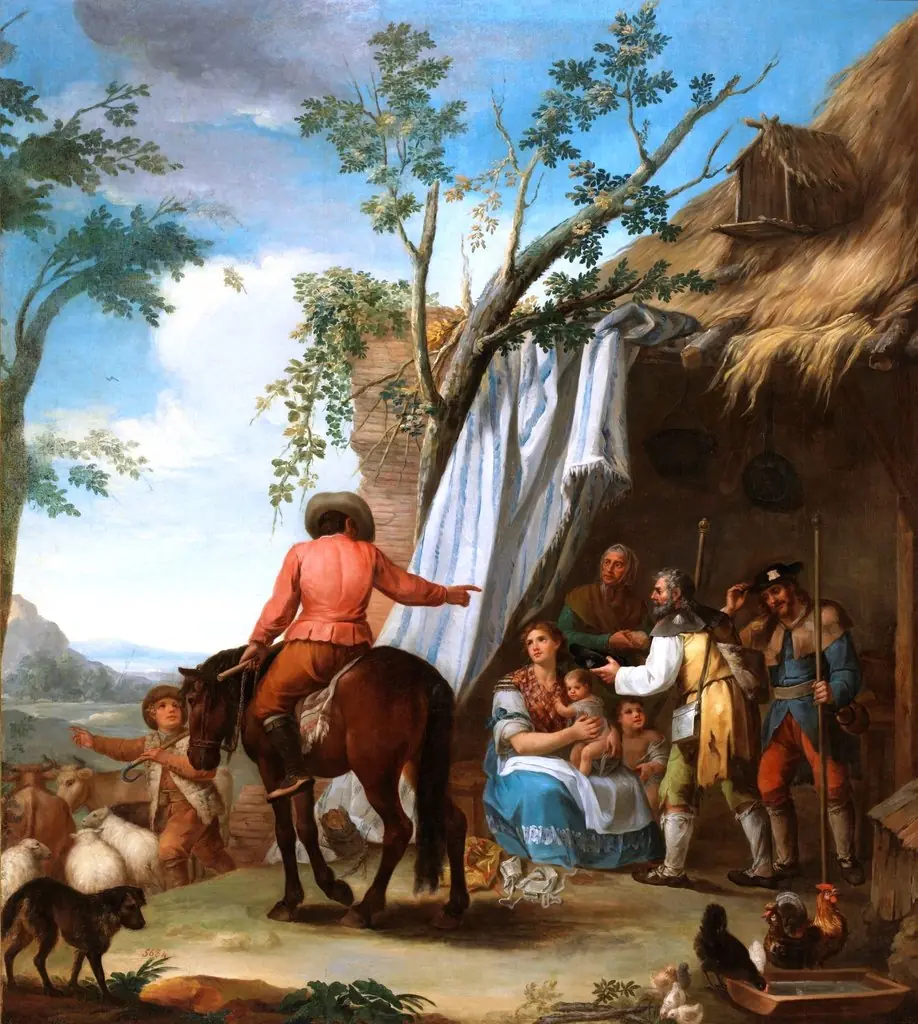
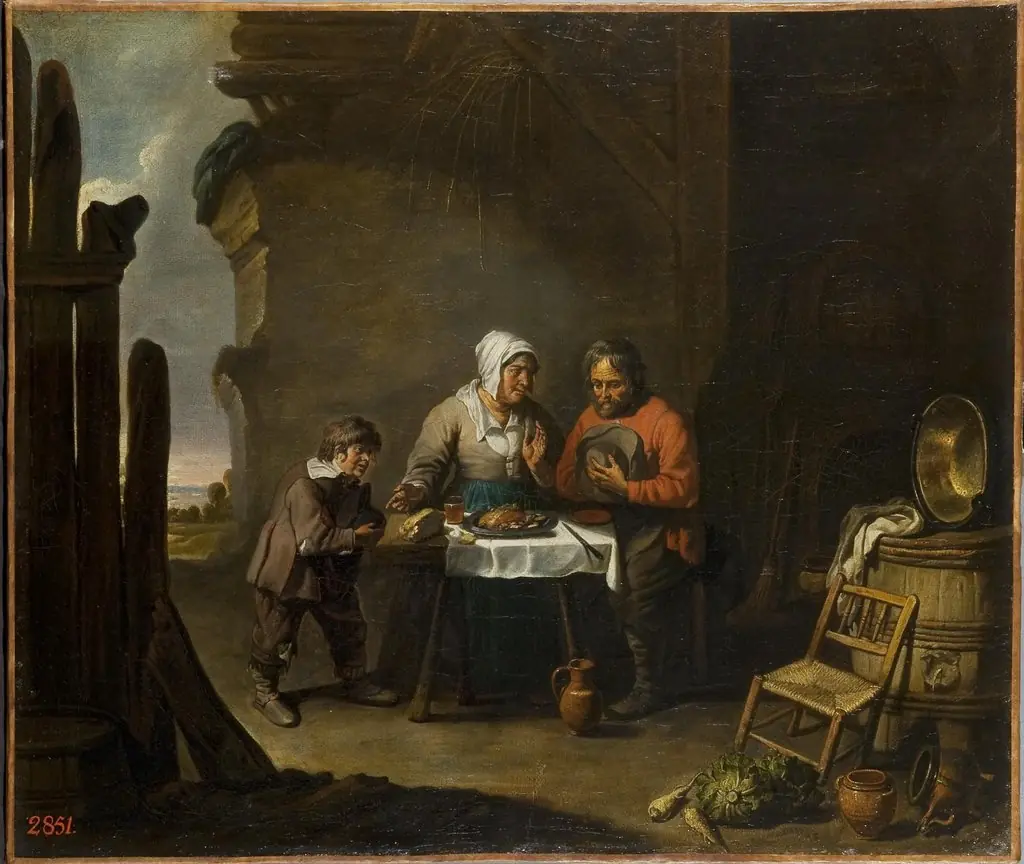
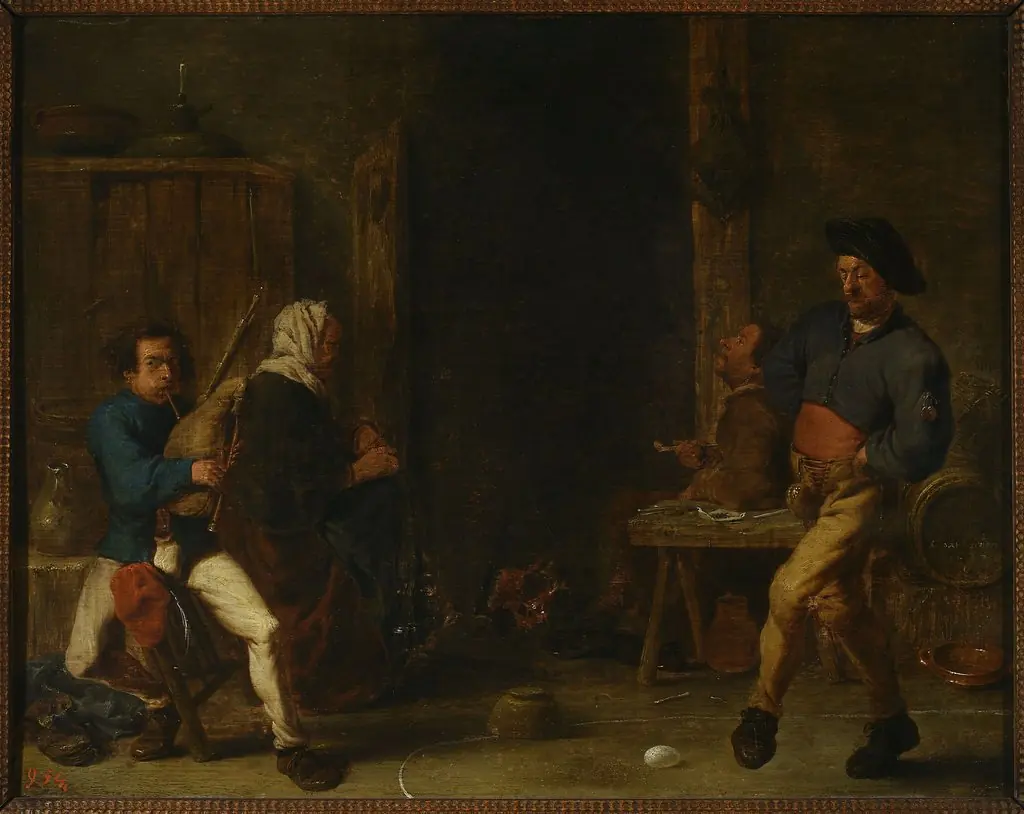
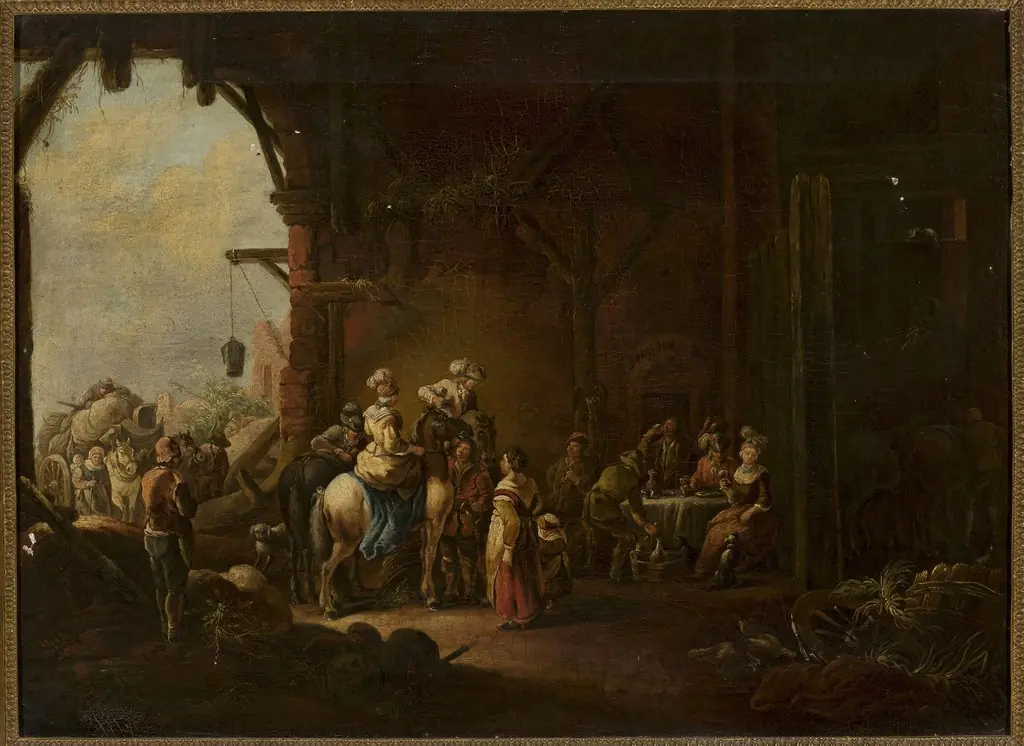
Don Quixote at the Inn is an oil painting by the Barbizon school artist Valero Iriarte. It dates from 1720 and is held in the collection of the Museo del Prado.
About this work
Subject & Meaning
The painting shows Alonso Quijano, the delusional knight-errant of Cervantes' novel, seated at an inn table while clutching a piece of stale bread.
The painting shows Alonso Quijano, the delusional knight-errant of Cervantes' novel, seated at an inn table while clutching a piece of stale bread. This humble sustenance symbolizes his misguided pursuit of chivalric glory amid everyday reality. The work captures the moment of Don Quixote's delusion before his famous windmill episode, reflecting the tension between illusion and the mundane world of 18th‑century Spain.
Technique & Style
Valero Iriarte executed Don Quixote at the Inn using oil paint on canvas. The artwork measures 54 by 78 centimeters. The composition depicts the literary figure Alonso Quijano alongside elements such as bread, reflecting a narrative approach to its subject matter.
History & Provenance
Valero Iriarte created the oil-on-canvas painting Don Quixote at the Inn in 1720. The work measures 54 cm in height and 78 cm in width. Its ownership history traces through several Spanish monarchs, beginning with Elisabeth Farnese.
The collection subsequently passed to Charles III of Spain and later to Ferdinand VII of Spain before entering the holdings of the Museo del Prado.
The painting Don Quixote at the Inn by Valero Iriarte (1720) is housed in the Museo del Prado, where it is recorded under inventory number P00968. It entered the museum's collection through the Spanish royal lineage, having been owned by Elisabeth Farnese, Charles III, and Ferdinand VII before accession.
The work has been part of several exhibitions at the Prado, most notably the permanent display of Spanish Golden Age paintings in Gallery 34 since 1995 and a temporary showcase of 18th‑century genre scenes in 2004.
Context
Valero Iriarte’s 1720 painting occupies a distinct place in early eighteenth-century Spanish art, reflecting the era's enduring fascination with Cervantes’s literary legacy by depicting the protagonist Alonso Quijano. The work's historical significance is underscored by its prestigious provenance and royal ownership, having been held by prominent Spanish monarchs including Elisabeth Farnese, Charles III, and Ferdinand VII. This lineage highlights the painting's elevated status within royal collections long before its eventual institutional home.
Today, the artwork is housed in the Museo del Prado, cementing its recognition as a culturally significant piece within the canon of Spanish painting.
Overview
Don Quixote at the Inn is an oil painting by Valero Iriarte, created in 1720. It is a representation of a scene from literature, held at the Museo del Prado.
Own this work as a print
Artist & collection