Artwork
Don Quixote Dubbed a Knight
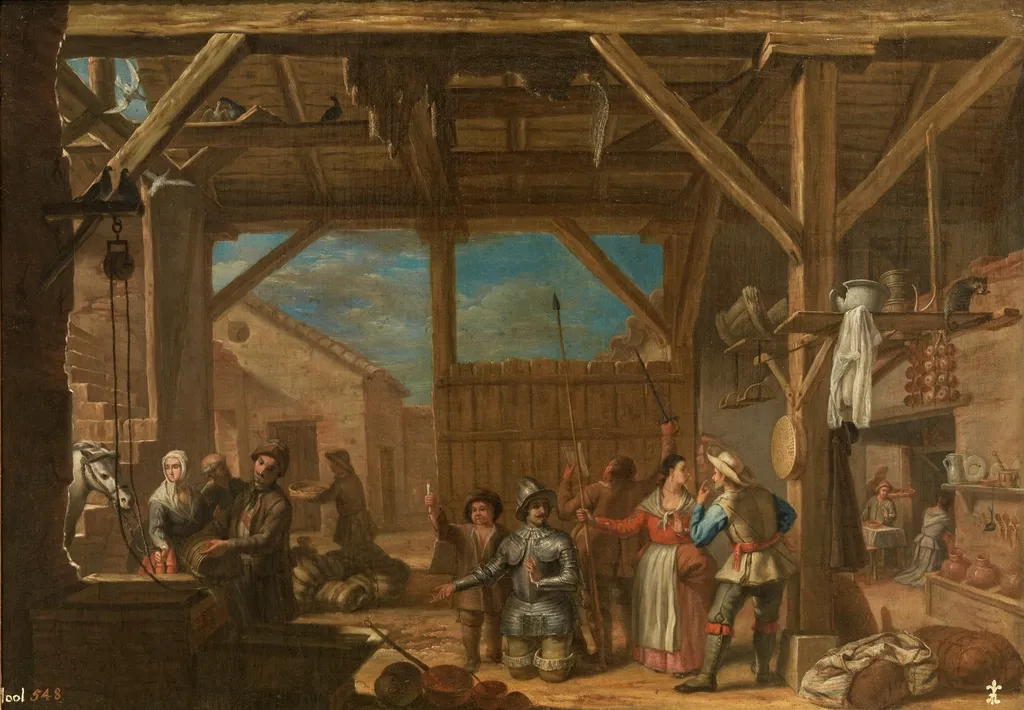
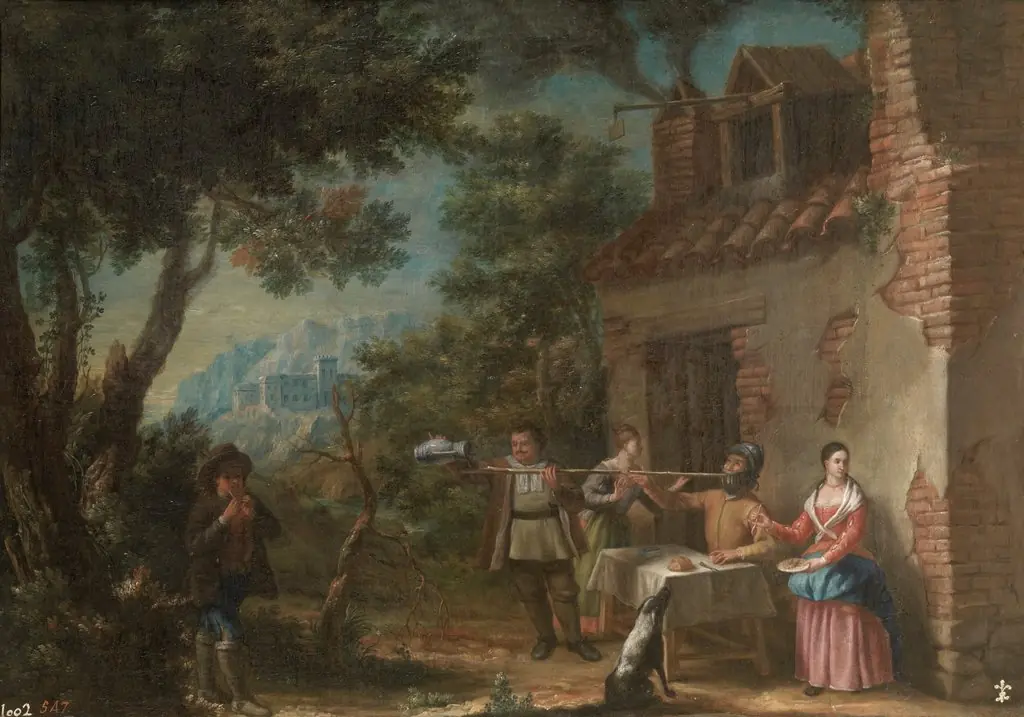
Don Quixote Dubbed a Knight is an oil painting by the Barbizon school artist Valero Iriarte. It dates from 1720 and is held in the collection of the Museo del Prado.
About this work
Subject & Meaning
The work thus symbolizes the transformation of madness into performative gallantry, reflecting Enlightenment-era critiques of outdated aristocratic ideals.
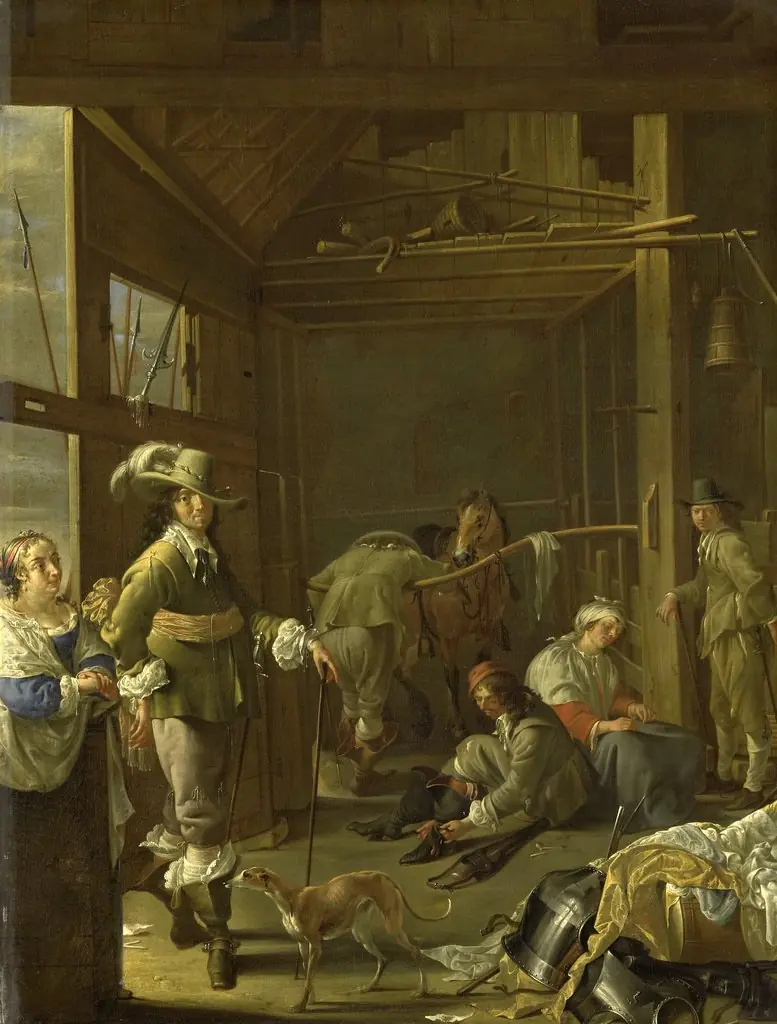
The painting portrays Alonso Quijano, the delusional nobleman of Cervantes' tale, being ceremonially dubbed a knight. He wears a combat helmet, holds a sword and spear, and is accompanied by a spoon, alluding to his absurd quest for chivalric honor. The work thus symbolizes the transformation of madness into performative gallantry, reflecting Enlightenment-era critiques of outdated aristocratic ideals.
Technique & Style
The work is executed in oil paint on canvas, a standard support for Spanish easel painting of the early 18th century. Valero Iriarte’s handling of the brushage delineates Alonso Quijano’s transformation, with a combat helmet, sword, spear, and spoon serving as symbolic attributes of knighthood. The composition balances narrative clarity with a restrained palette, emphasizing the figure’s psychological tension through chiaroscuro and precise line work.
History & Provenance
Valero Iriarte created the oil painting Don Quixote Dubbed a Knight in 1720. The work, executed on canvas, measures 54 cm in height and 78 cm in width. Its ownership history traces a clear lineage through the Spanish royal family, beginning with Elisabeth Farnese.
The painting subsequently passed to King Charles III of Spain and later to King Ferdinand VII of Spain. It is currently held in the collection of the Museo del Prado.
The painting Don Quixote Dubbed a Knight is held in the collection of the Museo del Prado. Created by Valero Iriarte in 1720, the work entered the royal collections through a lineage of Spanish monarchs, having been owned by Elisabeth Farnese, Charles III of Spain, and Ferdinand VII of Spain. The provided sources confirm its current location at the museum but do not list a specific inventory number or detail any public exhibition history for the piece.
Context
Valero Iriarte’s 1720 oil painting Don Quixote Dubbed a Knight entered private royal collections before entering the Museo del Prado, where it remains on display. The work depicts the titular character in a moment of dubbing, identifiable by his combat helmet, sword, spear, and spoon, reflecting Enlightenment-era interpretations of Cervantes’ narrative. Its dimensions of 54 cm by 78 cm underscore the canvas format typical of early 18th‑century Spanish easel painting.
Scholarship on the piece emphasizes its role within Valero Iriarte’s oeuvre as a bridge between Baroque tradition and Rococo sensibility, situating it amid broader Spanish artistic shifts of the period. The painting’s provenance, originally owned by Elisabeth Farnese, Charles III, and Ferdinand VII, highlights its royal significance and reception as a emblem of Spanish cultural identity.
Overview
Valero Iriarte’s 1720 oil on canvas, titled Don Quixote Dubbed a Knight, is part of the Prado Museum’s collection. The work presents a domestic interior crowded with figures, centering on a kneeling man in gleaming armor who appears to be receiving a knighthood.
Own this work as a print
Artist & collection