Artwork
Untitled
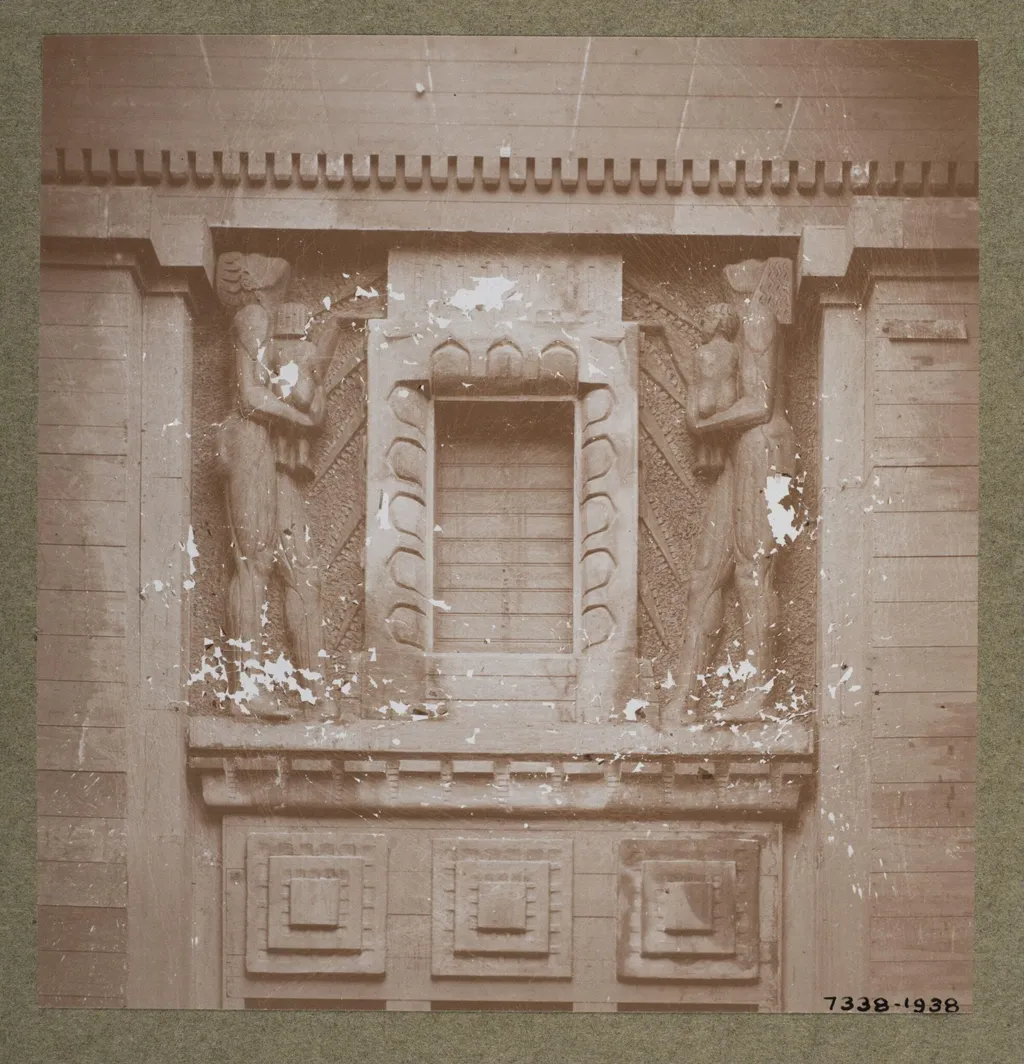
Untitled is a photographic photography by Joop van Lunteren. It is held in the collection of the Victoria and Albert Museum.
About this work
Overview
This photograph, taken by Joop van Lunteren, captures a carved wooden window frame mounted on green card. It was one of many images submitted to William Kineton Parkes during the 1920s as part of a survey on contemporary sculpture. The photograph serves as a documentary record rather than a standalone artistic statement, preserving details of architectural carving for scholarly reference.
Subject & Meaning
The wear on the carving and the damaged wood imply long exposure to weather and use, hinting at the object’s functional past and gradual erosion over time.
The image depicts a wooden window frame with two stylized figures carved on either side, supporting the sill. Their forms are rudimentary, integrated into the wood’s grain, suggesting a folk or vernacular tradition rather than formal sculpture. The wear on the carving and the damaged wood imply long exposure to weather and use, hinting at the object’s functional past and gradual erosion over time.
Technique & Style
Van Lunteren’s photograph renders the carving in sharp tonal contrast, emphasizing texture and surface irregularities. The lighting is even and neutral, avoiding dramatic shadows to prioritize clarity. The green card mount, typical of early 20th-century archival practices, frames the image without distraction, reinforcing its role as a record rather than an aesthetic object.
History & Provenance
The photograph entered the Victoria and Albert Museum’s collection in 1938 through the bequest of William Kineton Parkes, who collected responses from sculptors between 1920 and 1930. These images were sent by artists to illustrate regional or traditional carving techniques. This particular photograph was likely submitted by a sculptor documenting vernacular work they encountered during field research.
Context
During the 1920s, British sculptors and scholars were re-examining traditional craftsmanship amid industrialization. Parkes’s survey sought to document regional carving practices, including architectural details often overlooked by academic art circles. This photograph reflects an effort to preserve evidence of non-elite, utilitarian art forms that were fading from common use.
Legacy
The photograph remains part of a broader archive that informed later studies of British decorative arts and folk carving. While the original wooden frame’s current location is unknown, the image preserves its form and condition as it appeared in the early 20th century. It stands as a quiet testament to the intersection of craft, documentation, and scholarly preservation.
Artist & collection
Artist

- Ornamental Scupture
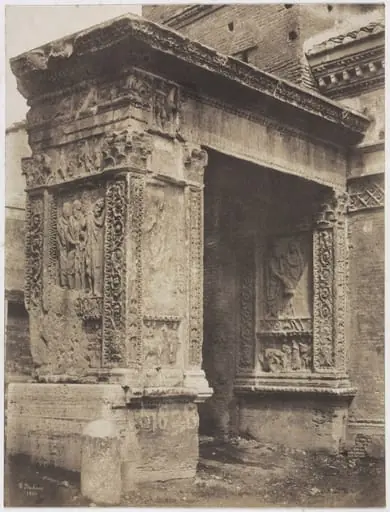 Goldsmith's Arch, Rome
 Untitled
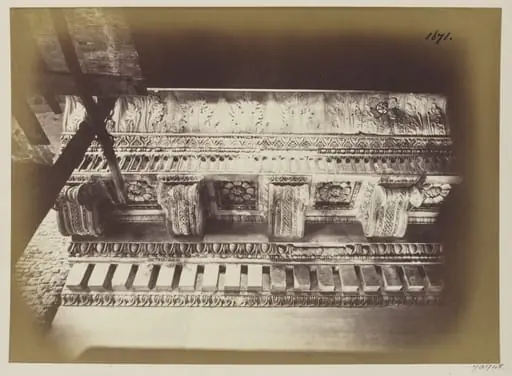 Sculpture - Architectural Details - Cornice of the Temple of Concord on the Clivus Capitolinus, now in the Tabularium.
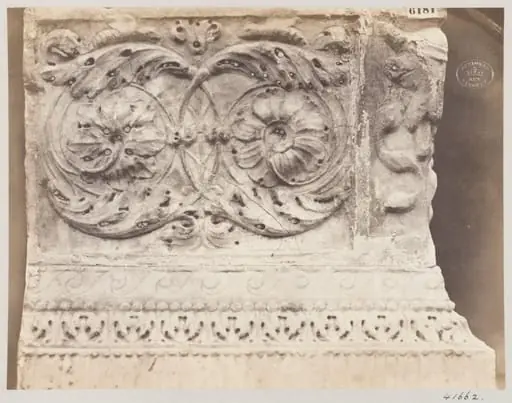 Marble portion of a sacophagus ornamented with bas-relief foliage
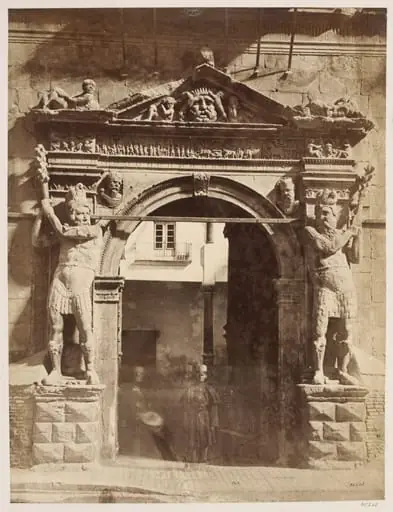 Zaragoza, Casa de los Gigantes, (now Audiencia)
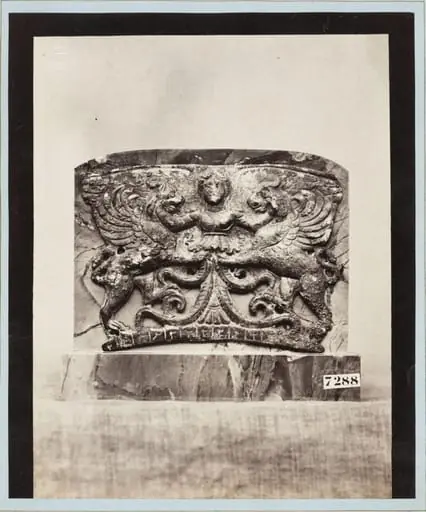 Antique bronze appliqué
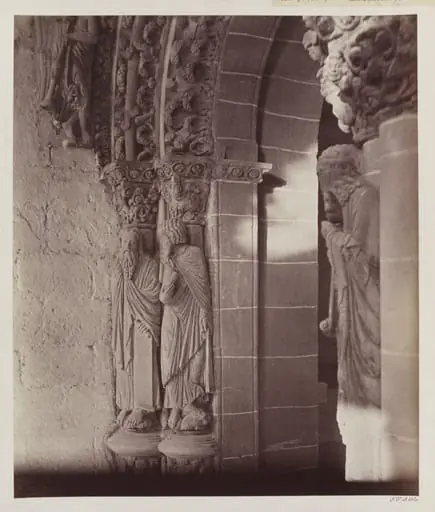 Cathedral, Santiago, Spain, Portico de la Gloria, Sculpture on the North wall
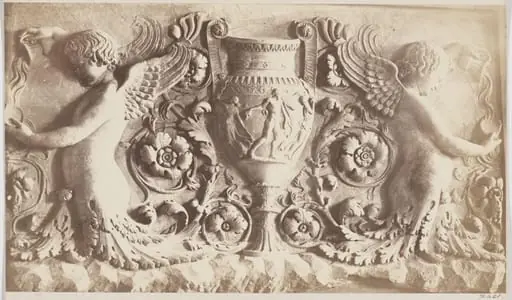 Untitled
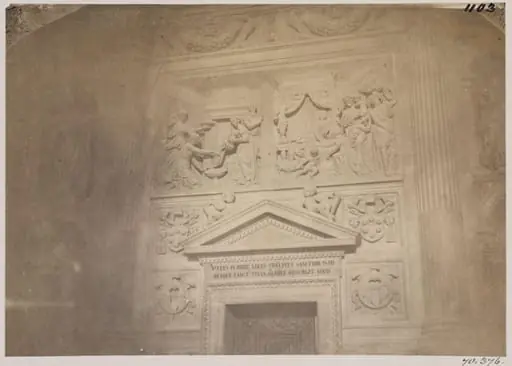 Out of Rome - House of the Blessed Virgin at Loreto. Sculpture of the Nativity over a Doorway, with the Arms of the Medici, Leo X., A.D. 1520
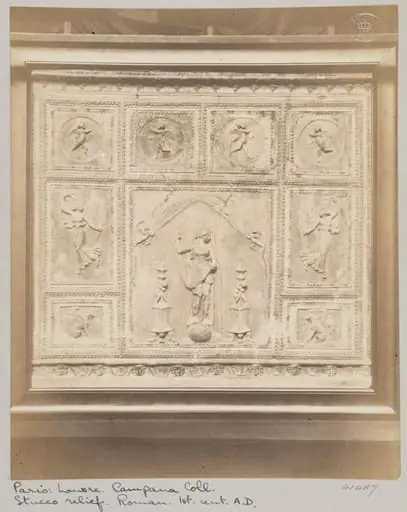 Venus standing on a ball surrounded by Ambrini, two figures of Victory and two griffins, bas-relief in coloured stucco
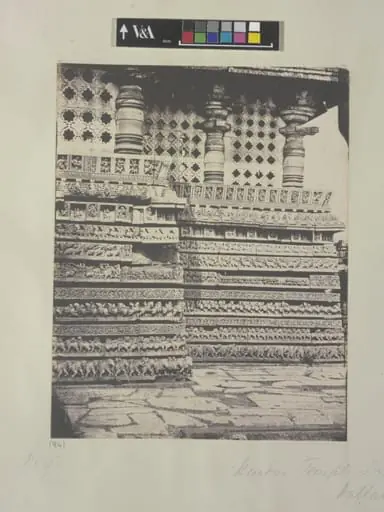 Hindoo Temple Sculpture, Southern India, Hullabeed