Artwork
Henham Park, Suffolk
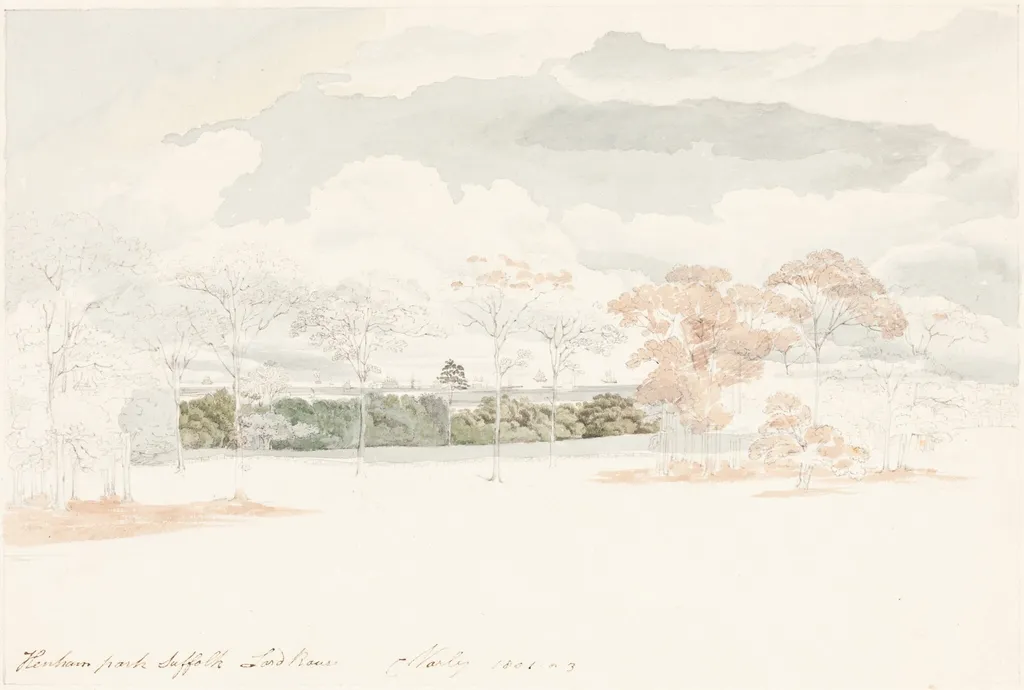
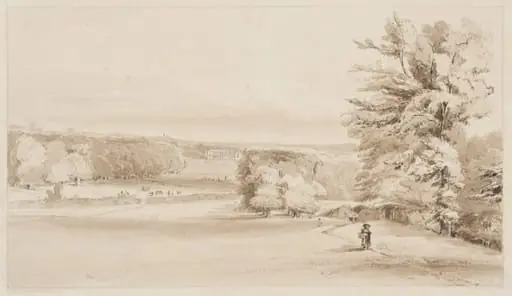
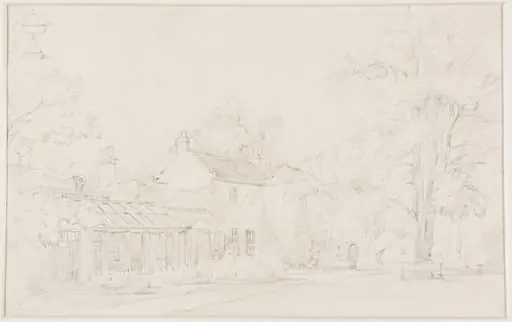
Henham Park, Suffolk is a graphite drawing by the Romanticist artist Cornelius Varley. It dates from 1802 and is held in the collection of the National Gallery of Art.
- Inscription
- Inscribed:lower left in pen and brown ink: Henham Parl Suffolk Lord Rous C. Varley 1801 or 3; by later hand, lower right in graphite: Cornelius Varley 1781-1873 / Ex coll. A. H. Varley / grandson of the artist.; by later hand, lower left in pen and black ink: 3698V; by later hand, lower left in graphite: VF 476; by later hand, lower left verso in graphite: DLA-2239.
About this work
Overview
Cornelius Varley created Henham Park, Suffolk in 1802, a drawing that combines graphite and watercolor on wove paper. It is a representative work by the British artist, who was also a printmaker and inventor of optical instruments.
Subject & Meaning
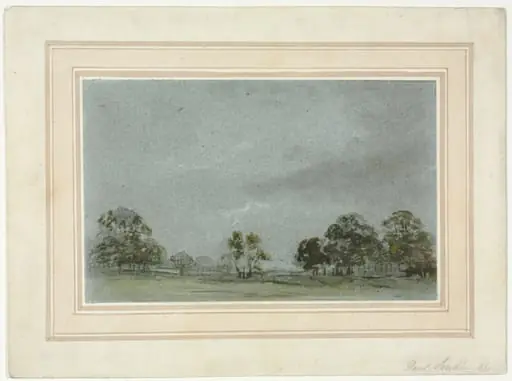
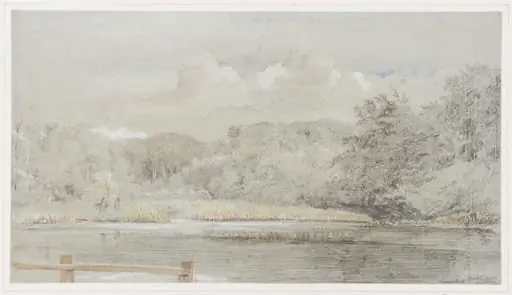
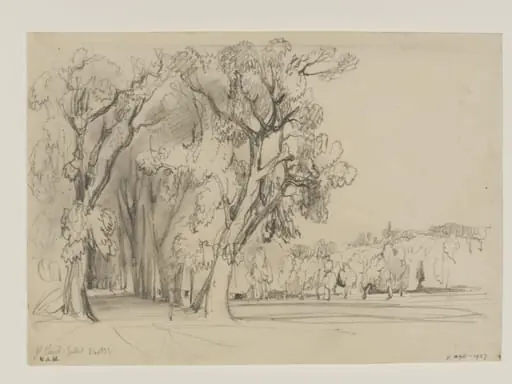
The drawing depicts Henham Park, a rural estate in Suffolk, characterized by a serene landscape with a line of trees, a distant fence, and a cloudy sky. The scene captures the transition of seasons, with some trees bare and others showing early signs of autumn.
Technique & Style
Varley employed light washes of watercolor to convey depth, leaving certain areas sketchy. The use of graphite and watercolor on wove paper allowed for a nuanced representation of the landscape, with subtle variations in tone and texture.
History & Provenance
The drawing is now part of the National Gallery of Art, Washington, collection. It was created during a time when topographical views were in demand among British artists, reflecting the era's interest in detailed documentation of landscapes.
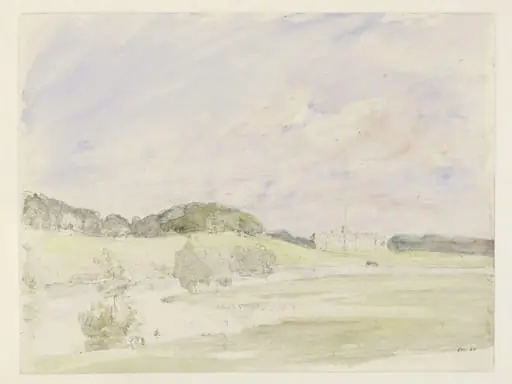
Own this work as a print
Artist & collection

Artist
Cornelius Varley, FRSA (21 November 1781 – 2 October 1873) was a British painter, mostly in watercolour, printmaker and optical instrument-maker. He invented the graphic telescope and the graphic microscope.

![Chatsworth [recto], by David Cox](https://artifactworldgallery.com/img/david-cox--chatsworth-recto--3f4d97adb21a8333-w320.webp)