Artwork
Saint Jerome in the Wilderness
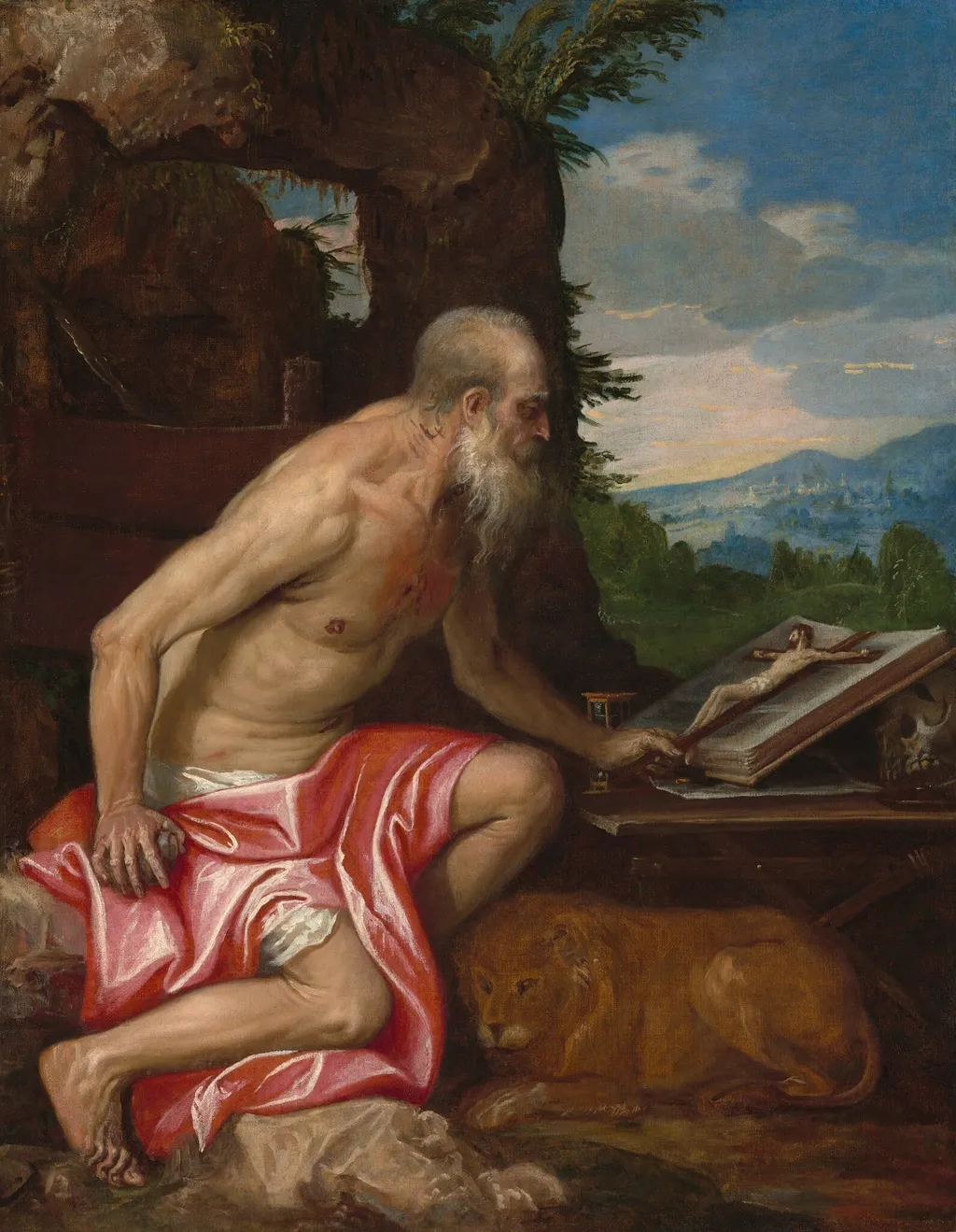
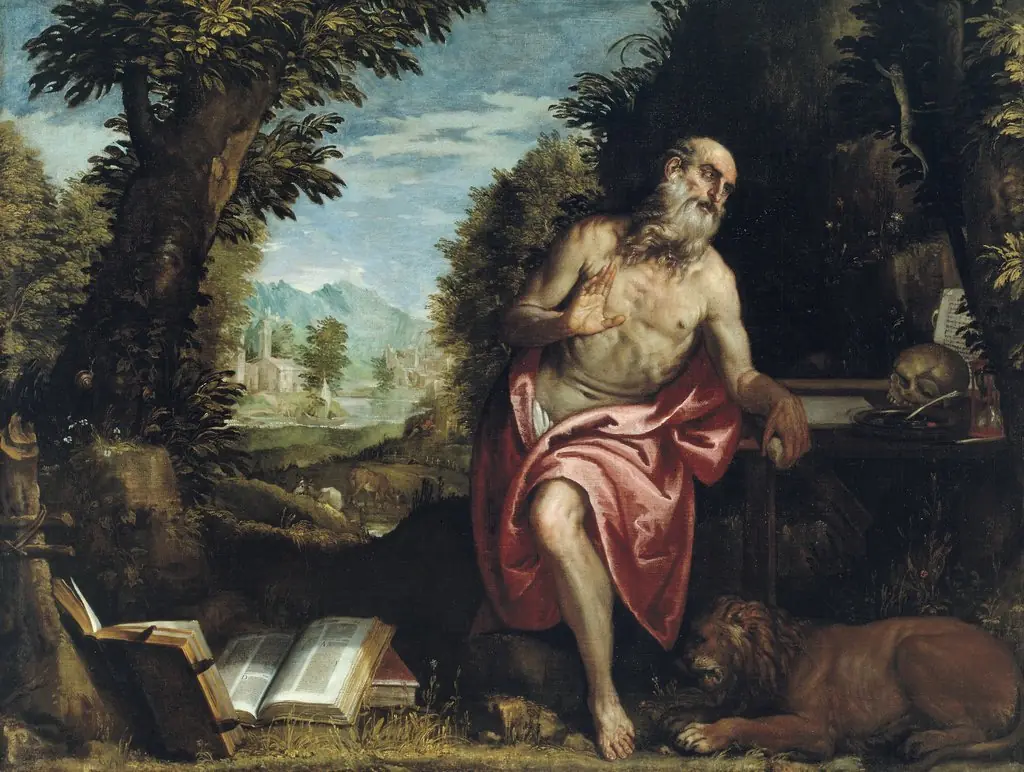
Saint Jerome in the Wilderness is an oil painting by the Mannerist artist Veronese. It dates from 1580 and is held in the collection of the National Gallery of Art.
About this work
Subject & Meaning
The composition reflects the Council of Trent's call for vivid, didactic imagery that would instruct viewers about the rewards of ascetic devotion.
The painting presents Saint Jerome as a solitary hermit in a barren landscape, a common Counter-Reformation motif that emphasizes penitence and contemplative study. Jerome is shown with a crucifix, a skull and a lion, symbols of faith, mortality and the wild nature tamed by the saint. The composition reflects the Council of Trent's call for vivid, didactic imagery that would instruct viewers about the rewards of ascetic devotion.
Veronese's work thus conveys the spiritual struggle of the scholar-hermit, embodying the tension between earthly knowledge and divine revelation.
History & Provenance
The painting, dated to 1580, was first documented in the collection of the painter and dealer Peter Lely in London. Following Lely's death, it appeared in the estate sale at his Covent Garden residence on 18 April 1682, described as a whole-length Saint Jerome with a landscape by Paul Veronese, and was purchased by Anthony Grey, 11th Earl of Kent. It then descended through the Grey and Robinson families-passing to Thomas Philip Robinson, 2nd Earl De Grey, at Wrest Park, Ampthill, and later to Nan Ino Herbert Cooper, 10th Baroness Lucas of Crudwell-until the Lucas sale at Christie, Manson & Woods, London, on 16 November 1917.
It subsequently passed through Freiherr Detlev von Hadeln in Venice and Count Alessandro Contini-Bonacossi in Florence before the Samuel H. Kress Foundation purchased it in 1954 and donated it to the National Gallery of Art, Washington, D.C., in 1961, where it resides within the Samuel H. Kress Collection.
Overview
Veronese's Saint Jerome in the Wilderness, painted around 1580, is an oil on canvas depicting the revered Christian scholar. The artwork portrays Jerome in a secluded, natural setting, emphasizing his period of ascetic contemplation. This painting exemplifies the artist's approach to religious subjects, combining detailed observation with a serene compositional quality, characteristic of the late Renaissance period in Venice.
Technique & Style
Veronese employs a sophisticated handling of light and shadow, known as chiaroscuro, to enhance the painting's tranquil yet profound atmosphere. The interplay of light illuminates Jerome's figure and the surrounding natural elements, creating depth and drawing the viewer's eye to the saint's meditative state. This technique contributes to the overall sense of peace and introspection, underscoring the spiritual nature of Jerome's wilderness retreat. The artist's brushwork renders the textures of the rocky landscape and foliage with subtle detail.
Own this work as a print
Artist & collection