Artwork
The Annunciation
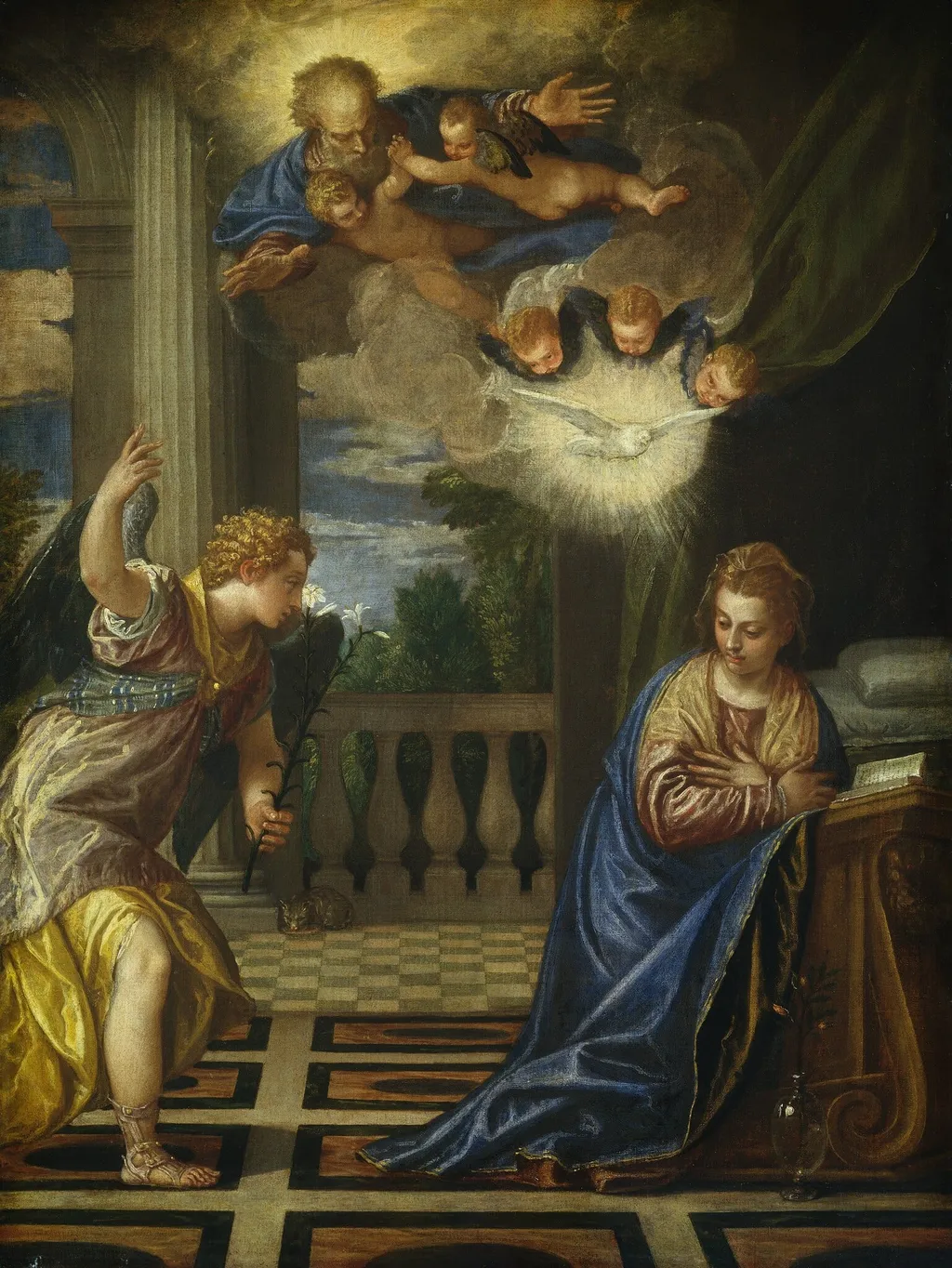
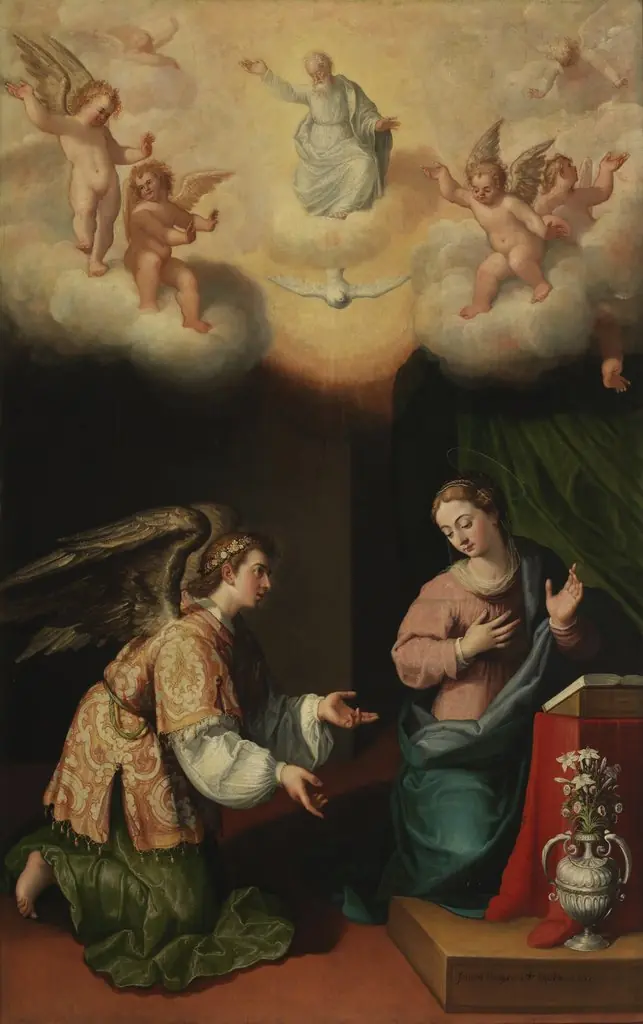
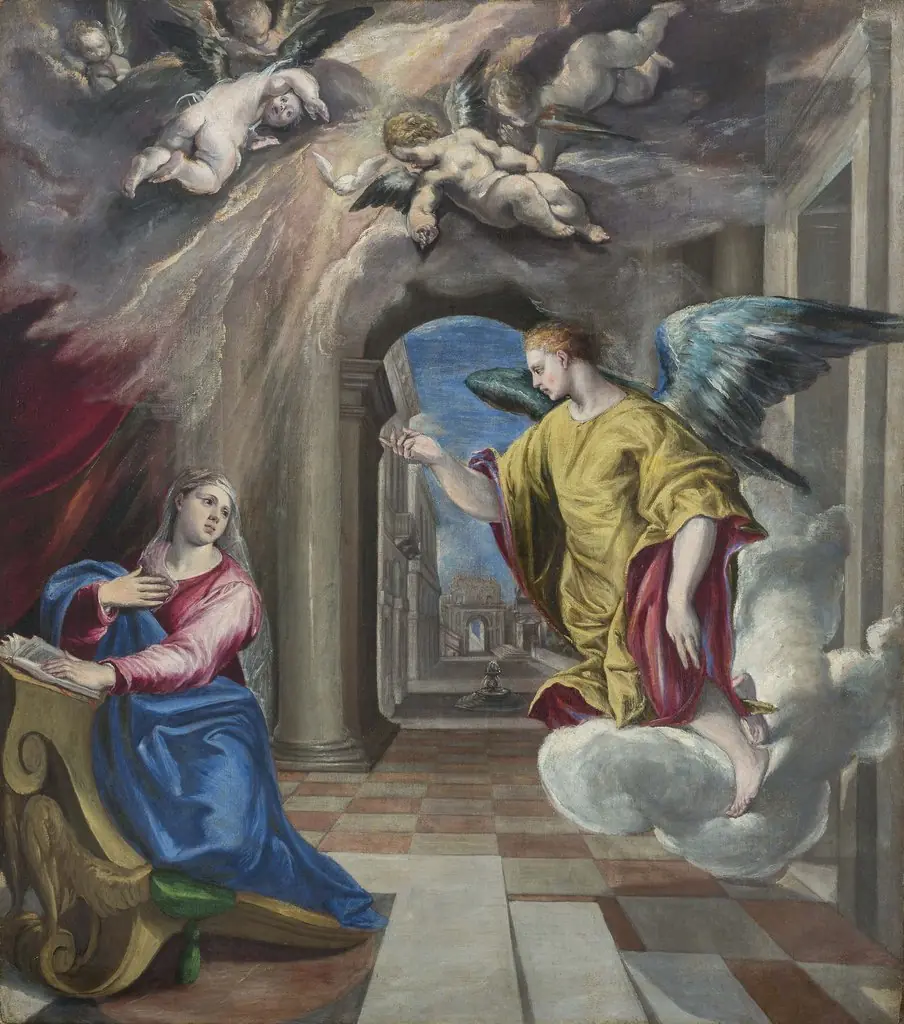
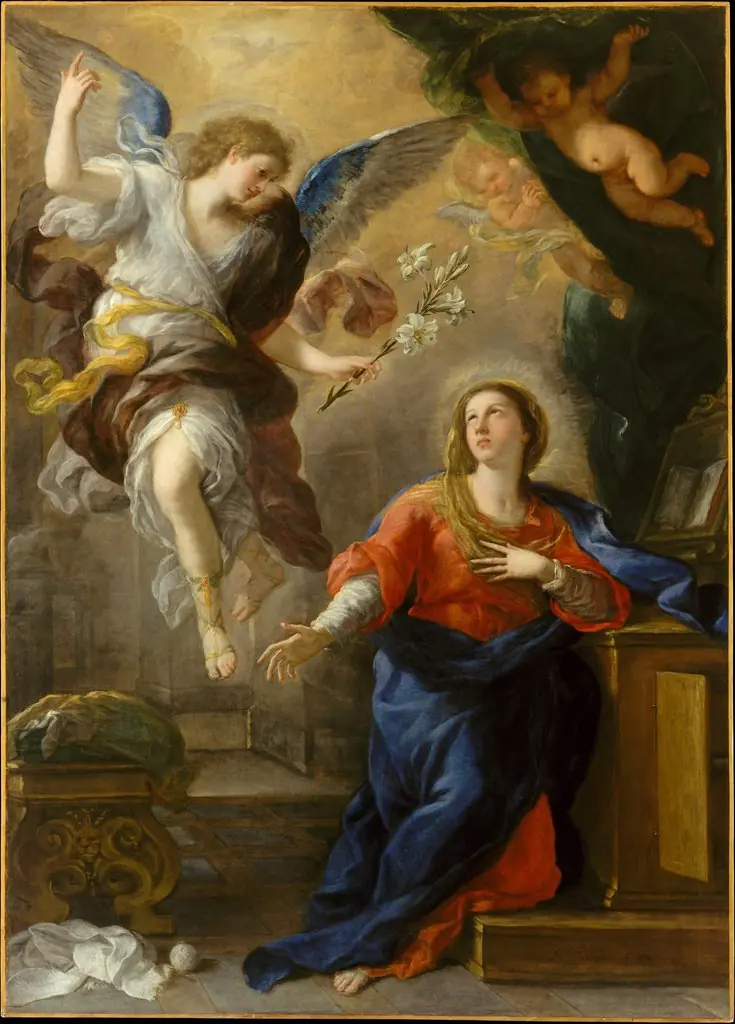
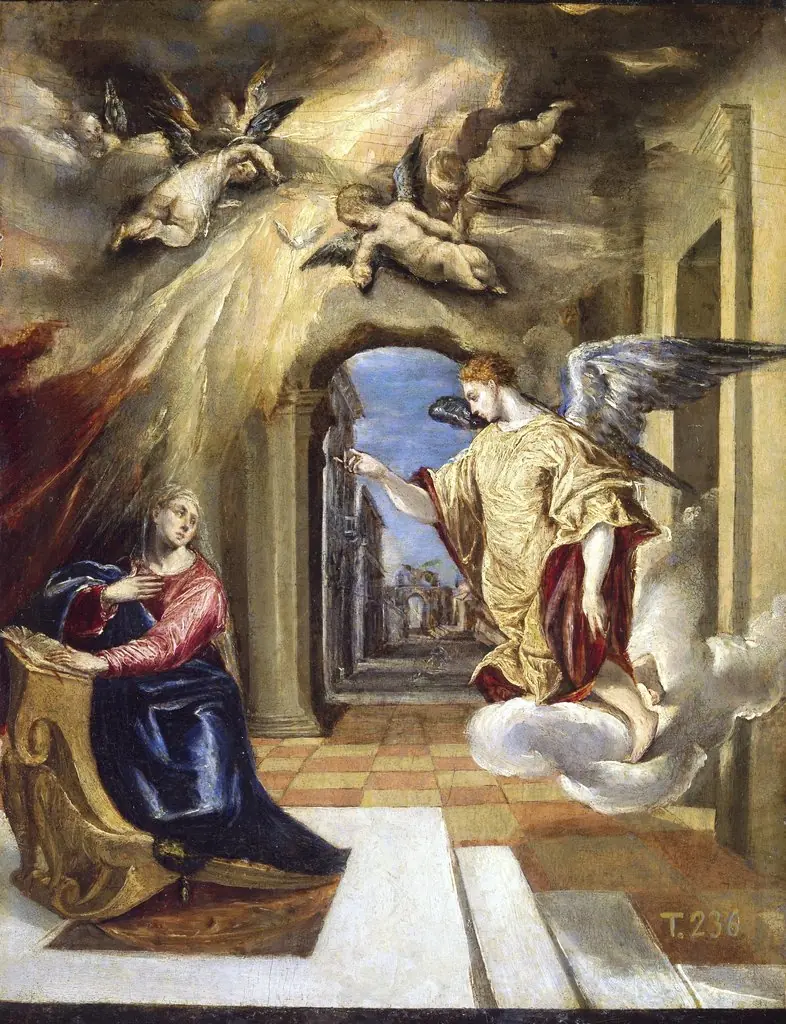
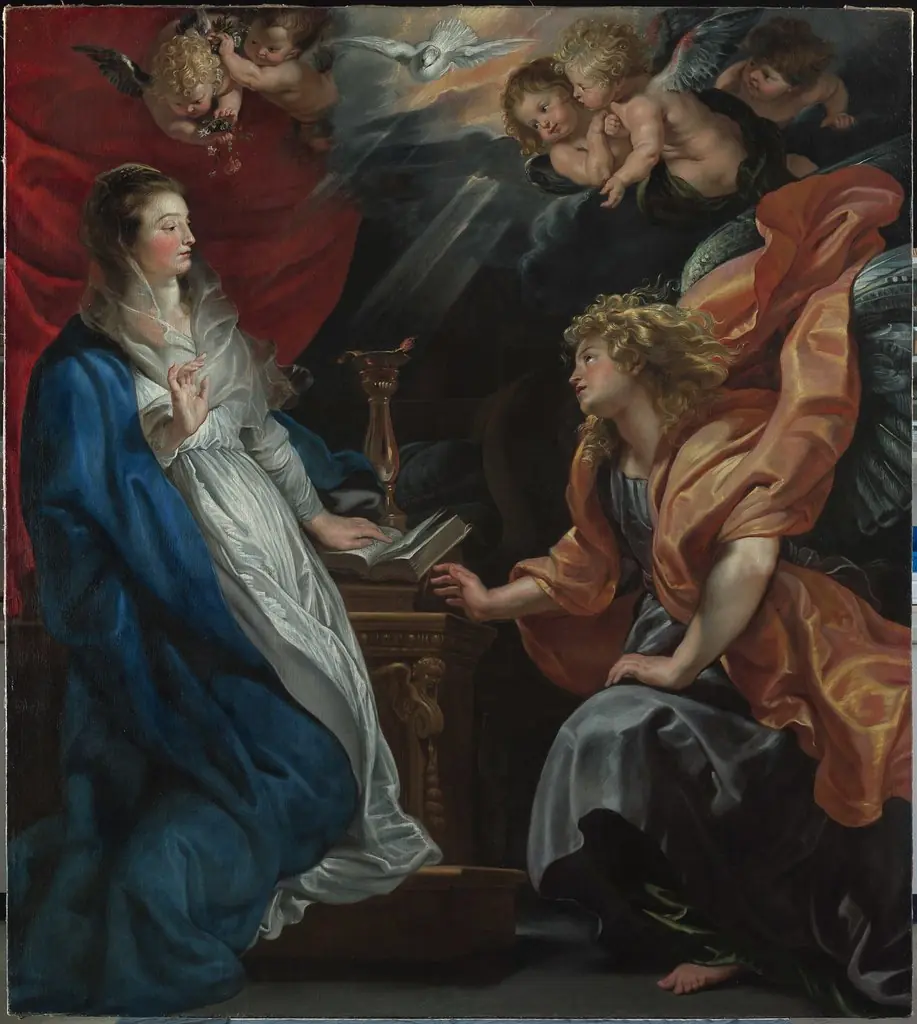
The Annunciation is an oil painting by the Mannerist artist Veronese. It is held in the collection of the National Gallery of Art.
About this work
Subject & Meaning
The subject is explicitly identified as the Annunciation, representing the divine intervention that initiates the salvation narrative.
Paolo Veronese's 1580 oil painting, The Annunciation, depicts the biblical moment of the Archangel Gabriel announcing to the Virgin Mary that she will conceive and bear the Son of God. As a work of religious art, the composition centers on this pivotal event in Christian theology, illustrating the Incarnation. The subject is explicitly identified as the Annunciation, representing the divine intervention that initiates the salvation narrative.
While the specific iconographic details of the figures and setting are not described in the provided sources, the work's classification as religious art confirms its function as a visual representation of this foundational scriptural episode. The painting serves as a devotional object, embodying the theological significance of Mary's acceptance of God's will.
Technique & Style
The Annunciation is painted in oil on canvas, employing oil paint as the medium and canvas as the support, as recorded in the documentation of the work. The painting’s material composition aligns with Renaissance practice, using oil pigments bound in linseed oil applied to a stretched canvas surface. No explicit condition assessment is provided in the sources, and handling details are limited to its provenance record. Its formal classification is listed as religious art within the genre of sacred painting.
History & Provenance
The Annunciation was painted by Paolo Veronese in 1580 in oil on canvas. Its early documented ownership traces to Victor Amédée, 3rd prince de Carignan, in Paris by 1742, when the painting appeared in his estate sale at the Hôtel de Soissons. It was bought in at that sale and resold the following year, in June 1743, when it was acquired by Thibaut for Louis François I de Bourbon, prince de Conti.
After passing through the prince de Conti's 1777 estate sale at the Palais du Temple, the canvas was purchased for Antoine Poullain, whose own 1780 estate sale at the Hôtel de Bullion included it as lot 4. Subsequent nineteenth-century owners included Jean Baptiste Pierre Le Brun, the comte de Vaudreuil, and Welbore Ellis Agar in London. In 1806 the entire Agar collection, including this picture, was bought by Robert Grosvenor, 1st marquess of Westminster, for Eaton Hall, descending thereafter through the Grosvenor family.
The painting is held by the National Gallery of Art in Washington, D.C., as part of the Samuel H. Kress Collection. Its documented provenance traces from Victor Amédée, 3rd prince de Carignan, through successive eighteenth-century Parisian owners including Louis François I de Bourbon, prince de Conti, and Antoine Poullain, before passing to Jean Baptiste Pierre Le Brun and the comte de Vaudreuil. It later surfaced in London through Welbore Ellis Agar, from whom it was inherited by his sons and then acquired in 1806, with the entire Agar collection, by Robert Grosvenor, 1st marquess of Westminster, for Eaton Hall, Cheshire.
It descended through the Grosvenor marquesses and dukes of Westminster until reaching Hugh Richard Arthur Grosvenor, 2nd duke of Westminster.
Legacy
The Annunciation by Paolo Veronese passed through a succession of distinguished owners, beginning with the prince de Conti and later the Poullain family, before entering the Agar collection and finally being acquired by the Grosvenor dukes in England; its documented journey reflects a high reputation among European collectors. In the 20th century the work was donated to the National Gallery of Art in Washington, D.C., as part of the Samuel H. Kress Collection, where it remains on public view, cementing its status as a key example of Venetian Renaissance art and influencing subsequent scholarship on Veronese’s iconography.
Overview
Veronese's The Annunciation, painted around 1584, is an oil on canvas depicting the biblical moment when the Archangel Gabriel informs Mary of her impending divine conception. This work exemplifies the artist's characteristic approach to religious themes, rendering a sacred event with a sense of tangible reality. The painting invites viewers into a familiar, domestic setting, making the miraculous encounter feel immediate and accessible.
Context
This depiction of The Annunciation aligns with Veronese's broader artistic practice. Throughout his career, he frequently applied a similar naturalistic and humanizing treatment to sacred subjects. By setting biblical events within familiar, often opulent, contemporary Venetian environments, he aimed to bridge the gap between the divine and the earthly, making religious narratives more resonant and immediate for his audience.
Own this work as a print
Artist & collection