Artwork
The Martyrdom and Last Communion of Saint Lucy
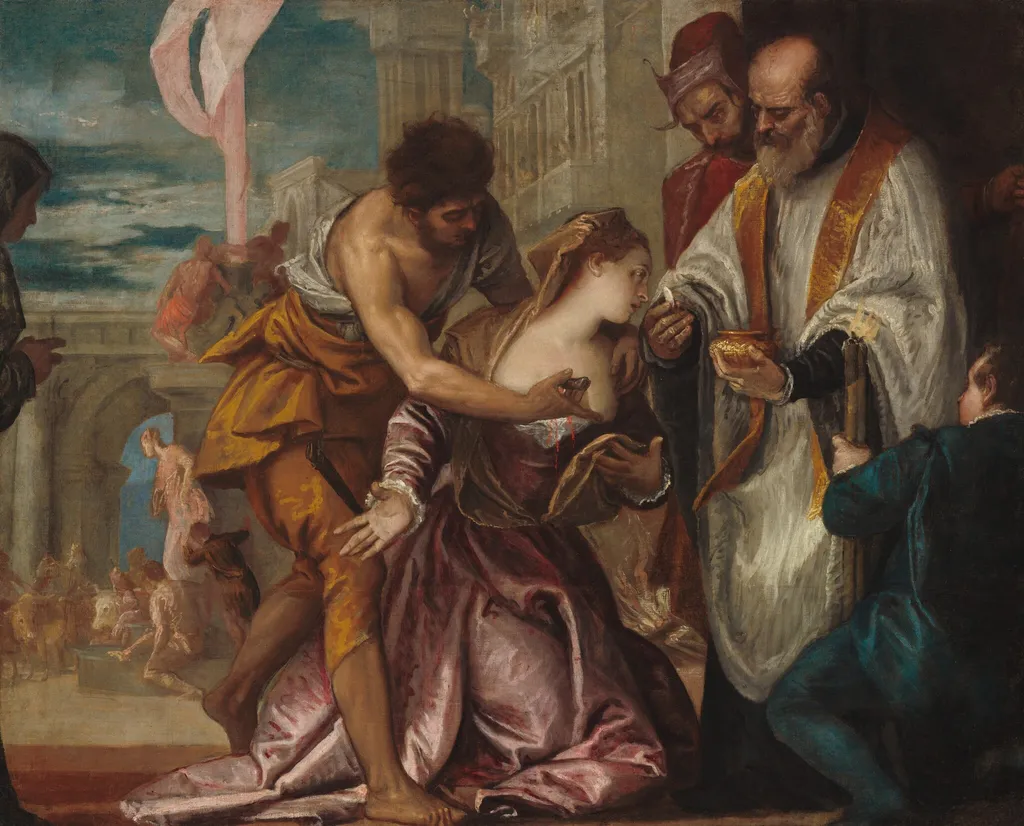
The Martyrdom and Last Communion of Saint Lucy is an oil painting by the Early Baroque Italian artist Veronese. It is held in the collection of the National Gallery of Art.
About this work
Saint Lucy receives communion before her martyrdom, ringed by a crowd of figures and angels. Veronese stages a busy, dramatic scene that holds a moment of stillness just before the violence to come, tense and charged with feeling. Oil on canvas, 1586.
Technique & Style
The composition depicts the martyrdom and final communion of Saint Lucy, adhering to the conventions of religious painting.
Executed in 1586, this religious painting by Paolo Veronese utilizes oil paint applied to a canvas support. The work measures approximately 139.7 centimeters in height and 173.4 centimeters in width. As a mature example of the artist's output from the late sixteenth century, the piece employs the standard medium of oil on canvas characteristic of Venetian painting of the period.
The composition depicts the martyrdom and final communion of Saint Lucy, adhering to the conventions of religious painting. While the specific handling of the brushwork and the current physical condition of the surface are not detailed in the available records, the fundamental material construction remains consistent with Veronese's established techniques for large-scale devotional works created during this era.
History & Provenance
Painted by Paolo Veronese in 1586, The Martyrdom and Last Communion of Saint Lucy is first securely documented in 1723, when it was recorded during a pastoral visitation of the church of Santa Croce in Belluno by Bishop Rota. Between 1808 and 1811 the canvas was transferred to Milan. By 1814 it had entered the collection of Generale Conte Teodoro Lechi in Brescia, where it appeared as no. 49 in his inventory.
In 1827 the dealer James Irvine, acting from London and Rome, acquired the painting for the Scottish collector Sir William Forbes of Pitsligo, 7th Baronet, of Fettercairn. The work then descended through the Forbes family, passing to Sir John Stuart Hepburn Forbes, 8th Baronet, and was offered unsuccessfully at the Forbes sale in London on 2 June 1842. It subsequently passed to Harriet Williamina Hepburn-Forbes Trefusis, Baroness Clinton, and later to the 21st Baron Clinton, before reaching Fenella Hepburn-Stuart-Forbes-Trefusis and her daughter Diana Bowes-Lyon.
Sold at Christie, Manson & Woods on 25 June 1971, the painting was bought by Eisenbeiss, reappeared at Christie's on 10 April 1981, and was acquired in 1984 by the National Gallery of Art in Washington, D.C., where it now hangs.
Context
The Martyrdom and Last Communion of Saint Lucy (1586) is a large oil-on-canvas religious work by Paolo Veronese that entered the National Gallery of Art collection in Washington, D.C. Its earliest documented appearance is a 1723 pastoral visitation of the church of Santa Croce in Belluno. The work exemplifies Veronese's mature synthesis of Venetian colorism and narrative drama, situating it within the late-Renaissance tradition of martyrdom imagery. Scholarly attention focuses on its iconography, provenance trajectory, and role in illustrating the diffusion of Veronese's altarpieces across Europe.
Legacy
The Martyrdom and Last Communion of Saint Lucy was first documented in a 1723 pastoral visitation of its original church, attesting to its early recognition. Subsequent owners, including the Conte Teodoro Lechi, the Forbes family, and later the Trefusis lineage, reflected a continuous chain of provenance, with recorded sales in 1842, 1971, and 1981 underscoring enduring interest. The painting's acquisition by the National Gallery of Art in Washington, D.C., placed it in a leading public collection.
Its sustained appearance in provenance records and major collections reflects its recognized importance in art-historical study of Veronese's late religious output.
Overview
Veronese's oil painting, "The Martyrdom and Last Communion of Saint Lucy," dates to approximately 1586. This large-scale canvas portrays the revered Christian martyr, Saint Lucy, in a pivotal moment of her narrative. The work is a significant example of religious art from the late Renaissance, capturing a dramatic episode from the saint's life with characteristic grandeur.
Subject & Meaning
The painting focuses on Saint Lucy as she partakes in her final communion, an act of spiritual solace immediately preceding her execution. This scene captures a profound contrast: a serene, sacred ritual unfolding amidst the looming threat of violent death. The artist imbues the canvas with a palpable tension, conveying the emotional weight of a soul preparing for sacrifice, surrounded by both earthly and divine witnesses.
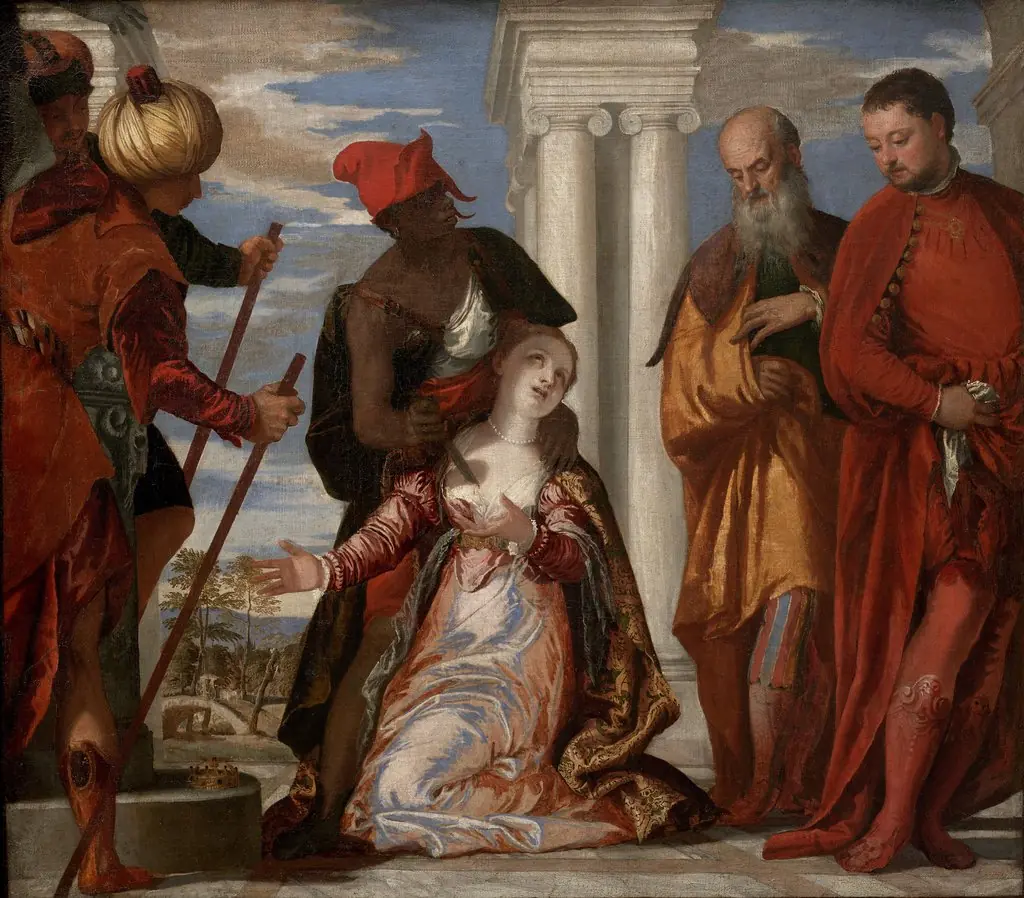
Own this work as a print
Artist & collection



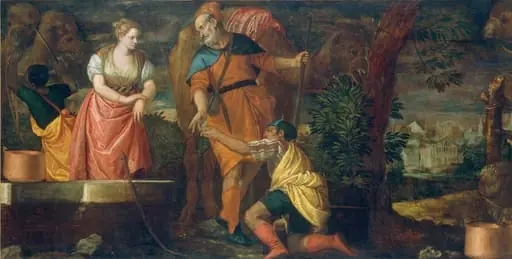
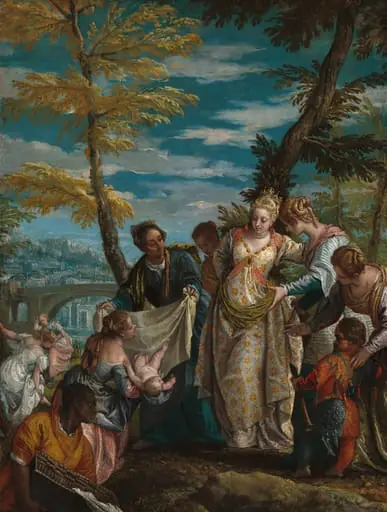
- The Martyrdom of Saint Justina
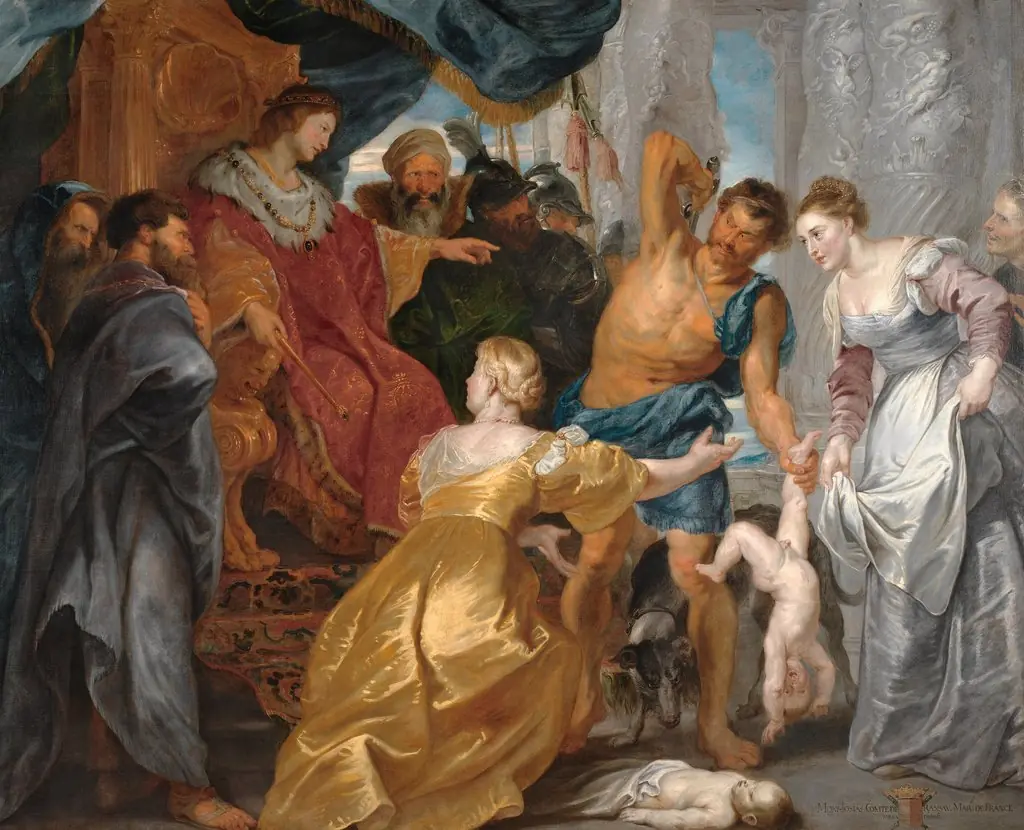 The Judgement of Solomon
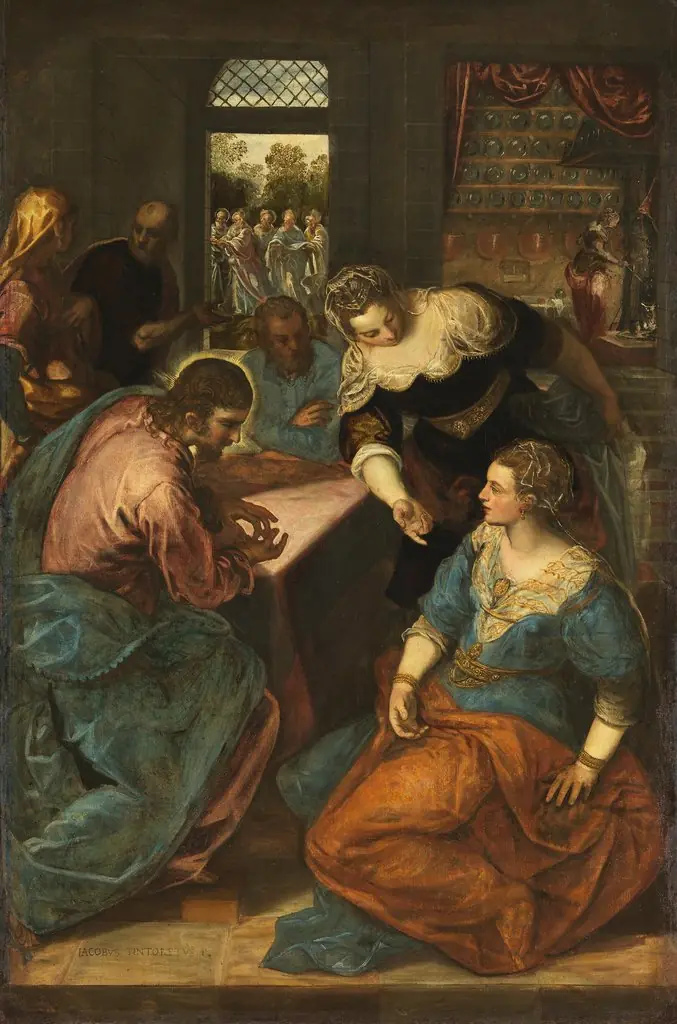 Christ with Mary and Martha
 Head of Cyrus Brought to Queen Tomyris
 The Adoration of the Magi
 Esther before Ahasuerus
 La Présentation de Marie au Temple
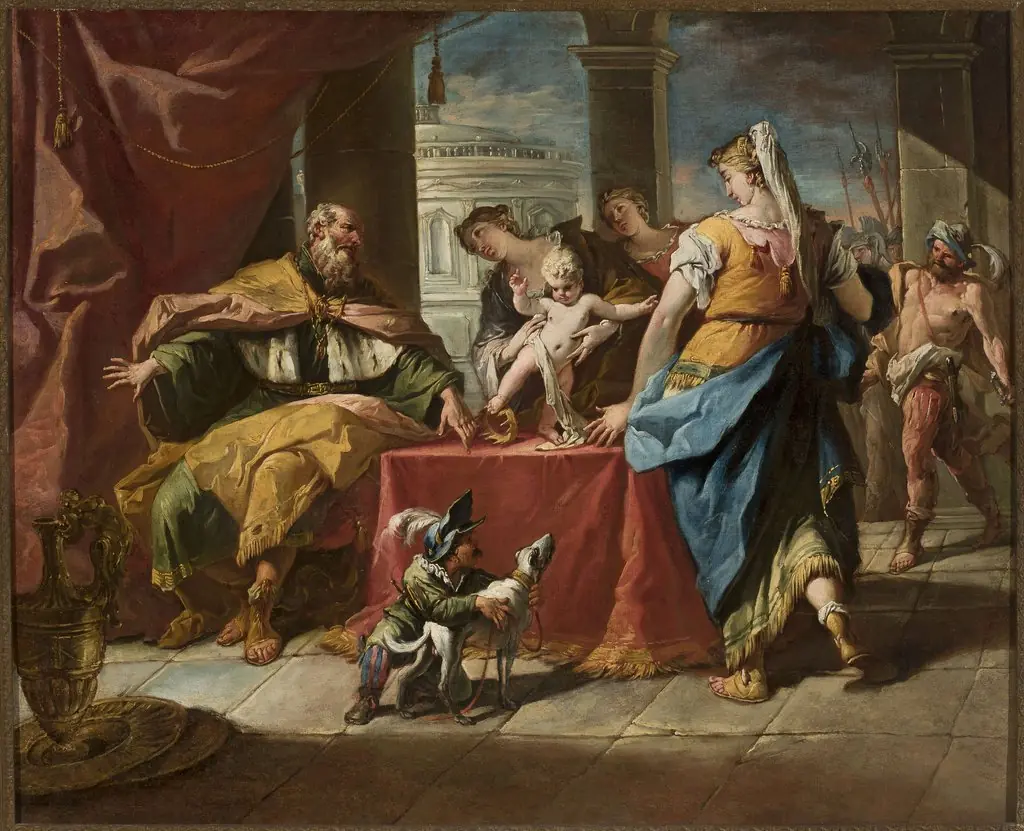 Moses trampling on the Pharaoh’s crown
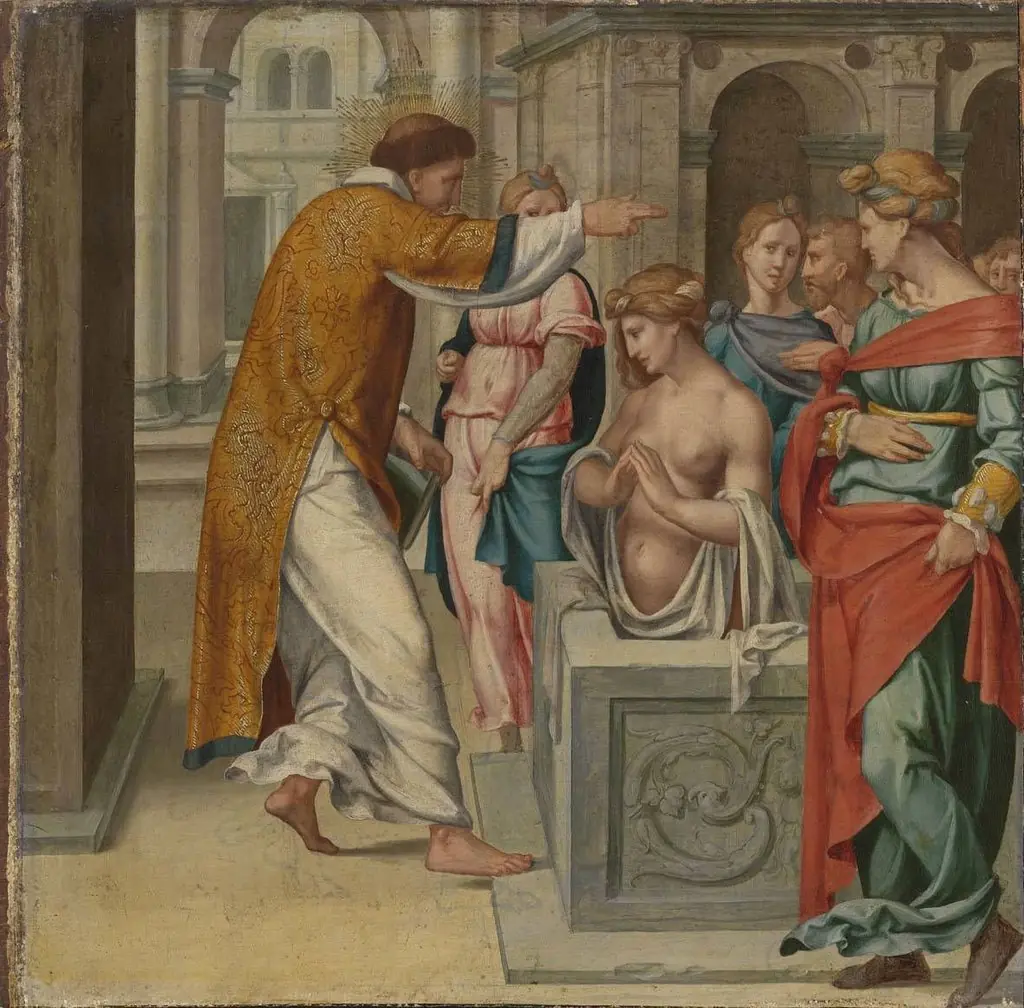 Cyriakus-Folge: Der hl. Cyriakus tauft Arthemia
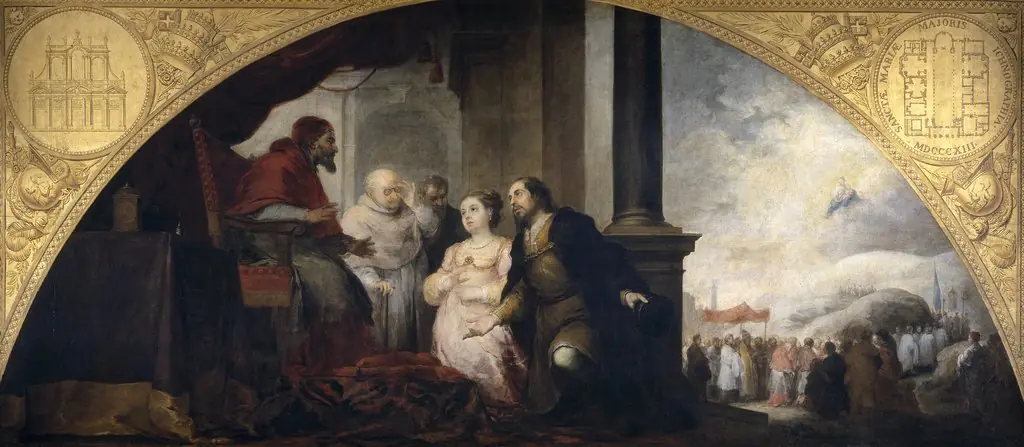 The Foundation of Santa Maria Maggiore in Rome. The Patrician recounts his Dream to the Pope
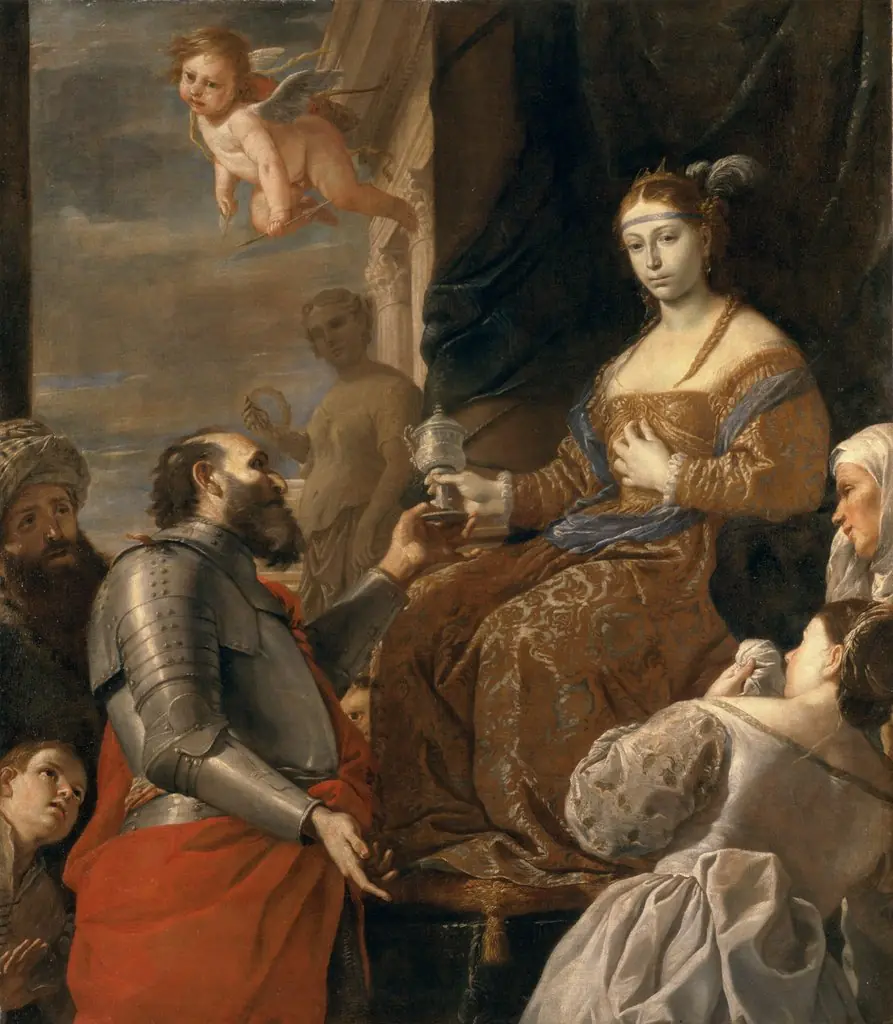 Death of Sophonisbe