Artwork
El martirio de santa Cristina
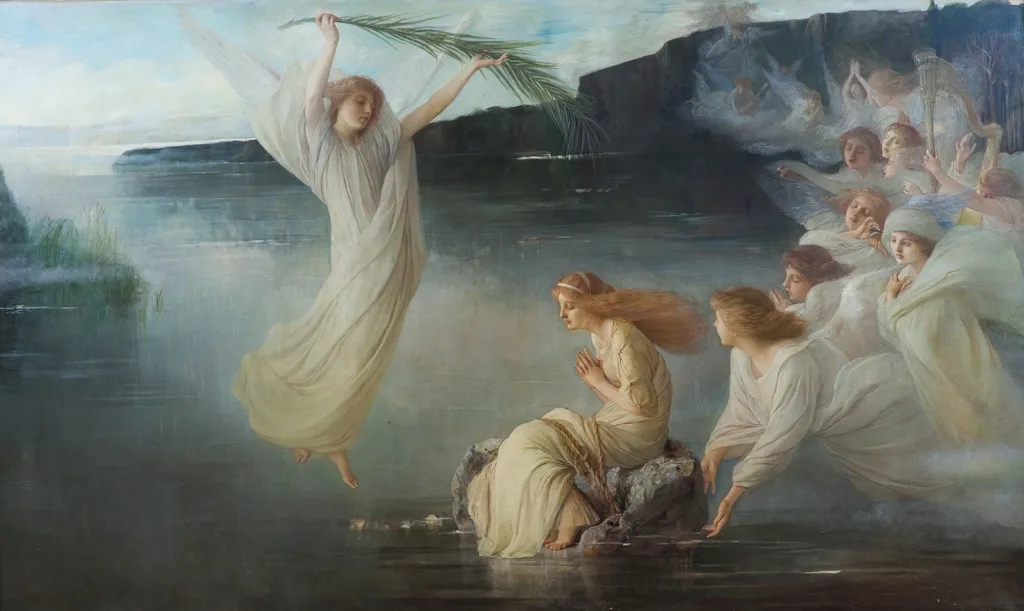
El martirio de santa Cristina is an oil painting by the Post-Impressionist artist Vicente Palmaroli. It is held in the collection of the Museo del Prado.
About this work
Technique & Style
Among the objects depicted within the scene are a guitar and a violin, which contribute to the painting's atmospheric and symbolic staging of the martyrdom.
El martirio de santa Cristina is executed in oil paint on canvas, a medium consistent with Vicente Palmaroli's late-career practice. The work's broad horizontal format, measuring 181.5 cm in height by 301 cm in width, accommodates a multi-figure narrative composition. Among the objects depicted within the scene are a guitar and a violin, which contribute to the painting's atmospheric and symbolic staging of the martyrdom.
The handling reflects the academic, polished finish typical of Palmaroli's history paintings, with carefully modeled figures set against a spatially developed background. The canvas is held in the collection of the Museo del Prado, where its condition is maintained under the museum's conservation standards.
History & Provenance
Vicente Palmaroli created the oil painting El martirio de santa Cristina in 1895. Executed on canvas, the work measures 181.5 cm in height and 301 cm in width. The painting is currently held in the collection of the Museo del Prado, where it remains part of the institution's holdings.
No specific details regarding the original commission or the intermediate ownership chain prior to its arrival at the museum are provided in the available records.
The painting El martirio de santa Cristina by Vicente Palmaroli is held in the collection of the Museo del Prado in Madrid. Created in 1895, the work is executed in oil on canvas and measures 181.5 cm in height by 301 cm in width. The available records confirm its location within the museum but do not provide a specific inventory number or details regarding its exhibition history.
Legacy
El martirio de santa Cristina, painted by Vicente Palmaroli in 1895, entered the collection of the Museo del Prado where it remains on public view. The work shows a guitar and violin alongside the saint, elements that have been noted for their subtle musical symbolism. Its presence in a major national museum contributed to renewed scholarly interest in late‑19th‑century Spanish academic painting during the early 2000s.
The painting was featured in the Prado’s 2004 exhibition on Spanish religious art, where curators highlighted its technical precision and devotional subject matter. Contemporary reviews praised the composition’s balance and the delicate rendering of fabric, reinforcing Palmaroli’s reputation as a master of genre scenes with spiritual themes.
Art historians have cited the piece as an example of how 19th‑century Spanish artists merged realism with symbolic detail to engage modern audiences.
Overview
Created in 1898, this oil on canvas by Spanish painter Vicente Palmaroli is part of the collection at Madrid’s Museo del Prado. The work presents a quiet, contemplative tableau centered on a woman seated on a rock beside water, surrounded by other figures in white robes.
Subject & Meaning
The central figure, clothed in a flowing white garment, sits with her hands joined, her reddish‑brown hair cascading down her back. To her left, another woman hovers, raising a palm frond overhead, while additional women gather on the shore, some holding musical instruments. The composition evokes a serene, possibly ritualistic gathering, emphasizing calm devotion.
Context
Executed toward the end of Palmaroli’s career, the painting reflects the artist’s interest in religious and allegorical subjects, a theme common among Spanish painters of the period who often combined devotional narratives with lyrical natural settings.
Artist & collection

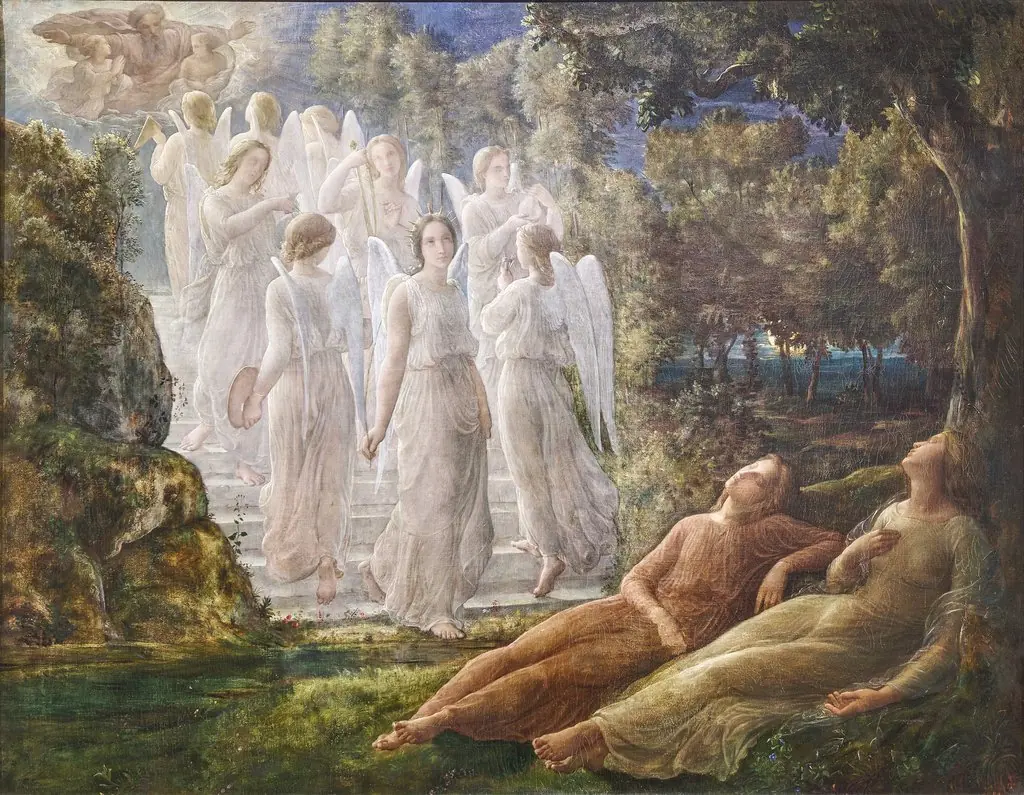
- Poem of the Soul - The golden stairs
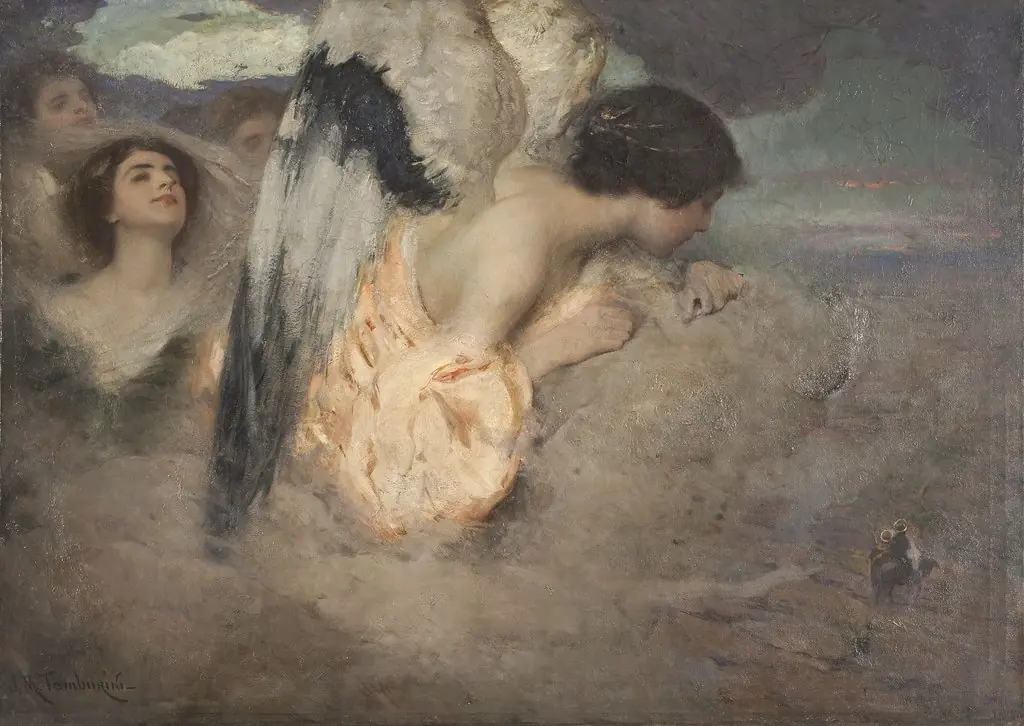 The Flight into Egypt
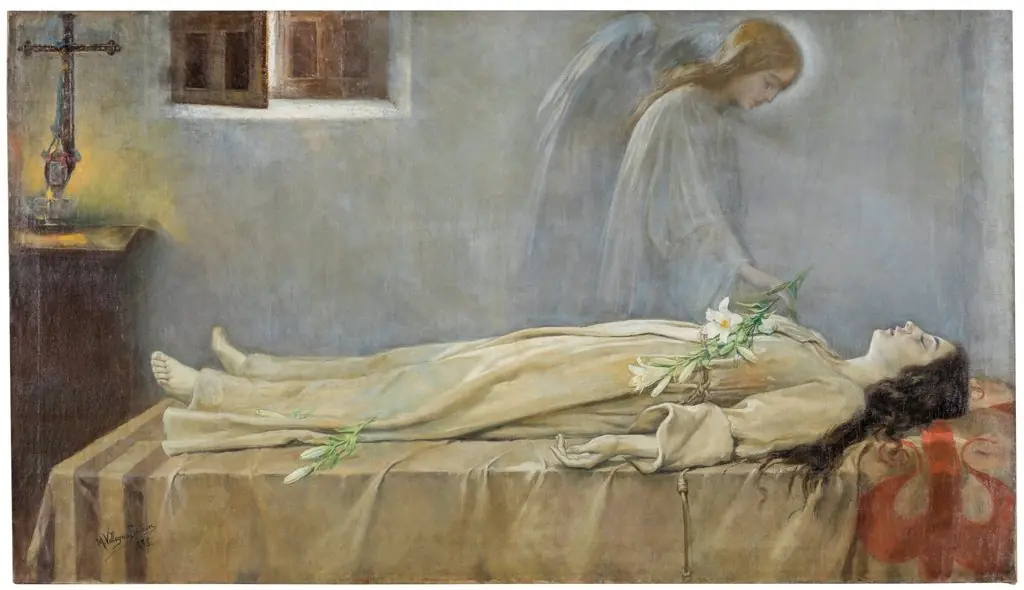 Último sueño de una virgen
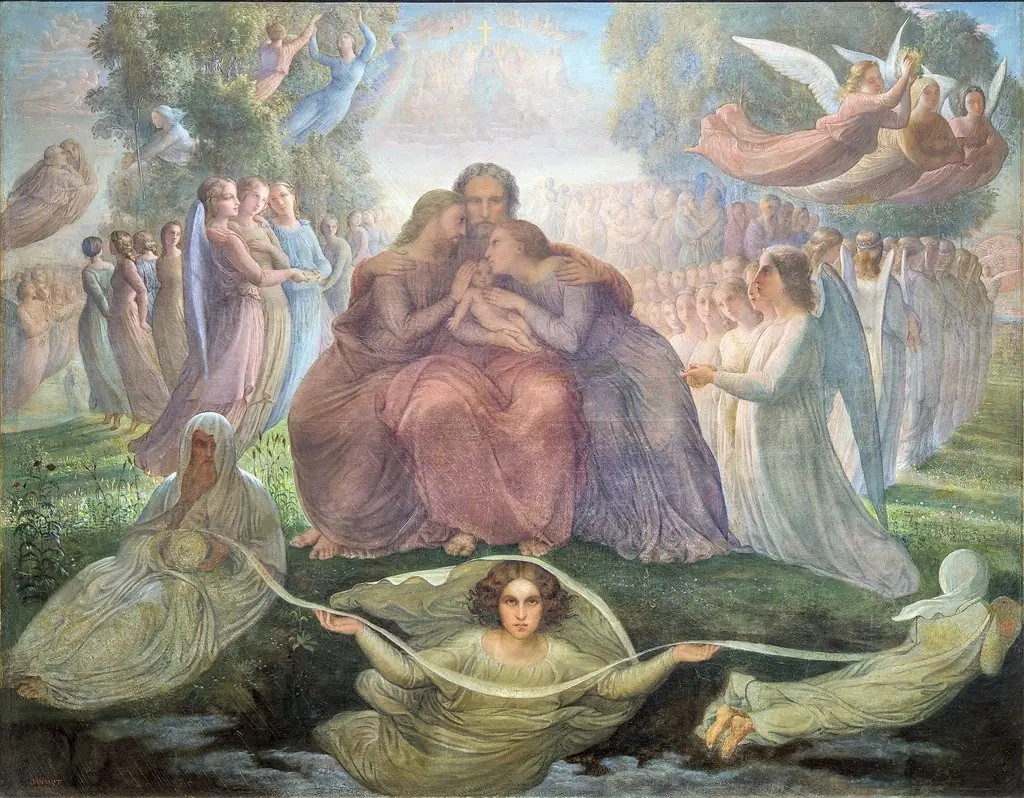 Poem of the Soul - Divine generation
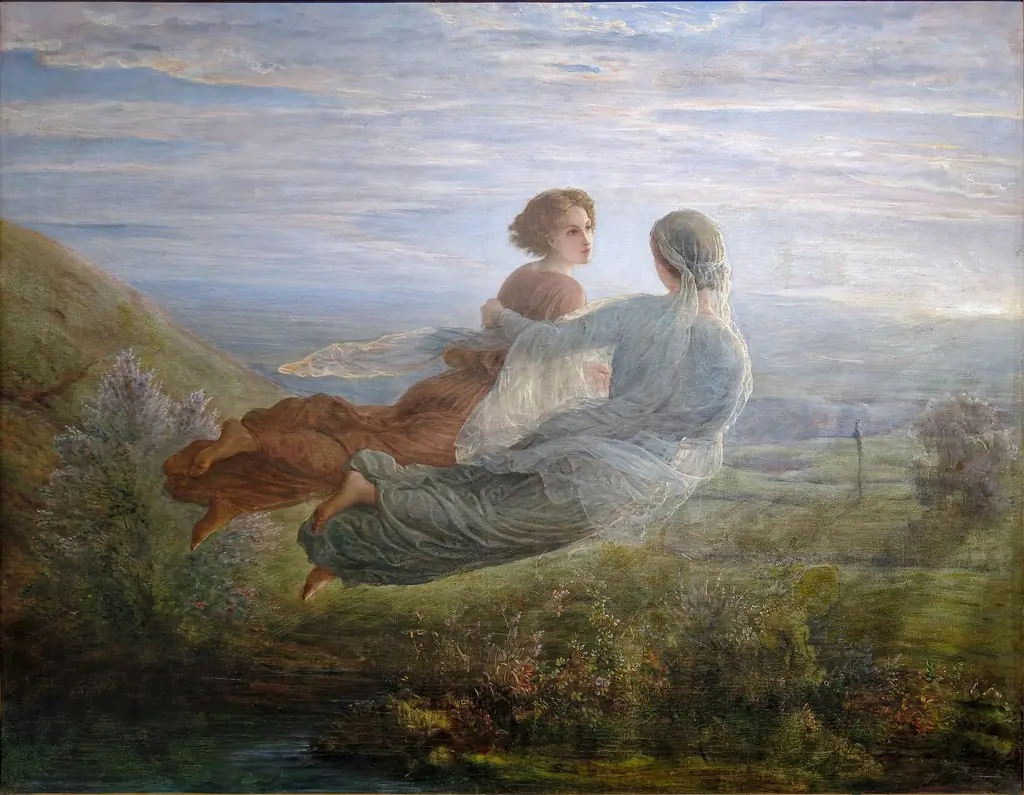 Poem of the Soul - The flight of the soul
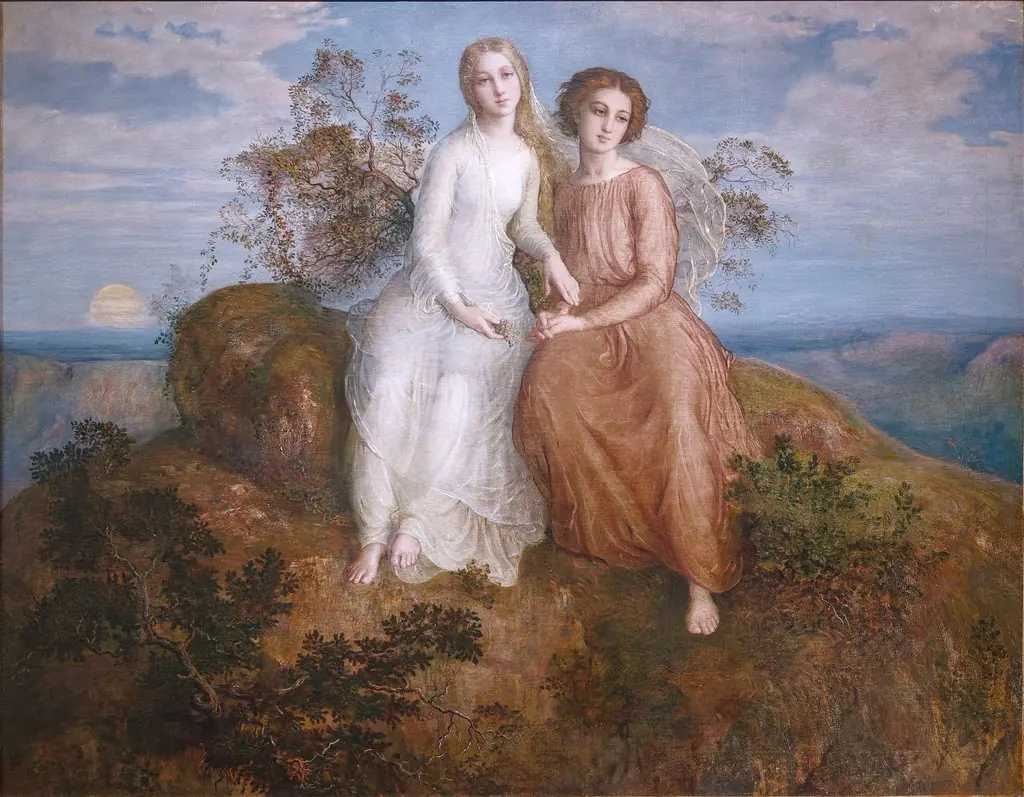 Poem of the Soul - One evening
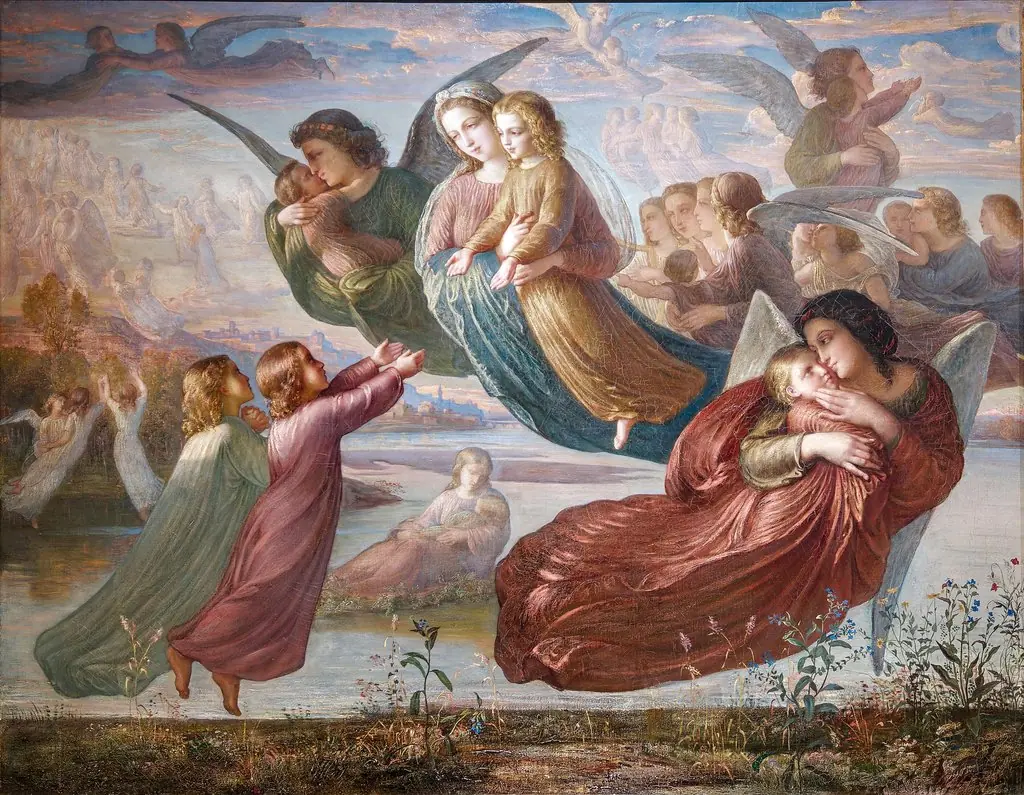 Poem of the Soul - Memories of the sky
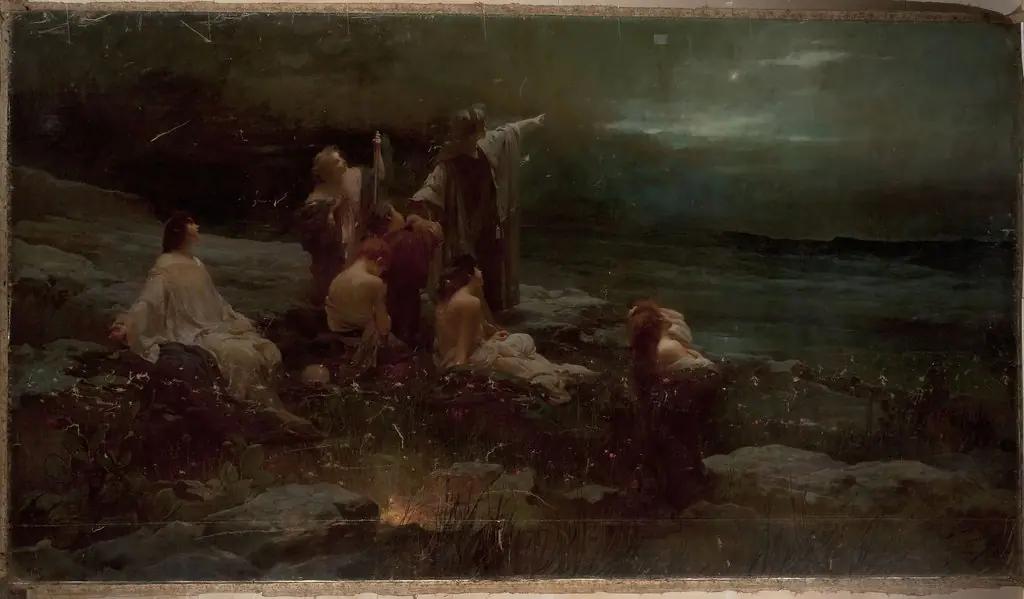 Morning star
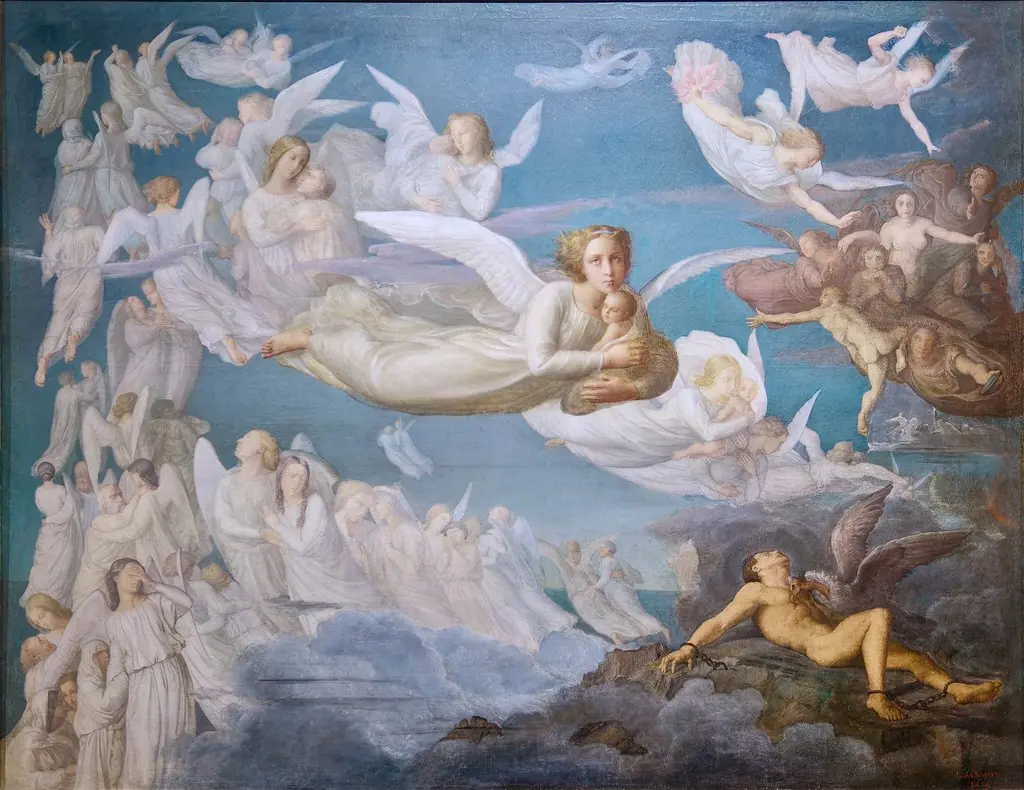 Poem of the Soul - Passage of the soul
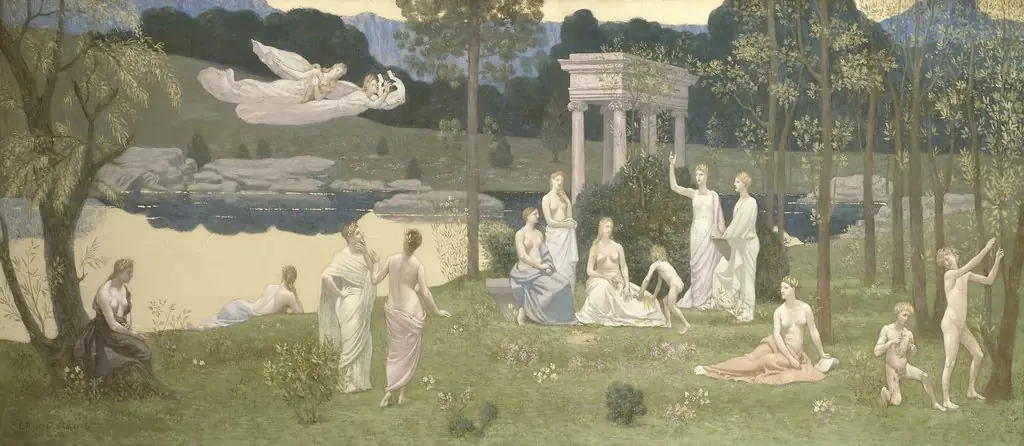 The Sacred Grove, Beloved of the Arts and the Muses
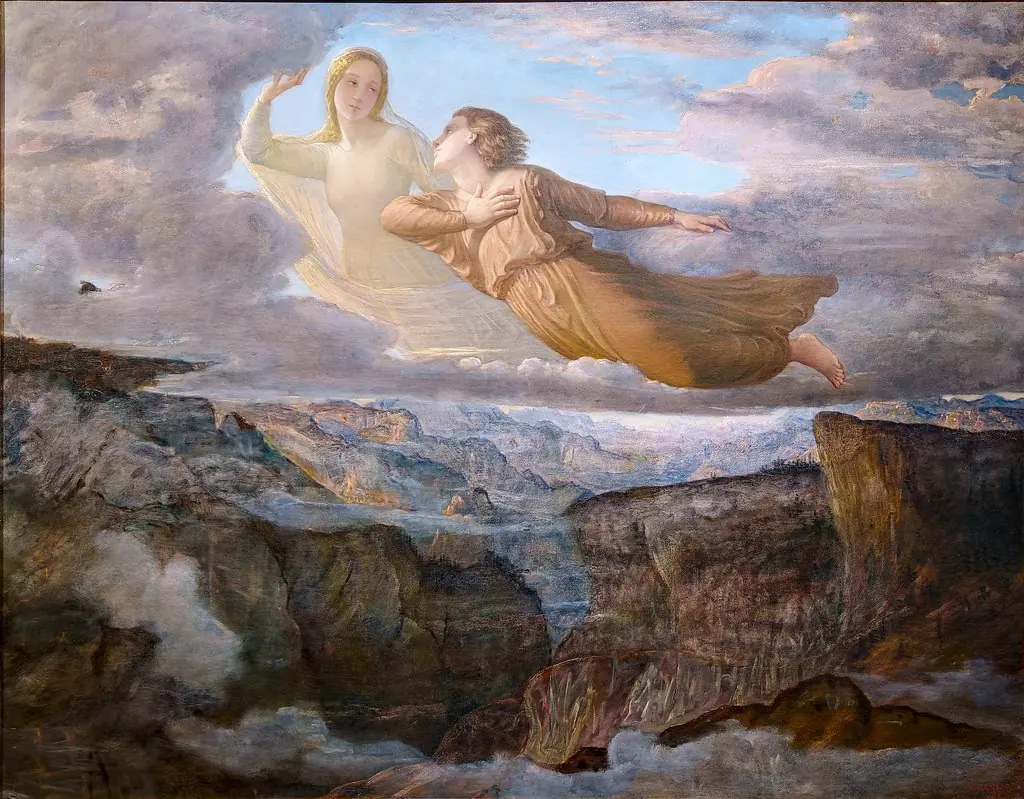 Poem of the Soul - Ideal
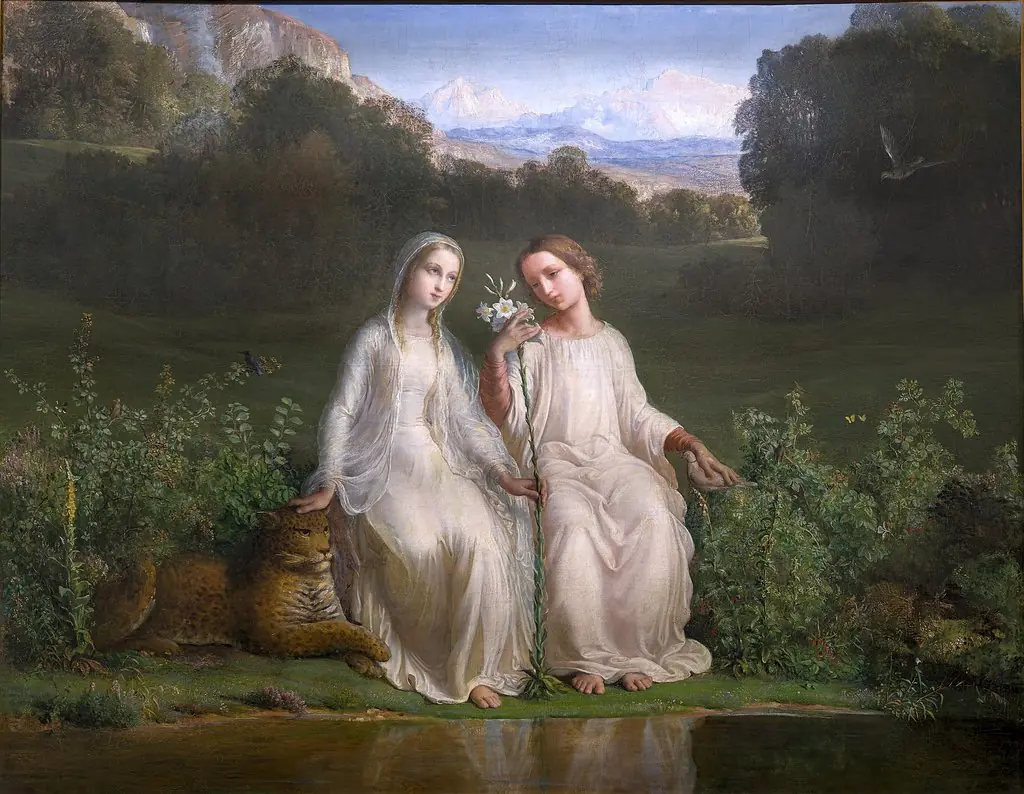 Poem of the Soul - Virginitas