Artwork
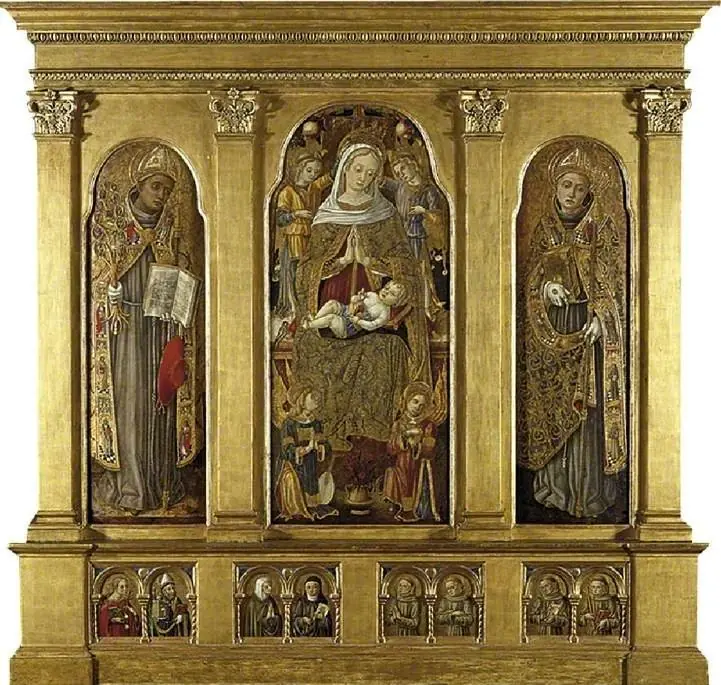
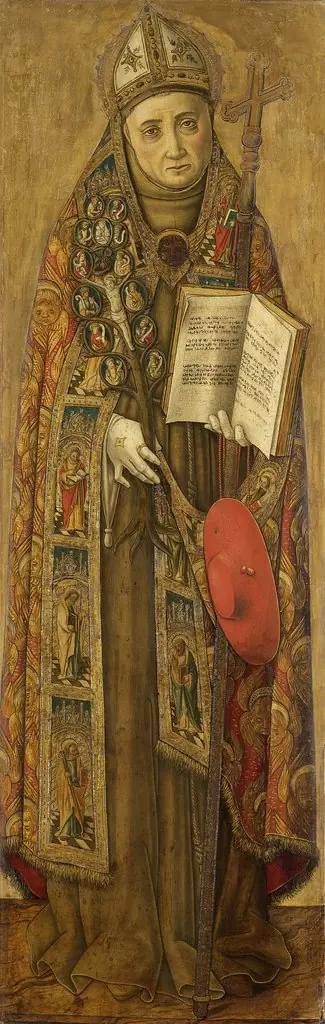
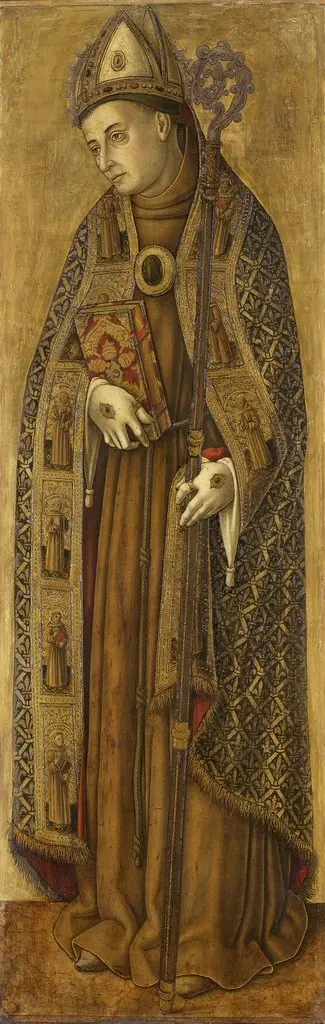
Virgin and Child enthroned; St Bonaventura (left); St Louis of Toulouse (right). below, four pairs of figures of Saints: St Agatha and St Augustine; an unidentified female Franciscan Saint and St Clar
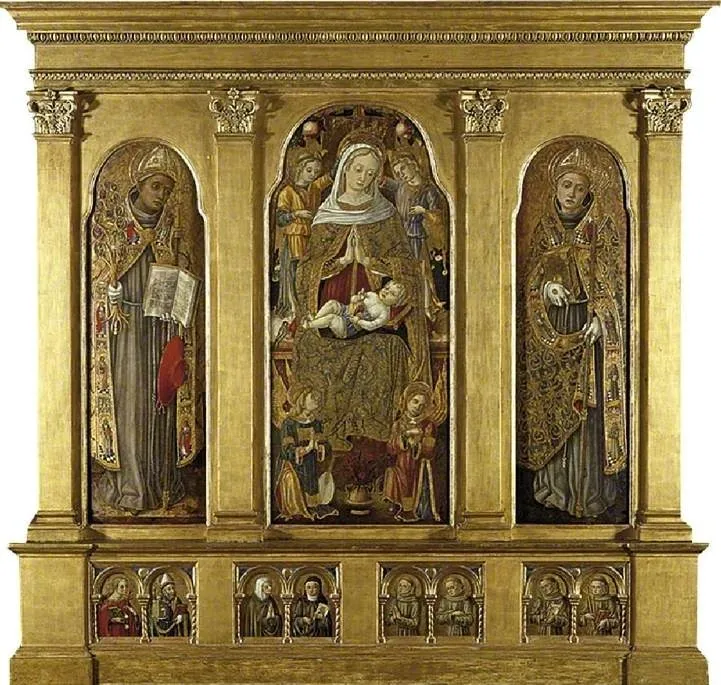
Virgin and Child enthroned; St Bonaventura (left); St Louis of Toulouse (right). below, four pairs of figures of Saints: St Agatha and St Augustine; an unidentified female Franciscan Saint and St Clar is an unspecified painting by the Early Renaissance artist Vittore Crivelli. It dates from 1495 and is held in the collection of the Fitzwilliam Museum.
About this work
Subject & Meaning
The presence of Agatha and Augustine extends the appeal beyond Franciscan patrons, presenting a universal roster of holy advocates.
The painting presents a hierarchical sacred assembly centered on the Madonna and Child enthroned, flanked by two Franciscan luminaries: St Bonaventura on the left and St Louis of Toulouse on the right. Below this principal group, four pairs of saints are arranged in a lower register, identified as St Agatha and St Augustine, an unidentified female Franciscan saint alongside St Clare of Assisi, and additional male Franciscan saints. The composition unites the Christ Child and his mother with representatives of the Franciscan order, including its celebrated theologians, royals, and early followers, alongside figures drawn from broader Christian tradition such as the martyr Agatha and the Church Father Augustine.
This arrangement reflects the Franciscan devotional program typical of late fifteenth-century Italian altarpieces, in which the Virgin and Child are venerated within a celestial court of intercessors. The pairing of Bonaventura and Louis of Toulouse emphasizes the order's intellectual and royal heritage, while the inclusion of Clare of Assisi and an unnamed Franciscan woman highlights its female branch. The presence of Agatha and Augustine extends the appeal beyond Franciscan patrons, presenting a universal roster of holy advocates.
History & Provenance
The altarpiece was created in 1489 by Vittore Crivelli for the church of San Francisco in Perugia, commissioned by the Confraternity of the Immaculate Conception. It remained in situ until the late nineteenth century when the confraternity was dissolved, after which the work entered the collection of the Fitzwilliam Museum in Cambridge, where it is currently housed.
The painting is held in the collection of the Fitzwilliam Museum. While the specific inventory or accession number is not provided in the available sources, the work is definitively attributed to Vittore Crivelli and dated to 1489. The provided sources do not contain any information regarding the artwork's exhibition history.
Overview
Created in 1495, this painted altarpiece presents the Virgin Mary seated on a throne with the infant Christ, flanked by Saint Bonaventure on the left and Saint Louis of Toulouse on the right. Beneath the central trio, four smaller panels display paired saints: Saint Agatha with Saint Augustine, an unidentified Franciscan woman with Saint Clare of Assisi. The composition is framed by a gold background typical of late medieval devotional works.
Technique & Style
Executed in tempera on panel, the work features a luminous gold ground that heightens the figures' outlines. The figures are rendered with the linear clarity and decorative detail associated with the Crivelli workshop, echoing the more refined approach of Carlo Crivelli while retaining a somewhat simpler handling of drapery and facial expression.
Context
The altarpiece belongs to the early Renaissance phase in northern Italy, when artists blended Gothic ornamental traditions with emerging naturalistic concerns. Its iconographic program aligns with Franciscan liturgical settings, suggesting it was intended for a chapel or church associated with the order.
Artist & collection
Artist
Vittorio (or Vittore) Crivelli (c. 1440 – 1501 or 1502) was an Italian painter and brother of Carlo Crivelli. His works are similar in style to his brother's, but less accomplished. He was born and died in…

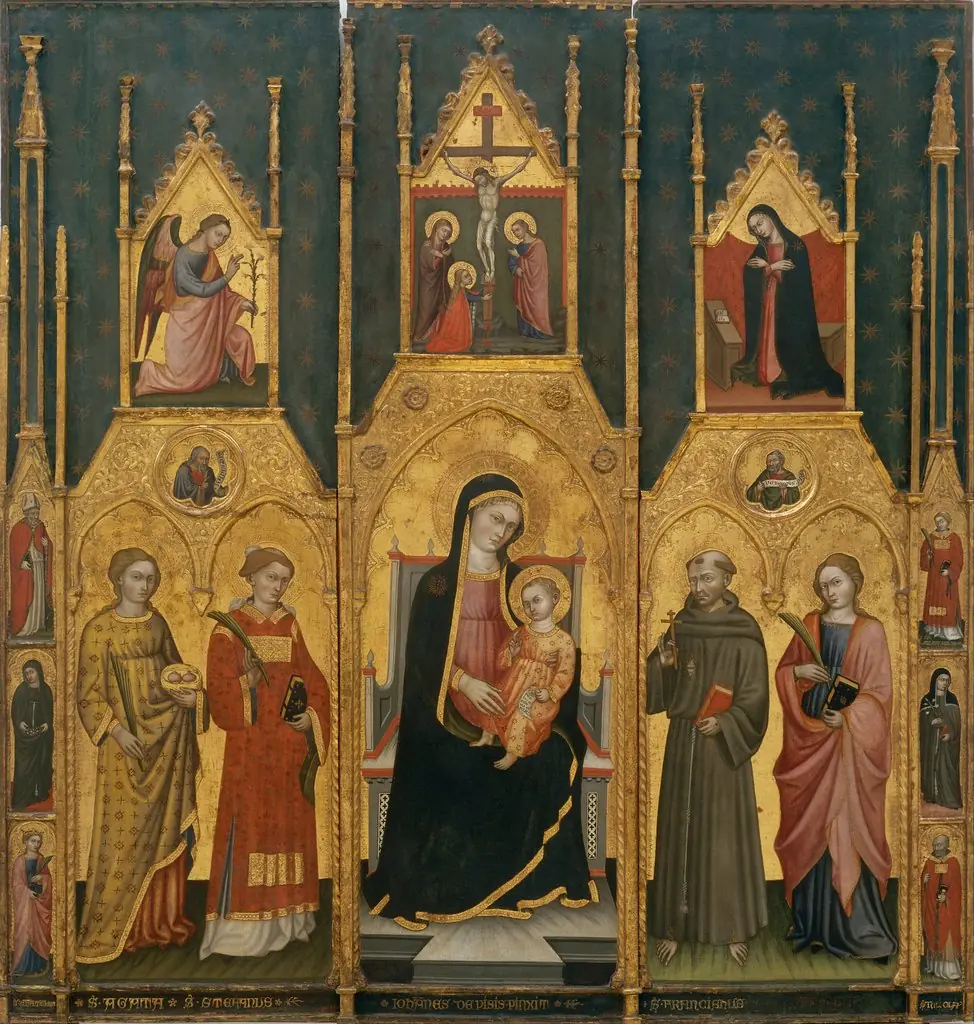 Altarpiece of the Virgin with Saints Agatha, Stephen, Francis and a Martyr Saint
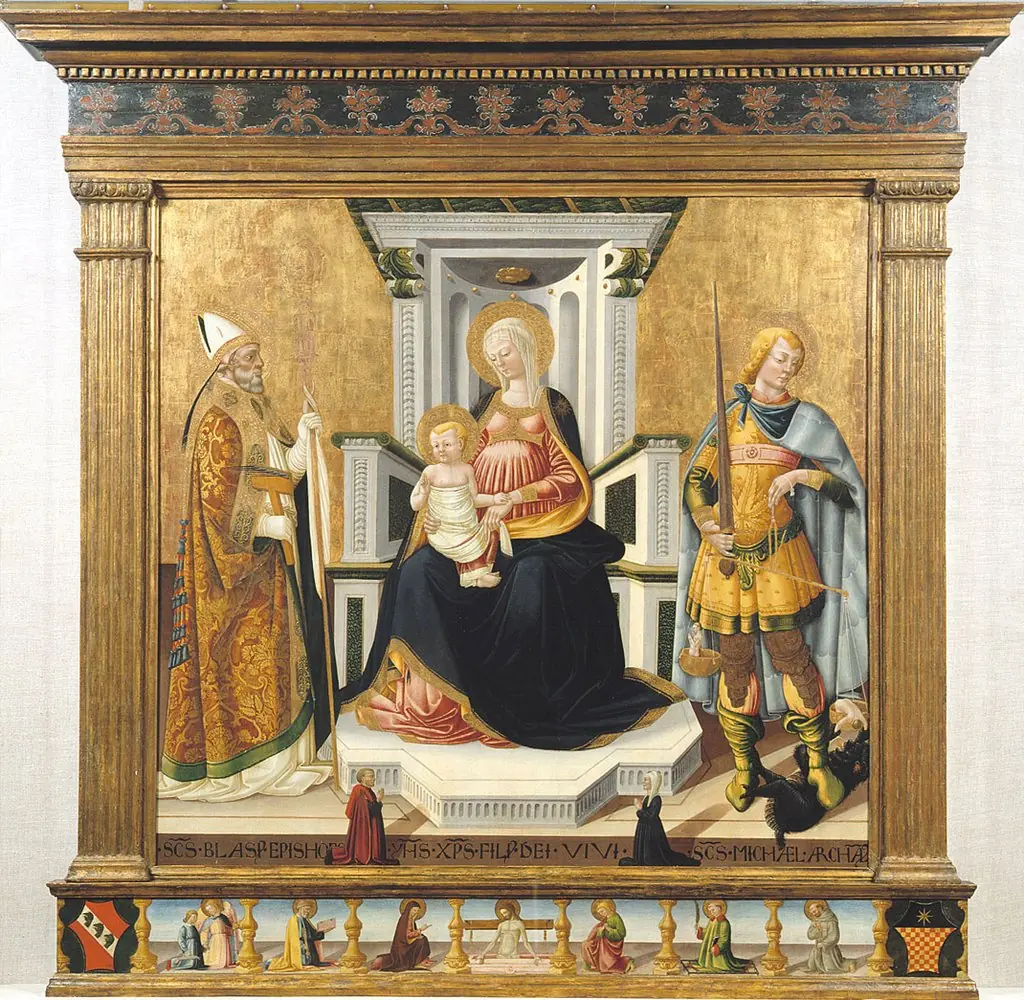 Madonna and Child with Two Saints (Bicci)
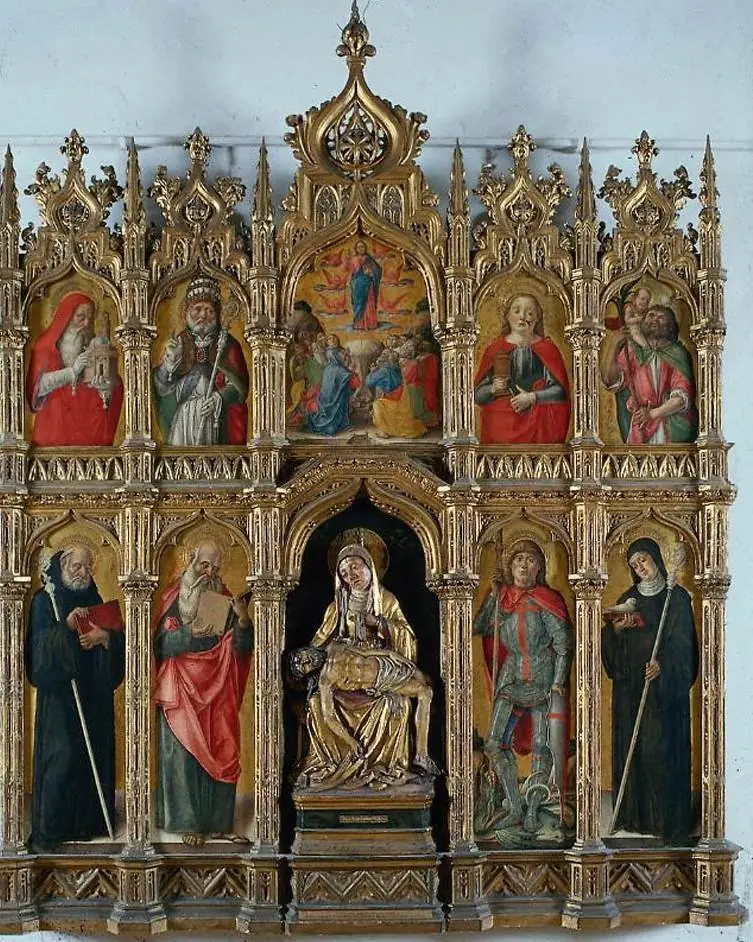 Virgin and the Dead Christ with the Ascension and Saints
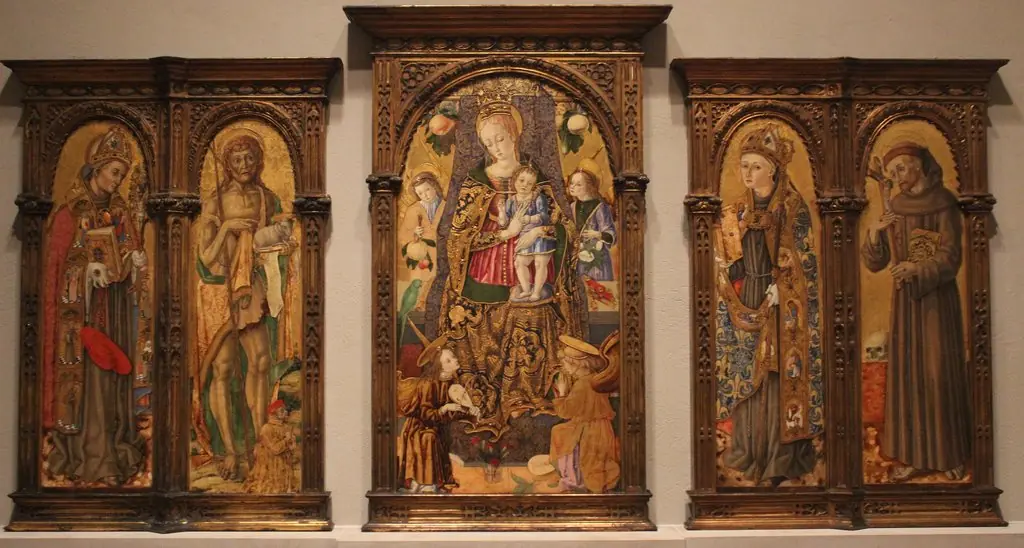 Enthroned Virgin and Child, with Angels and Saints Bonaventure, John the Baptist, Louis of Toulouse, and Francis of Assisi
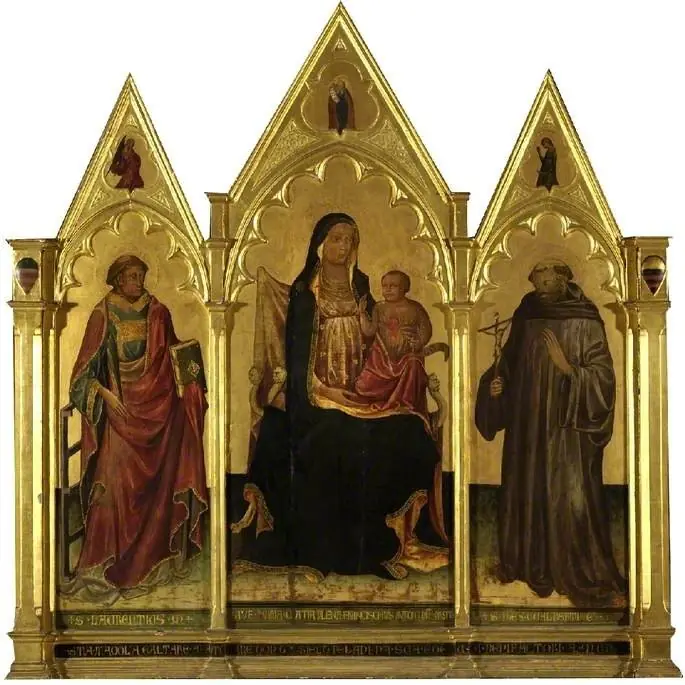 The Virgin and Child enthroned, between (left) St Lawrence and (right) St John Gualbert
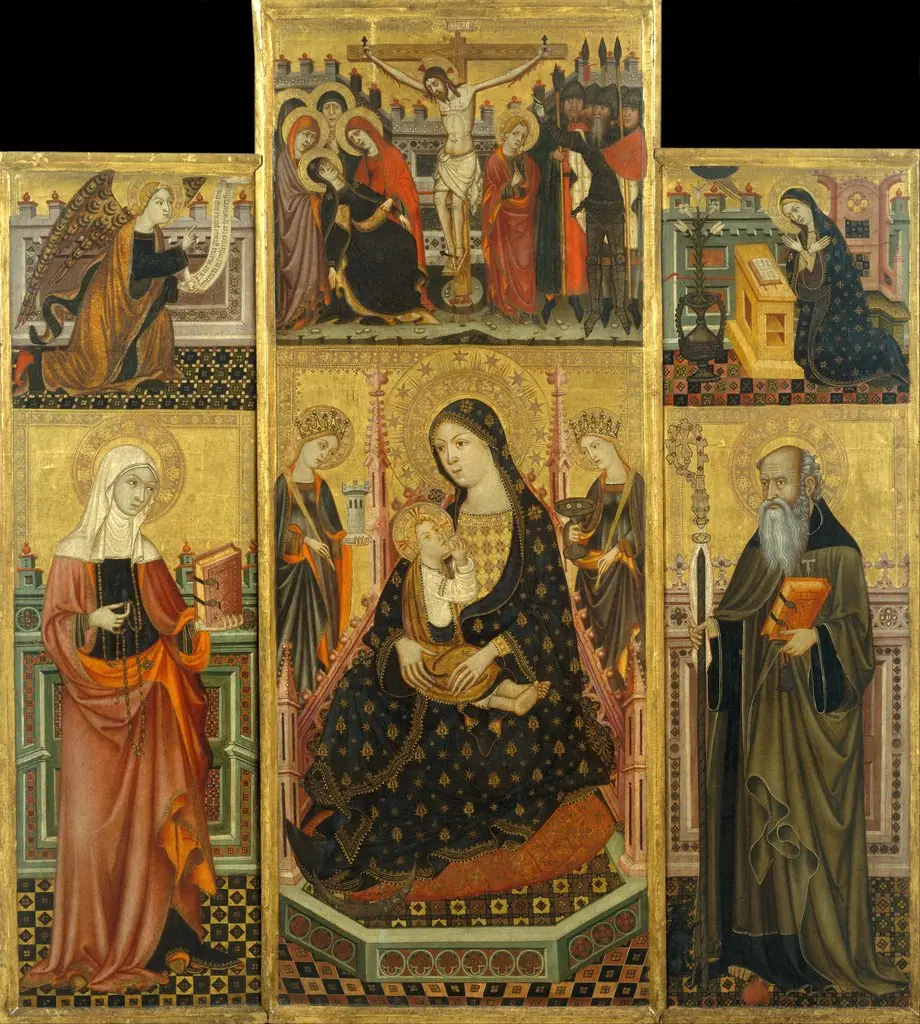 Altarpiece of the Virgin Suckling the Child, Saint Clare and Saint Anthony the Abbott
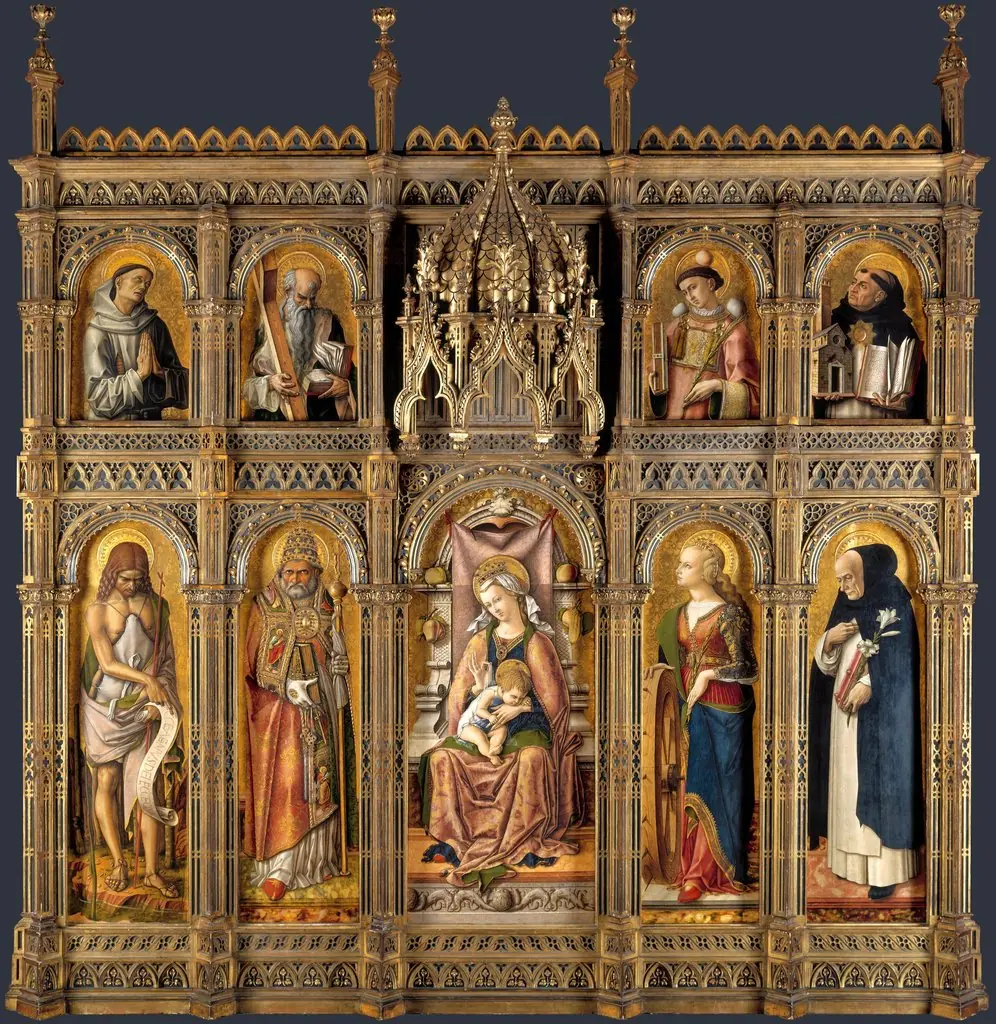 Demidoff Altarpiece
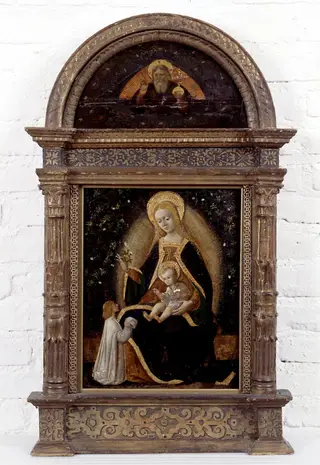 Neitsyt Maria, Jeesus-lapsi ja lahjoittaja
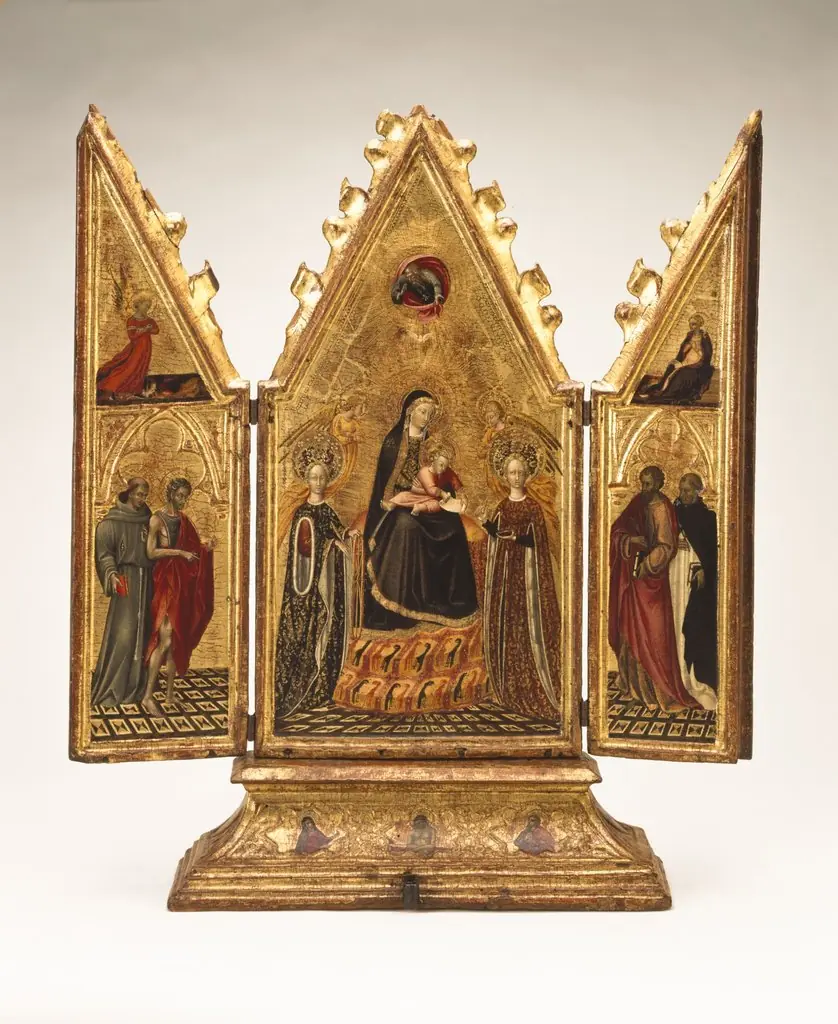 The Virgin and Child with Saints and the Annunciation
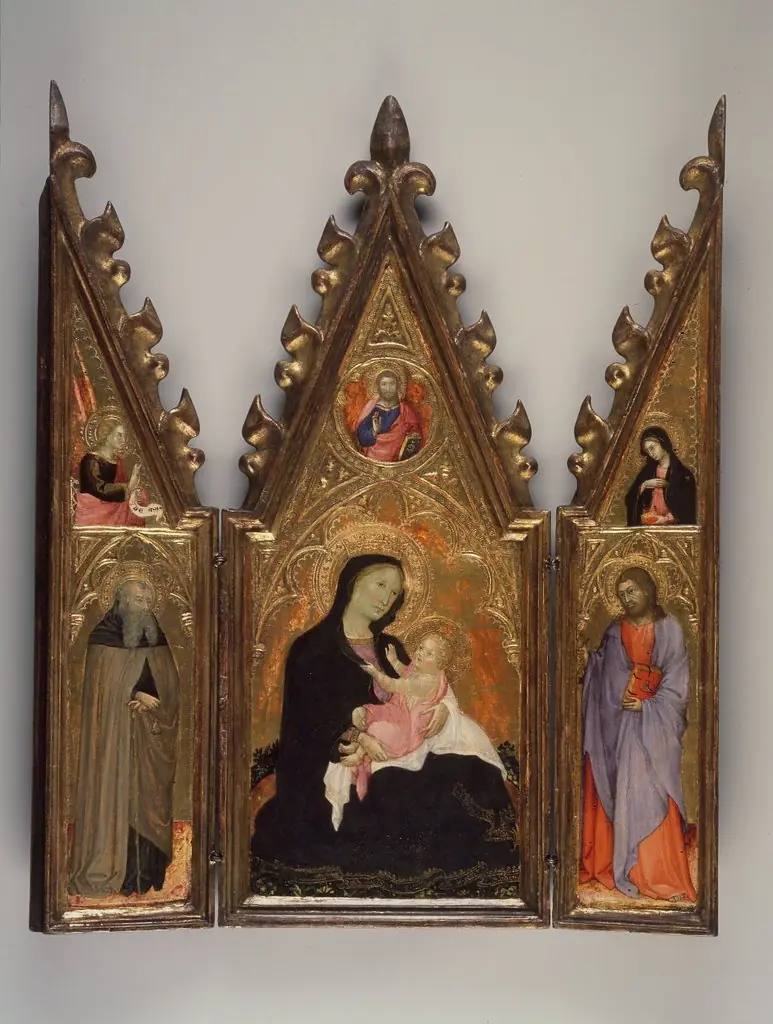 Madonna of Humility, portable altarpiece
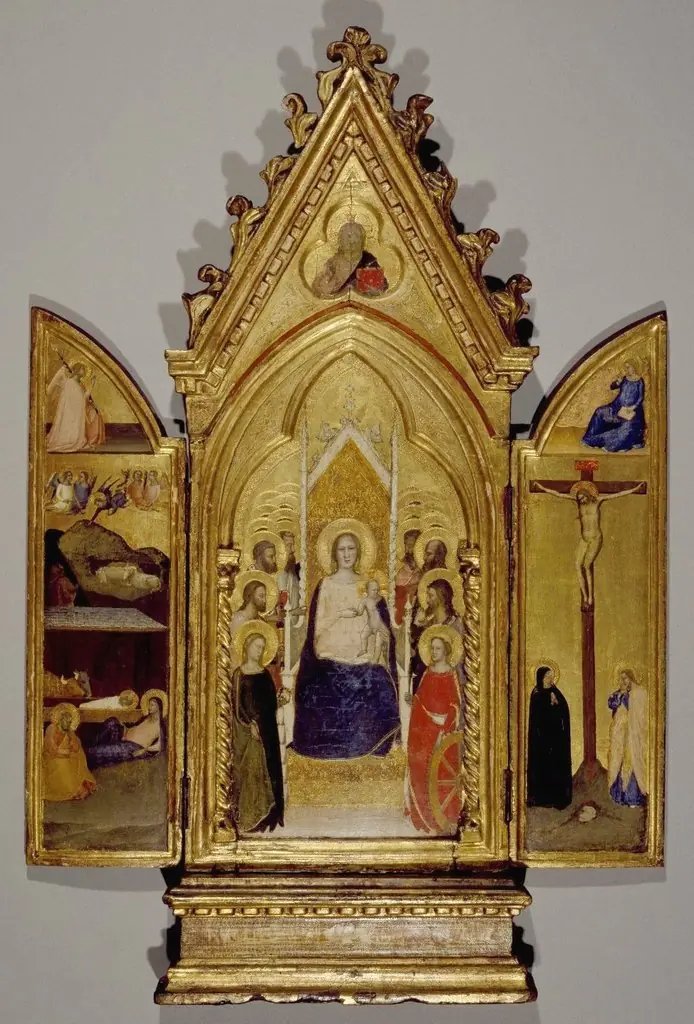 Triptych: Madonna with Saints and Christ Blessing (Center); The Nativity and the Annunciate Angel (Left Wing); Crucifixion and the Virgin Annunciate (Right Wing)
- Virgin and Child Enthroned: Saint Bonaventura (left); Saint Louis of Toulouse (right) Saint Agatha and Saint Augustine, an Unidentified Female Franciscan Saint and Saint Clare of Assisi, Four Male Fra