Artwork
Demidoff Altarpiece
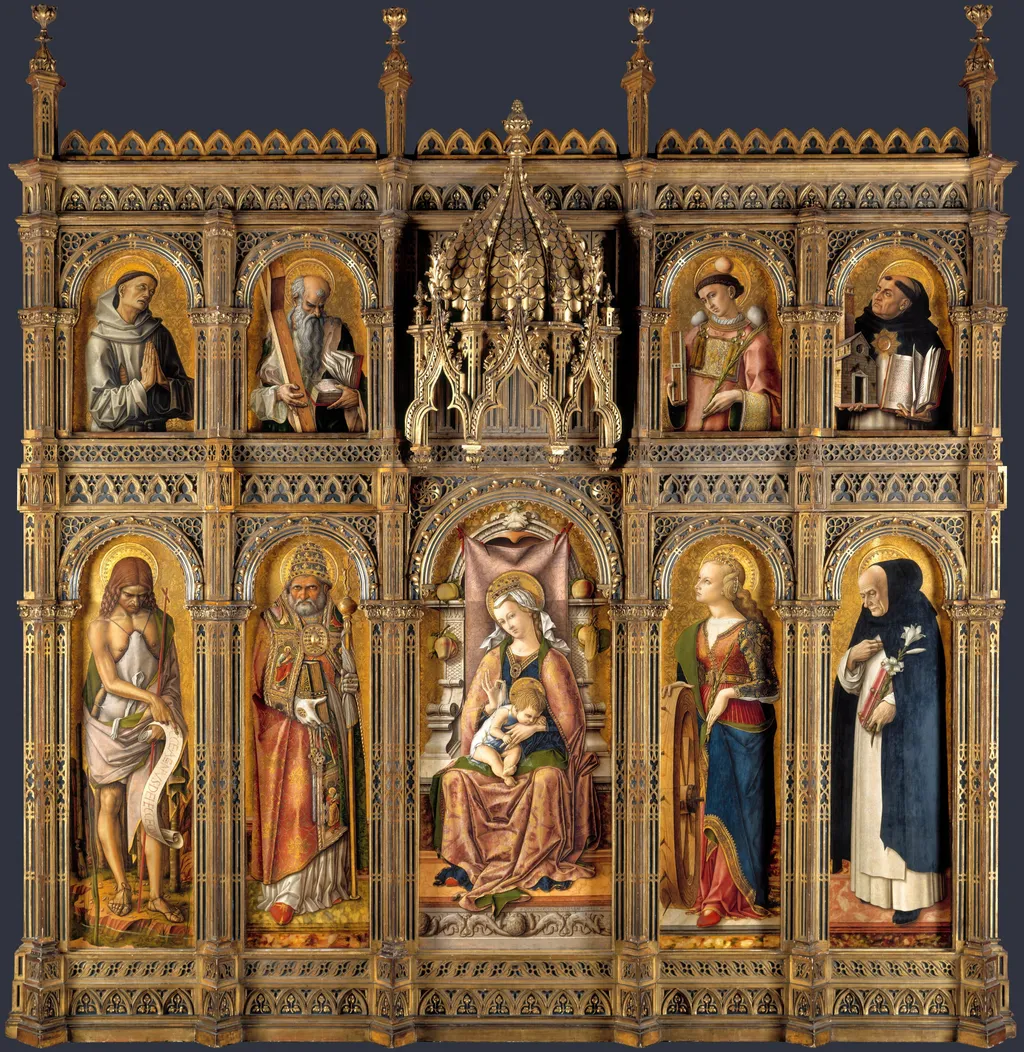
Demidoff Altarpiece is an unspecified painting by the Venetian Renaissance artist Carlo Crivelli. It dates from 1488 and is held in the collection of the Metropolitan Museum of Art.
About this work
Subject & Meaning
The Demidoff Altarpiece is a religious polyptych organized around a traditional devotional hierarchy.
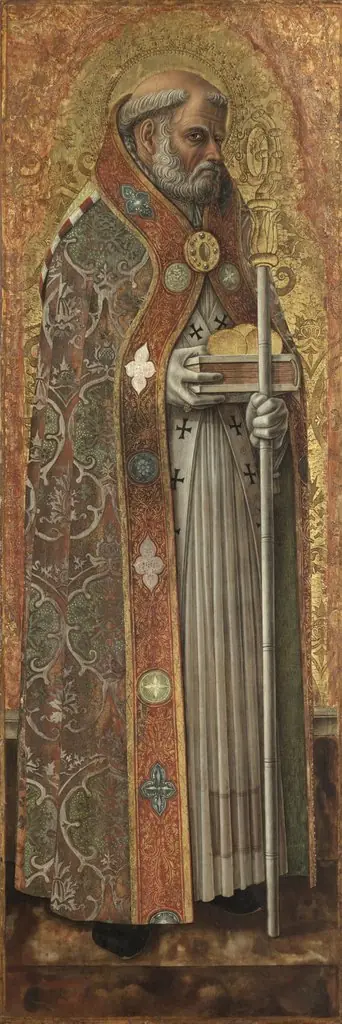
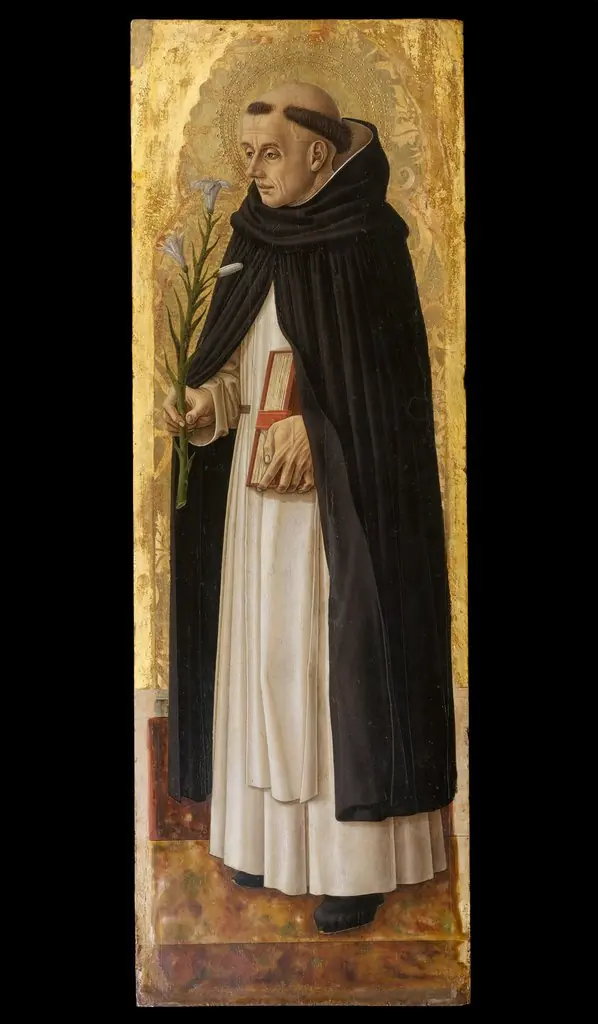
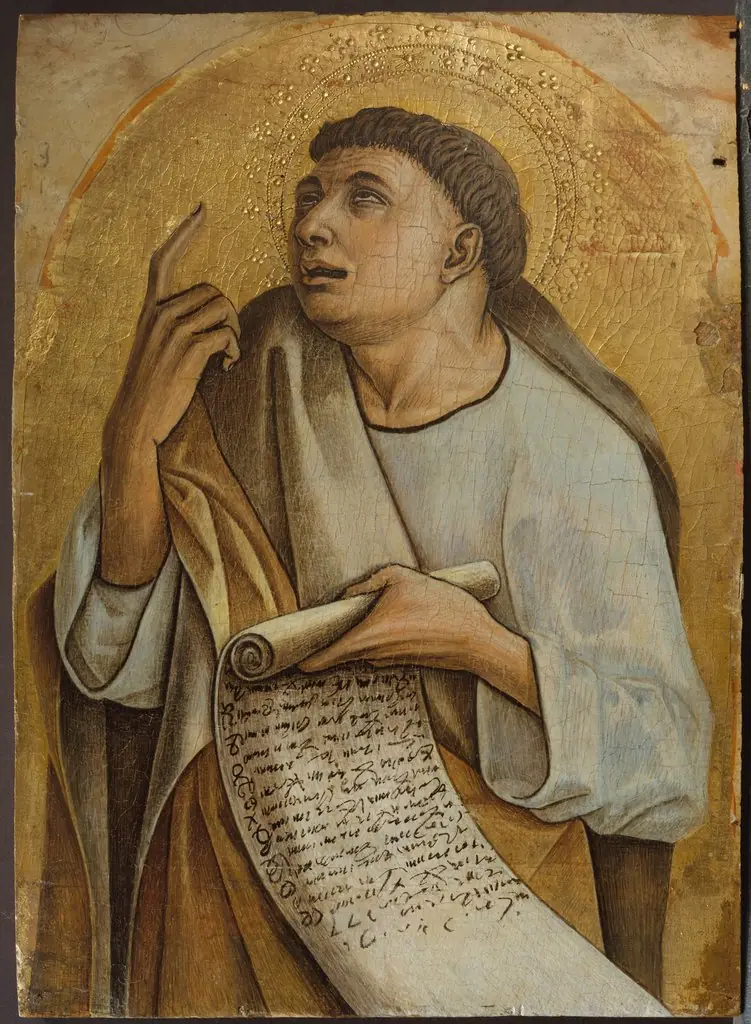
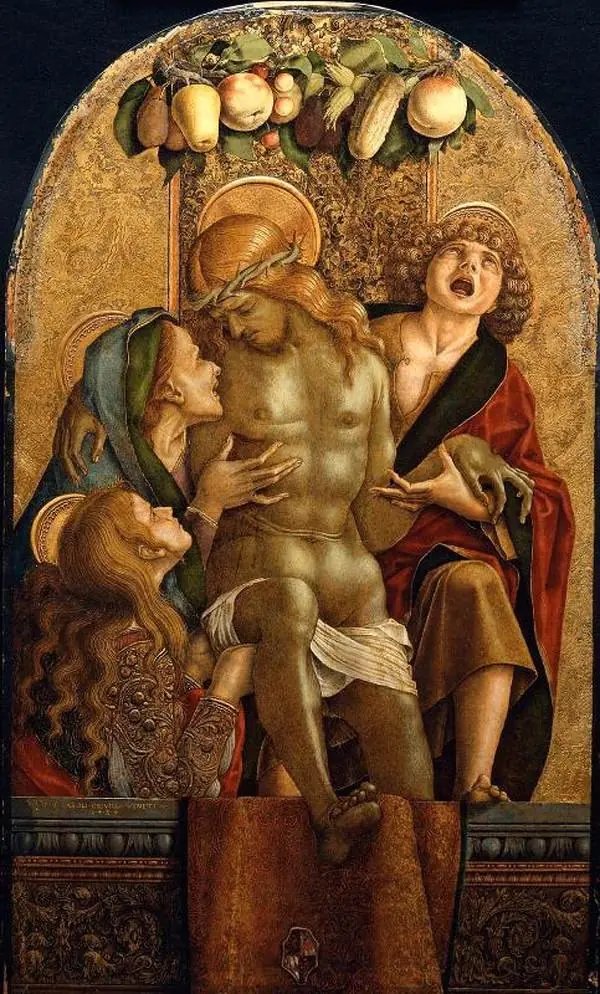
The Demidoff Altarpiece is a religious polyptych organized around a traditional devotional hierarchy. At the center, the Madonna and Child enthroned is flanked by full-length saints in the lower register, John the Baptist, Peter, Catherine of Alexandria, and Dominic, and surmounted by an upper register containing a Pietà alongside half-length saints Francis, Andrew, Stephen, and Thomas. The Dominican saints in the lower tier reflect the work's original Dominican context.
The central Madonna belongs to the iconographic type known as the Madonna del Velo: the Virgin delicately lifts a transparent veil over her sleeping son, a gesture prefiguring the Passion, since the cloth recalls the shroud that will later cover Christ's lifeless body. John the Baptist unfurls a scroll inscribed "Ecce Agnus Dei," identifying the sleeping child as the sacrificial Lamb, while Catherine of Alexandria gazes heavenward in the attitude of a martyr.
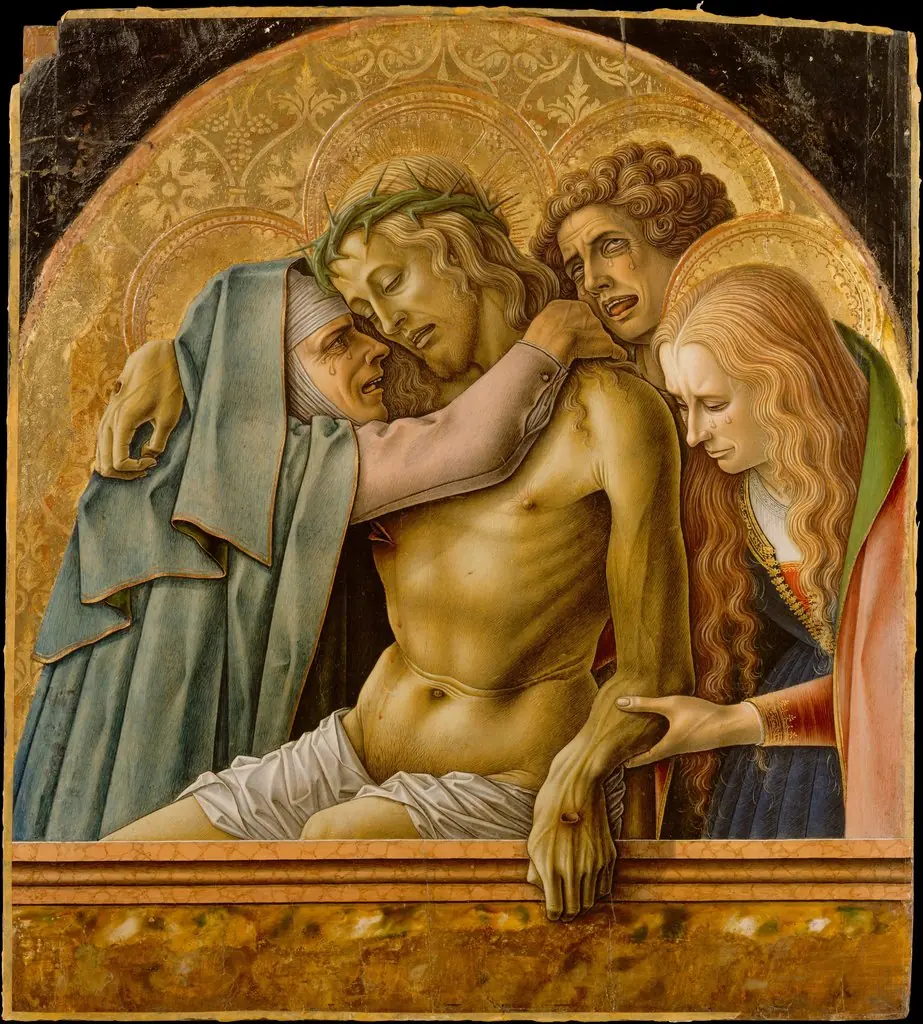
The Pietà crowns the composition, showing the risen Christ rising from the tomb, embraced by the mourning Mary, with John gesturing in despair, linking the altarpiece's themes of incarnation, sacrifice, and resurrection.
Technique & Style
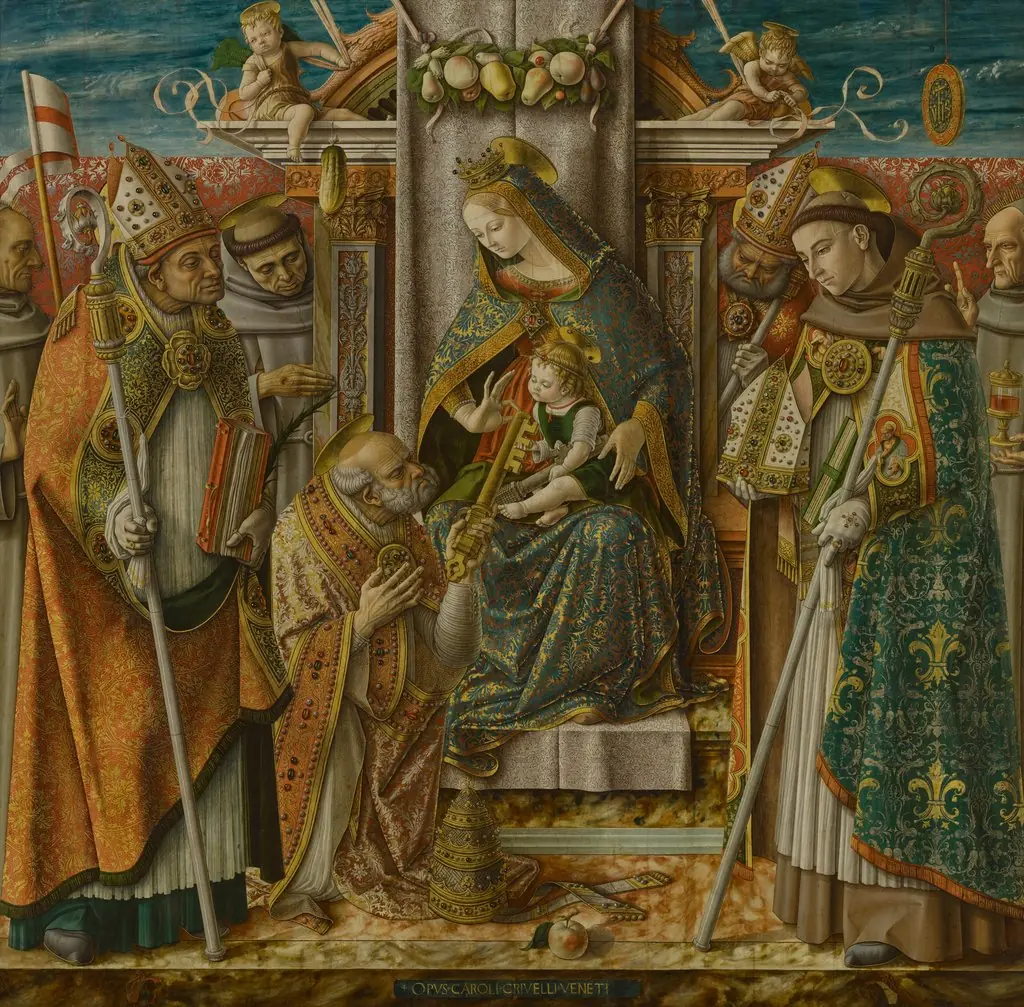
The Demidoff Altarpiece is a 1476 tempera and gold leaf work executed on wooden panels, a typical early-Renaissance support for polyptychs. The panels are painted on thin wooden boards assembled into a multi-register altarpiece; the central Madonna and Child bears the inscription "OPVS KAROLI CRIVELLI VENETI 1476" and is gilded with elaborate ornamental framing. Gold leaf decorates the background and architectural details, while the figures are rendered in fine tempera washes that combine vivid color with delicate modeling.
The work's handling is evident in the raised relief of attributes such as the pastorale and keys, and its condition has been altered by 19th-century disassembly and reassembly, leaving some panels separated but preserving the original gilded surfaces and the characteristic linear realism of Crivelli's style.
History & Provenance
Originally commissioned for the Dominican church of Ascoli Piceno, the altarpiece was dismantled around 1776 during church renovations and sold to antiquarian Grossi, who separated its panels. It entered the collection of Francesco Saverio de Zelada in Rome in 1789, later passed to the Rinuccini family, and in 1868 arrived at London's National Gallery from the Demidov collection. Art historians Zeri and Pallucchini later re-identified the fragments, linking the Pietà to the Metropolitan Museum and a Madonna to the Museum of Fine Arts, Budapest, before the National Gallery re-disassembled and re-grouped the panels into two polyptychs in 1961.
The Demidoff Altarpiece is currently divided between two institutions. Nine of its panels are held by the National Gallery in London, which acquired the work in 1868 from the Demidoff collection in Florence. The central upper panel of the Pietà is held by the Metropolitan Museum of Art in New York. In 1961, the National Gallery disassembled its panels and reconstructed them into two separate polyptychs.
Context
Scholarship long puzzled over the Demidoff Altarpiece's unusual three-tier format and heterogeneous provenance. Federico Zeri and Rodolfo Pallucchini demonstrated that the panels in London and New York originally belonged to two distinct polyptychs made for San Domenico, Ascoli Piceno, dismantled around 1776 and reassembled by an antiquarian before reaching Cardinal Zelada in 1789. The work's complex history, from its original Dominican setting to its dispersal and eventual reconstruction, has framed Crivelli's practice within the late-Quattrocento Adriatic milieu, where polyptychs often merged Venetian luxury with Paduan spatial illusionism.
Critical consensus emphasizes the artist's archaisms, ungrounded planes, emphatic relief effects, while acknowledging the refined realism of faces and gestures, situating the altarpiece at the cusp of Renaissance innovation and regional tradition.
Legacy
The Demidoff Altarpiece's later reception has centered on its unusual structure and the scholarly debates it provoked. After its dispersal in the late 18th century and reassembly under collectors, art historians such as Federico Zeri and Rodolfo Pallucchini reconstructed its original configuration, linking panels between London and New York and confirming its Ascoli Piceno origins through iconographic evidence. The work's fragmented history and complex reconstruction became a touchstone in Italian Renaissance studies, illustrating how dispersed altarpieces could be recontextualized through archival and stylistic research.
Its legacy persists in museum displays that emphasize the polyptych's dismantling and reconstruction, shaping modern approaches to panel painting conservation and connoisseurship.
Overview
The Demidoff Altarpiece, also known as the San Domenico Altarpiece, is a significant work from 1476 by the Italian Renaissance painter Carlo Crivelli. Executed in tempera and gold on panel, this multi-panel artwork originally served as a unified altarpiece. Today, its components are divided: the central panel depicting the Pietà resides in the Metropolitan Museum of Art, New York, while the remaining nine panels are housed in the National Gallery, London. Its intricate goldwork and vibrant palette are characteristic of the artist's style.
Own this work as a print
Artist & collection
Artist
Carlo Crivelli (c. 1430 – c. 1495) was an Italian Renaissance painter of conservative Late Gothic decorative sensibility, who spent his early years in the Veneto, where he absorbed influences from the Vivarini,…

 Altarpiece of the Annunciation from Kisszeben
 Arbe Polyptich
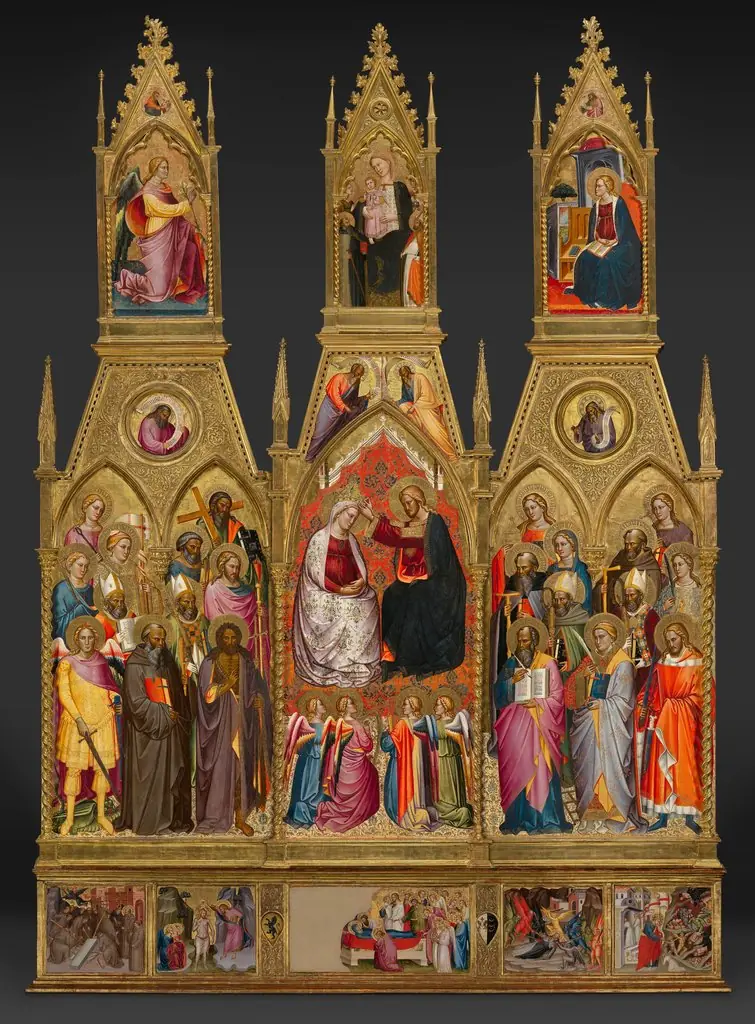 Polyptych with Coronation of the Virgin and Saints
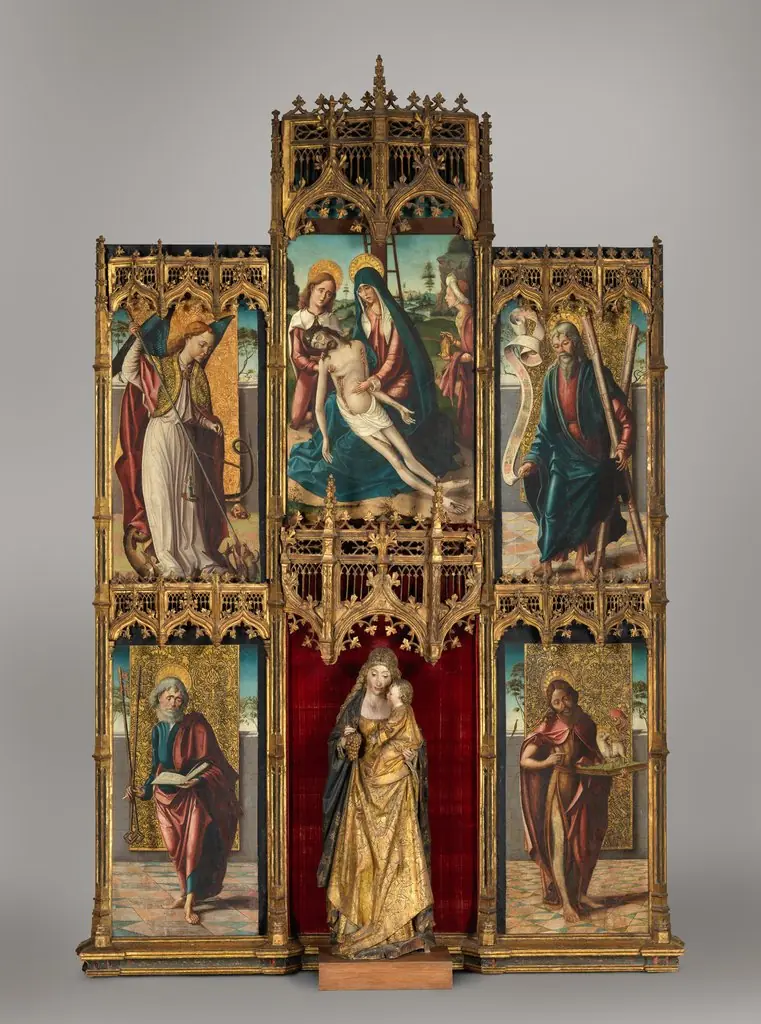 Virgin and Child with the Pietà and Saints
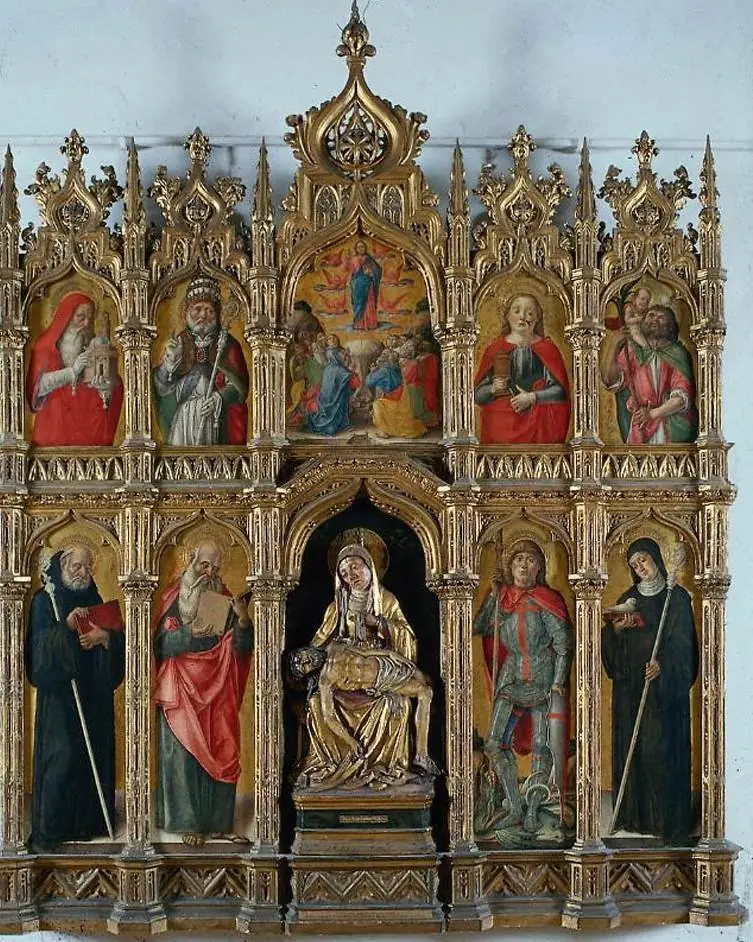 Virgin and the Dead Christ with the Ascension and Saints
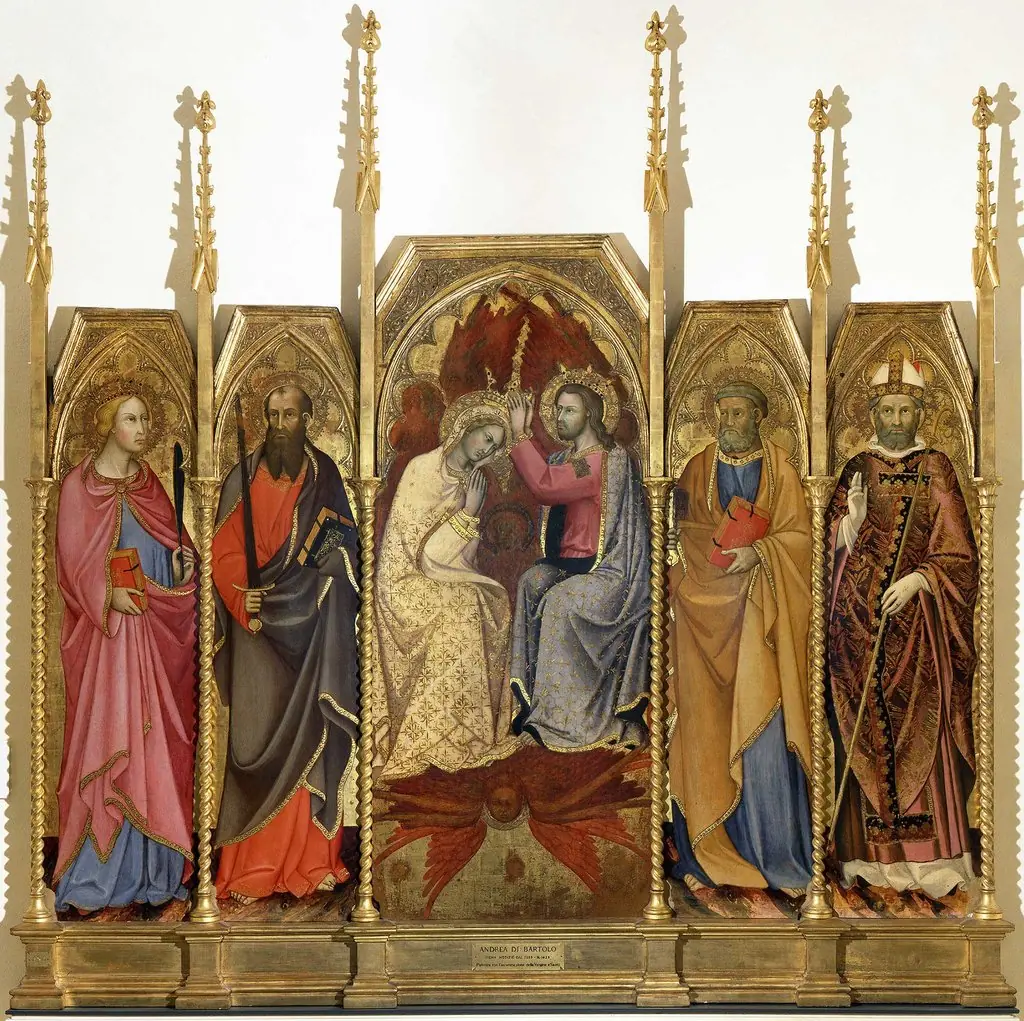 Coronation of the Virgin
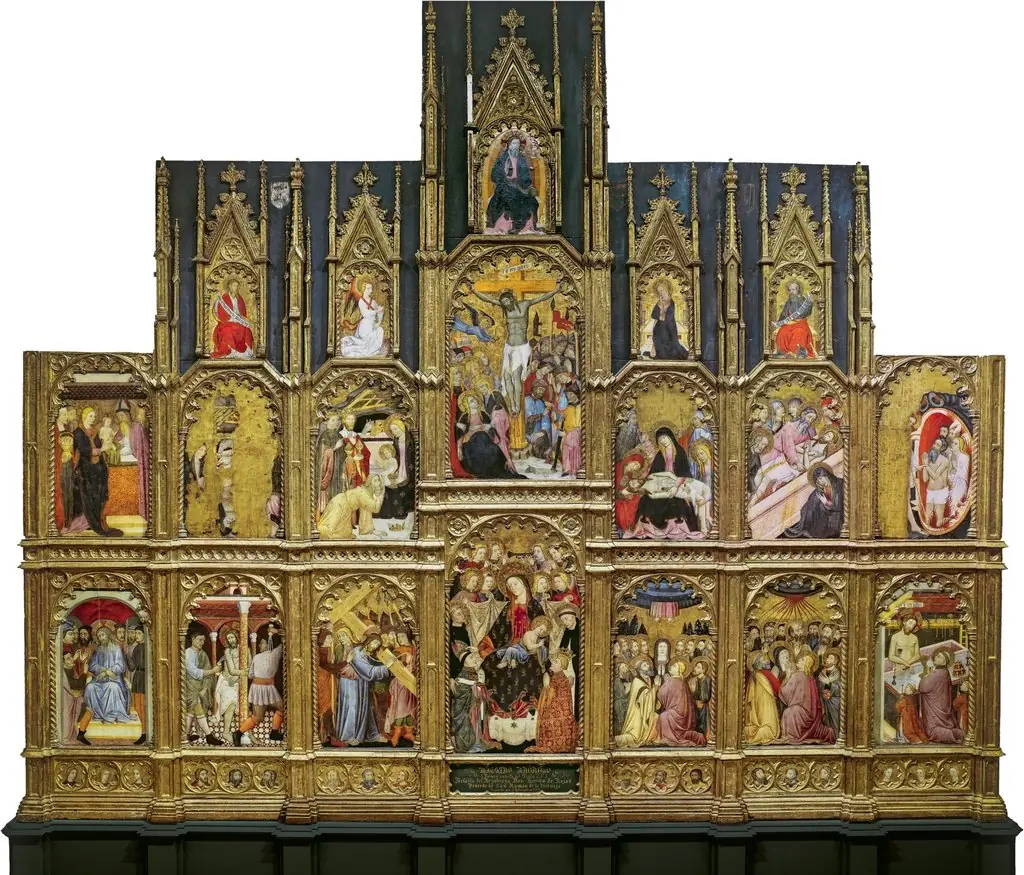 Altarpiece of Archbishop Sancho de Rojas
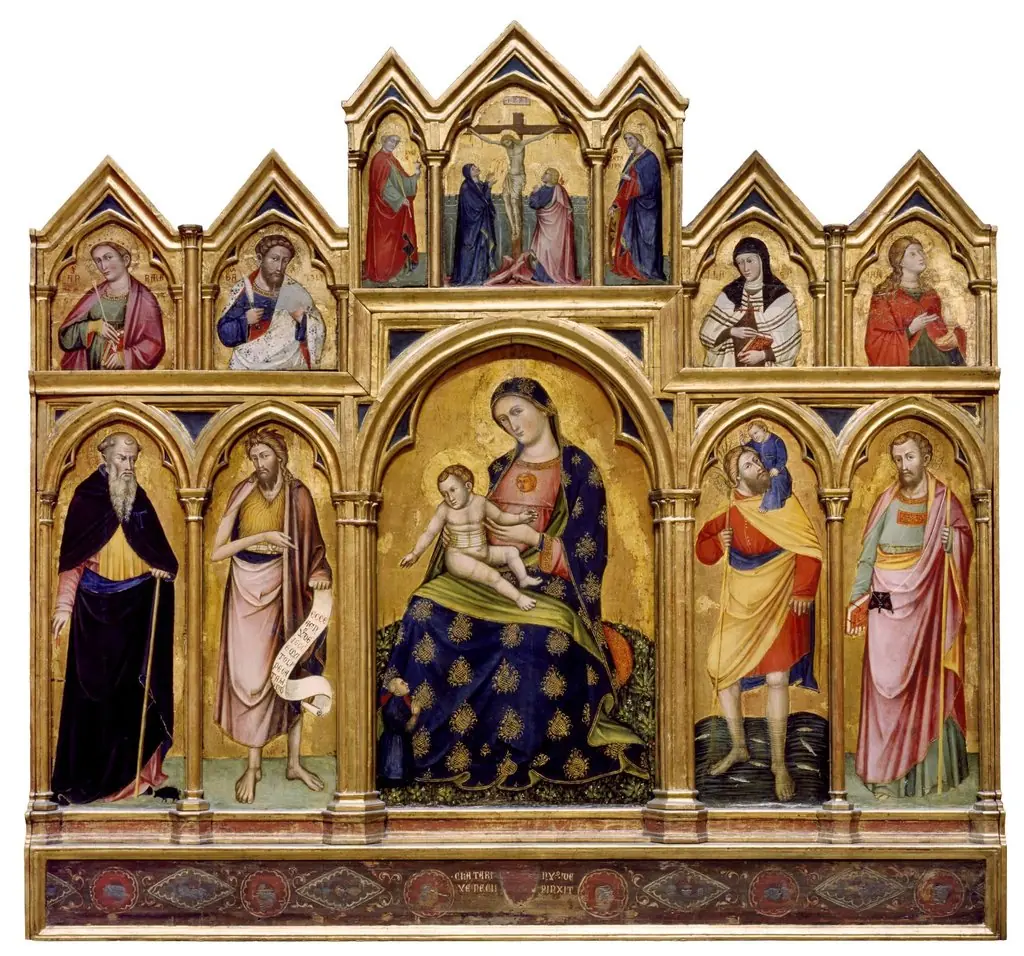 Madonna and Child, Crucifixion and Saints