Artwork
St. Louis of France, pendant to St. Bonaventure
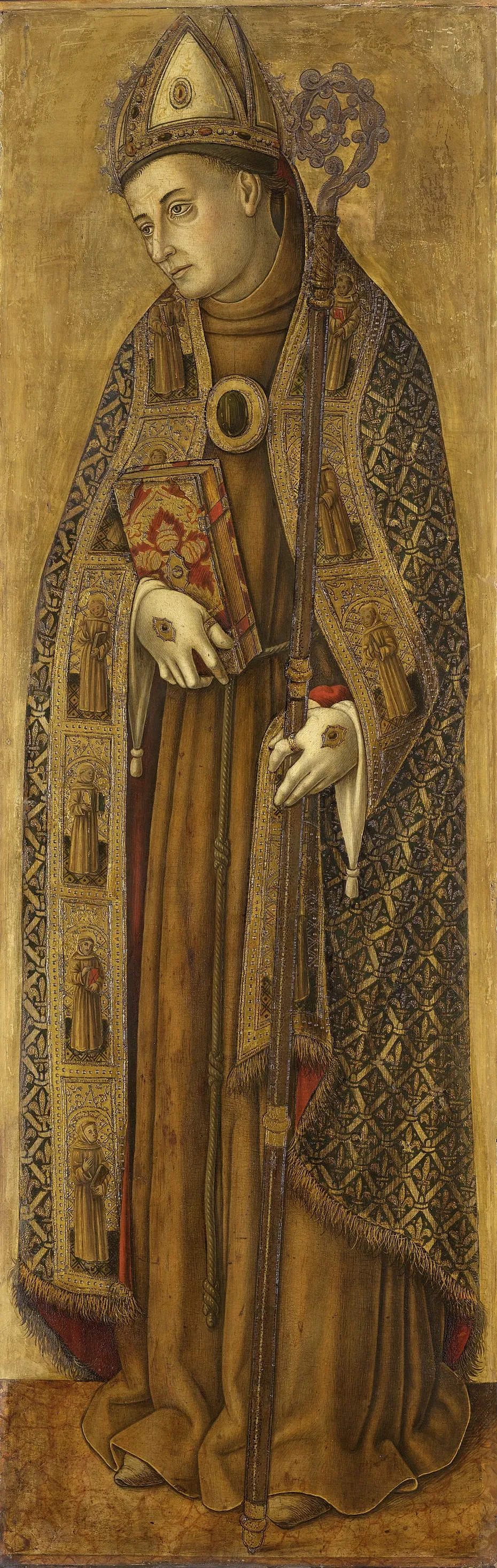
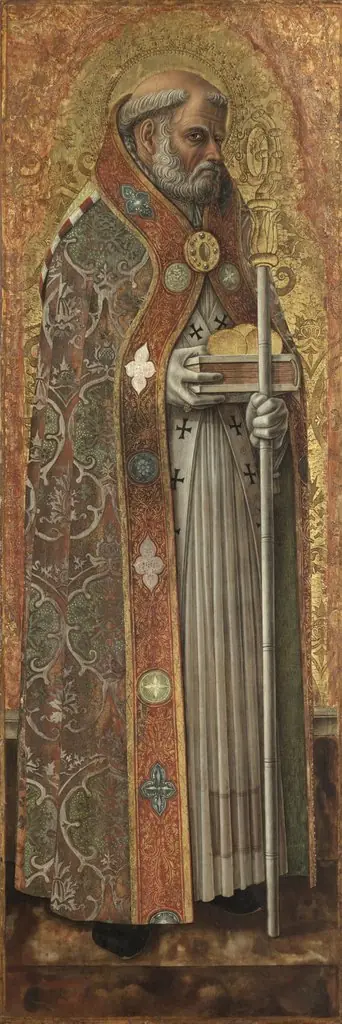
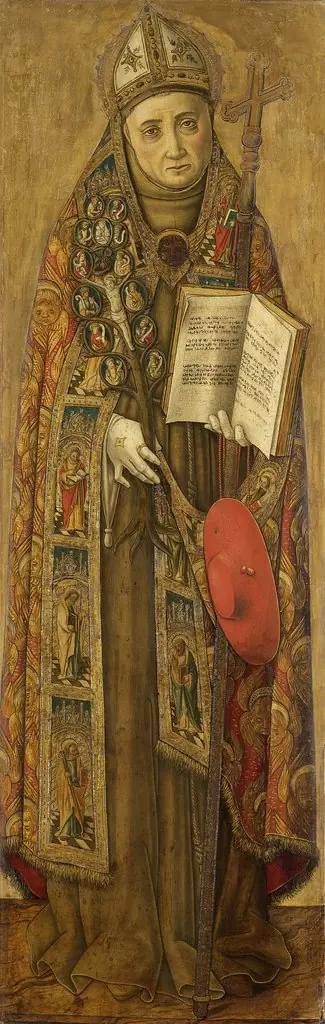
St. Louis of France, pendant to St. Bonaventure is a tempera painting by the Northern Renaissance artist Vittore Crivelli. It dates from 1496 and is held in the collection of the Rijksmuseum.
About this work
Subject & Meaning
The painting depicts Louis of Toulouse, also known as Saint Louis of France, a 13th-century Franciscan bishop and member of the House of Anjou.
The painting depicts Louis of Toulouse, also known as Saint Louis of France, a 13th-century Franciscan bishop and member of the House of Anjou. The work is a religious painting created as a pendant to a companion piece depicting Saint Bonaventure, suggesting a deliberate pairing of two major Franciscan saints. This pairing highlights the importance of the Franciscan order in late 15th-century Italian devotional art.
The vertical format (127 × 41 cm) and tempera medium on panel are typical of altarpiece components or devotional panels from this period.
Technique & Style
The work is executed in tempera on panel, measuring 127 cm in height and 41 cm in width. It depicts Saint Louis of Toulouse and was painted in 1490 by Vittore Crivelli. The composition reflects the devotional intensity characteristic of late 15th-century Italian religious painting, with careful attention to drapery and facial expression.
The panel was originally part of a diptych, serving as a pendant to a depiction of Saint Bonaventure.
History & Provenance
The work was created in 1490 by Vittore Crivelli as a religious painting on panel using tempera. It was commissioned by or entered the collection of Julius Wilhelm Edwin von Rath, who owned the piece before it entered the Rijksmuseum, where it remains in the collection. The work measures 127 cm in height and 41 cm in width and depicts Louis of Toulouse.
St. Louis of France, pendant to St. Bonaventure, is held in the Rijksmuseum collection. The painting was formerly owned by Julius Wilhelm Edwin vom Rath before entering the museum's holdings. According to the available records, the work's documented history focuses on its provenance through this private collection and its current institutional location, with no specific exhibition history detailed in the consulted sources.
Context
The attribution to Vittore Crivelli has been widely accepted in scholarly literature, with the painting identified as a pendant to St. Bonaventure and dated to around 1490. This small devotional work, depicting Louis of Toulouse, reflects the devotional practices of the late 15th century and the stylistic conventions of Northern Italian religious painting. Its presence in the collection of Julius Wilhelm Edwin vom Rath underscores the role of 19th-century private collectors in assembling early Renaissance works.
The piece, part of the Rijksmuseum's holdings, serves as a key example for understanding Crivelli's output within the broader context of devotional art and the transmission of religious imagery in Renaissance Italy.
Overview
Created in 1496 by Vittore Crivelli, an Italian painter who worked in Venice during the late 15th century, this tempera panel forms a pendant to a companion image of St. Bonaventure. The work is part of the Rijksmuseum’s collection and exemplifies the devotional panel painting typical of the Northern Renaissance.
Artist & collection
Artist
Vittorio (or Vittore) Crivelli (c. 1440 – 1501 or 1502) was an Italian painter and brother of Carlo Crivelli. His works are similar in style to his brother's, but less accomplished. He was born and died in…

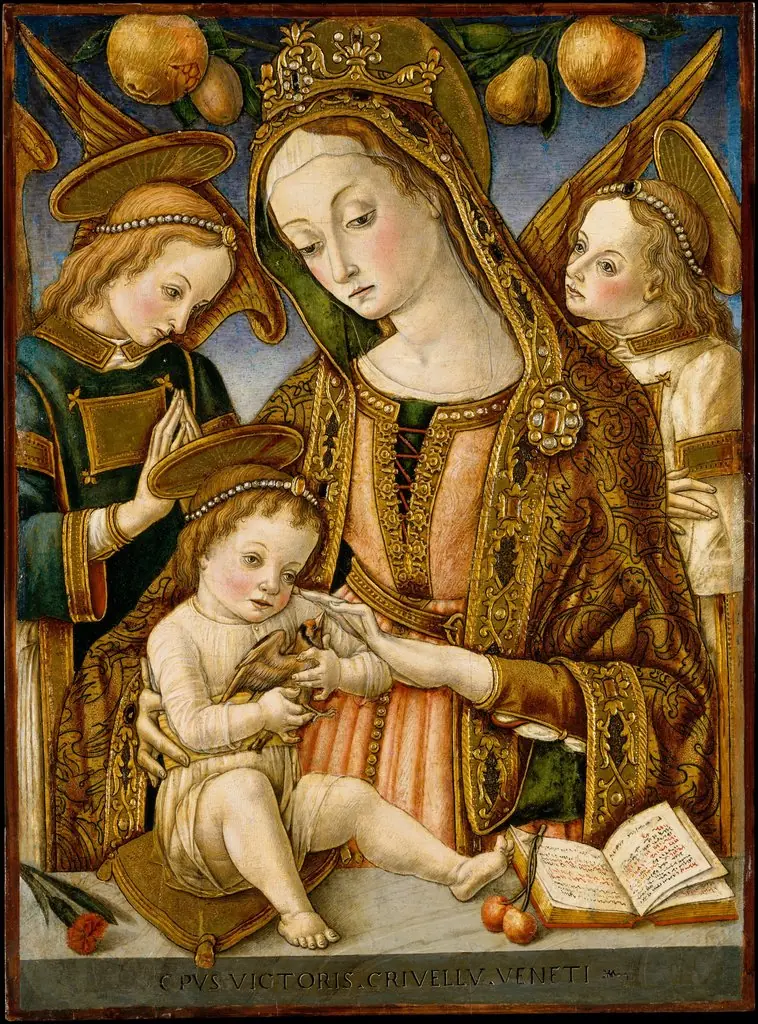 Madonna and Child with Two Angels
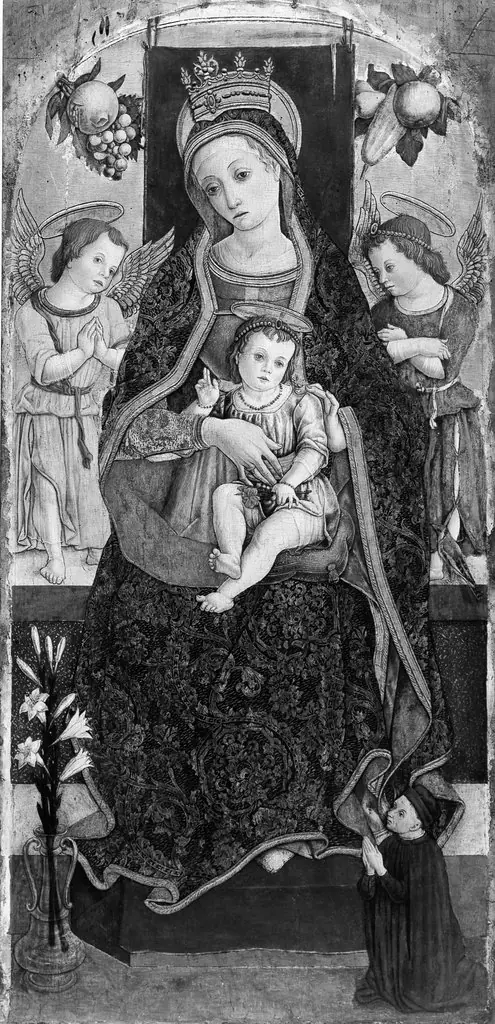 Madonna and Child Enthroned with Two Angels and a Donor
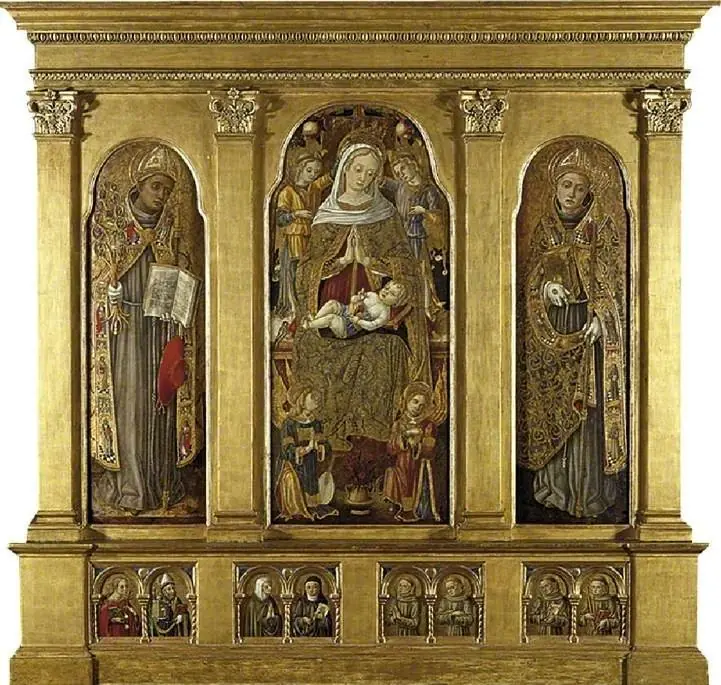 Virgin and Child enthroned; St Bonaventura (left); St Louis of Toulouse (right). below, four pairs of figures of Saints: St Agatha and St Augustine; an unidentified female Franciscan Saint and St Clar
- St. Bonaventure, pendant to St. Louis