Artwork
The Adoration of the Magi
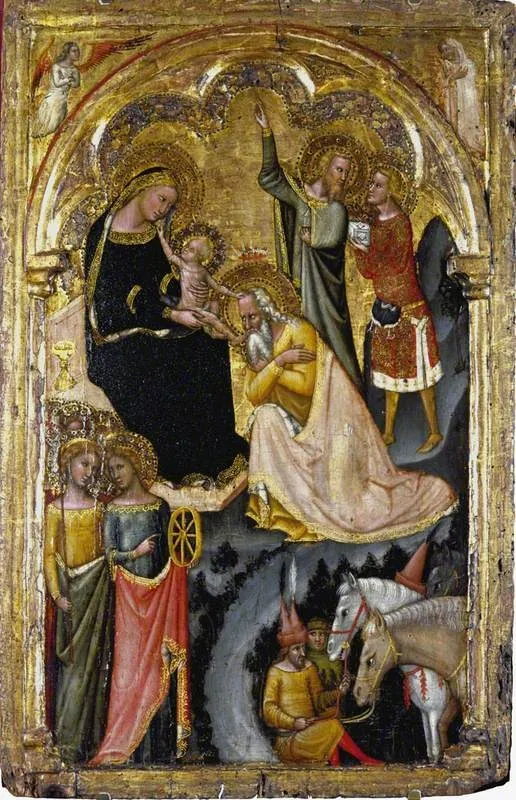
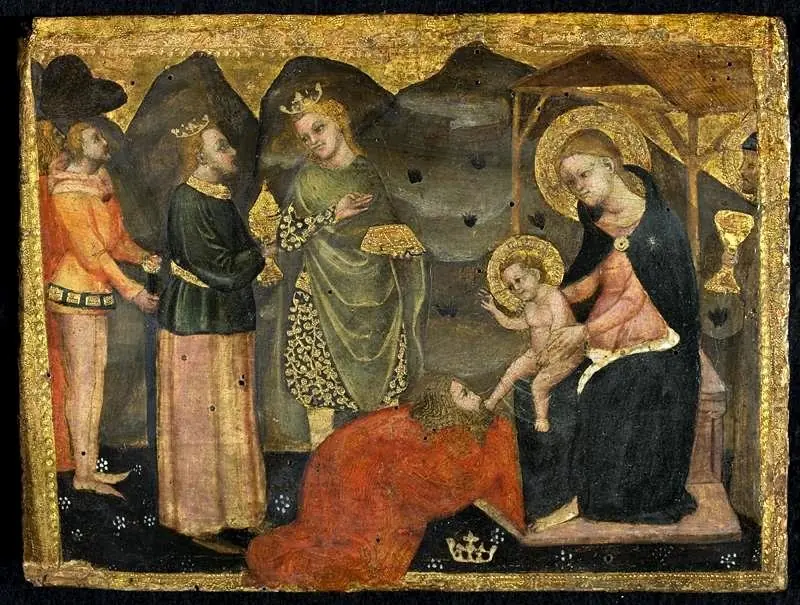
The Adoration of the Magi is an unspecified painting by the Italo Byzantine artist Vitale da Bologna. It dates from 1354 and is held in the collection of the National Galleries Scotland.
About this work
Overview
Executed in tempera and gold leaf on wood, it reflects the lingering influence of Byzantine traditions within 14th-century Italian painting.
Painted in 1354 by Vitale da Bologna, this work is a devotional panel depicting the biblical moment when the Magi honor the infant Jesus. Executed in tempera and gold leaf on wood, it reflects the lingering influence of Byzantine traditions within 14th-century Italian painting. The composition follows established iconographic norms, emphasizing sacred hierarchy over naturalistic space. It is now part of the Scottish National Gallery’s collection.
Subject & Meaning
The scene centers on the Virgin Mary seated with the Christ Child, surrounded by three kneeling Magi offering gifts. Their postures signify reverence and submission to divine authority. A reclining figure, possibly representing the pagan king Herod or a symbolic figure of fallen power, lies at their feet.
Two mounted soldiers in the lower right suggest worldly authority watching the sacred event, reinforcing the contrast between earthly and spiritual realms.
Technique & Style
The painting employs flat, bright pigments with minimal modeling, avoiding chiaroscuro and perspective. Gold leaf backgrounds and decorative patterns create a luminous, otherworldly setting. Figures are rendered with elongated proportions and rigid poses, typical of Italo-Byzantine conventions.
Details like fabric folds and facial features are outlined with precision but lack volumetric depth, prioritizing symbolic clarity over realism.
History & Provenance
Commissioned during Vitale’s active period in Bologna, the painting likely served a private or ecclesiastical devotional function. It entered the Scottish National Gallery’s collection in the 19th century, possibly through the acquisition of a European private collection. Its survival in relatively intact condition is notable, given the fragility of tempera panels from this era.
Context
In mid-14th-century Italy, artists like Vitale worked between the enduring Byzantine style and emerging naturalistic tendencies. While Giotto’s innovations in spatial depth were spreading in Florence, northern Italian painters retained hierarchical composition and gold-ground backgrounds. This work exemplifies the regional persistence of traditional iconography amid broader artistic change.
Legacy
Vitale’s painting stands as a representative example of late medieval devotional art in northern Italy. Though overshadowed by contemporaries who embraced perspective and anatomy, it preserves the spiritual intensity and formal discipline of its time. Its preservation allows study of how religious imagery evolved before the full emergence of the Renaissance.
Artist & collection
Artist
Vitale da Bologna (c. 1309–1360), also known as Vitale di Aymo de' Cavalli or Vitale degli Equi, was an Italian painter of the Early Renaissance. He is a representative of the 14th-century school of painting in…

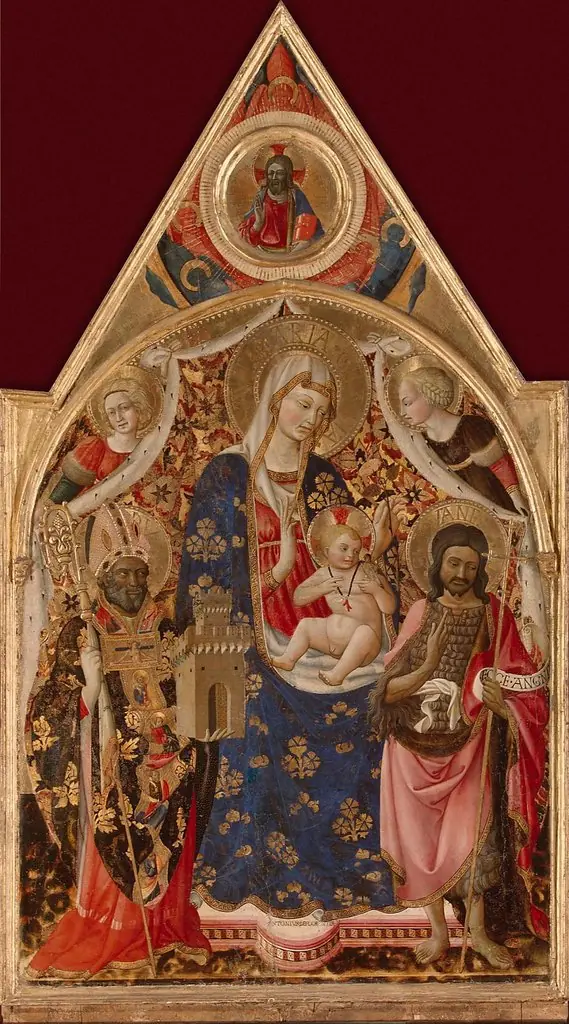
- Madonna and Child, with a Bishop, St John The Baptist and Angels
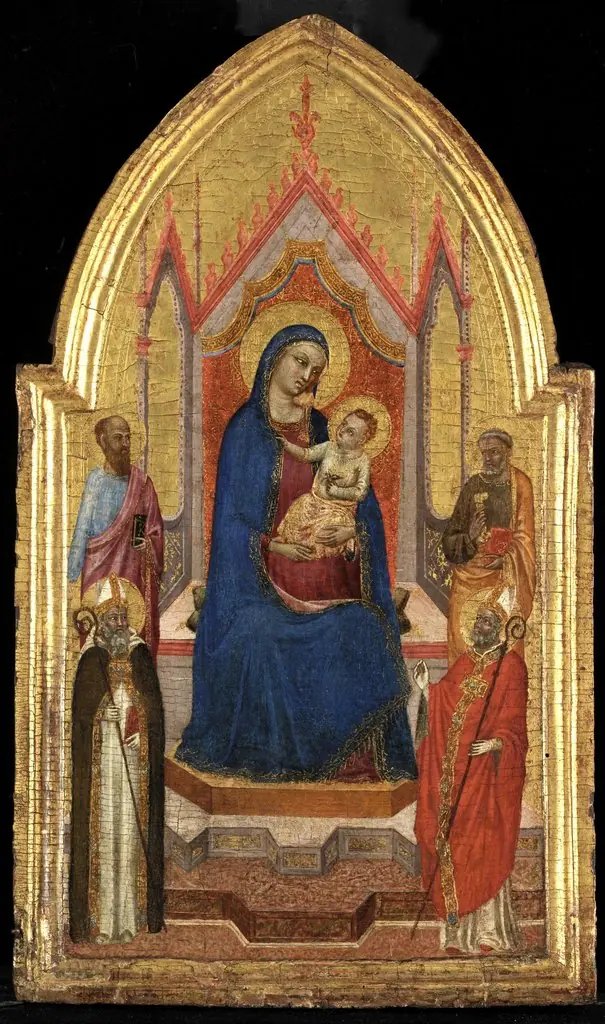 Madonna and Child Enthroned with Four Saints
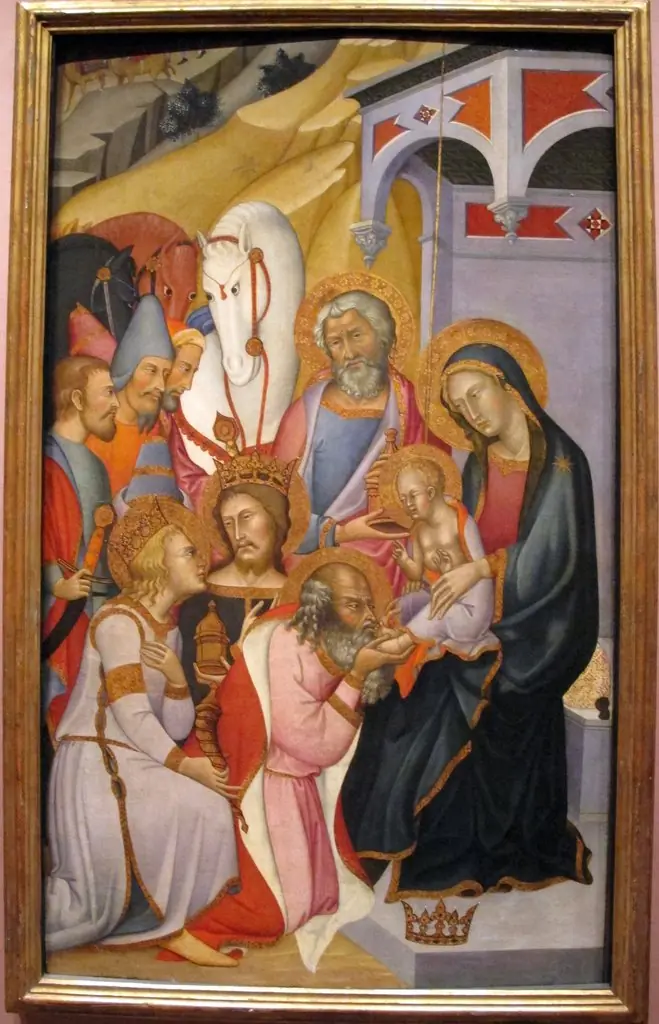 Adoration of the Magi
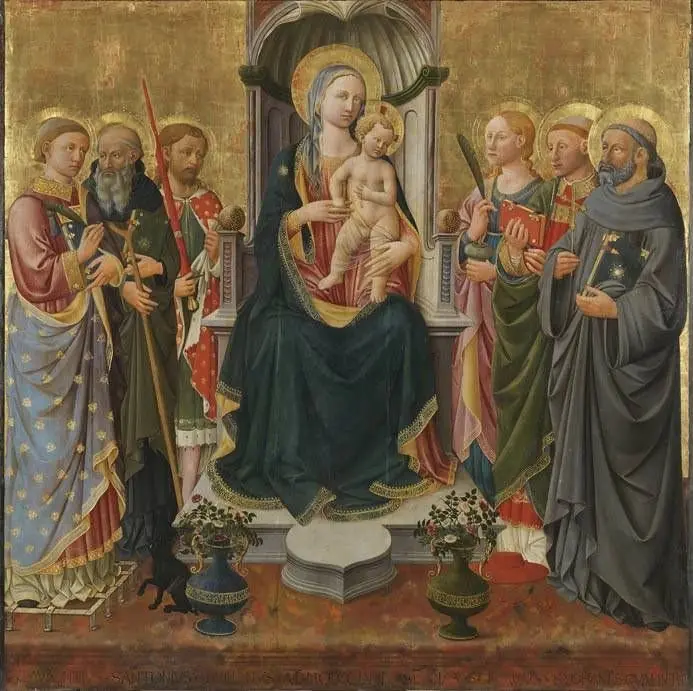 Madonna and Child and 6 Saints
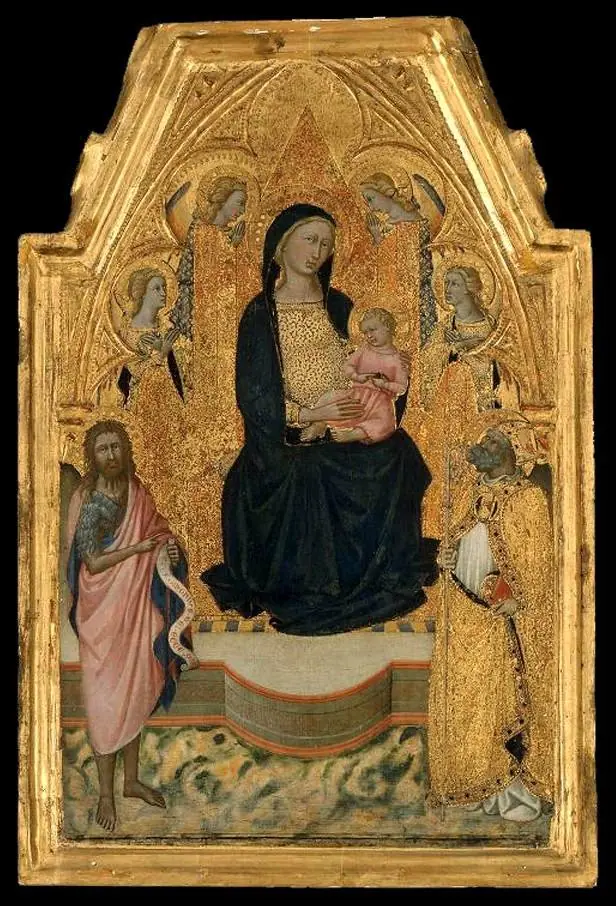 Virgin and Child Enthroned with a Bishop Saint, Saint John the Baptist, and Four Angels
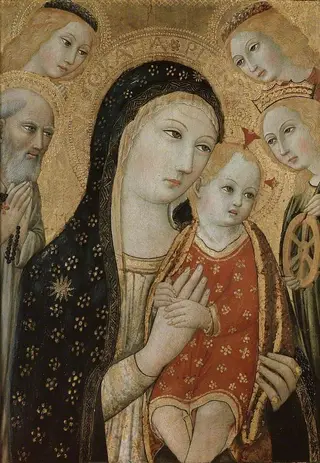 The Virgin and Child with St Jerome, St Catherine of Alexandria and two Angels
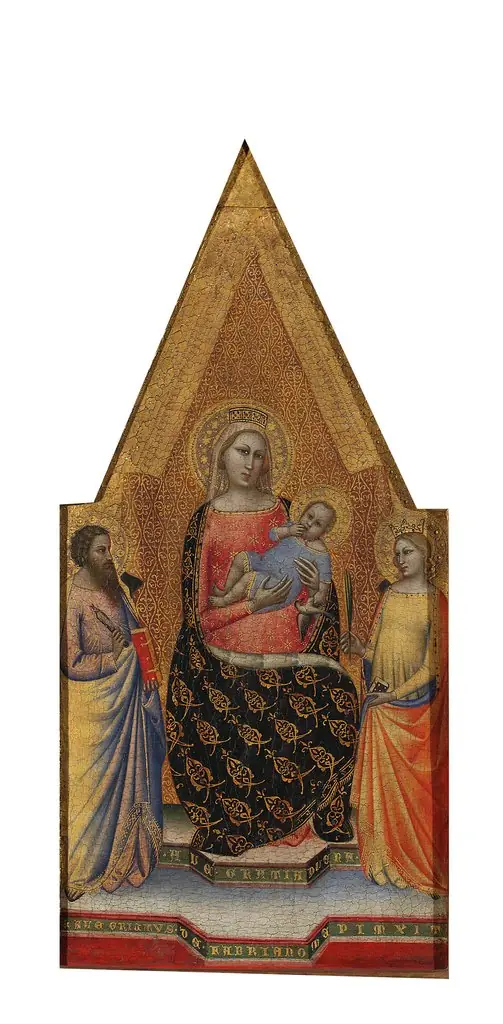 Madonna and Child enthroned with two Saints, Crucifixion
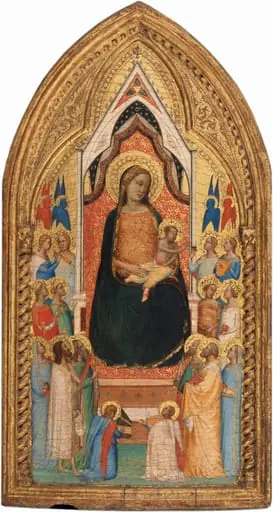 Madonna and Child with Saints and Angels
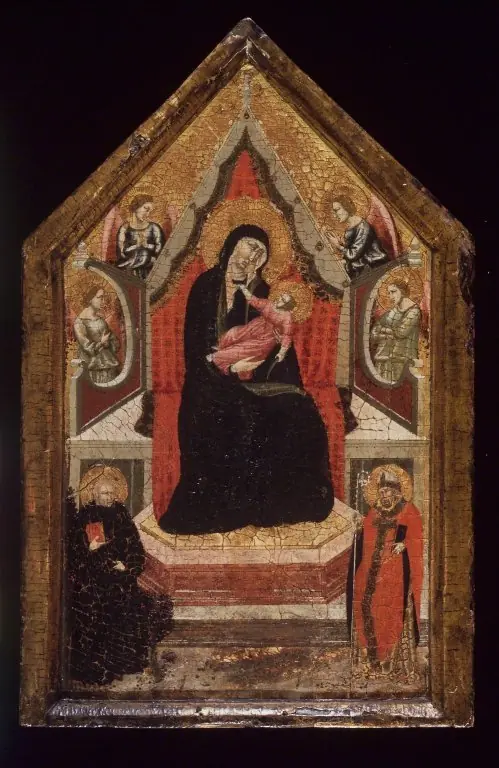 Virgin and Child Enthroned with Saints Benedict and Donato (?) and Four Angels
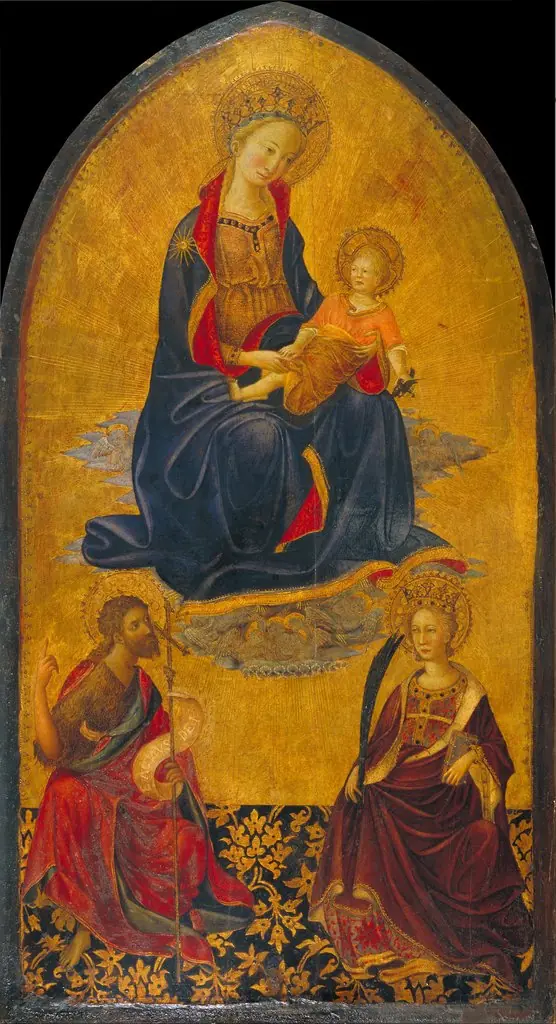 Adoration of the Virgin and Child by Saint John the Baptist and Saint Catherine
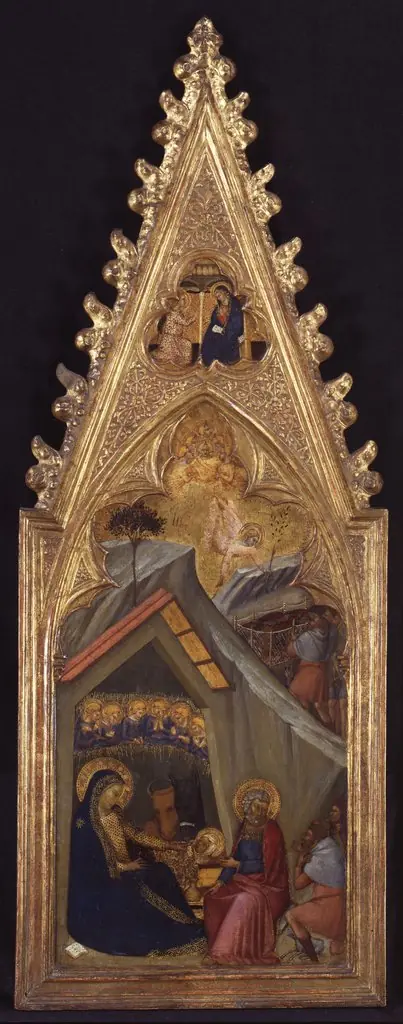 Nativity of Christ
 Adoration of the Kings