Artwork
Dutch Mill at Littlebourne
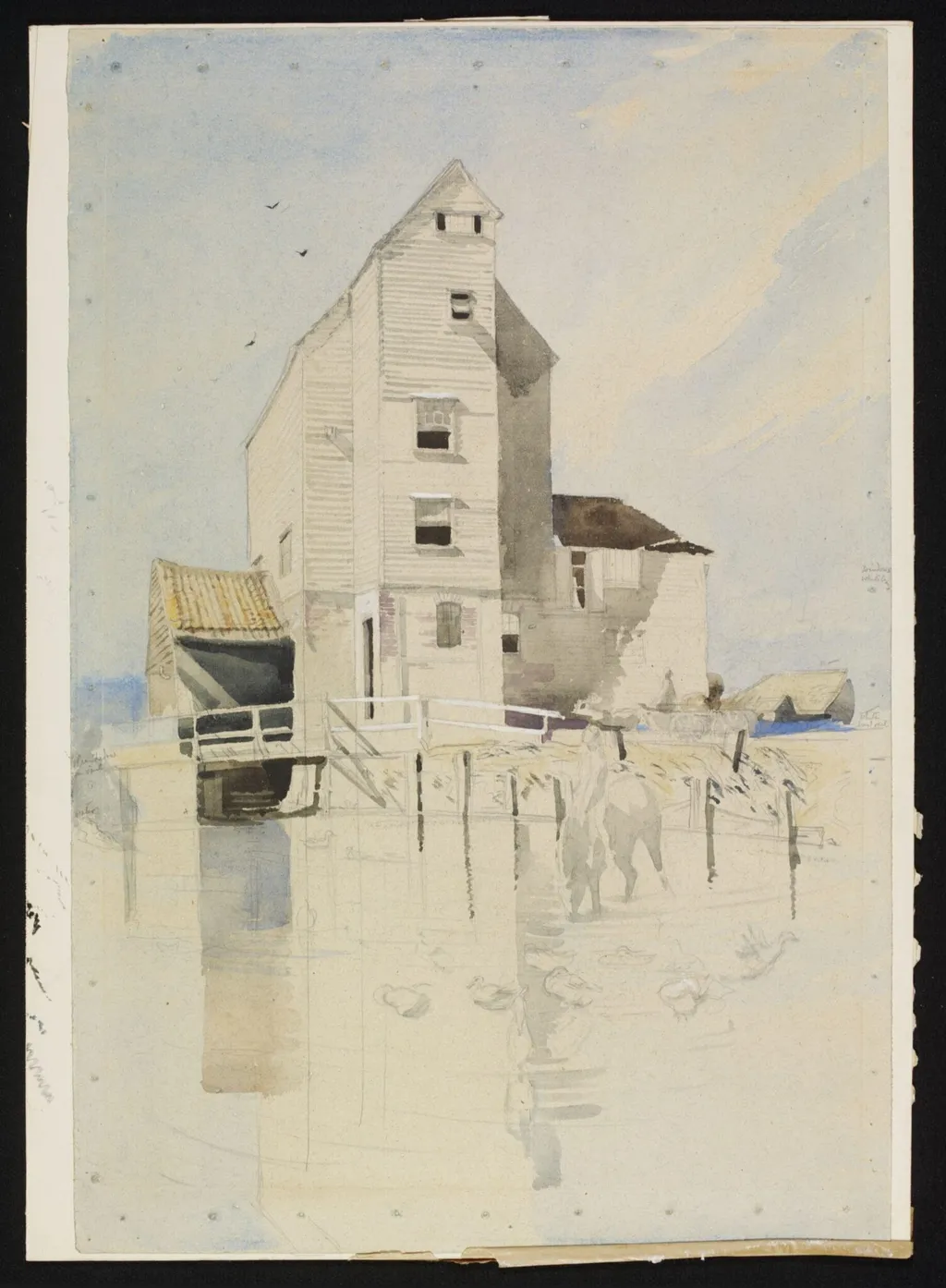
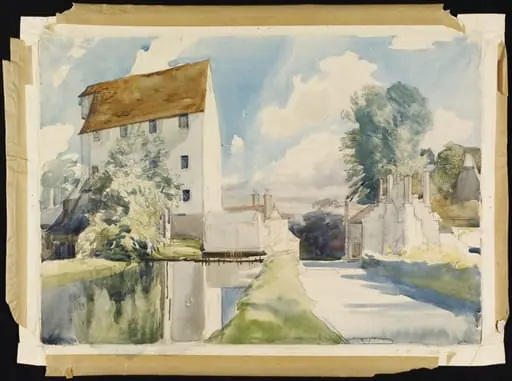
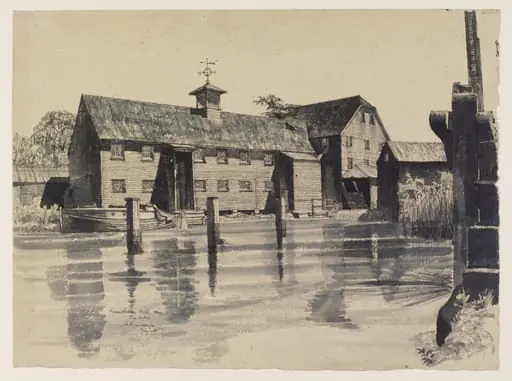
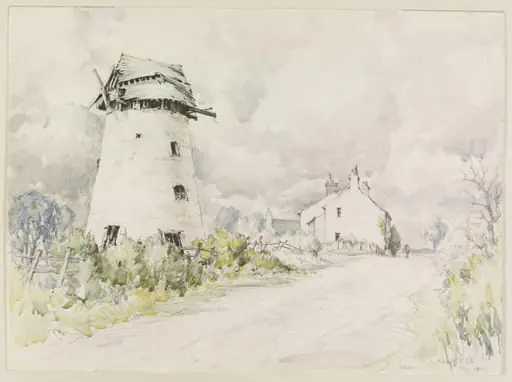
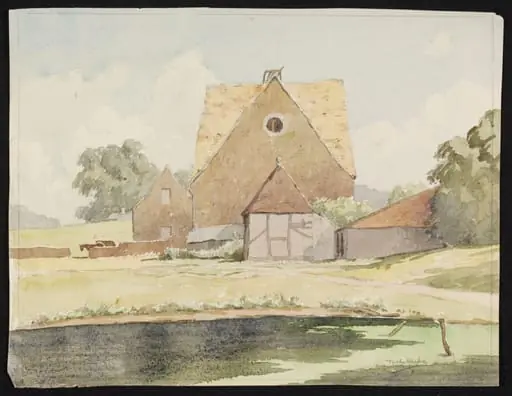
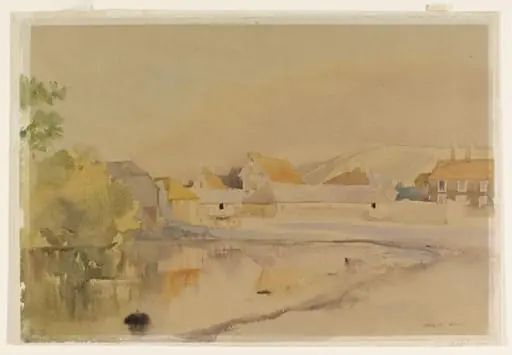
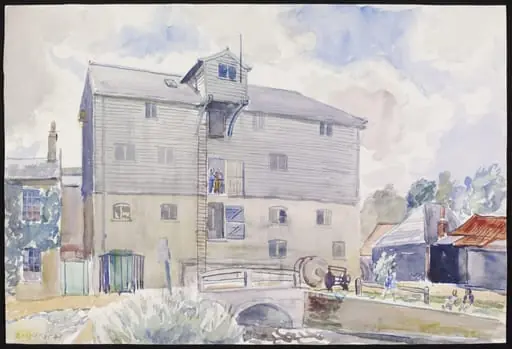
Dutch Mill at Littlebourne is a watercolor work on paper by the Regionalist artist Waterfield. It dates from 1942 and is held in the collection of the Victoria and Albert Museum. Created in 1942, this watercolour portrays a slender, weather‑worn watermill standing beside the river at Littlebourne.
About this work
Overview
Created in 1942, this watercolour portrays a slender, weather‑worn watermill standing beside the river at Littlebourne. The composition includes a modest thatched outbuilding, a horse with a cart positioned in the foreground, and a few birds drifting over the water, all rendered with light, loose brushwork that suggests a tranquil, everyday scene.
Subject & Meaning
The picture records a typical rural English landscape, emphasizing the relationship between the mill’s functional architecture and the surrounding countryside. The modest presence of the horse and cart hints at the mill’s role in local agricultural life, while the subdued reflections convey a calm, unhurried atmosphere.
Technique & Style
Executed in watercolour, the artist employs simple geometric forms and a restrained palette of pale hues. Quick, sketchy strokes leave portions of the surface loosely defined, allowing the viewer’s eye to fill in details. The treatment of water is minimal, offering only a faint suggestion of reflection.
History & Provenance
The work belongs to the Recording Britain project, a wartime initiative launched in 1940 by the Committee for the Employment of Artists in Wartime. Funded by the Pilgrim Trust and overseen by Sir Kenneth Clark, the scheme commissioned artists to document the nation’s built environment and landscapes during World War II, producing over 1,500 pieces before its conclusion in 1943.
Context
Recorded at a time when many historic structures faced threat from war and modernization, the mill scene reflects a broader effort to preserve visual memory of Britain’s regional character. The piece serves as a visual archive of a specific locale, illustrating the everyday rural life that the Recording Britain project aimed to safeguard.
Artist & collection
Artist
This artist left a small group of watercolours around Kent from the early 1940s, all towering brick chimneys and spinning sails against low, soft skies.