Artwork
Three Regentesses and the ‘House Mother’ of the Amsterdam Lepers’ Asylum
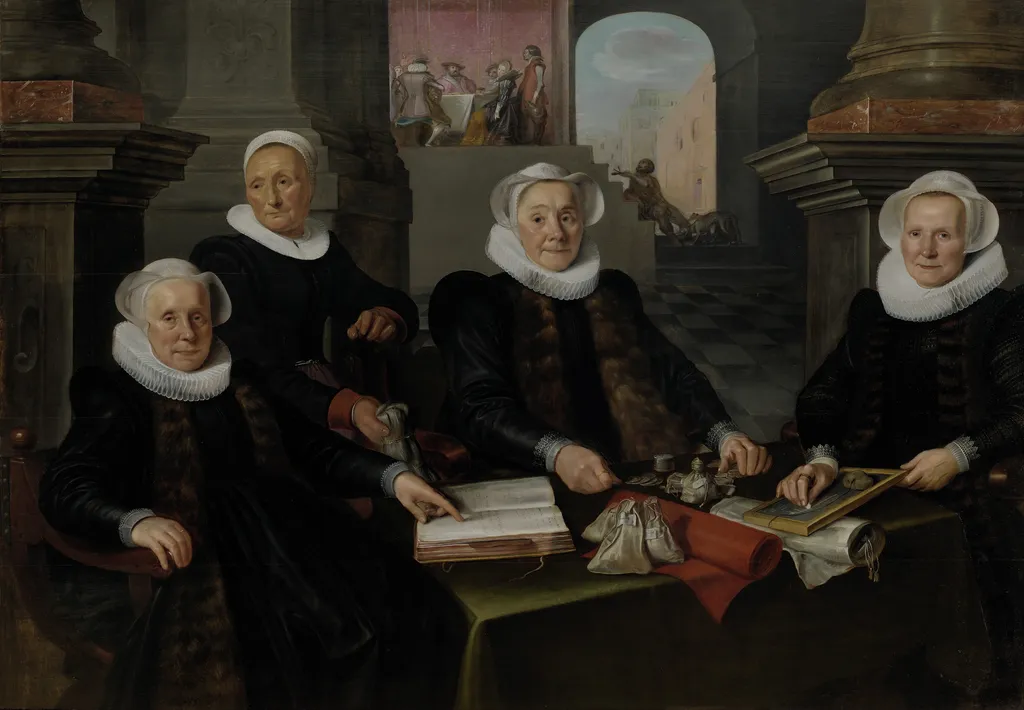
Three Regentesses and the ‘House Mother’ of the Amsterdam Lepers’ Asylum is an oil painting by the Dutch Golden Age artist Werner van den Valckert. It dates from 1624 and is held in the collection of the Rijksmuseum.
About this work
Subject & Meaning
The work functions as an allegory through its architectural background, which incorporates a depiction of the biblical parable of the Rich Man and Lazarus.
This 1624 group portrait depicts the three female regents and the house mother (binnenmoeder) of the Amsterdam Lepers' Asylum seated at a table. The women, identified as Trijntie ten Bergh, Anna Willekens, and Trijntie Weelinx, are shown in modest attire with lace cuffs and collars, wearing no visible jewelry except for a single ring. Their administrative authority is symbolized by objects on the table, including writing materials, ledgers, money bags, and loose coins, while the house mother stands beside them in simpler clothing holding a slate.
The work functions as an allegory through its architectural background, which incorporates a depiction of the biblical parable of the Rich Man and Lazarus. This inclusion underscores the institution's charitable mission toward the sick and poor. Columns and a view of the city frame the scene, grounding the spiritual message within the civic context of Amsterdam.
Technique & Style
The work is an oil painting executed on a wooden panel, measuring roughly 132 × 189.5 cm and dated 1624.
It belongs to the regents group‑portrait genre and shows three regentesses and the house mother seated around a table, each holding writing tools, money bags and a book; they wear black dresses with lace cuffs and modest caps, and the composition is set against an architectural backdrop with columns and a city view.
History & Provenance
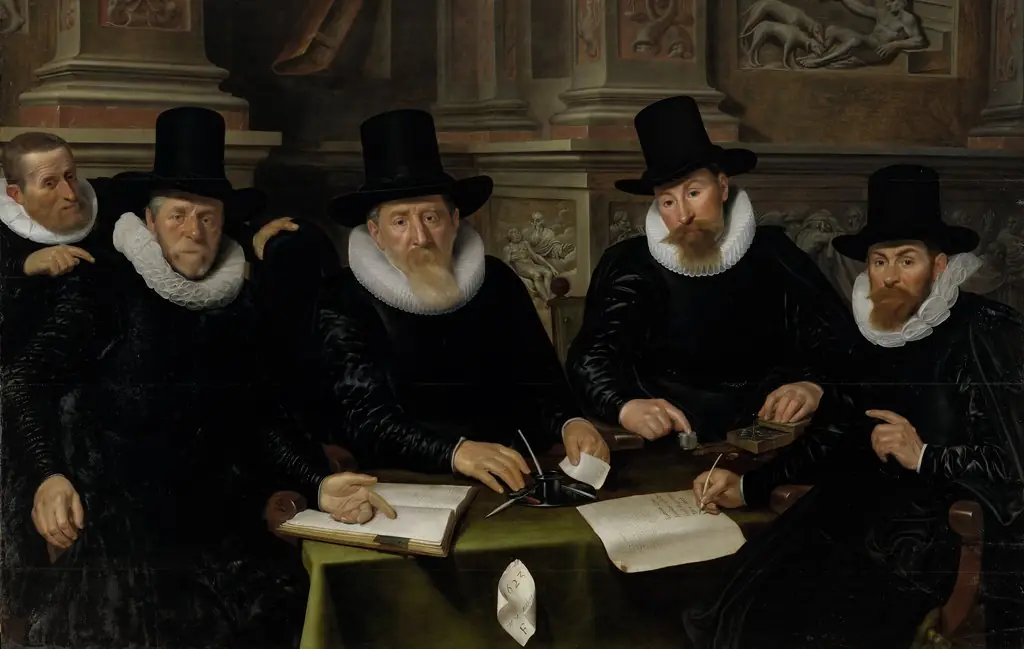
Werner van den Valckert received a commission in 1624 from the Amsterdam Lepers’ Asylum (Leprozenhuis) to paint a group portrait of its three regentesses and the house mother, completing the work that year as an oil on panel–4). The painting remained in the asylum’s possession, hanging alongside a companion portrait of the male regents, until the institution was closed in 1860 after the Dutch Poor Law transferred responsibility to the municipality. The city of Amsterdam then lent the canvas to the newly opened Rijksmuseum in 1885, where it has remained part of the collection ever since.
The painting Three Regentesses and the ‘House Mother’ of the Amsterdam Lepers’ Asylum (1624) by Werner van den Valckert is held in the Rijksmuseum in Amsterdam. The work is part of the museum’s permanent collection, though the specific inventory or accession number is not given in the available sources. Its presence in the Rijksmuseum has been highlighted in several exhibition contexts, most notably its inclusion in the 1949 publication “120 Schilderijen uit het Rijksmuseum,” which catalogued works on display.
The painting has also been featured in periodic displays of the museum’s Dutch Golden Age holdings, allowing public viewings within the broader narrative of regent portraiture.
Context
Werner van den Valckert's 1624 painting belongs to the established Dutch tradition of regents group portraits, specifically created for the Amsterdam Lepers' Asylum. The work fits within a long lineage of administrative portraits commissioned by the institution, a practice that continued decades later with artists such as Ferdinand Bol, who adopted a similar compositional approach for the same venue in 1668.
Scholarship highlights the painting's inclusion in the 1949 publication '120 Schilderijen uit het Rijksmuseum,' marking its recognition within the museum's canonical holdings. The artwork's historical trajectory reflects the dissolution of the asylum itself; following the institution's closure in 1860 and subsequent liquidation, the city of Amsterdam transferred the painting to the Rijksmuseum on loan in 1885, securing its place in the national collection.
Legacy
The painting established a significant precedent within the tradition of Dutch regent group portraits, directly influencing later works by major artists. Approximately forty years after Van den Valckert's 1624 creation, Ferdinand Bol adopted the identical compositional setup for his own depiction of the leper asylum's regentesses around 1668. This continuity highlights the enduring model of authority and domestic management established by the original group portrait.
Following the dissolution of the asylum in 1860 and the subsequent demolition of its buildings, the work survived as a key artifact of the institution's history. It entered the public sphere in 1885 when the City of Amsterdam placed it on loan to the newly opened Rijksmuseum, where it remains a notable entry in the collection. The painting's historical value was further cemented by its inclusion in the 1949 publication 120 Schilderijen uit het Rijksmuseum.
Overview
Werner van den Valckert's 1624 oil on panel painting, "Three Regentesses and the ‘House Mother’ of the Amsterdam Lepers’ Asylum," depicts four women associated with the institution. This work is a notable example of the regents group portrait, a genre popular in the Dutch Golden Age. It is presently housed in the Rijksmuseum in Amsterdam, offering insight into the administrative figures of charitable organizations during the period.
Own this work as a print
Artist & collection
Artist
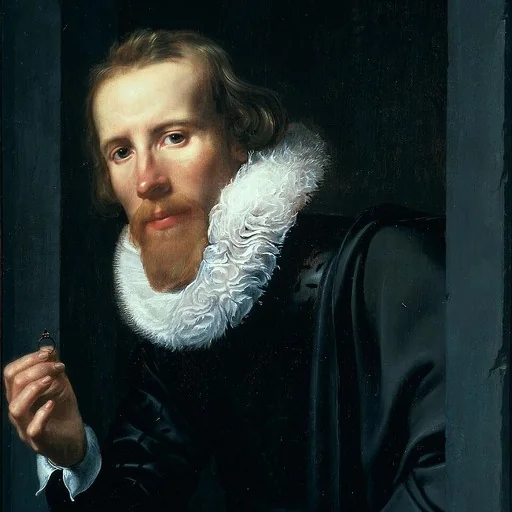
Werner van den Valckert (1585–1635) was an artist, born in The Hague.

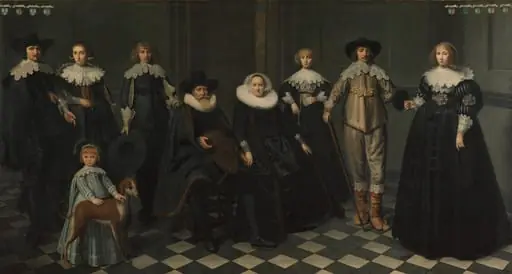 Portrait of the Family of Dirck Bas Jacobsz, Burgomaster of Amsterdam
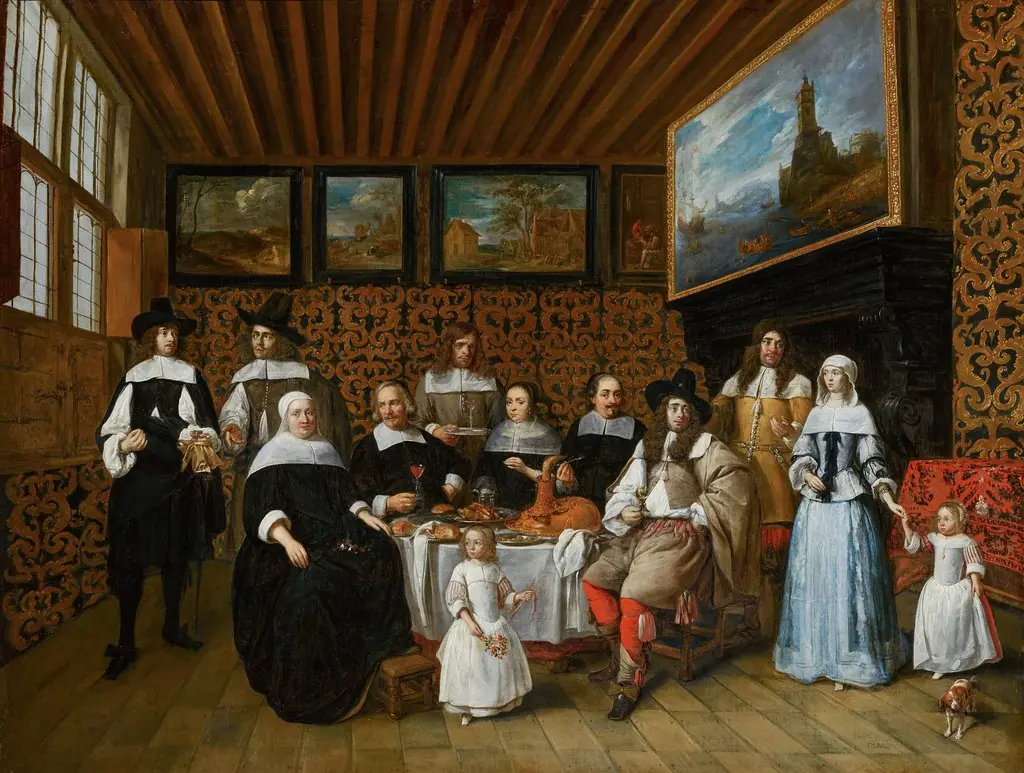 Family Portrait
 Portrait of the Family of Dirck Jacobsz Bas (1569-1637), Burgomaster of Amsterdam, and Margriet Snoeck (1588-1645)
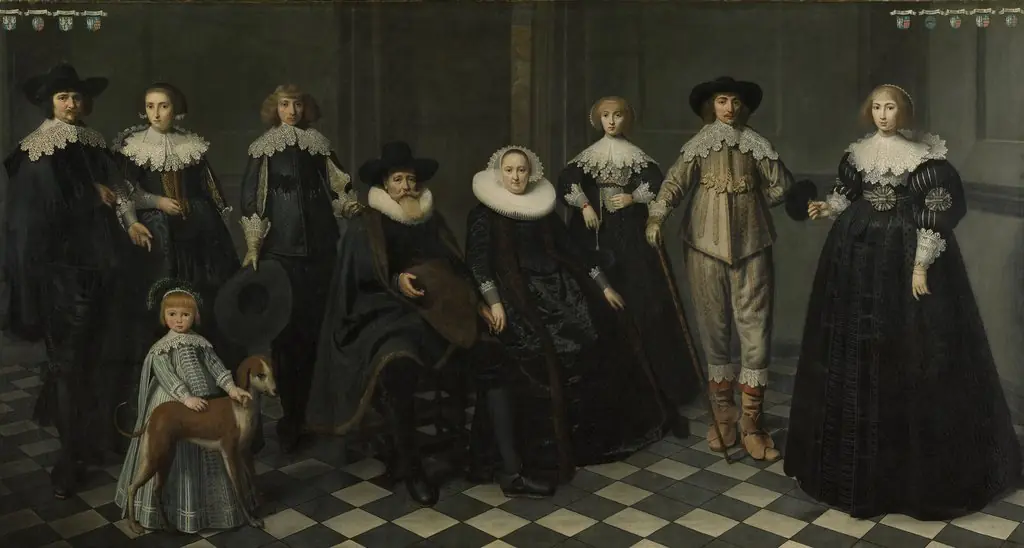 The family of Dirck Bas Jacobsz, burgomaster of Amsterdam
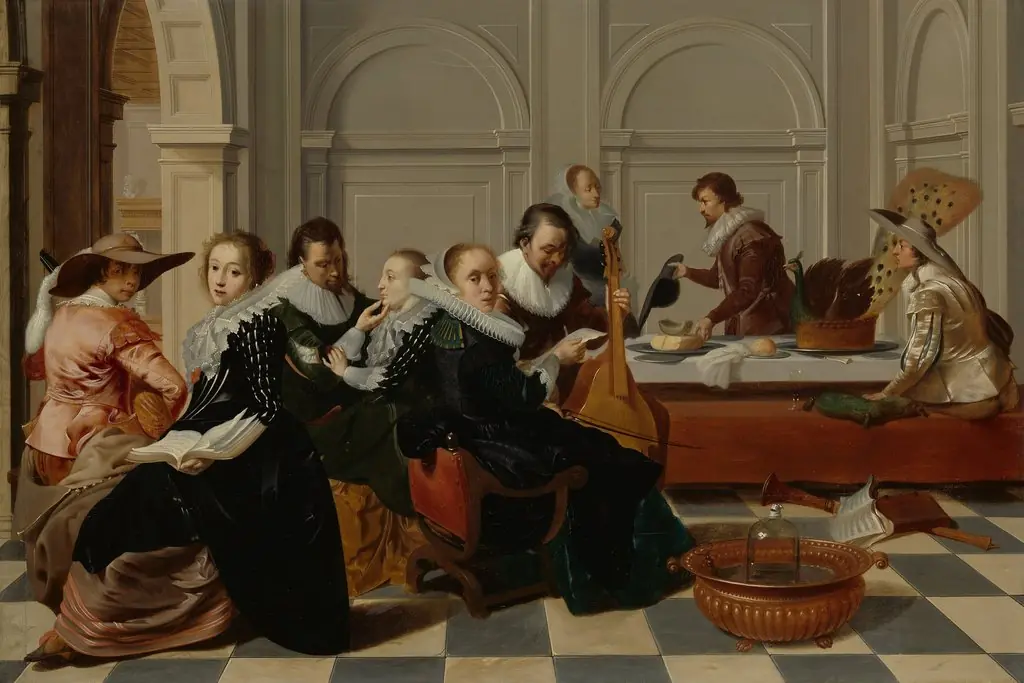 The musical gathering
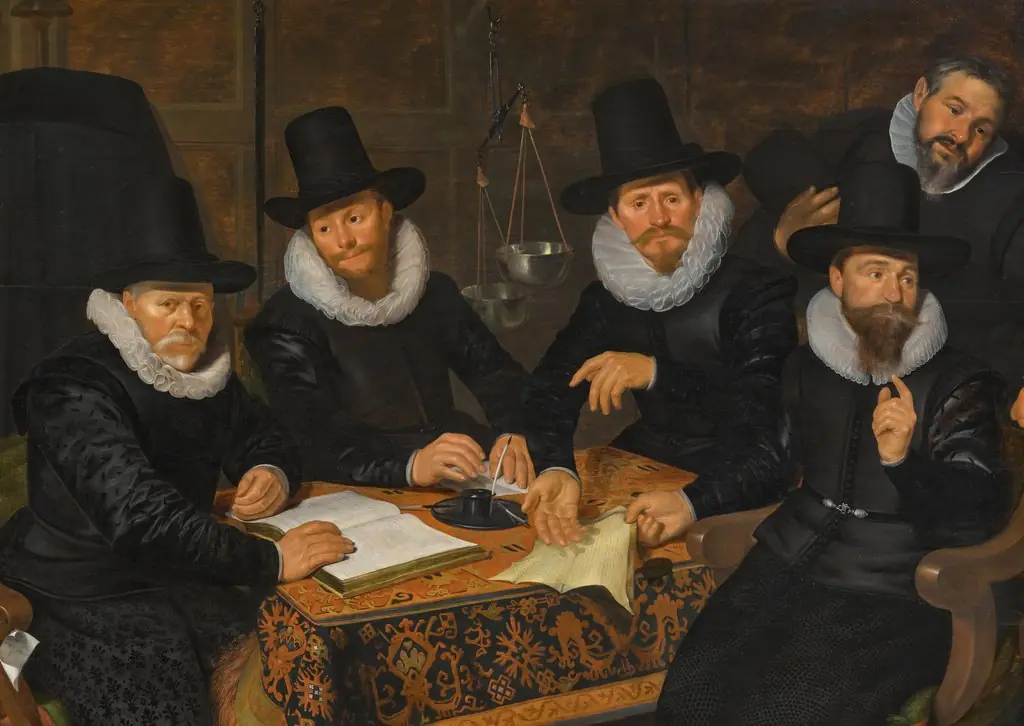 Four Regents of the Groot-Kramergild
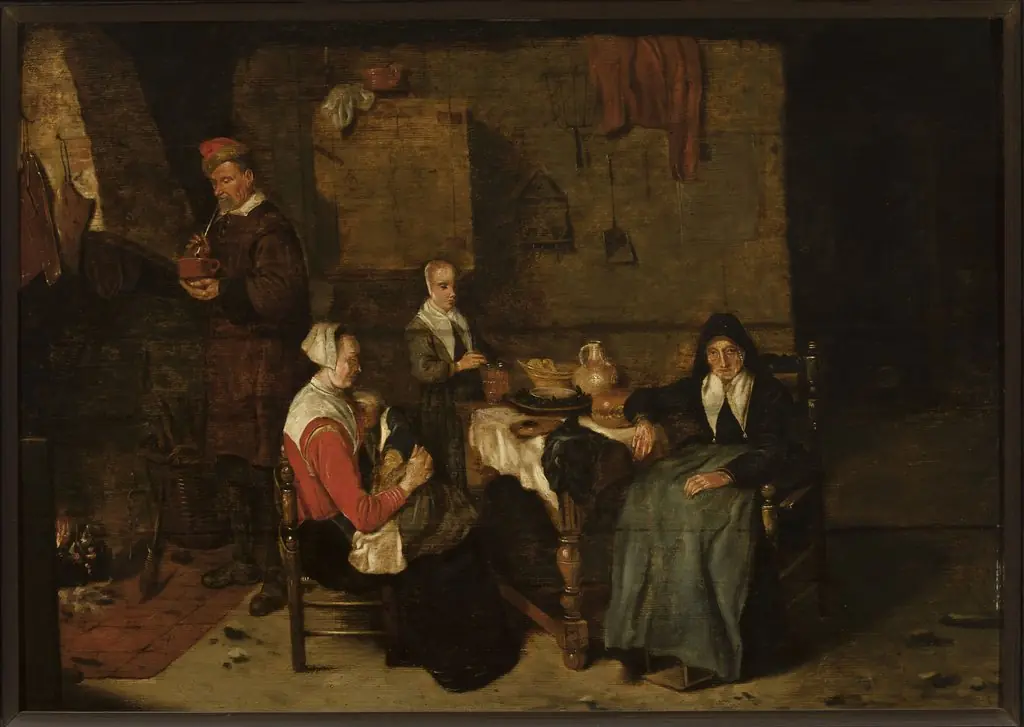 Family scene