Artwork
Portrait of a Goldsmith, Probably Bartholomeus Jansz van Assendelft
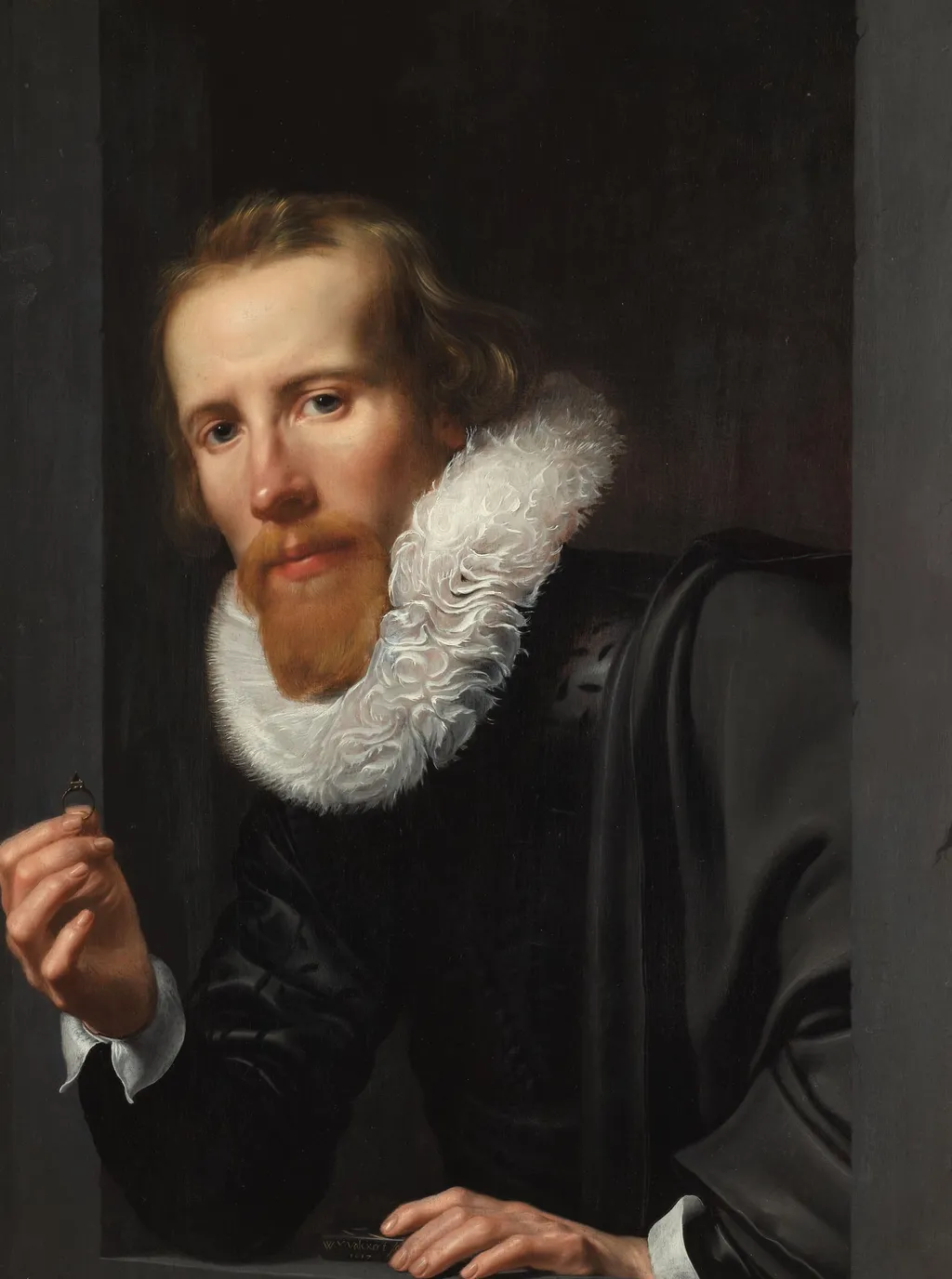
Portrait of a Goldsmith, Probably Bartholomeus Jansz van Assendelft is an unspecified painting by the Baroque artist Werner van den Valckert. It dates from 1617 and is held in the collection of the Rijksmuseum. This painting depicts a man leaning from a stone window, engaging directly with the viewer.
About this work
He holds up a gold ring in one hand and rests the other on a small black slab, a touchstone used to test metal purity.
A man in a dark coat leans out of a stone window. He holds up a gold ring in one hand and rests the other on a small black slab, a touchstone used to test metal purity.
This isn’t just a portrait. The touchstone hints at his job: he may have been a goldsmith and official tester for Leiden’s guild in 1617. The ring and stone show his skill and trustworthiness, like a business card in paint.
Look up more works from the Baroque movement to see how other artists played with light and detail like this.
Subject & Meaning
The painting portrays a goldsmith, most likely Bartholomeus Jansz van Assendelft, identified through his professional attributes. He is shown holding a ring and a touchstone (sortija y piedra de toque), the standard tools of the goldsmith's trade, which serve as iconographic markers of his craft and expertise in assaying precious metals.
As a Dutch Golden Age portrait from 1617, the work belongs to a tradition of individual likenesses that emphasized the sitter's profession, status, and civic identity. The inclusion of trade-specific objects reflects the era's interest in documenting the prosperous merchant and craft classes of Amsterdam, situating the subject within the city's guild-based economy rather than presenting him through allegorical or biblical symbolism.
History & Provenance
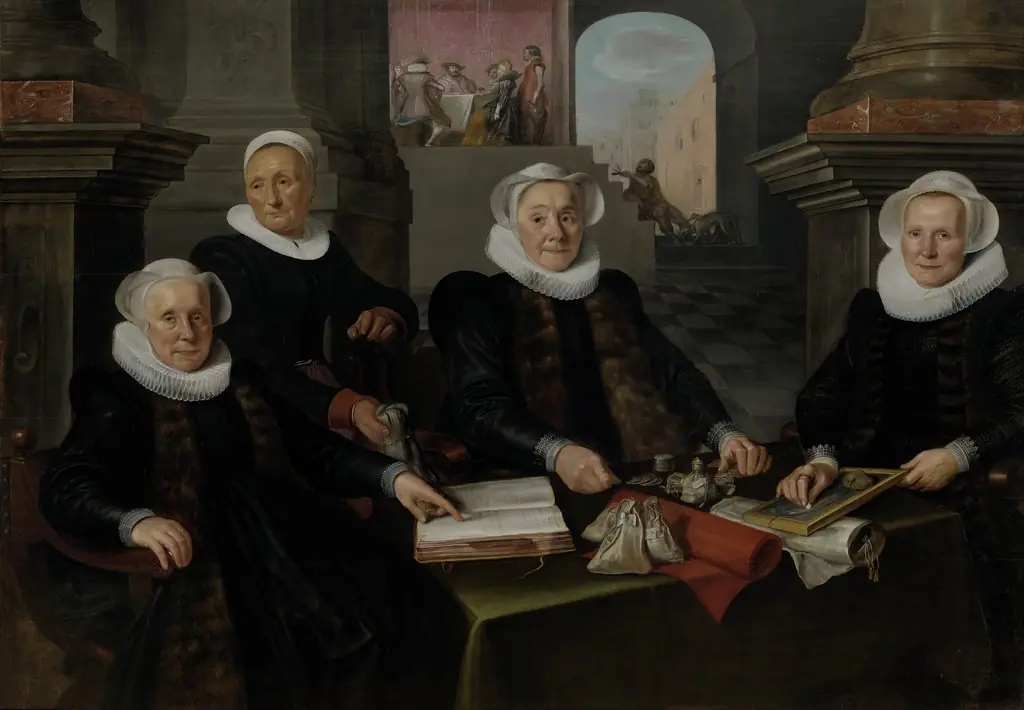
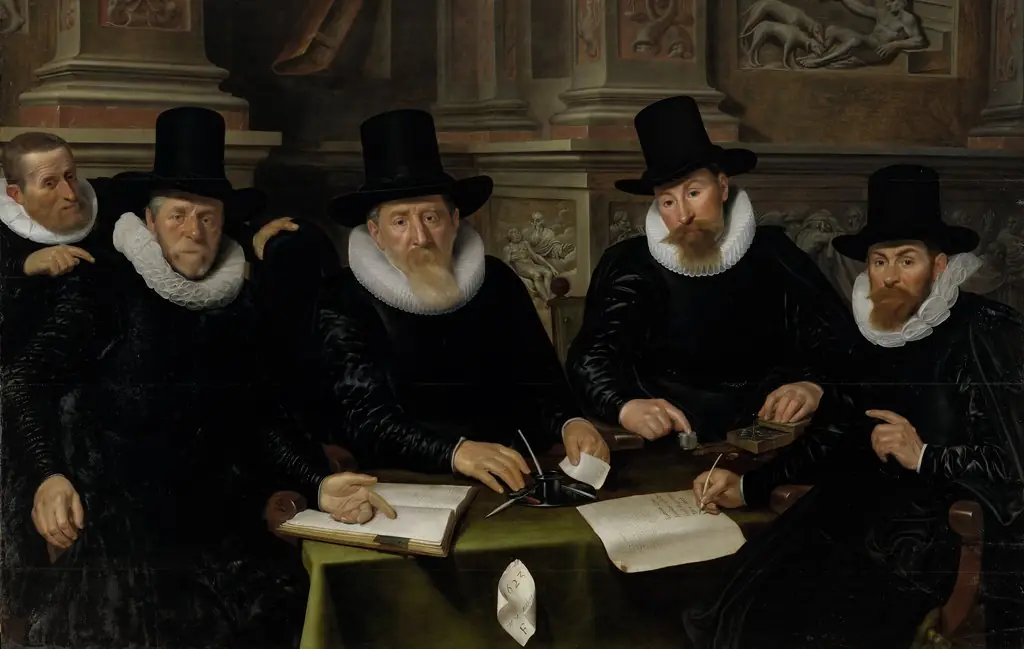
Werner van den Valckert executed the Portrait of a Goldsmith, identified as likely depicting Bartholomeus Jansz van Assendelft, in 1617. The composition features the subject holding a ring and a touchstone, attributes consistent with the goldsmithing trade. This individual portrait is distinct from the artist's later group commissions, such as the regents of the Amsterdam leper house painted in 1624.
Both the goldsmith's likeness and the 1624 regents' piece are preserved in the collection of the Rijksmuseum in Amsterdam. While van den Valckert was active in The Hague and Amsterdam during this period, no specific details regarding the original commissioning party or the work's ownership history prior to its museum acquisition are provided in the available records.
Context
Werner van den Valckert, a Dutch Golden Age painter active in The Hague and Amsterdam, operated within a Baroque context that blended historical allegory with portraiture. His 1617 work, Portrait of a Goldsmith, Probably Bartholomeus Jansz van Assendelft, exemplifies his contribution to the genre of individual portraiture, depicting the sitter with specific attributes such as a ring and touchstone. Scholarship notes that Van den Valckert was likely a student of Hendrik Goltzius and produced a range of works including prestigious schutterstukken and religious allegories.
The artist's broader oeuvre includes group portraits with biblical allusions, such as the 1623 Family as an Allegory of Charity, which features his self-portrait. His career bridges the transition from The Hague to Amsterdam, where he remained documented until at least 1627, contributing to the city's visual culture alongside contemporaries like Rubens in imperial portrait series.
Overview
This painting depicts a man leaning from a stone window, engaging directly with the viewer. In his right hand, he prominently displays a gold ring adorned with a stone. His left hand rests upon a touchstone, a specialized implement used to ascertain the purity of precious metals.
The inclusion of these specific tools suggests the sitter's professional identity, likely connected to the craft of goldsmithing.
Own this work as a print
Artist & collection
Artist
Werner van den Valckert (1585–1635) was an artist, born in The Hague.

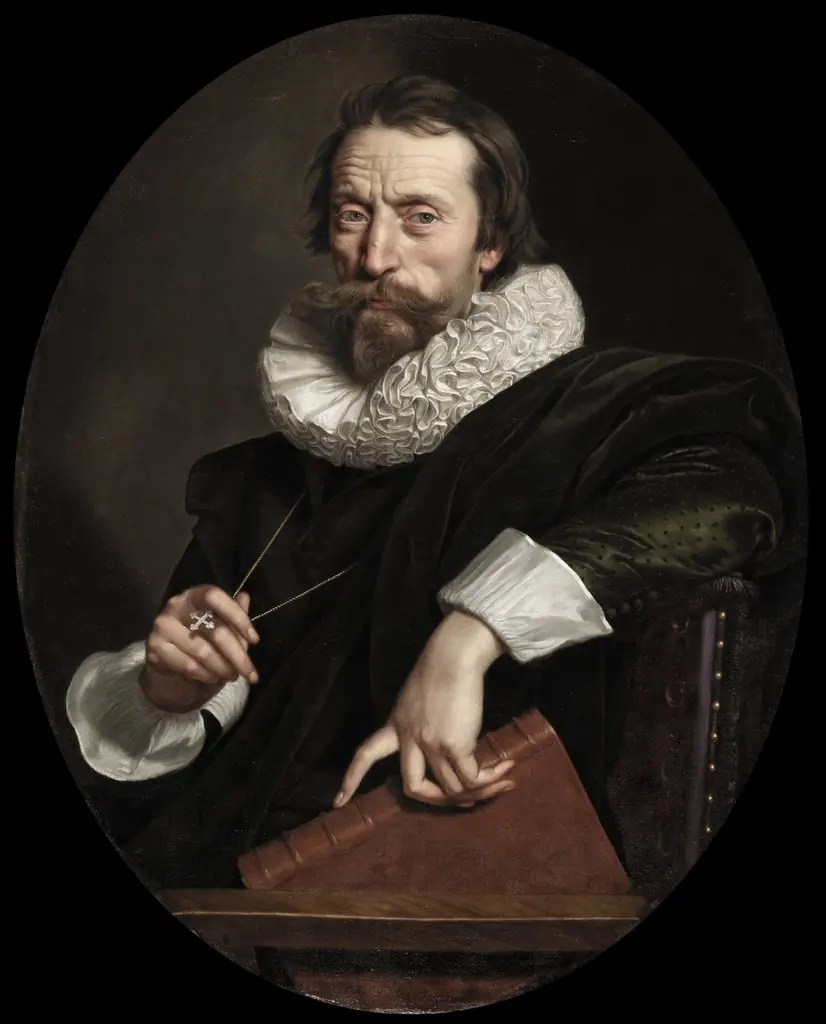
- Man in Oval Frame
 Portrait of the Italian Poet, Giambattista Marino
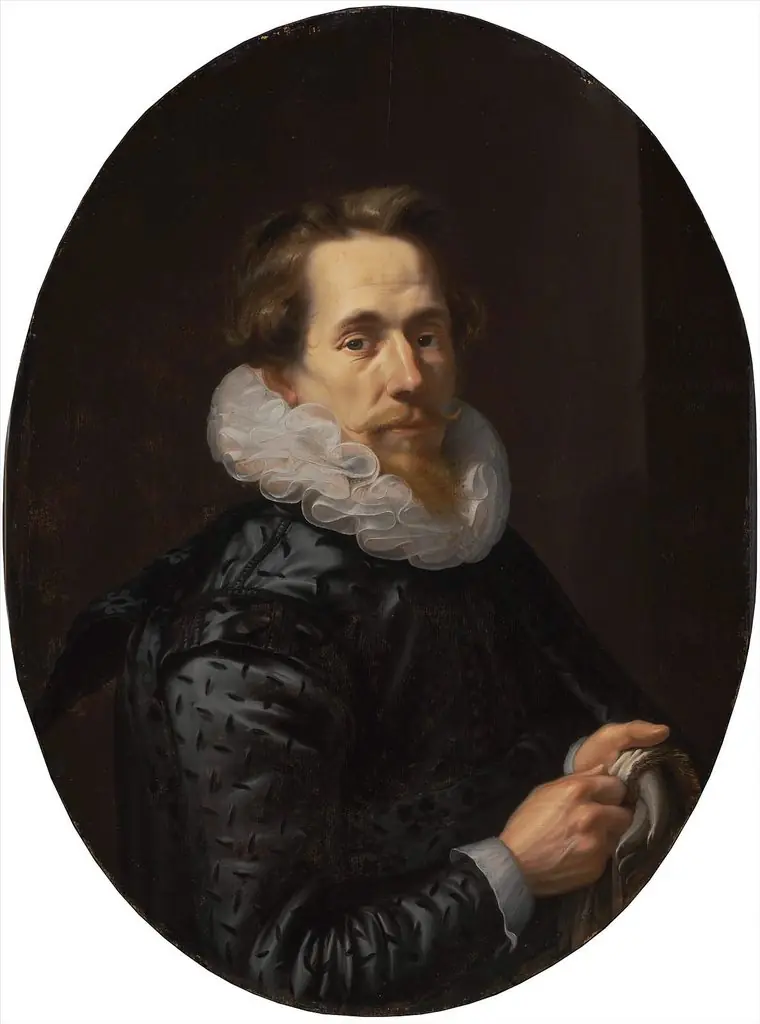 Portrait of a Man with a Ruff
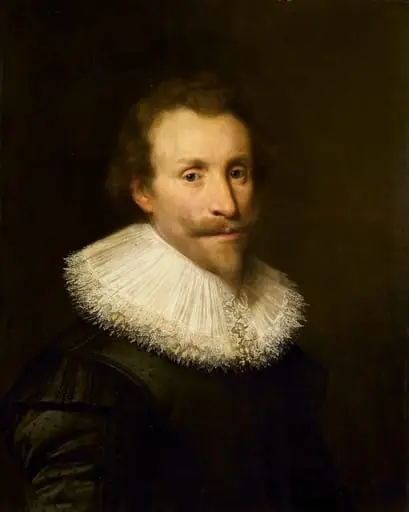 Untitled
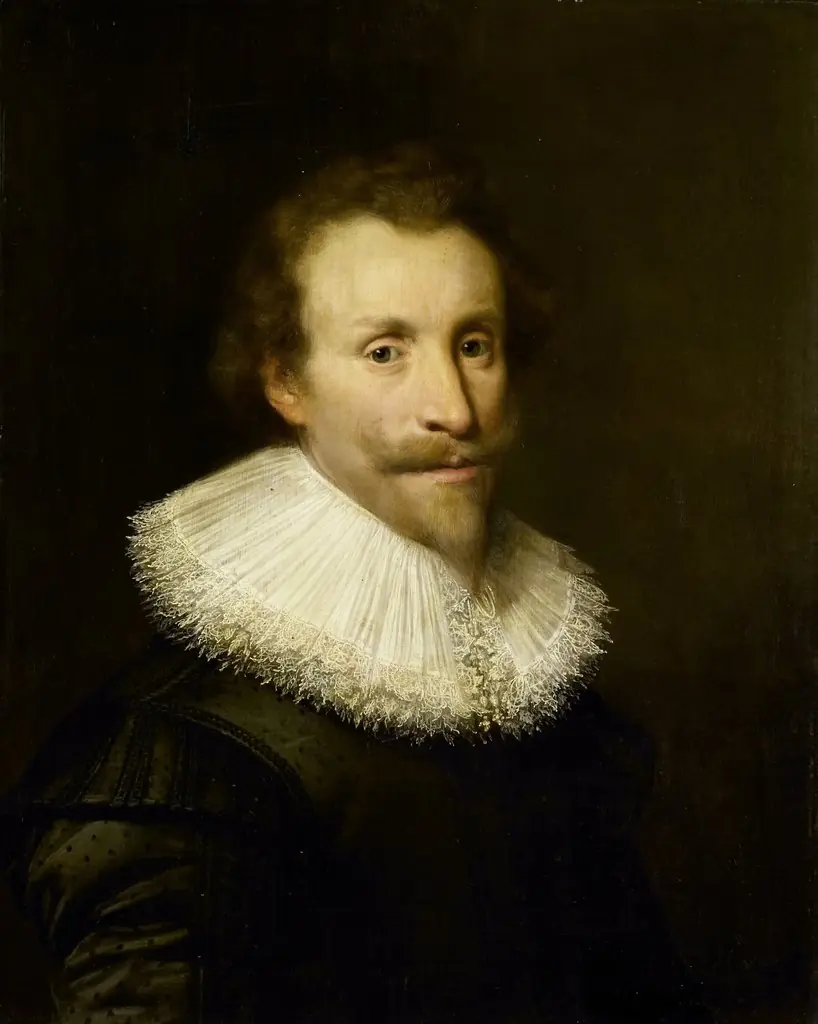 Portrait of a man
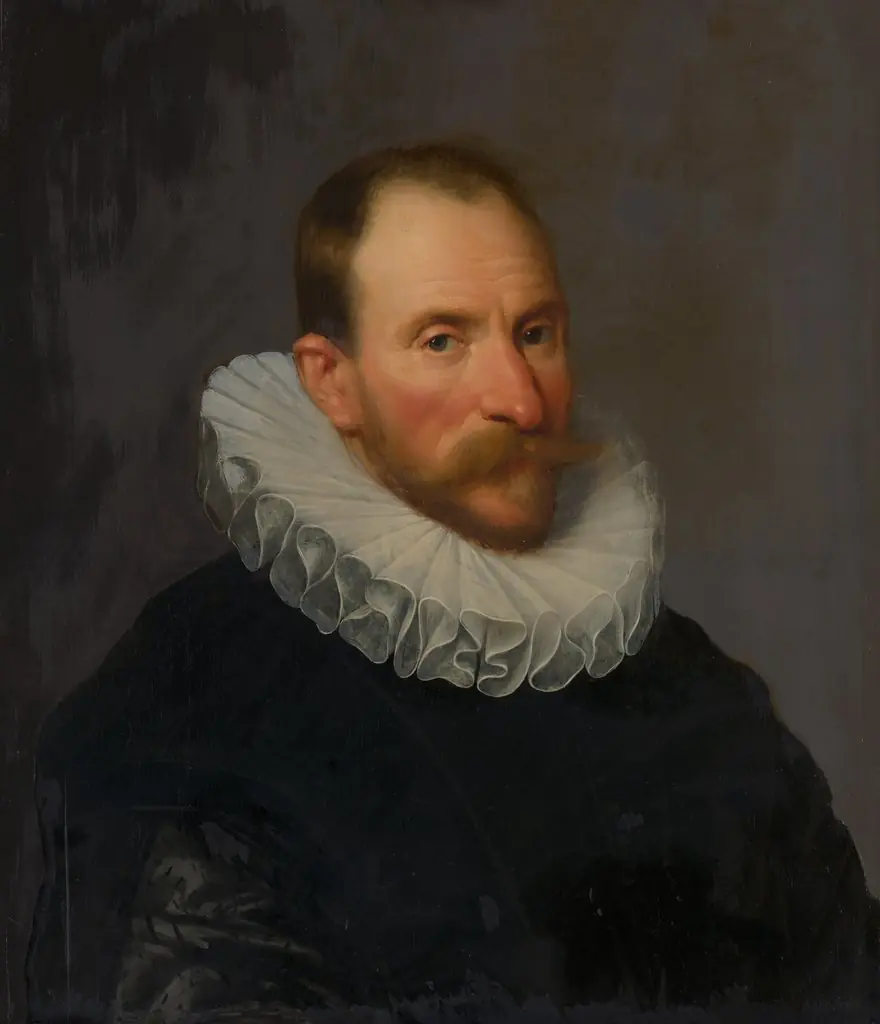 Portrait of Cornelis van Aerssen (1545-1627)
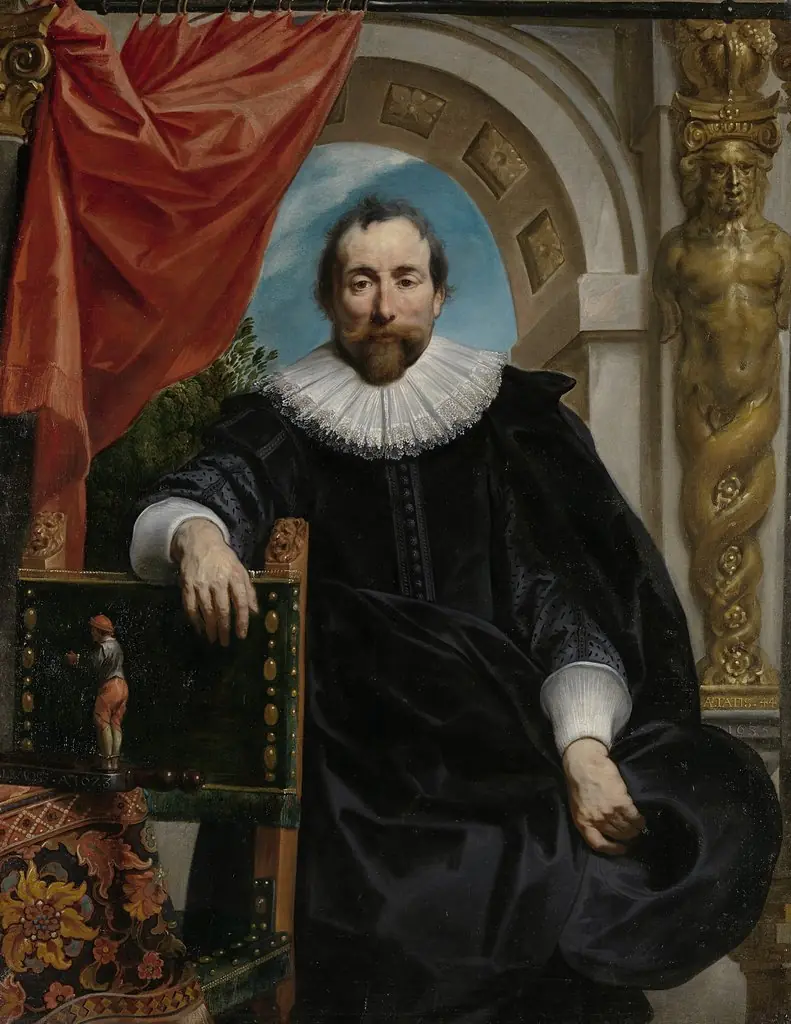 Portrait of Rogier Le Witer (1591-1678), Merchant in Antwerp
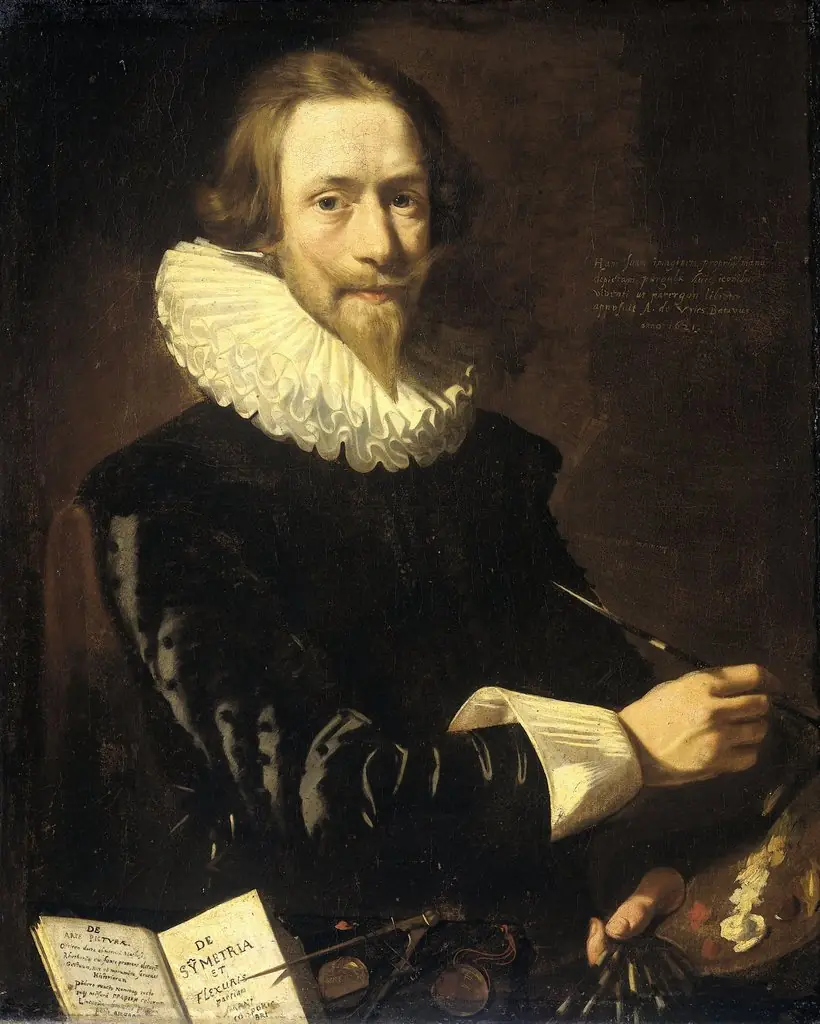 Self-portrait
 Portrait of a Man
 Portrait of David de Moor (1598-1643)
 Untitled
 Self-Portrait