Artwork
The Rich Man Playing Violin on a Jaw Bone
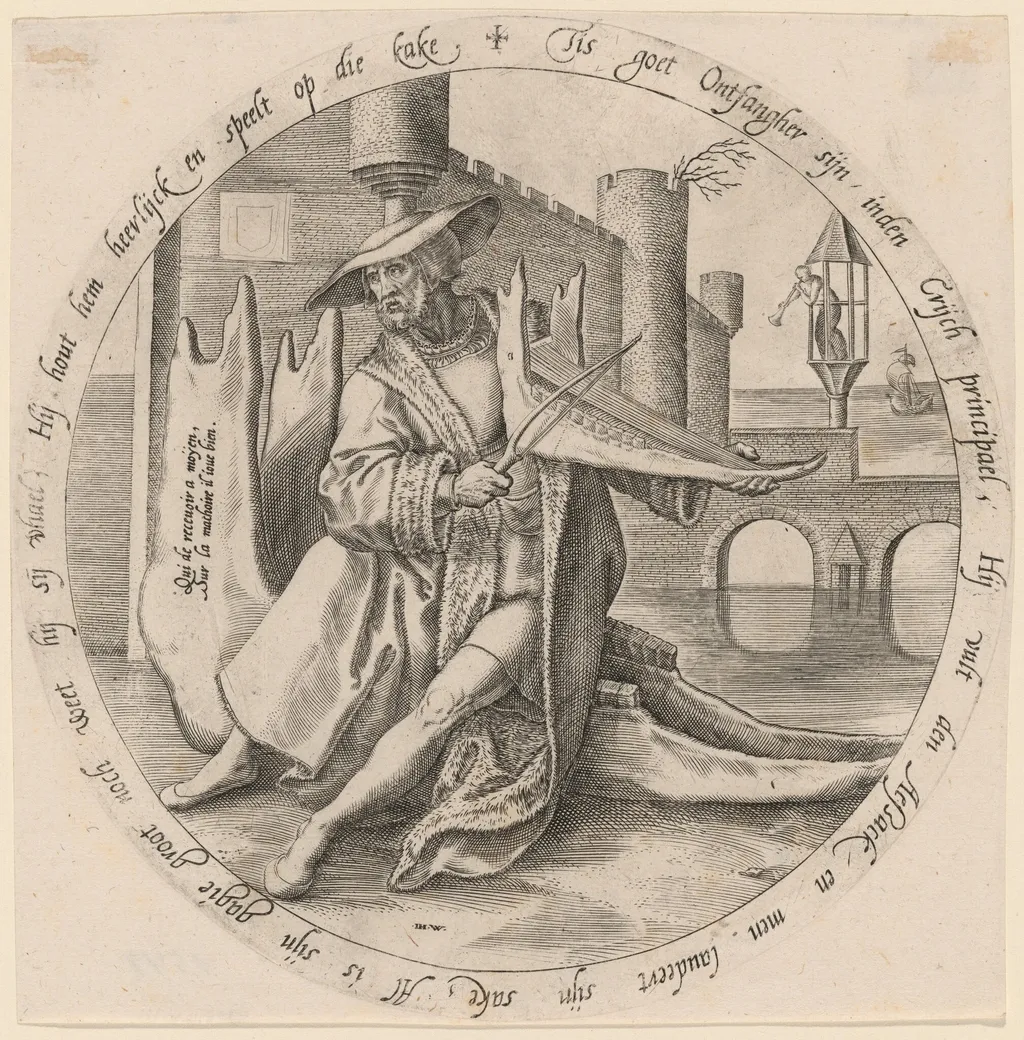
The Rich Man Playing Violin on a Jaw Bone is an ink print by the Renaissance artist Johan Wierix. It dates from 1568 and is held in the collection of the National Gallery of Art.
- Inscription
- Inscribed:in plate, in image at bottom: .IHW.; in plate, in the image, vertically on the bone at left: Qui de receuoir a moijen, / Sur la machoire il ioue bien. (He who means to receive / Plays well on a jawbone); in plate, in the margin around image: Tis goet Ontfangher sijn - inden Crijch principael, Hij vult den Aessack - en men laudeert sijn sake, Al is sijn gagie groot noch weet hij sij v[er]hael, Hij hout hem heerlijck en speelt op die kake. (It is good to be the recipient of money due to a big war, / He fills his purse and one praises his business, Even if his pay is great, he knows his story, / He behaves honourably but still plays on the jawbone.) [translation by Wouter Bracke from Maarten Bassens and Joris van Grieken, eds., Bruegel in Black and White: The Complete Graphic Works. Brussels: KBR, 2019, p. 269, notes 7 and 8].; on verso, in graphite, on hinge at upper right: B 173 / H 170 / 4; on verso, in graphite, on sheet at lower right: 1548 / Bast 173 / DTTH
- Markings
- Marked:Waldburg-Wolfegg'sches Kupferstichkabinett (Lugt 2542) in gray ink; Albert van Loock (Lugt 3751) in purple ink
About this work
Overview
Created around 1568 by Johan Wierix, this engraving on laid paper depicts a wealthy man playing a violin using a human jawbone as a makeshift instrument.
Created around 1568 by Johan Wierix, this engraving on laid paper depicts a wealthy man playing a violin using a human jawbone as a makeshift instrument. The work belongs to the National Gallery of Art in Washington, D.C., and exemplifies the Northern Renaissance tradition of moralizing imagery. Its medium, engraving, allowed for fine detail and wide circulation, making such symbolic messages accessible beyond elite audiences.
Subject & Meaning
The figure, dressed in ornate clothing and appearing content, contrasts sharply with the skeletal jawbone he uses as a violin. This juxtaposition serves as a memento mori, reminding viewers that material wealth and earthly pleasures are transient. The jawbone, a clear reference to death, transforms the violin, a symbol of joy and refinement, into an instrument of mortality, reinforcing the futility of vanity.
Technique & Style
Wierix employed precise engraving techniques to render intricate textures in the man’s fabric, hair, and the bone’s surface. Fine lines and cross-hatching create depth and contrast, characteristic of Netherlandish printmaking of the period. The composition is tightly focused, directing attention to the absurdity of the scene while maintaining a polished, almost courtly aesthetic that heightens its ironic tone.
History & Provenance
The print emerged during a period of religious and social upheaval in the Low Countries, when moral allegories were commonly disseminated through prints. While its early ownership is undocumented, it entered the National Gallery of Art’s collection in the 20th century as part of a broader effort to preserve Northern Renaissance graphic works. Its survival reflects its enduring relevance as a visual moral lesson.
Context
In mid-16th-century Europe, prints like this often conveyed Protestant critiques of Catholic excess and worldly attachment. The imagery aligns with broader themes in vanitas art, where symbols of decay undercut displays of affluence. Wierix’s work fits within a tradition of satirical and didactic imagery, responding to both religious reform and the growing literacy of urban audiences.
Legacy
Though not widely known today, the engraving remains a compelling example of how printmaking could distill complex moral ideas into a single, portable image. Its use of dark humor and visual paradox influenced later satirical traditions in European art. Scholars continue to reference it as a case study in the intersection of visual symbolism and social commentary during the Reformation era.
Own this work as a print
Artist & collection


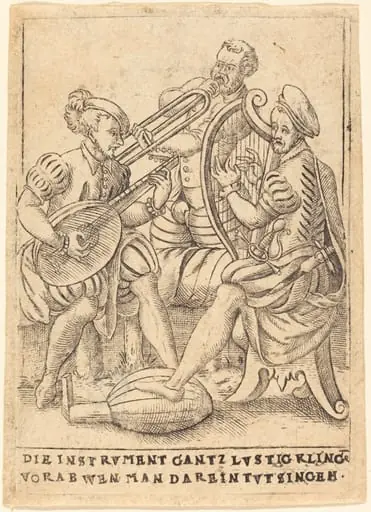
- Die Instrvment gantz lvstig Kling vorab wen man darein tvt singen
 XX: Twenty Years
 Saint Quirinus of Neuss
 Cardinal
 Giovanni Filoteo Achillini
 Nach der Mvsic: Geigen wir drei gantz Kvnstlice vnd artliche dabei
 The Little Standard Bearer
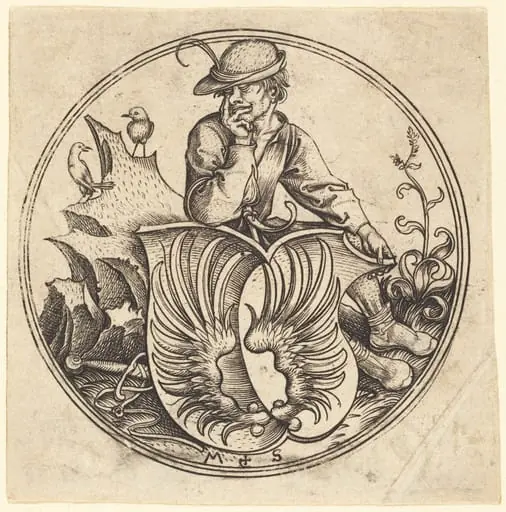 Shield with Wings, Held by Peasant
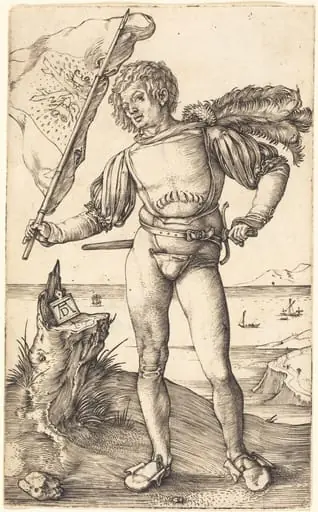 Standard Bearer
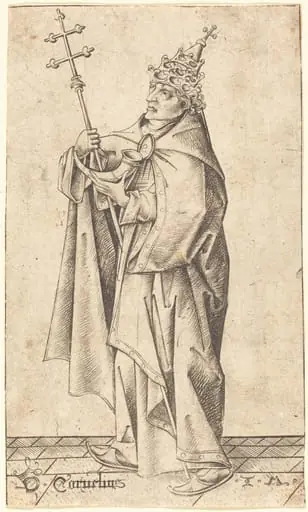 Saint Cornelius
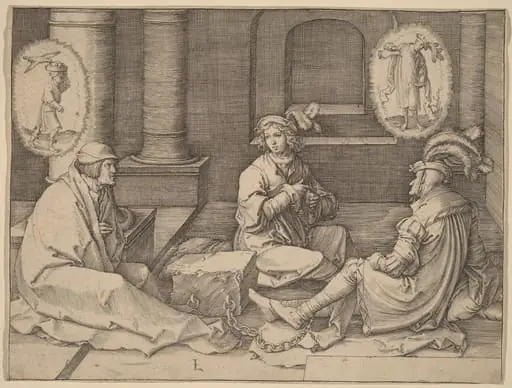 Joseph Interprets the Dreams in Prison
 LXX: Seventy Years