Artwork
Mercury and Proserpina
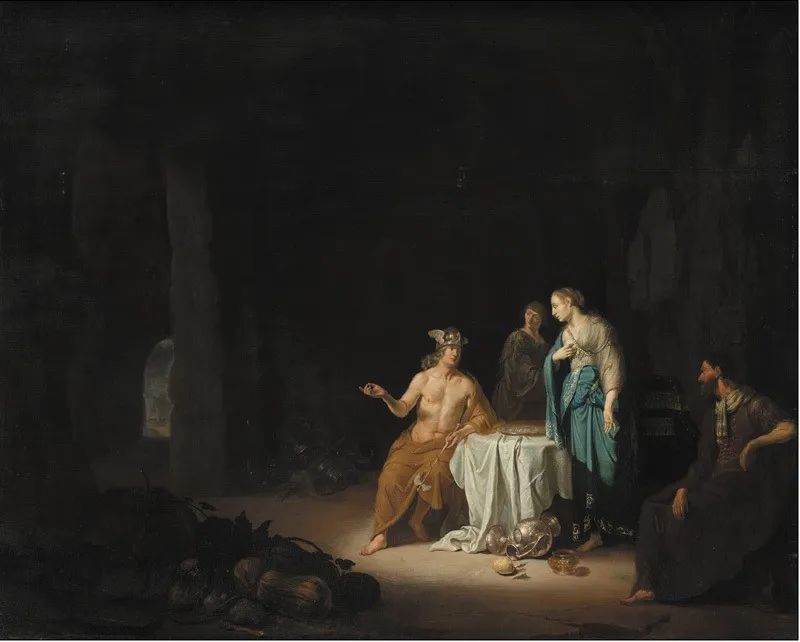
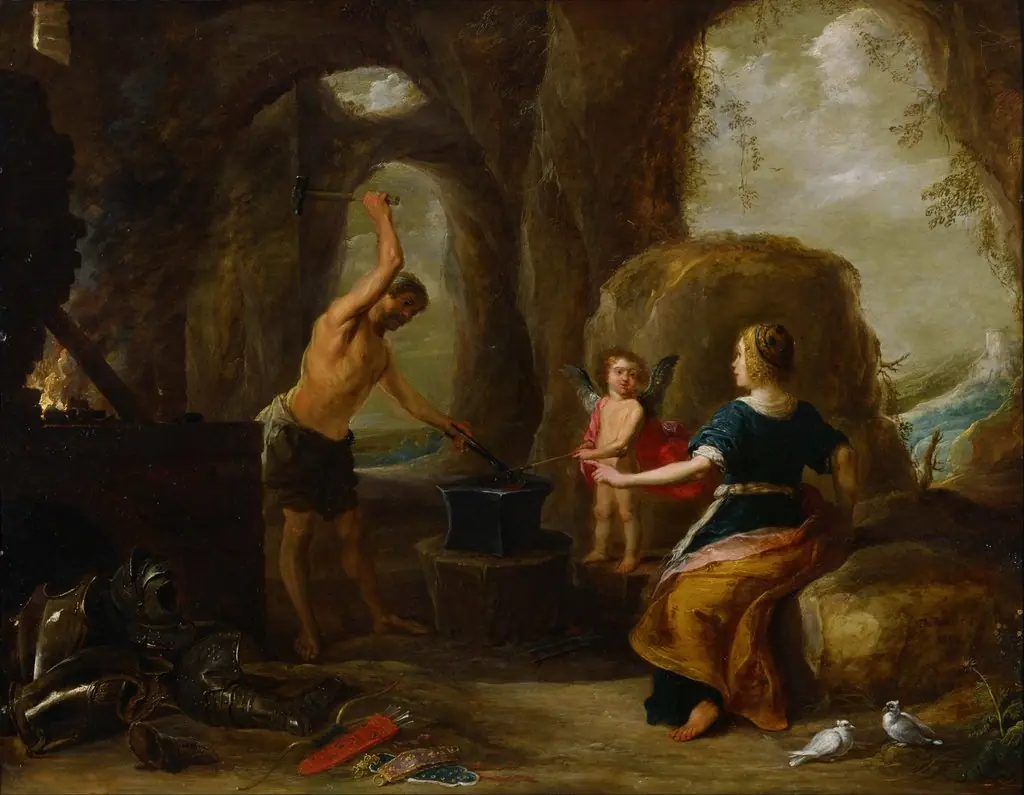
Mercury and Proserpina is an oil painting by the Dutch Golden Age artist Willem de Poorter. It dates from 1635 and is held in the collection of the Statens Museum for Kunst.
About this work
Subject & Meaning
The painting depicts the mythological figures Mercury and Proserpina, as identified in its cataloguing as a mythological work by Willem de Poorter.
The painting depicts the mythological figures Mercury and Proserpina, as identified in its cataloguing as a mythological work by Willem de Poorter. The subject is drawn from classical mythology, where Mercury, the Roman messenger god, is associated with Proserpina, the goddess whose abduction by Pluto and seasonal return to the surface explained the cycle of vegetation in antiquity.
In de Poorter's treatment, the two figures are rendered in oil on panel, a format suited to the intimate scale of mythological cabinet pictures popular in the Dutch Golden Age. The pairing of Mercury and Proserpina allowed artists to explore themes of transition between realms, the underworld and the upper world, and the negotiation between divine powers.
The work thus functions as an allegorical visualization of mythological narrative, presenting the encounter or relationship between the two deities as a subject of contemplation for the viewer.
Technique & Style
The painting is executed in oil on a wooden panel support, with overall dimensions of 55.0 cm in height and 68.5 cm in width. The handling is consistent with early 17th-century Dutch painting, employing smooth, blended transitions in the modeling of flesh and drapery to render Mercury’s youthful anatomy and Proserpina’s flowing garments. The composition emphasizes dynamic diagonal movement between the figures, with Mercury’s gesture and Proserpina’s turned torso creating a spiraling rhythm that animates the scene.
Stylistic features include a restrained palette dominated by earth tones and muted highlights, heightened by selective use of cooler blues and silvers to distinguish the messenger god’s attributes.
History & Provenance
The oil painting Mercury and Proserpina was created by Willem de Poorter in 1635. Executed in oil on panel, the work depicts the mythological figures Mercury and Proserpina. It is currently held in the collection of the Statens Museum for Kunst.
The specific commission details and the full chain of ownership prior to its arrival at the museum are not detailed in the available records.
The painting is held at Statens Museum for Kunst in Copenhagen.
Its inventory number is not specified in the cited sources. The work entered the museum’s collection as part of its holdings of Dutch Golden Age paintings.
No exhibition history is documented in the provided sources.
Legacy
Willem de Poorter's 1635 oil painting Mercury and Proserpina entered the collection of the Statens Museum for Kunst in Copenhagen, where it has been displayed as part of the museum's European Baroque holdings. The work is cited in scholarly surveys of Dutch Golden Age mythological painting as an example of how classical narratives were adapted by Northern artists to suit local patronage tastes, influencing later interpretations of the subject in Northern European art. Its inclusion in the museum's permanent displays has contributed to renewed public interest in de Poorter's oeuvre and the broader study of mythological subjects in Dutch painting.
Overview
Willem de Poorter’s oil on canvas, dated 1635, portrays a mythological encounter between Mercury and Proserpina. The work is part of the collection of Denmark’s Statens Museum for Kunst. Executed in the early Dutch Baroque period, the painting presents a compact interior scene illuminated by a single, focused light source that draws attention to the central figures.
Context
During the Dutch Golden Age, artists often revisited classical myths to explore moral and allegorical themes. De Poorter’s choice of Mercury and Proserpina aligns with contemporary interests in antiquity and the use of dramatic lighting to emphasize emotional states, reflecting broader Baroque tendencies toward theatricality and chiaroscuro.
Artist & collection

 Paulus the Apostle defending himself at the Trial in Caesarea
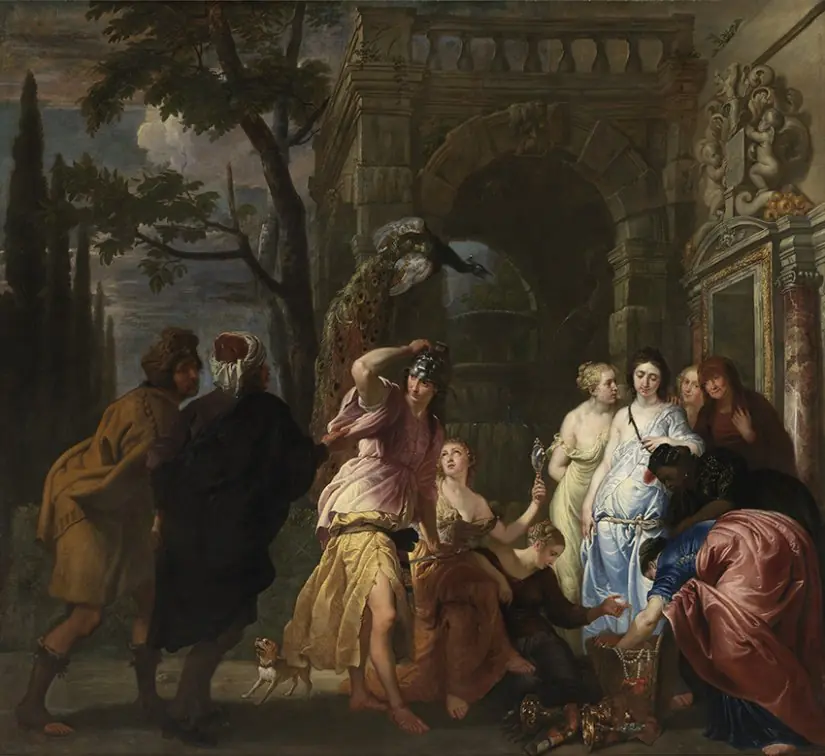 Achilles among the Daughters of Lycomedes
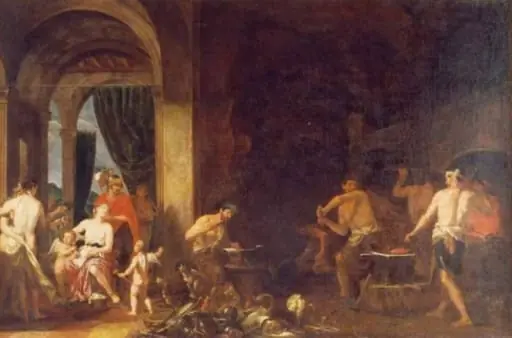 Atelierul lui Vulcan
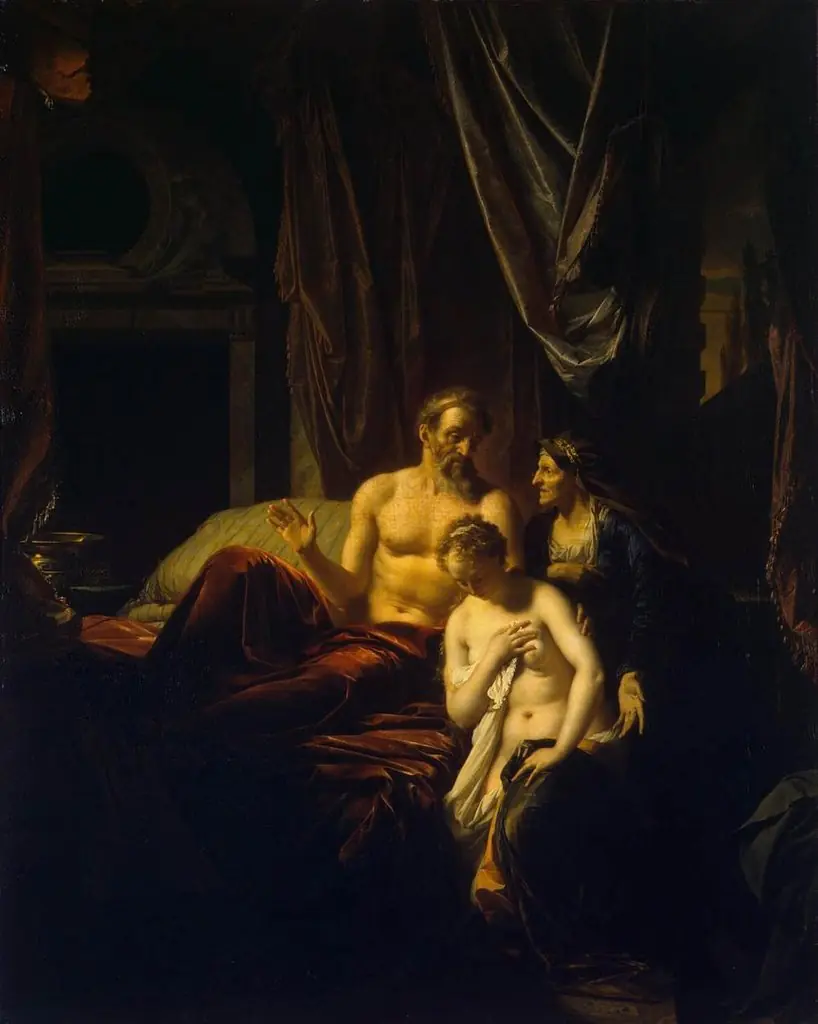 Sarah Bringing Hagar to Abraham
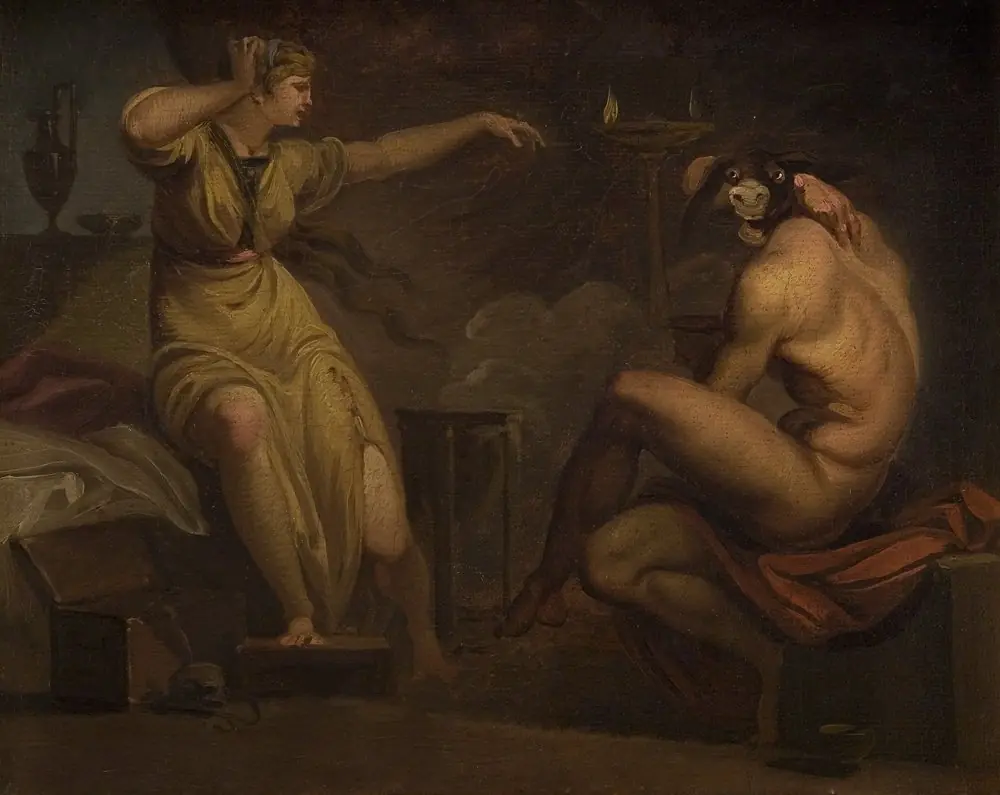 Fotis sees her Lover Lucius Transformed into an Ass. Motif from Apeleius' The Golden Ass
 The Corinthian Maid
 Jupiter ja Merkurius Filemonin ja Bauciin luona
 Bathing Nymphs in a Landscape
 The Return of Ulysses. Scene from Homer´s Ulysses
 Venus Visiting Vulcan’s Forge