Artwork
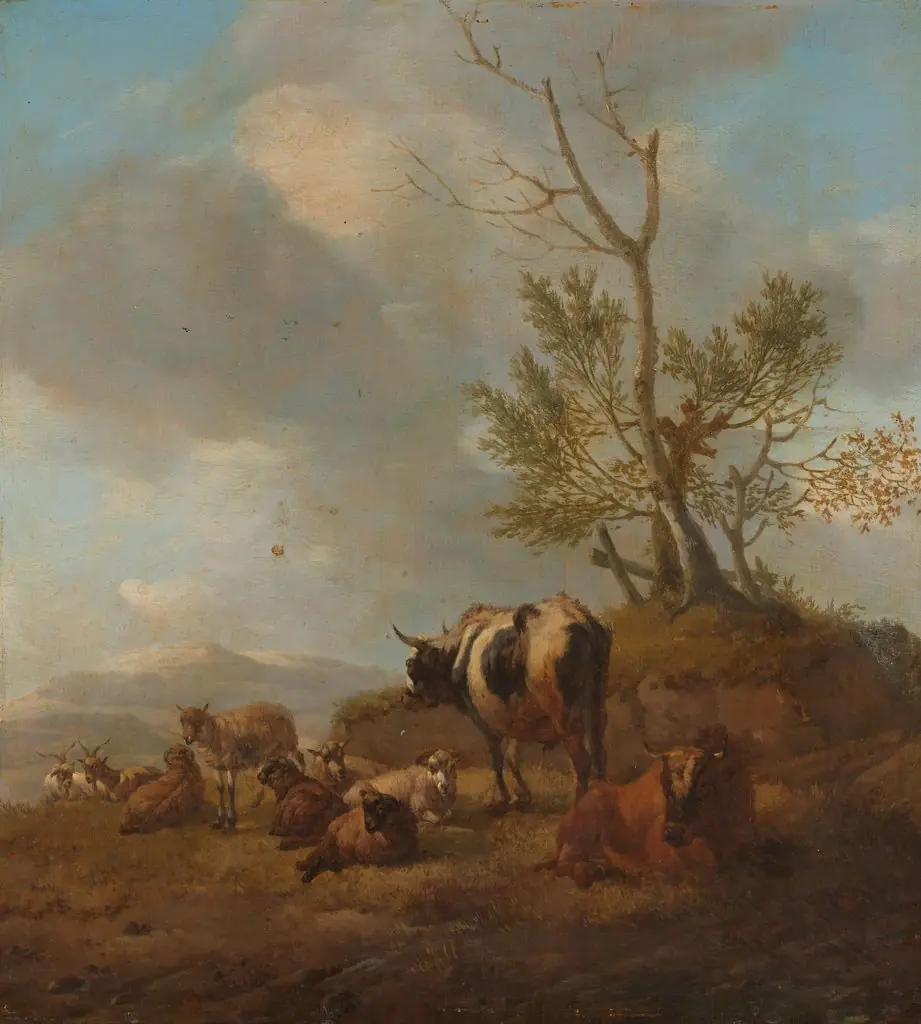
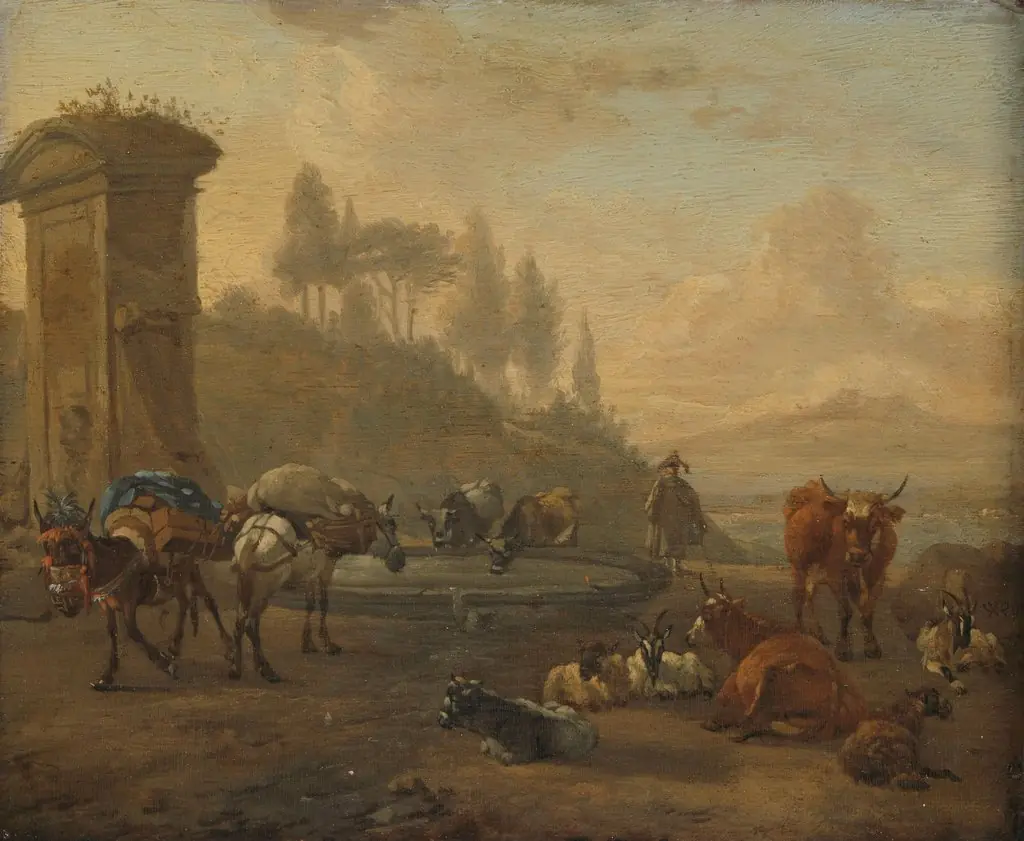
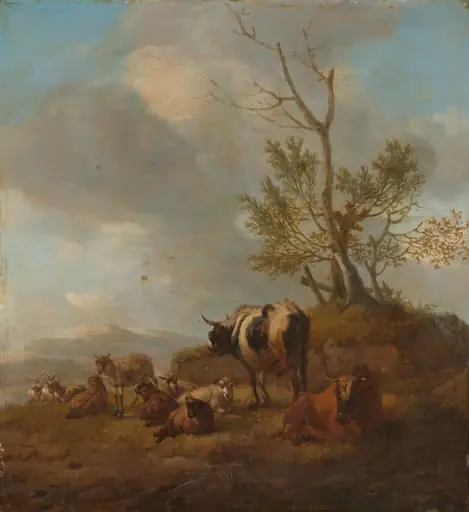
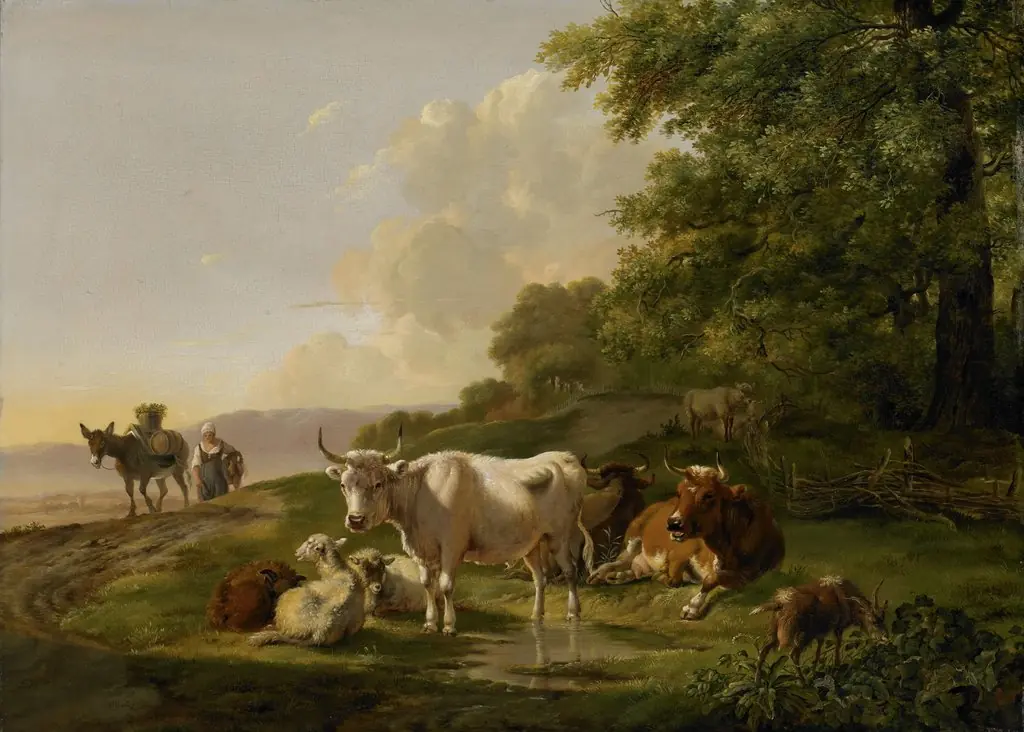
Resting herd
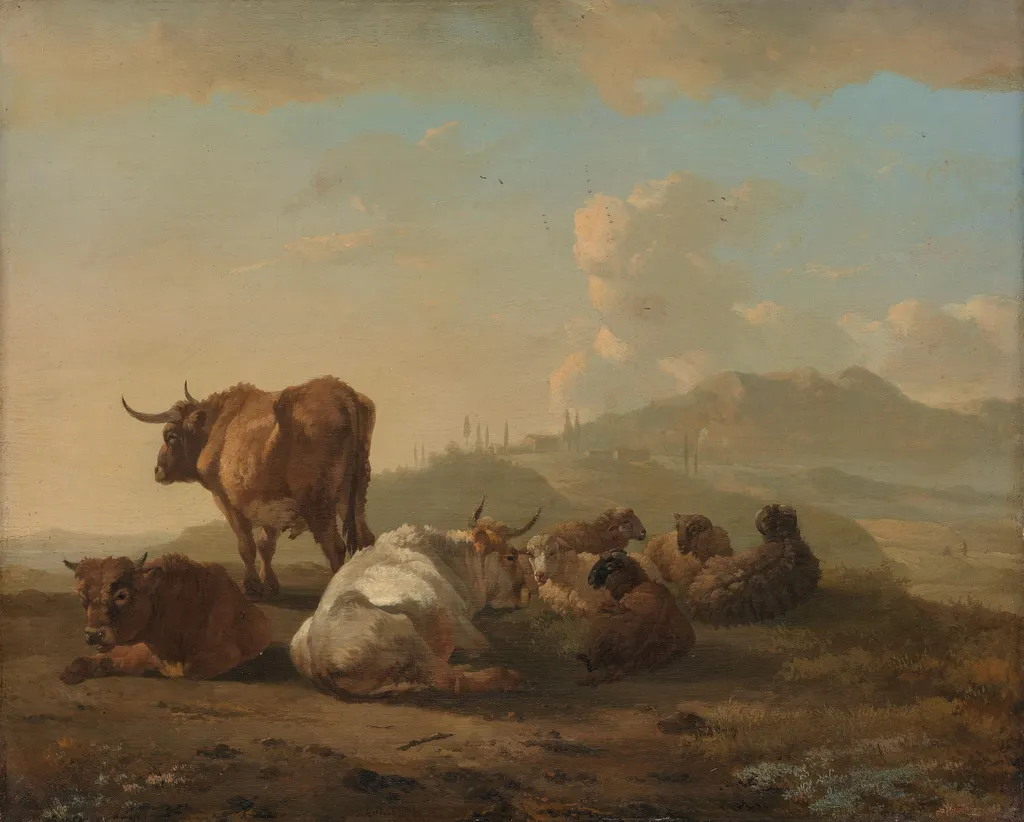
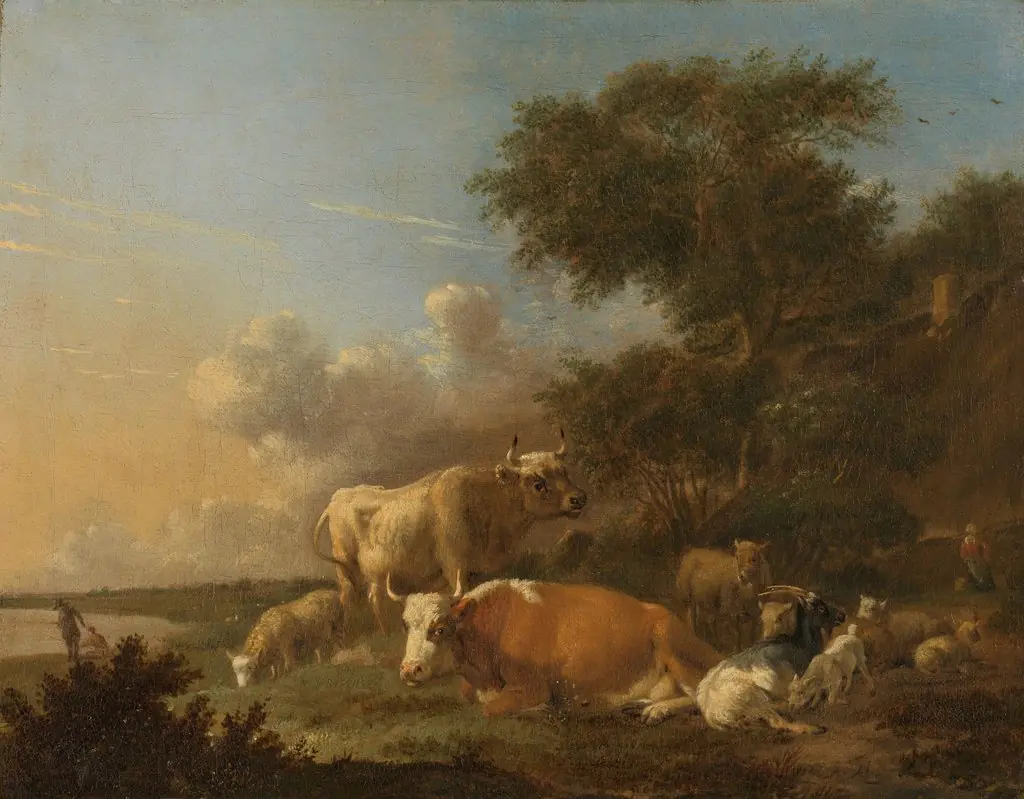
Resting herd is an oil painting by the Dutch Golden Age artist Willem Romeyn. It dates from 1650 and is held in the collection of the Rijksmuseum.
About this work
Technique & Style
The medium consists of oil paint applied to the panel support, a standard technique for Dutch genre and animal paintings of the mid-seventeenth century.
Resting herd is an oil painting executed on a wooden panel by Willem Romeyn in 1650. The work measures 30.5 cm in height and 37.5 cm in width. As an example of animal art, the piece depicts a herd of animals in a resting state, characteristic of Romeyn's genre specialization.
The medium consists of oil paint applied to the panel support, a standard technique for Dutch genre and animal paintings of the mid-seventeenth century.
History & Provenance
The painting Resting herd was created by Willem Romeyn in 1650. Executed in oil on panel, the work measures 30.5 cm in height and 37.5 cm in width. It currently resides in the collection of the Rijksmuseum. Historical records indicate that the artwork was previously owned by Jan Hendrik Cremer.
Resting herd is an oil painting on panel measuring 30.5 cm by 37.5 cm, created in 1650 by Willem Romeyn. It entered the collection of Jan Hendrik Cremer before being acquired by the Rijksmuseum in Amsterdam, where it remains on view in the museum's display of Dutch Golden Age animal paintings.
The work was part of the private collection of Jan Hendrik Cremer and was later accessioned into the Rijksmuseum's holdings, where it has been exhibited as part of the institution's permanent collection showcasing 17th-century Dutch art.
Overview
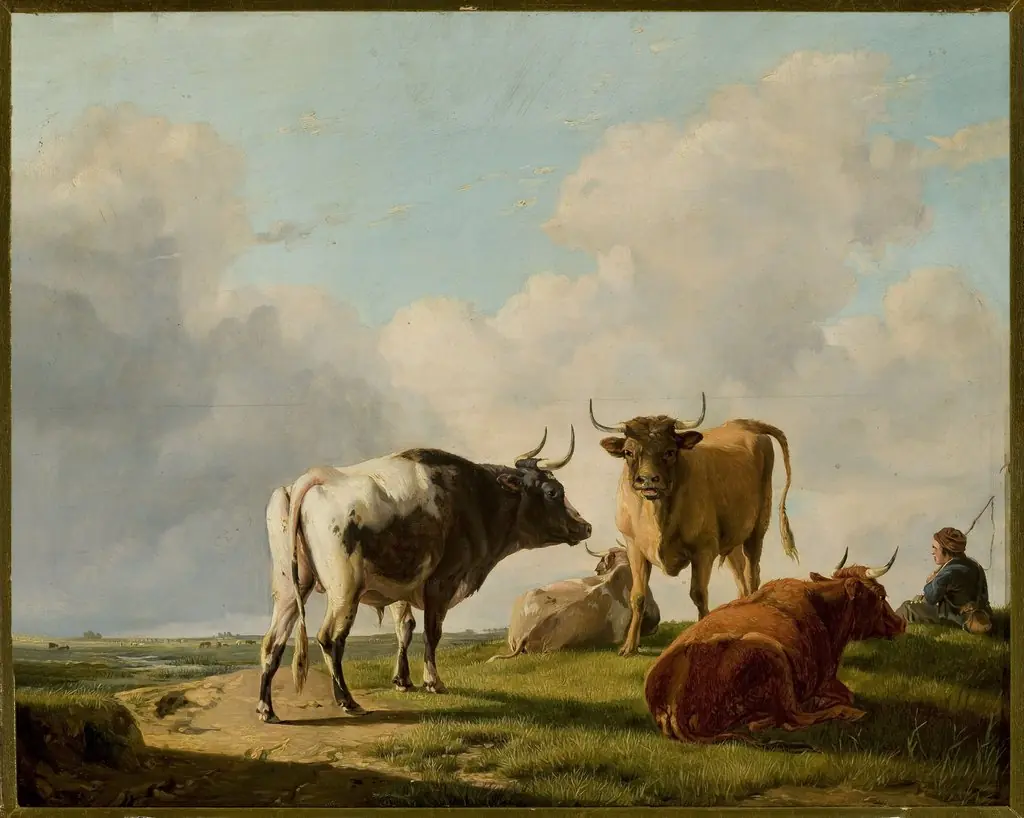
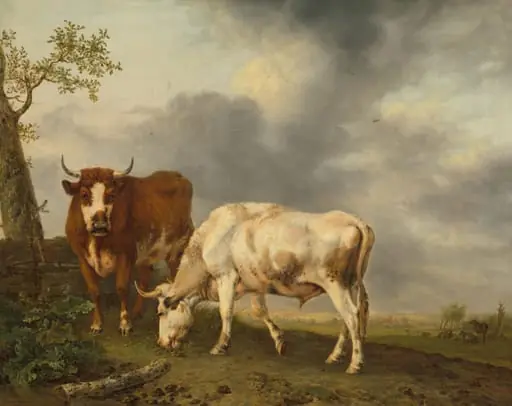
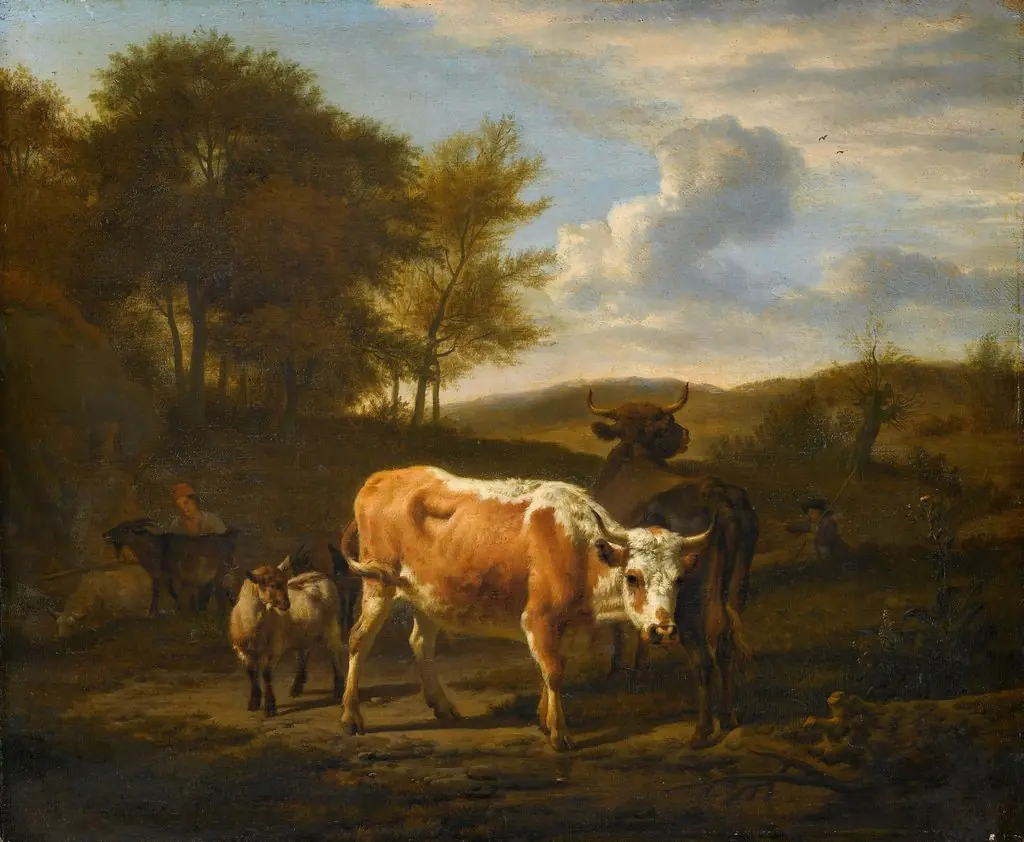
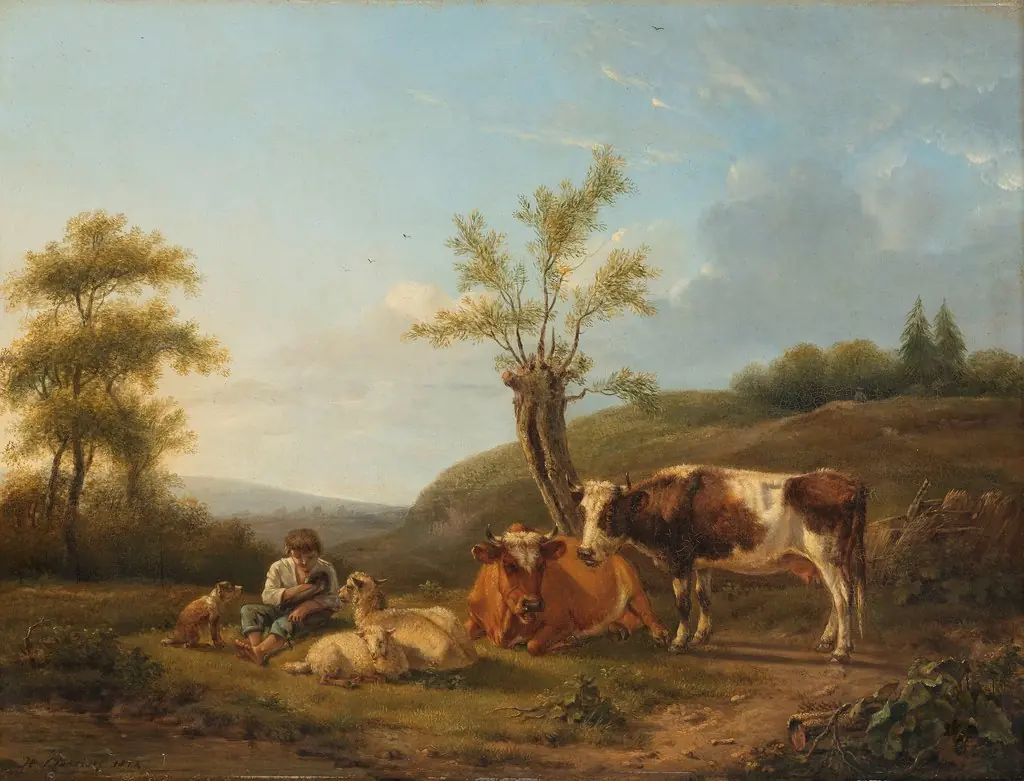
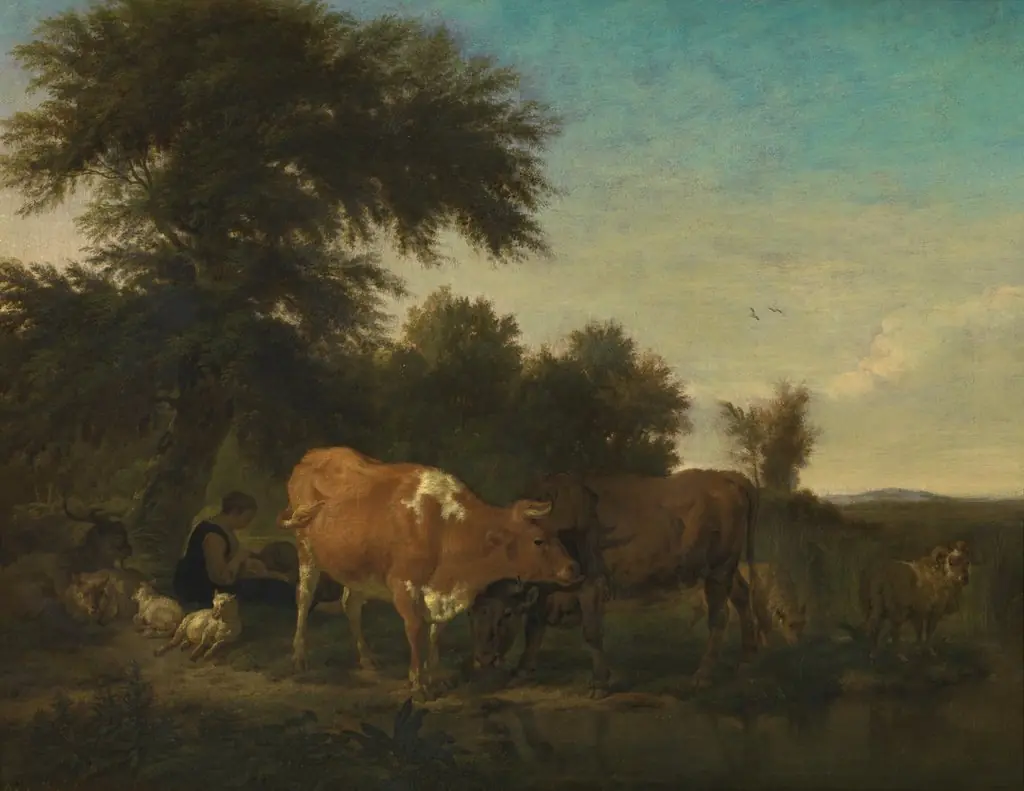
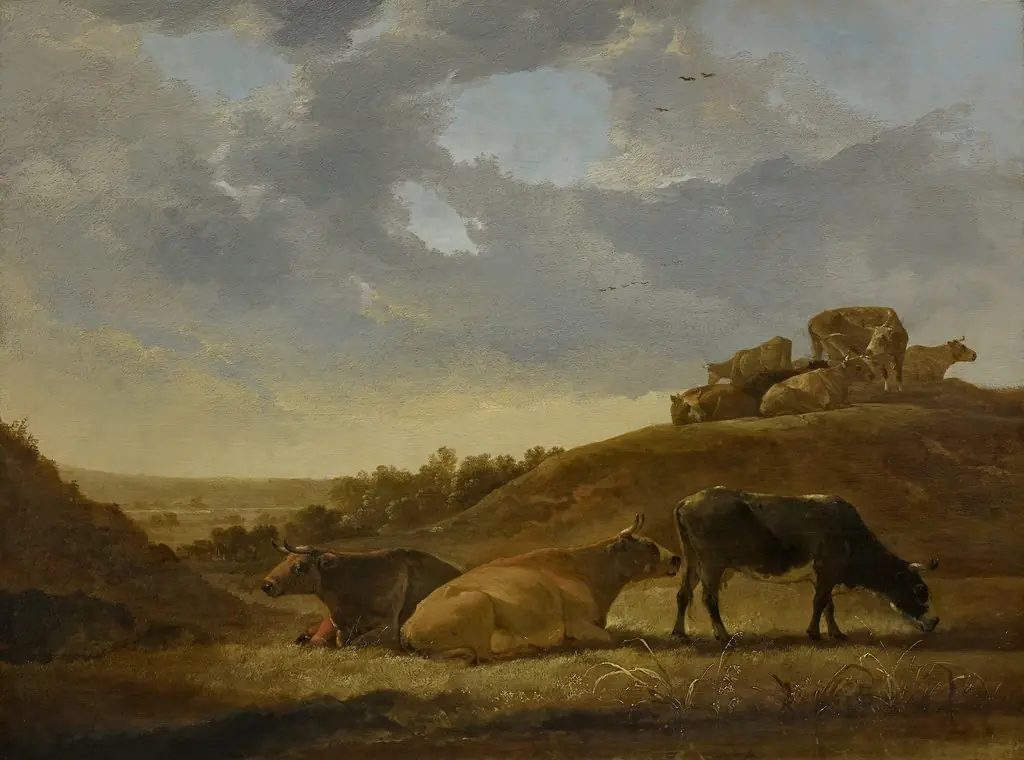
Willem Romeyn’s Resting Herd, executed in oil around 1650, portrays a tranquil scene of cattle gathered in a mist‑filled landscape. The composition centers on a dominant bull with dark, curved horns, while smaller cows lie or stand nearby, their bodies merging with the earthy tones of the ground. A distant village and rolling hills recede into a hazy horizon, suggesting a quiet, pastoral moment.
Subject & Meaning
The painting captures a moment of repose among livestock, emphasizing the natural behavior of the herd within an open field. By juxtaposing the sturdy bull against the more relaxed cows, Romeyn hints at the hierarchy and social dynamics of rural life, while the softened background conveys a sense of timeless, unhurried countryside.
Context
During the Dutch Golden Age, depictions of livestock served both decorative and moral purposes, symbolizing prosperity and the virtues of hard work. Romeyn’s treatment aligns with contemporary trends that favored realistic observation of nature, while the hazy landscape echoes the atmospheric effects favored by his peers.
Own this work as a print
Artist & collection
Artist
Willem Romeyn (1624–1697) was a Dutch Golden Age landscape artist, born in Haarlem.