Artwork
View of New York from New Jersey
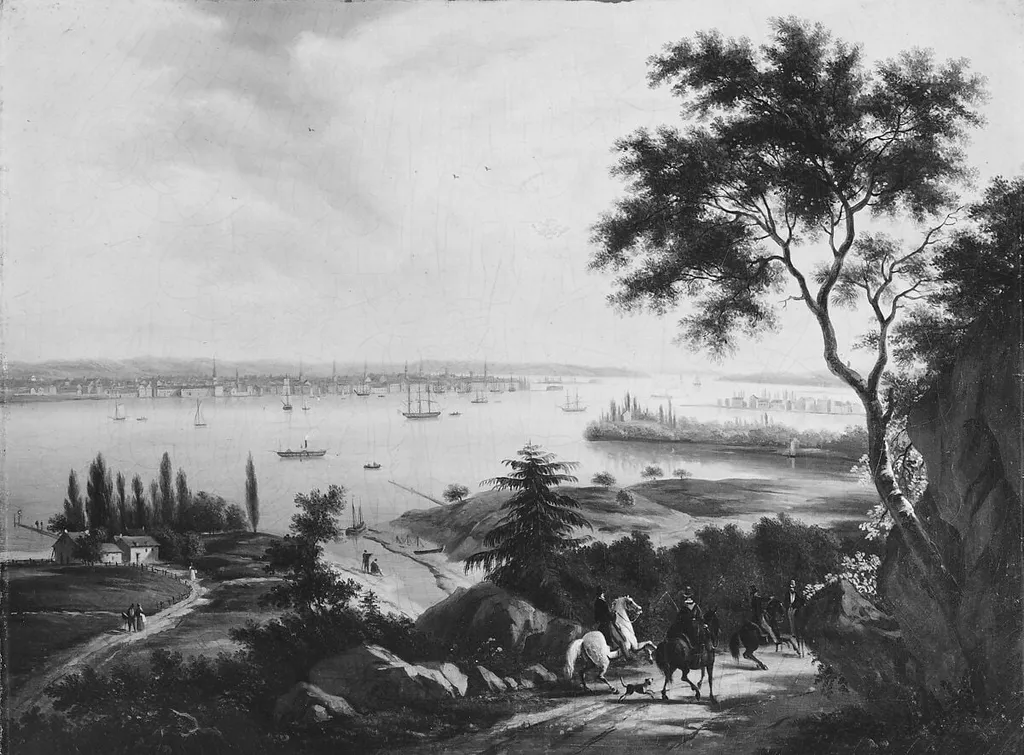
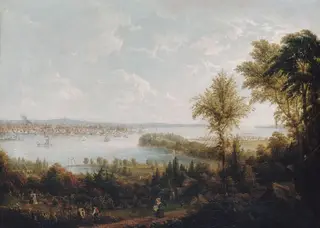
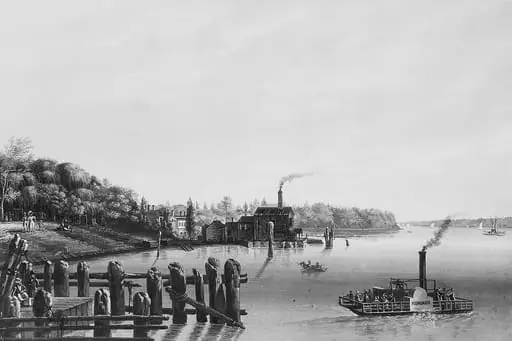
View of New York from New Jersey is an oil painting. It dates from 1850 and is held in the collection of the Metropolitan Museum of Art.
About this work
Subject & Meaning
These elements create a topographical view that also reflects the commercial and travel motifs common in mid-nineteenth-century American landscape painting.
The work titled View of New York from New Jersey (1850) is an anonymous oil on canvas landscape that portrays a river, a sailing ship, a solitary tree, and an equestrian figure within a New Jersey vista looking toward the city. These elements create a topographical view that also reflects the commercial and travel motifs common in mid-nineteenth-century American landscape painting. The painting is part of The American Wing at the Metropolitan Museum of Art, where it is recorded as a landscape genre piece.
Technique & Style
Created around 1850, this anonymous landscape is executed in oil paint on a canvas support. The work measures 53.6 centimeters in height and 71.9 centimeters in width, presenting a horizontal format typical for river views. Stylistically, the painting functions as a landscape depicting a river scene populated by ships, trees, and an equestrian figure.
As part of the American Wing collection at the Metropolitan Museum of Art, the piece reflects mid-nineteenth-century approaches to American topography.
Overview
This oil on canvas, titled "View of New York from New Jersey," offers an early depiction of the burgeoning city. Created by an unknown artist, the painting captures New York before the construction of the Brooklyn Bridge, highlighting its identity as a vibrant port rather than the skyscraper-dominated metropolis it would later become. The work provides a serene, almost nostalgic glimpse into the city's past.
History & Provenance
The creator of this canvas remains anonymous, a common circumstance for artworks from this historical period. Its creation predates the Brooklyn Bridge, firmly placing it in an era when New York functioned primarily as a port city. The perspective, looking across the Hudson River, strongly suggests the artist positioned themselves in New Jersey to capture this specific panorama of the developing city.
Artist & collection

 New York City and Harbor from Weehawken
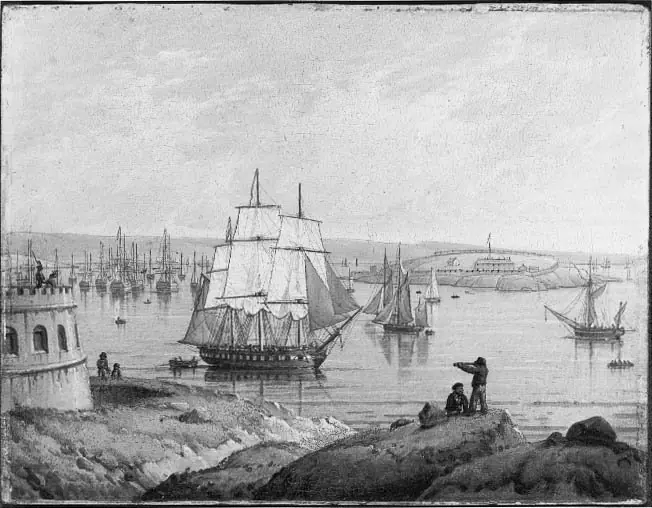 Plimouth Sound
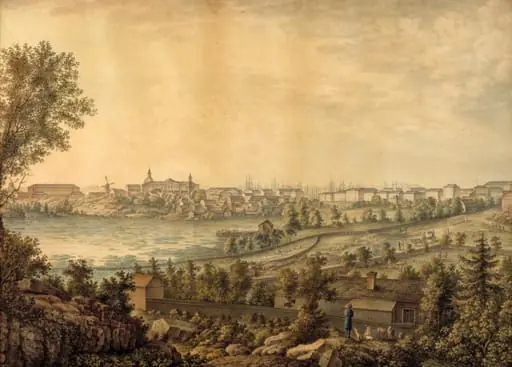 Helsinki nähtynä Kluuvinlahden yli
 Et parti fra Svendborg, set fra Ørkel Slotsbanke
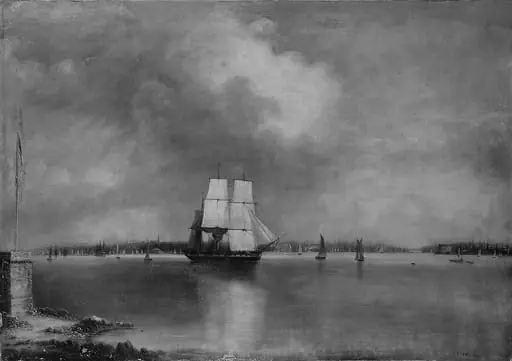 Bay and Harbor of New York from Bedlow's Island
 Et parti fra Svendborg, set fra Ørkel Slotsbanke
 Lake Mendota, Madison, Wisconsin
 Et prospekt af de europæiske factorier i Canton
 View of Detroit in 1836
 View of Hoboken Taken from the Ferry