Artwork
A Gypsy Encampment
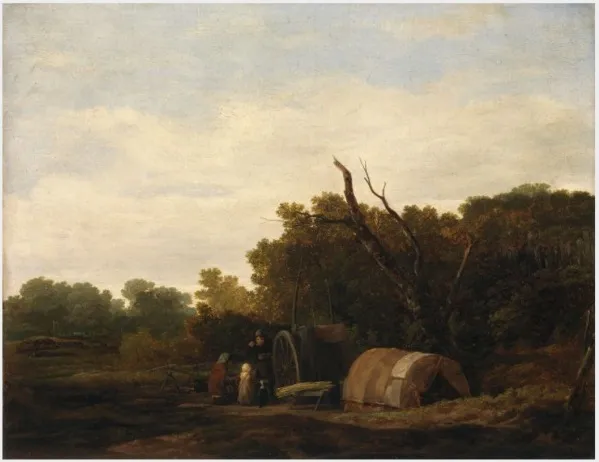
A Gypsy Encampment is an unspecified painting by William Mulready. It dates from 1810 and is held in the collection of the National Gallery of Ireland.
About this work
Overview
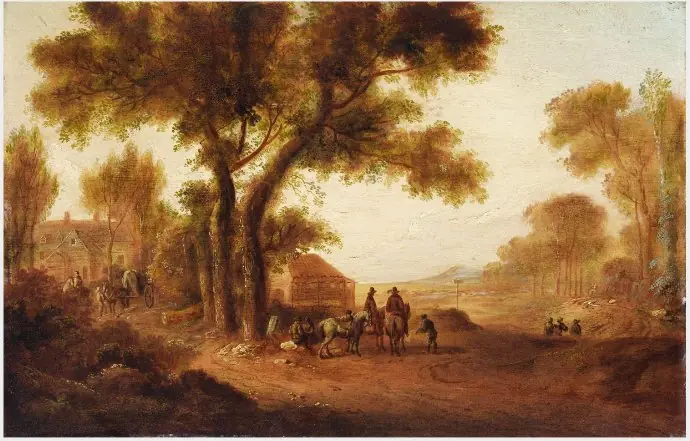
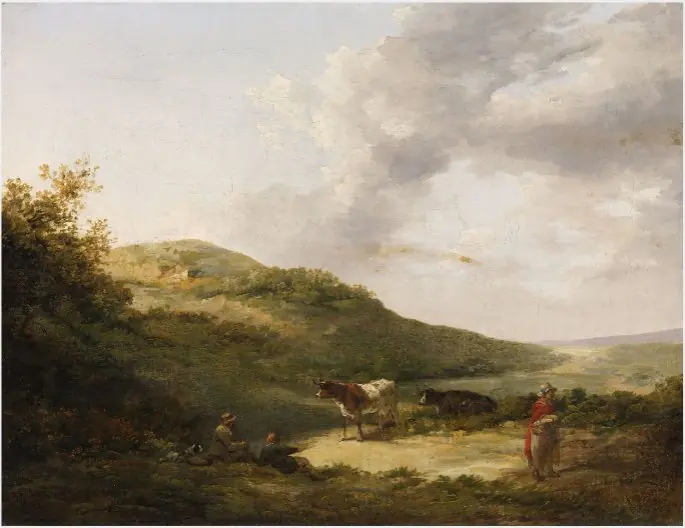
Mulready’s composition captures a quiet moment of daily life, rendered in a restrained palette that conveys both intimacy and the chill of the weather.
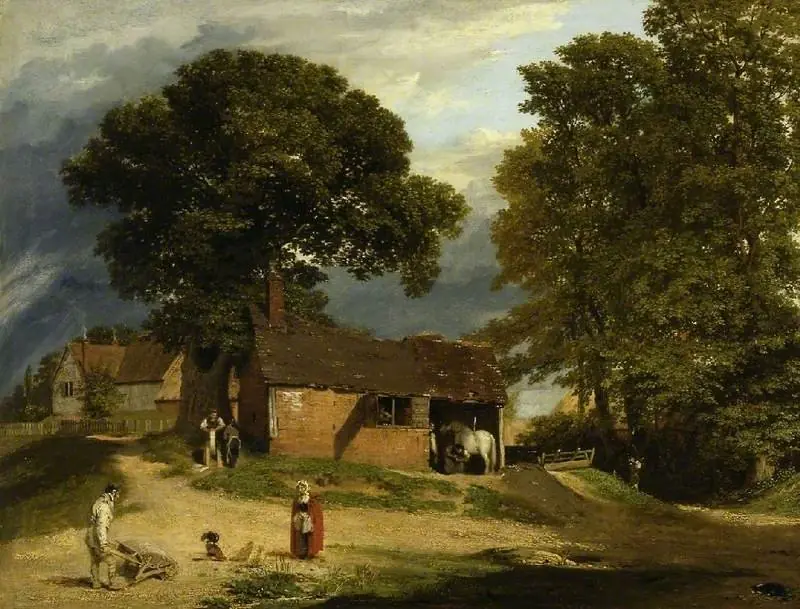
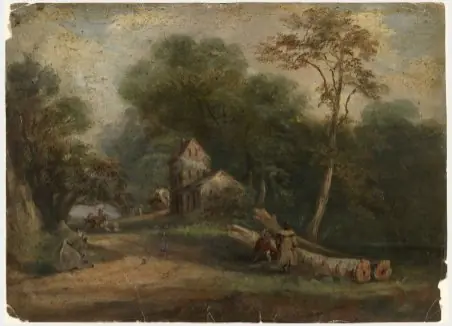
William Mulready’s oil painting A Gypsy Encampment, completed in 1810, is part of the National Gallery of Ireland’s collection. The work presents a modest group of figures gathered beside a canvas shelter within a forested clearing, under a cloud‑filled sky. Mulready’s composition captures a quiet moment of daily life, rendered in a restrained palette that conveys both intimacy and the chill of the weather.
Subject & Meaning
The scene portrays itinerant people at rest, their simple garments and modest belongings, such as a wheelbarrow and a basket, suggesting a transient lifestyle. By focusing on ordinary activities rather than heroic narratives, the painting reflects early‑19th‑century interest in genre subjects that reveal social realities and the humanity of marginalized groups.
Technique & Style
Mulready employs a muted colour scheme, allowing subtle tonal variations to model forms and suggest depth. Light falls softly across the figures, creating gentle contrasts that hint at chiaroscuro without dramatic extremes. The brushwork is careful and detailed, especially in the rendering of textures like fabric, wood, and foliage, contributing to the work’s overall sense of calm realism.
History & Provenance
Created in 1810, A Gypsy Encampment entered the National Gallery of Ireland’s holdings through acquisition in the early twentieth century, though the precise chain of ownership prior to that remains sparsely documented. Its presence in the museum’s collection underscores Mulready’s reputation as a prominent British‑Irish genre painter of his era.
Context
The painting emerges from a period when British and Irish artists increasingly turned to scenes of everyday life, influenced by the Dutch genre tradition and the Romantic fascination with the rural poor. Mulready’s choice of a gypsy camp aligns with contemporary curiosities about nomadic cultures, while his sympathetic portrayal avoids sensationalism.
Artist & collection
Artist
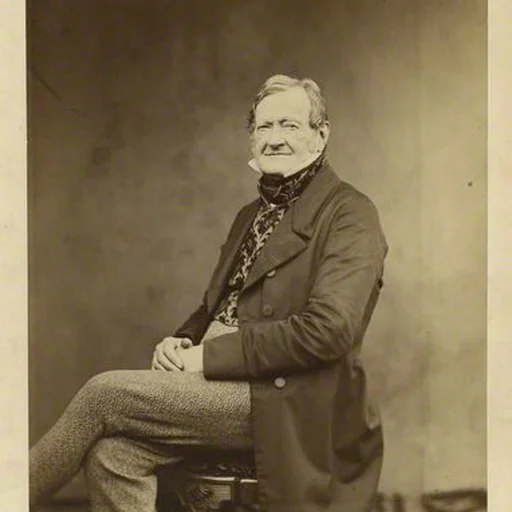
William Mulready was an Irish genre painter living in London. He is best known for his romanticising depictions of rural scenes, and for creating Mulready stationery letter sheets, issued at the same time as the Penny Black postage stamp.