Artwork
The Watermill
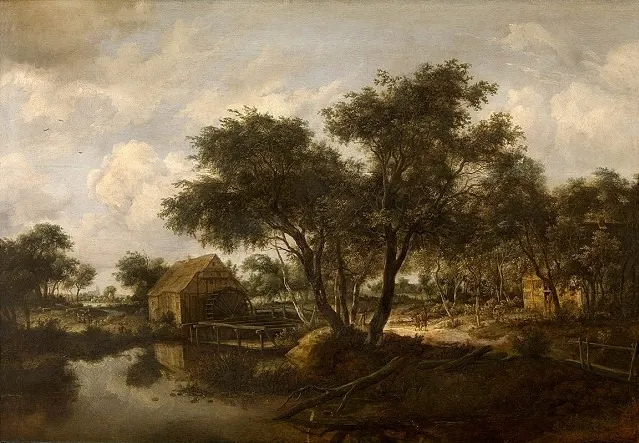
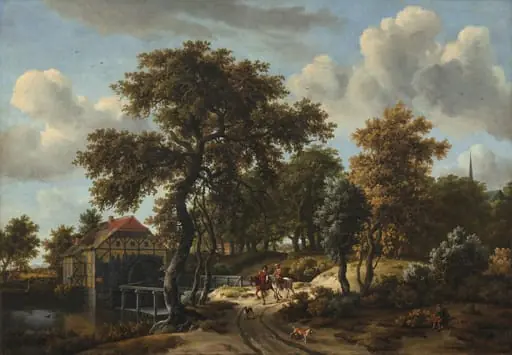
The Watermill is an oil painting by the Dutch Golden Age artist Meindert Hobbema. It dates from 1693 and is held in the collection of the Royal Museum of Fine Arts Antwerp.
About this work
Subject & Meaning
The painting depicts a rural watermill set within a dense grove of trees beside a modest house, conveying the quiet productivity of pre-industrial life.
The painting depicts a rural watermill set within a dense grove of trees beside a modest house, conveying the quiet productivity of pre-industrial life. Hobbema’s composition emphasizes the mill’s wooden wheel and thatched roof, framing the structure between overarching oaks and leafy undergrowth to suggest harmony between human labor and nature. The scene’s subdued palette and stillness evoke a timeless, almost meditative quality, aligning with 17th-century Dutch landscape traditions that celebrated the virtue of industriousness within a tranquil, God-given world.
History & Provenance
The Watermill was painted by Meindert Hobbema in 1685, as established by its inception date. Executed in oil on panel, the work measures 74 by 108 centimeters and depicts a watermill, trees, and a house within a landscape setting.
The painting has been part of the collection of the Royal Museum of Fine Arts Antwerp, where it is currently housed. No documented evidence regarding its commission, early ownership, or intermediate provenance prior to its acquisition by the museum is provided in the available sources.
The Watermill is held in the collection of the Royal Museum of Fine Arts Antwerp, with inventory number 1988-001-001. It was first exhibited publicly in 1992 as part of the museum's Dutch Golden Age retrospective. The work was included in the 2005 exhibition "Hobbema: Landscapes and Light" at the same institution.
Context
Hobbema's 1685 landscape painting depicts a rural watermill scene with trees and a house, reflecting 17th-century Dutch fascination with harmonious village life and water management. The work entered the collection of Antwerp's Royal Museum of Fine Arts early in its history, where it remains displayed today.
Scholarship emphasizes how this painting extends the compositional innovations of Jacob van Ruisdael while showcasing Hobbema's specialized skill in rendering tranquil, sun-dappled countryside settings that defined his mature style.
Overview
Created in 1693, The Watermill is an oil painting by Dutch landscape artist Meindert Hobbema. Executed during the later phase of the Dutch Golden Age, the work exemplifies Hobbema’s focus on tranquil rural settings and is part of the collection of the Royal Museum of Fine Arts in Antwerp.
Technique & Style
Hobbema employs a restrained palette of earth tones and muted greens, rendering the foliage and architecture with delicate brushwork. The sky is rendered in soft, diffused light, and the calm water reflects the surrounding forms, showcasing the artist’s skill in creating depth through subtle tonal variations.
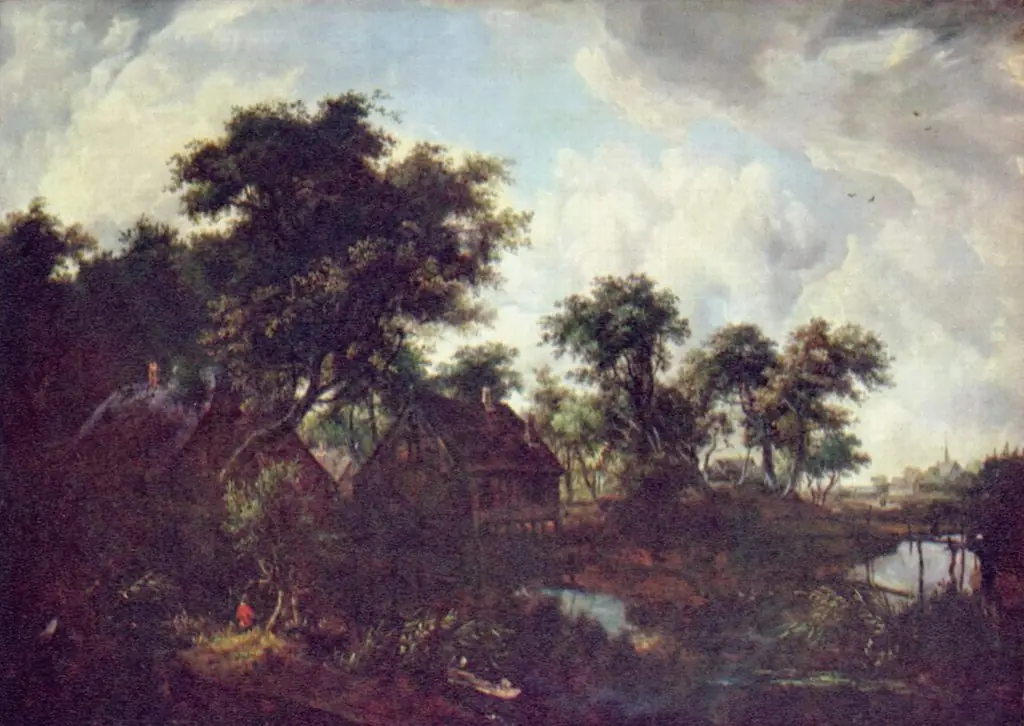
Artist & collection
Artist
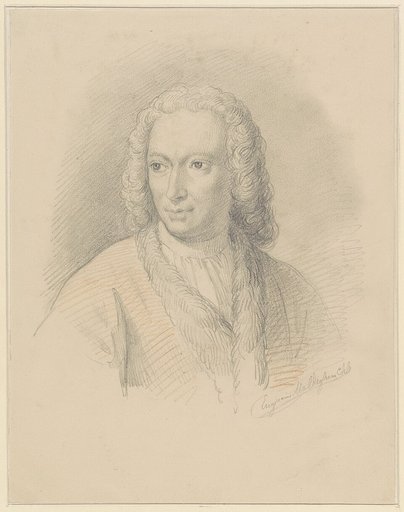
Meindert Lubbertszoon Hobbema (bapt. 31 October 1638 – 7 December 1709) was a Dutch Golden Age painter of landscapes, specializing in views of woodland, although his most famous painting, The Avenue at Middelharnis…

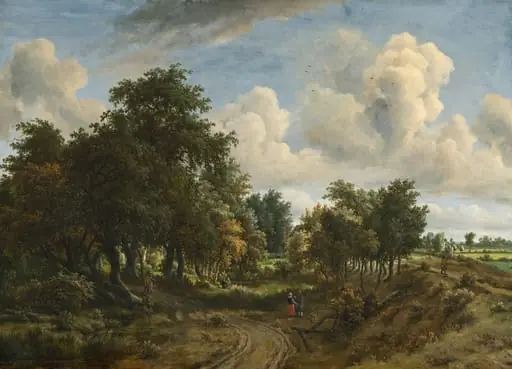
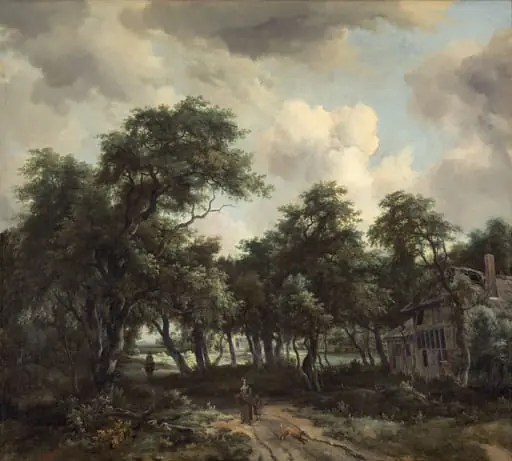
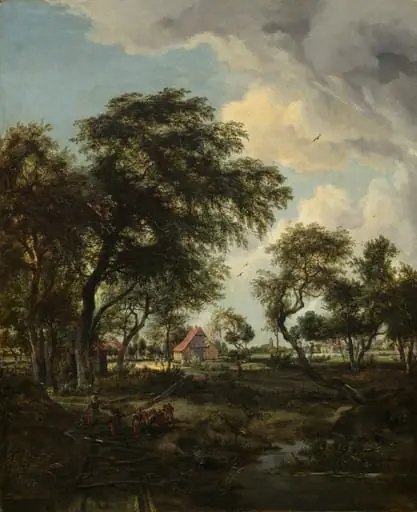
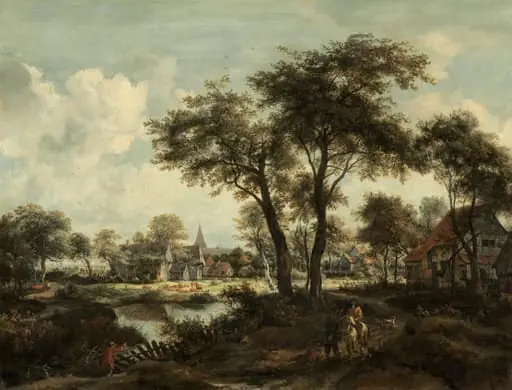
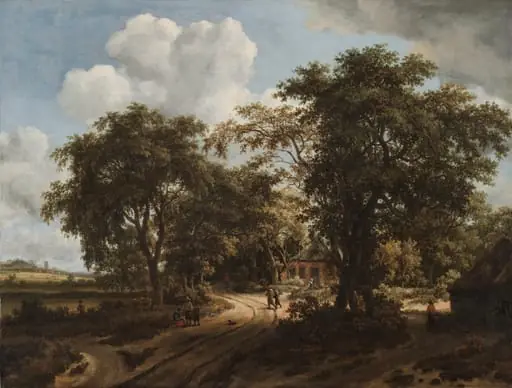 A Cottage in the Woods
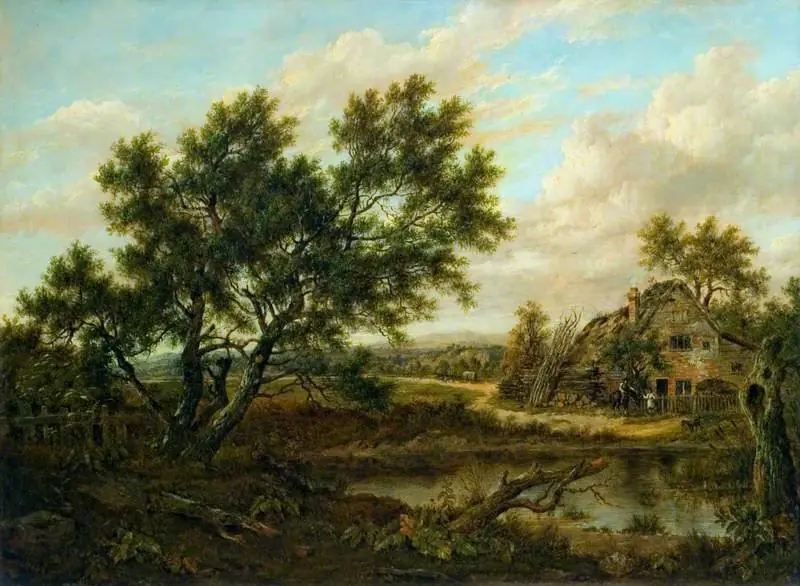 Landscape with a Cottage and Figures
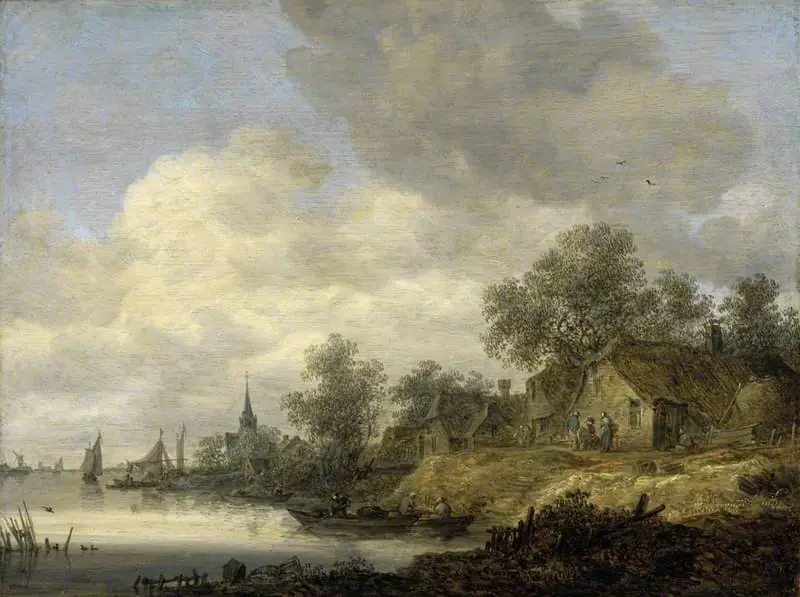 A River Scene
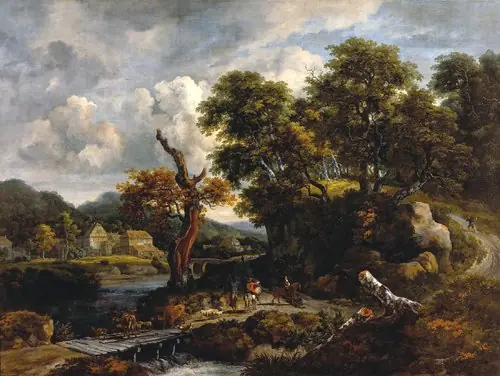 Travellers and shepherds at a crossroads near a dead tree
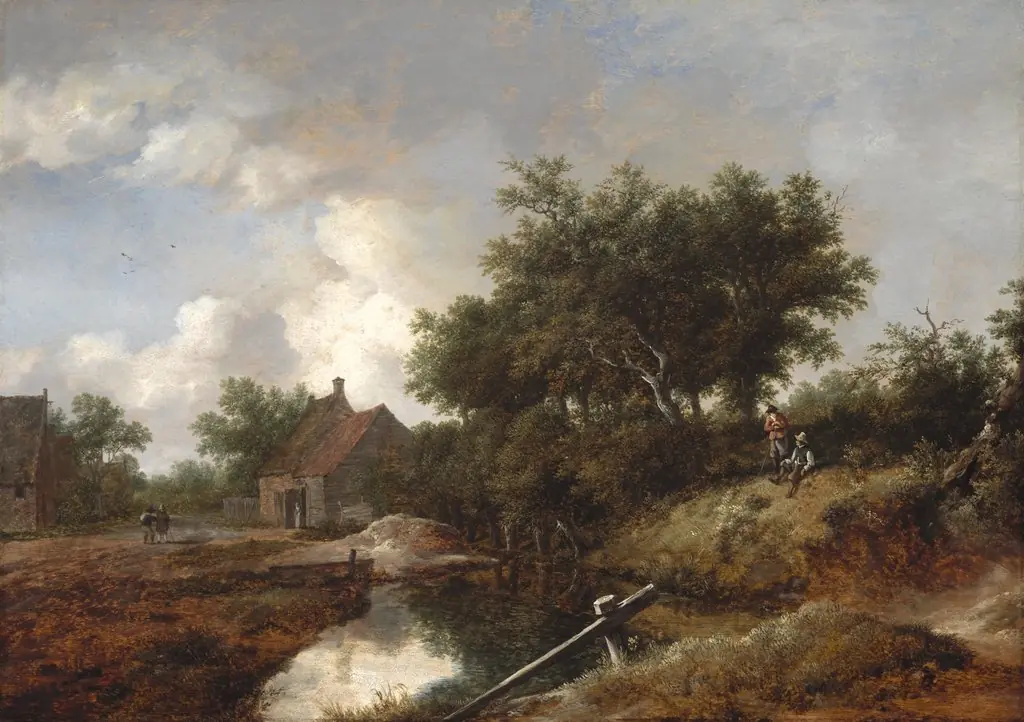 Path Leading to Farms by a Wooded Brook, ca. 1645
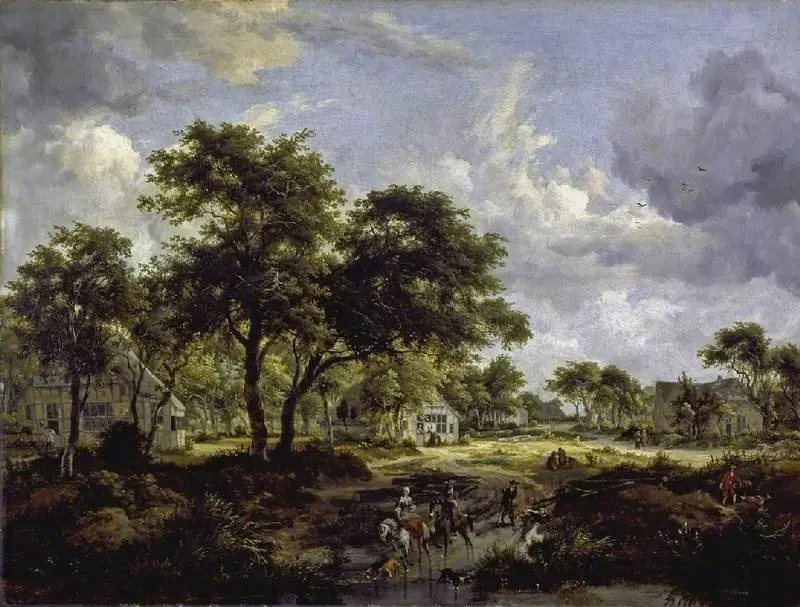 Wooded landscape
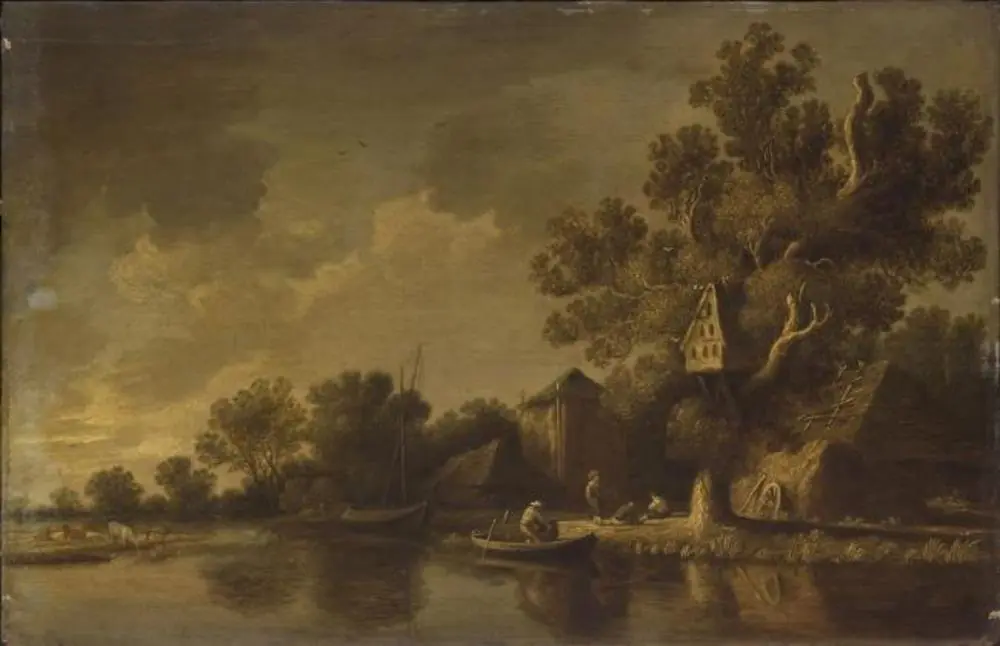 Landscape with a Canal
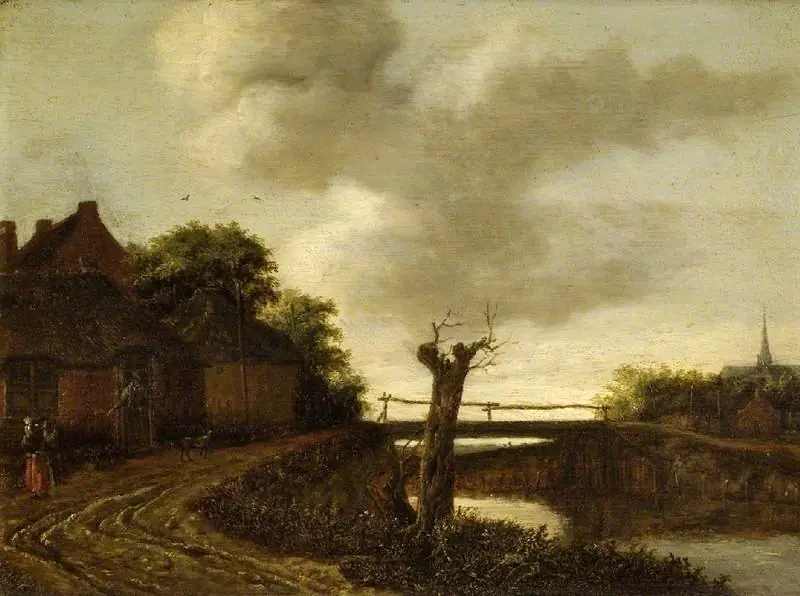 Landscape with a bridge
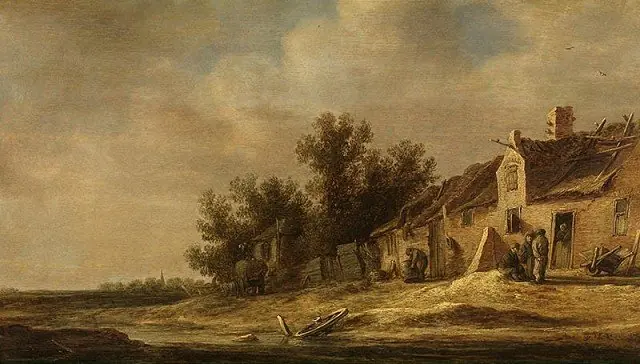 Landscape with Farmhouse
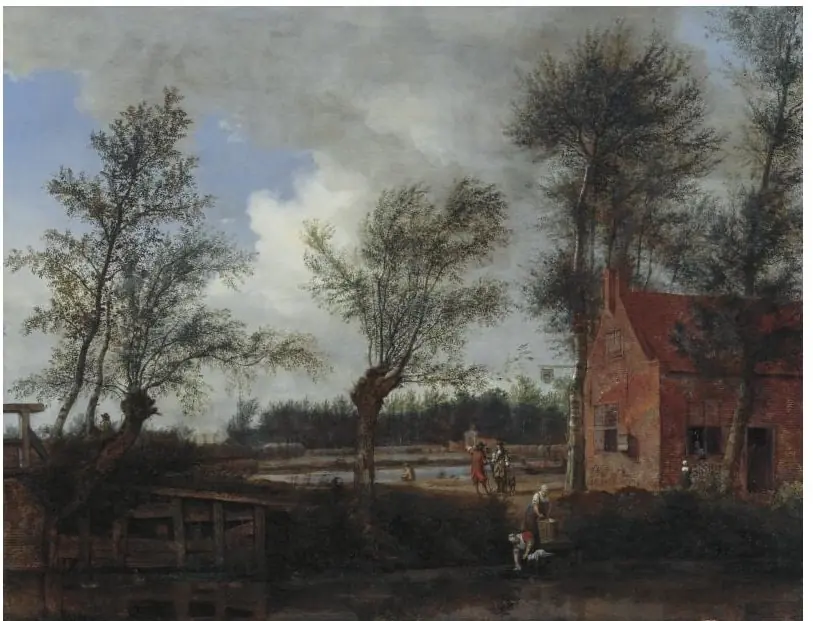 The Black Pig Inn at Maarssen
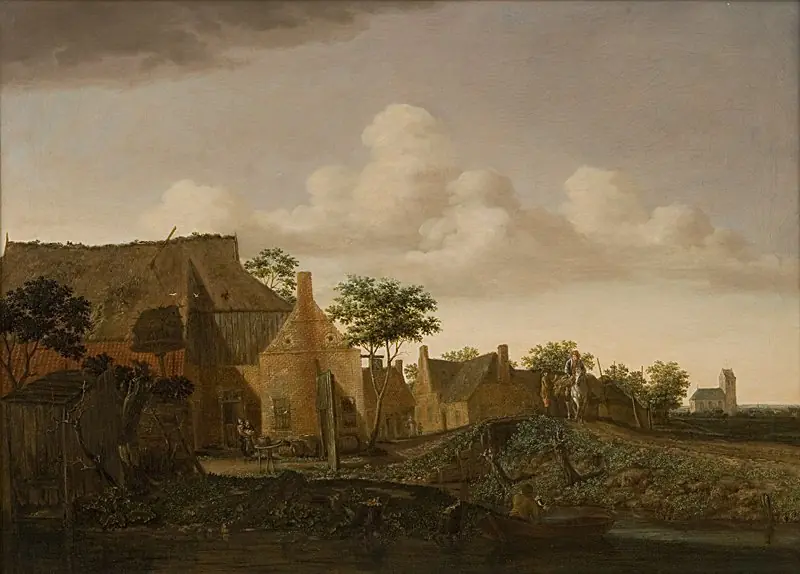 Dutch Village
- The Watermill