Artwork
An Australian mangrove, ebb tide
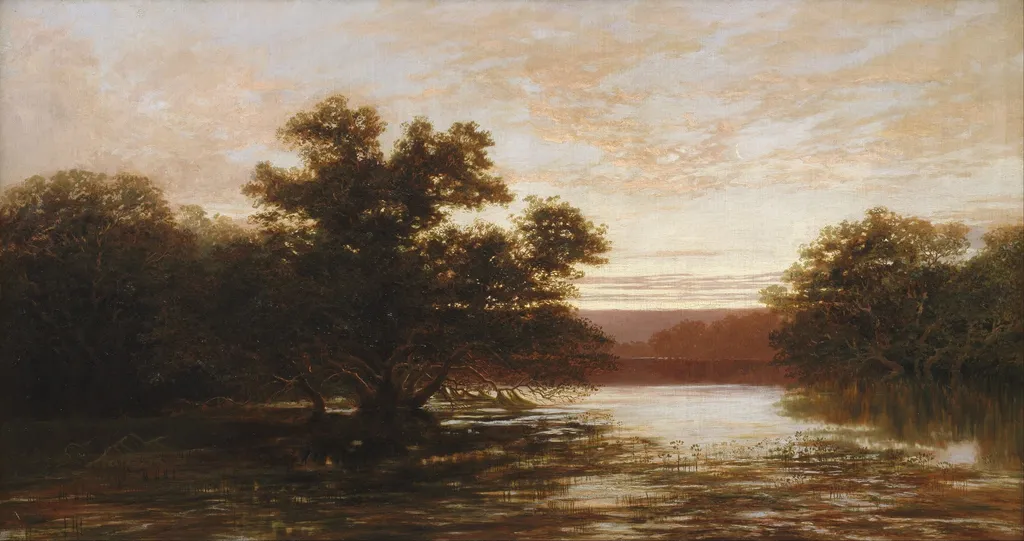
An Australian mangrove, ebb tide is an oil painting by the Impressionist artist William Piguenit. It dates from 1893 and is held in the collection of the Art Gallery of New South Wales.
About this work
Overview
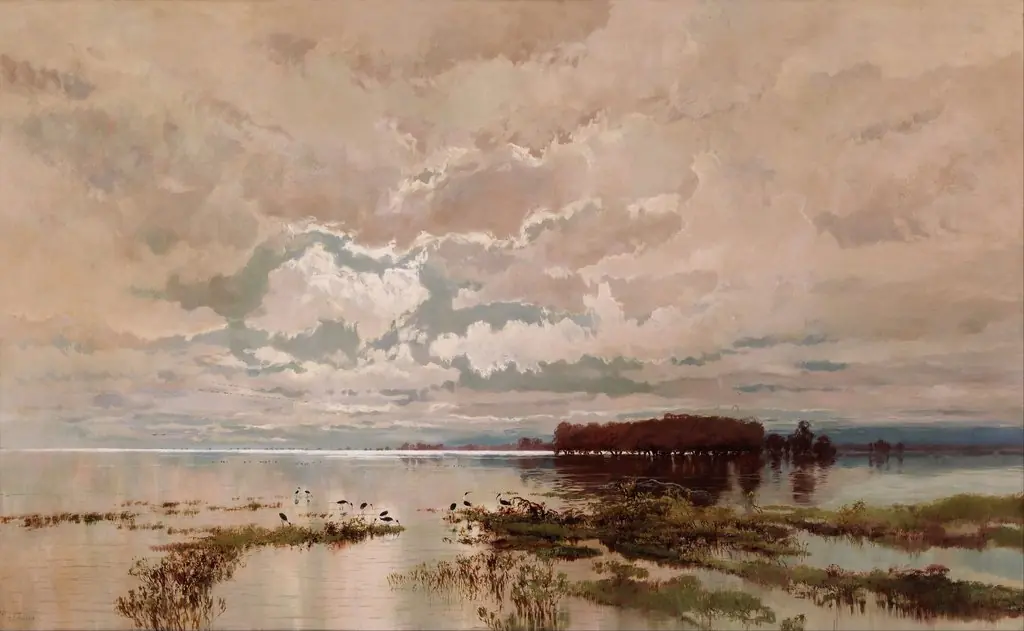
The water surface acts as a reflective plane, mirroring the subtle gradations of the sky and enhancing the sense of stillness associated with the ebb tide.
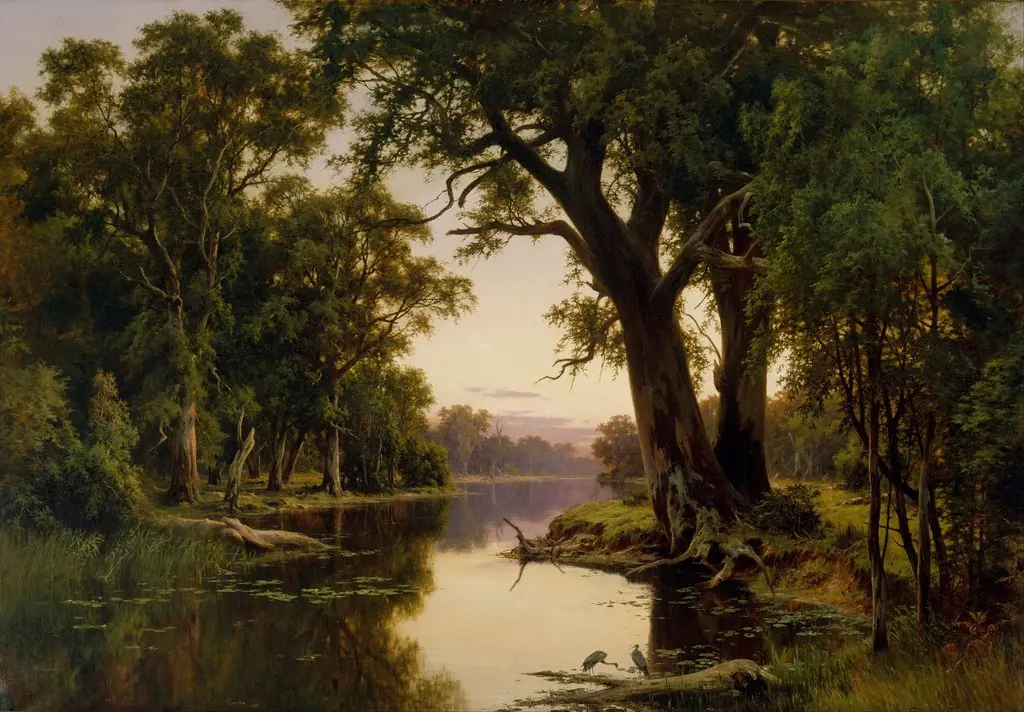
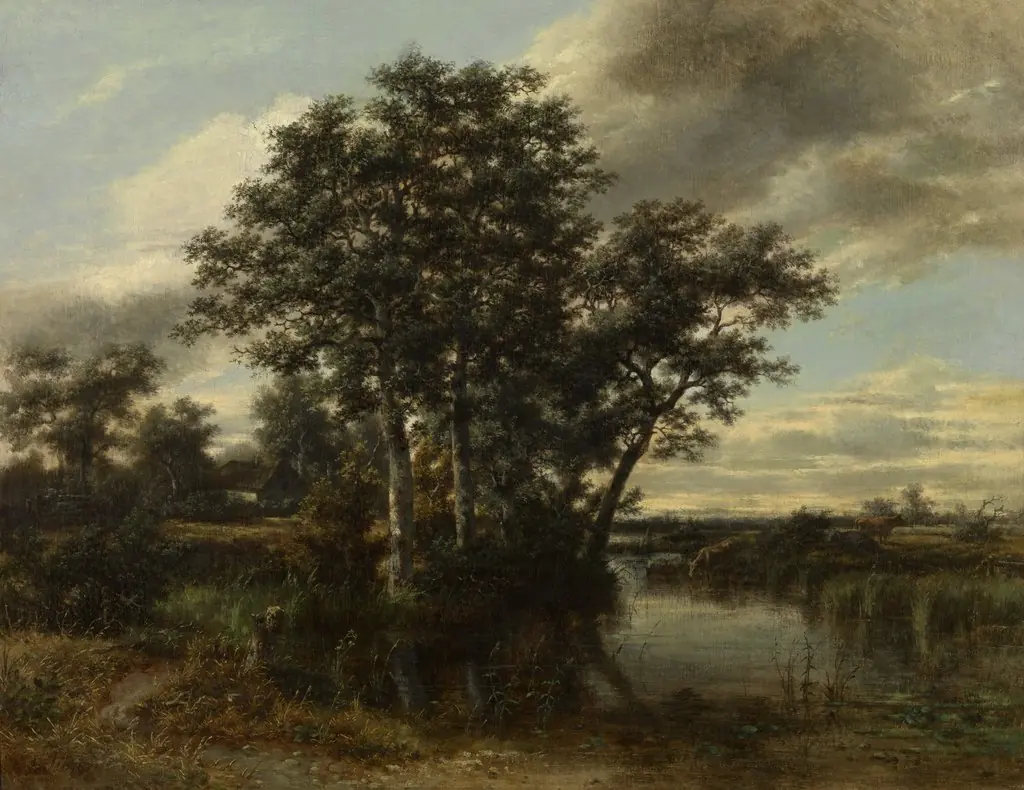
An Australian mangrove, ebb tide (1893) is an oil painting by William Piguenit, a leading figure in the Australian Hudson River School tradition. The work depicts a coastal wetland scene dominated by a central mangrove tree whose gnarled branches extend horizontally over a calm expanse of water. The composition emphasizes the intricate root systems and dense foliage typical of the species, set against a backdrop of surrounding vegetation.
Piguenit employs a palette of earthy greens, browns, and muted ochres to render the natural textures of the bark and mudflats. The water surface acts as a reflective plane, mirroring the subtle gradations of the sky and enhancing the sense of stillness associated with the ebb tide. Executed during the height of Piguenit's career, this piece exemplifies his commitment to detailed, large-scale landscape painting that captures the specific atmospheric and geological conditions of the Australian coast.
The work reflects the artist's broader interest in documenting the unique flora and topography of New South Wales, moving beyond romanticized European conventions to present a distinctively local environment with scientific observation and painterly precision.
Subject & Meaning
The scene captures a typical tidal mangrove environment, emphasizing the interplay between land and water at ebb tide. By focusing on the solitary tree and its mirrored reflection, the painting suggests a moment of stillness and transition, inviting contemplation of the delicate balance within these ecosystems.
Technique & Style
Executed in oil, Piguenit employs a muted palette of greens, browns, grays and blues, allowing the natural tones of the swamp to dominate. Visible brushwork creates a textured surface, while careful chiaroscuro models the foliage and water, imparting depth and atmospheric perspective that convey the damp, low‑light conditions of the tide.
History & Provenance
Completed in 1893, the work reflects Piguenit’s mature period of landscape painting, during which he documented Australian scenery with scientific accuracy. It entered the collection of the Art Gallery of New South Wales, where it remains on display as part of the institution’s representation of 19th‑century Australian art.
Artist & collection