Artwork
Catskill Clove in Palingsville
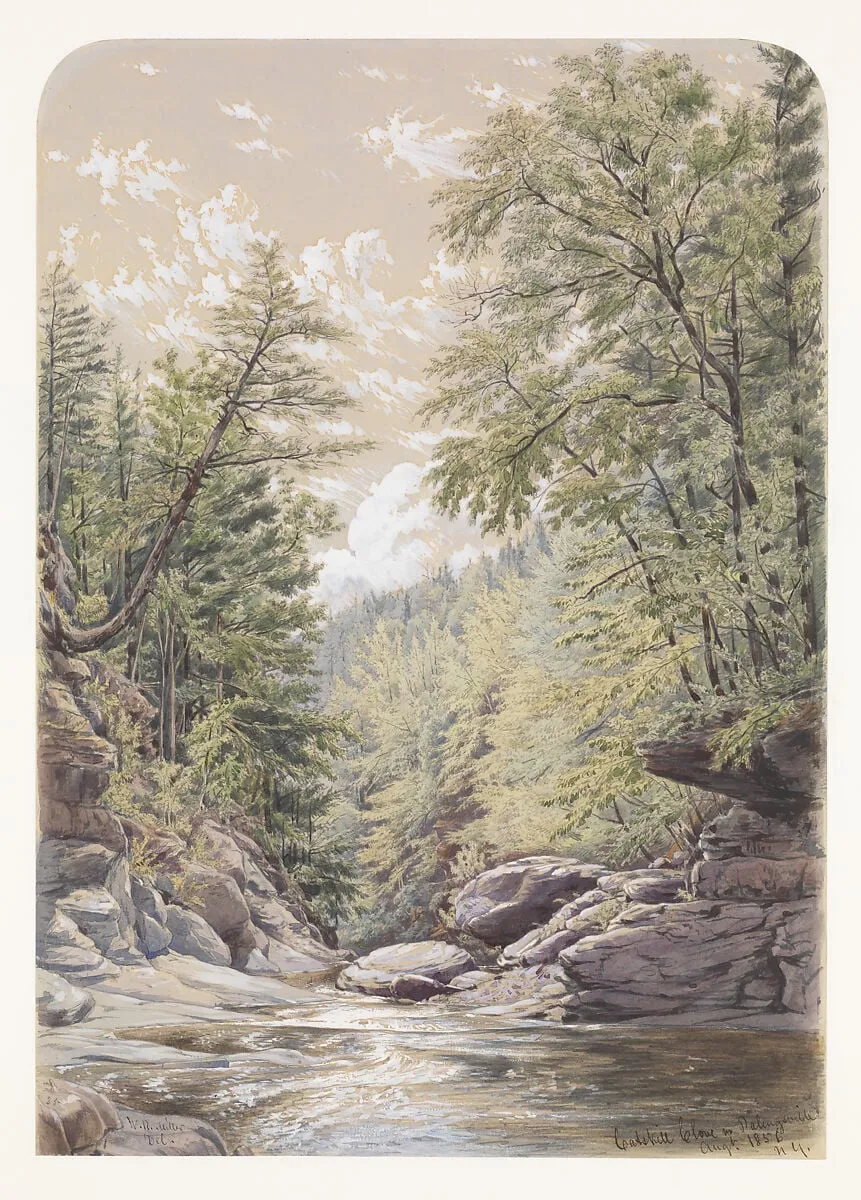
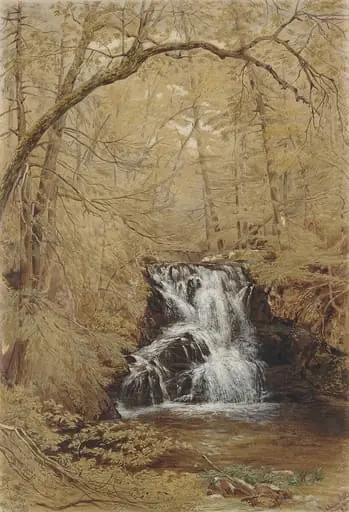
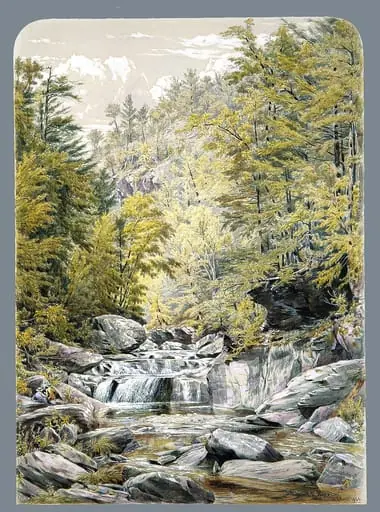
Catskill Clove in Palingsville is a gouache work on paper by the Hudson River School artist William Rickarby Miller. It dates from 1856 and is held in the collection of the Metropolitan Museum of Art.
About this work
Watercolor was still new in America, and he used it to show the freshness of the scene, like the paper itself is breathing.
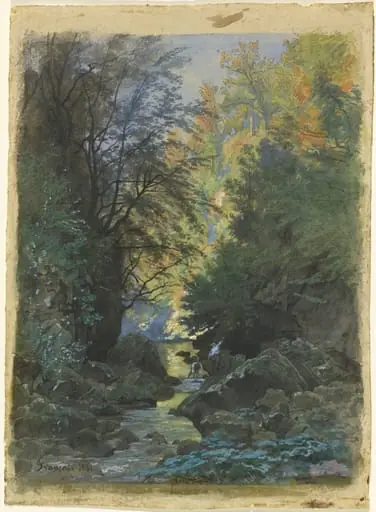
You’re looking at a quiet stream winding through thick green trees, sunlight dappling the water. The Catskill Mountains rise in the distance, hazy and soft.
Miller painted this in 1856, when most artists were working in oil. Watercolor was still new in America, and he used it to show the freshness of the scene, like the paper itself is breathing. The light green background peeks through, making the whole thing feel alive.
If you like this, check out other watercolor landscapes from the same time.
Subject & Meaning
The painting shows the Catskill Mountains as they appear in the narrow gorge of Palingsville, a setting identified as a Catskill Clove. A tree stands within the composition, underscoring the focus on the natural environment. As a landscape work housed in the American Wing of the Metropolitan Museum of Art, it exemplifies 19th‑century American artistic interest in untouched scenery.
The depiction of rugged terrain and vegetation functions as visual evidence of the region’s wilderness character, reflecting the era’s romantic view of nature as both majestic and instructive.
Technique & Style
Executed in 1856, the work is rendered in watercolor and gouache over graphite on light green wove paper, measuring 50.5 × 35.7 cm. The layered application of translucent washes and opaque body color heightens the atmospheric recession of the Catskill Clove, while graphite underdrawing remains visible in foliage and rock contours. The handling favors delicate stippling for distant foliage and broader, wet-in-wet passages for sky and mist, aligning with mid-nineteenth-century American watercolor practice. The light green tint of the paper subtly modulates the overall tonality, reinforcing the luminous effect typical of Hudson River School tonal landscapes.
History & Provenance
Catskill Clove in Palingsville was created in 1856 by the American artist William Rickarby Miller. Executed as a landscape, the work combines watercolor, gouache, and graphite on light green wove paper. The piece is currently held in the collection of the Metropolitan Museum of Art, where it is classified within the American Wing. The artwork depicts the Catskill Mountains and is noted for its environmental subject matter.
Catskill Clove in Palingsville, a watercolor, gouache, and graphite work on light green wove paper by William Rickarby Miller dated 1856, is held in the collection of the Metropolitan Museum of Art, classified under The American Wing. The Wikidata record for the work places it within the museum's holdings and identifies its location as the Metropolitan Museum of Art. No specific accession number or inventory identifier is provided in the available sources, and no exhibition history is documented.
The sources confirm the institutional holding but do not supply accession details, loan records, or past exhibition venues for this landscape.
Overview
William Rickarby Miller's Catskill Clove in Palingsville, executed in 1856, captures a serene woodland scene within the Catskill Mountains. The composition centers on a quiet stream meandering through dense foliage, where dappled sunlight filters through the canopy to illuminate the water's surface. In the background, the mountain ridges recede into a hazy, atmospheric distance, establishing a sense of depth and tranquility.
Miller rendered the work using watercolor, gouache, and graphite on light green wove paper, a medium choice that distinguishes it from the oil paintings dominant among his Hudson River School contemporaries. This piece reflects Miller's dedication to capturing the specific light and texture of the American landscape during the mid-19th century. By utilizing watercolor, he emphasized the freshness and immediacy of the natural environment, showcasing the medium's capacity for luminous detail.
The work stands as a significant example of Miller's contribution to American landscape art, demonstrating his skill in translating the subtle tonal variations of the Catskill region onto paper.
Context
In 1856, watercolor was still emerging as a significant artistic medium in the United States, with many artists preferring the established tradition of oil painting. William Rickarby Miller was among those who explored its potential, utilizing its unique properties to render landscapes with a lighter touch and a more spontaneous feel. His work contributes to the developing history of American watercolor painting, offering a fresh perspective on familiar natural subjects.
Artist & collection