Artwork
Archduke Leopold Wilhelm (1614-1662), governor of the Netherlands.
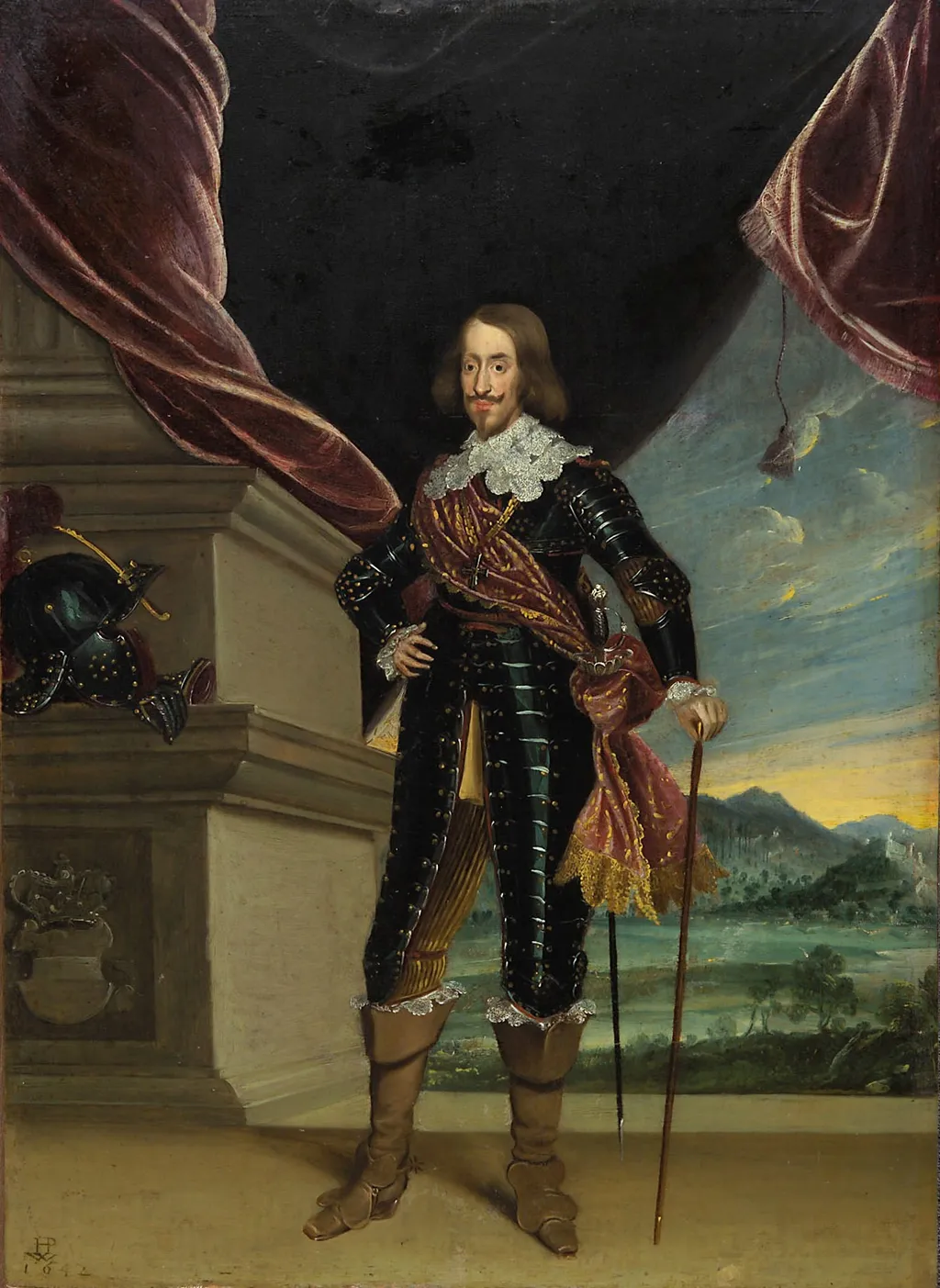
Archduke Leopold Wilhelm (1614-1662), governor of the Netherlands. is an oil painting by the Flemish Baroque painting artist Wolfgang Heimbach. It dates from 1642 and is held in the collection of the Kunsthistorisches Museum.
About this work
Subject & Meaning
As a formal portrait, the piece functions to represent the status and identity of the Archduke during his tenure as governor.
The work is a portrait depicting Archduke Leopold Wilhelm of Austria, who served as the governor of the Netherlands. Created by Wolfgang Heimbach in 1642, the painting identifies the subject as the primary focus of the composition. As a formal portrait, the piece functions to represent the status and identity of the Archduke during his tenure as governor.
The visual representation centers entirely on the individual, establishing his presence as the main subject of the artwork.
Technique & Style
Executed in 1642 by Wolfgang Heimbach, the portrait is painted in oil on a copper support, a combination that yields a smooth, finely detailed surface suited to small-scale works. The handling is precise, with meticulous attention to facial features and the textures of costume and accessories, reflecting the refined tastes of its sitter and the conventions of Northern European court portraiture. The composition is restrained yet authoritative, centering on the three-quarter-length figure against a neutral ground, emphasizing presence through controlled modeling and subtle gradations of tone rather than dramatic setting.
History & Provenance
The portrait of Archduke Leopold Wilhelm was painted by Wolfgang Heimbach in 1642 on copper, as recorded by both institutional documentation and the work’s Wikidata entry.
It entered the collection of the Kunsthistorisches Museum, where it remains located, aligning with the painting’s documented presence in that institution. The work’s small dimensions (31.5 × 22.7 cm) and copper support correspond to the technical specifications associated with Heimbach’s portraiture of the archduke.
The portrait of Archduke Leopold Wilhelm by Wolfgang Heimbach is held in the collection of the Kunsthistorisches Museum in Vienna. Created in 1642, the work is executed in oil paint on a copper support. The painting measures 31.5 cm in height and 22.7 cm in width.
The provided sources do not contain specific inventory or accession numbers, nor do they list any exhibition history for this artwork.
Overview
Wolfgang Heimbach’s 1642 portrait of Archduke Leopold Wilhelm is executed on a copper plate, a medium that lends the work a luminous surface. The figure stands in an interior setting, his posture confident, with a cane in his left hand and his right hand placed on his hip. The composition is framed by a stone wall, a red curtain, and a distant landscape visible through an open space behind him.
Context
The painting belongs to a tradition of 17th‑century portraiture that emphasized the political and military roles of aristocratic patrons. By portraying Leopold Wilhelm in armor within an elegant interior, Heimbach aligns the archduke with contemporary ideals of sovereign authority, while the inclusion of a tranquil landscape hints at the broader cultural interests of the Habsburg court during the Baroque era.
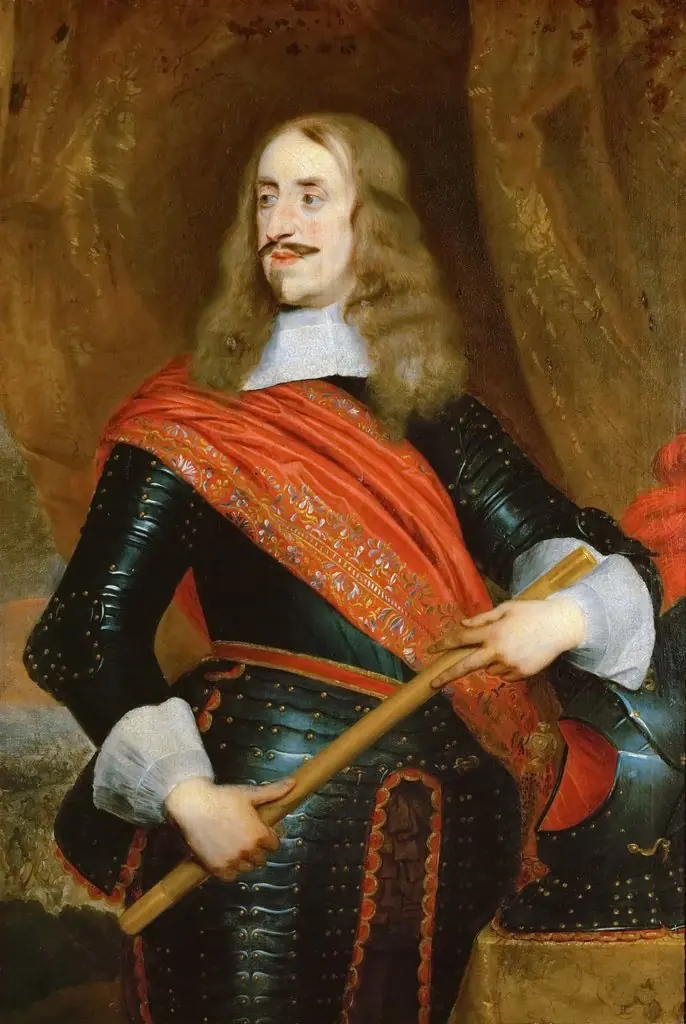
Artist & collection
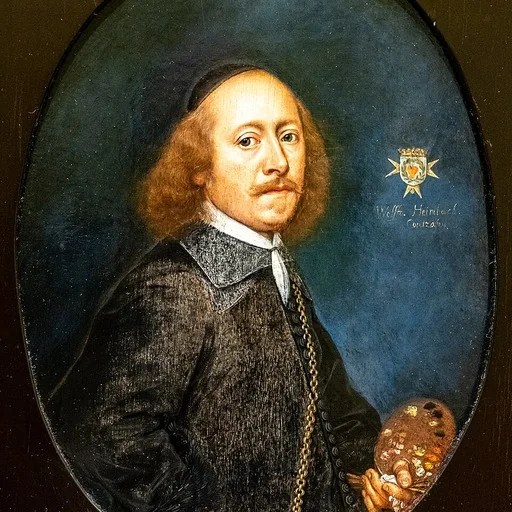
Artist
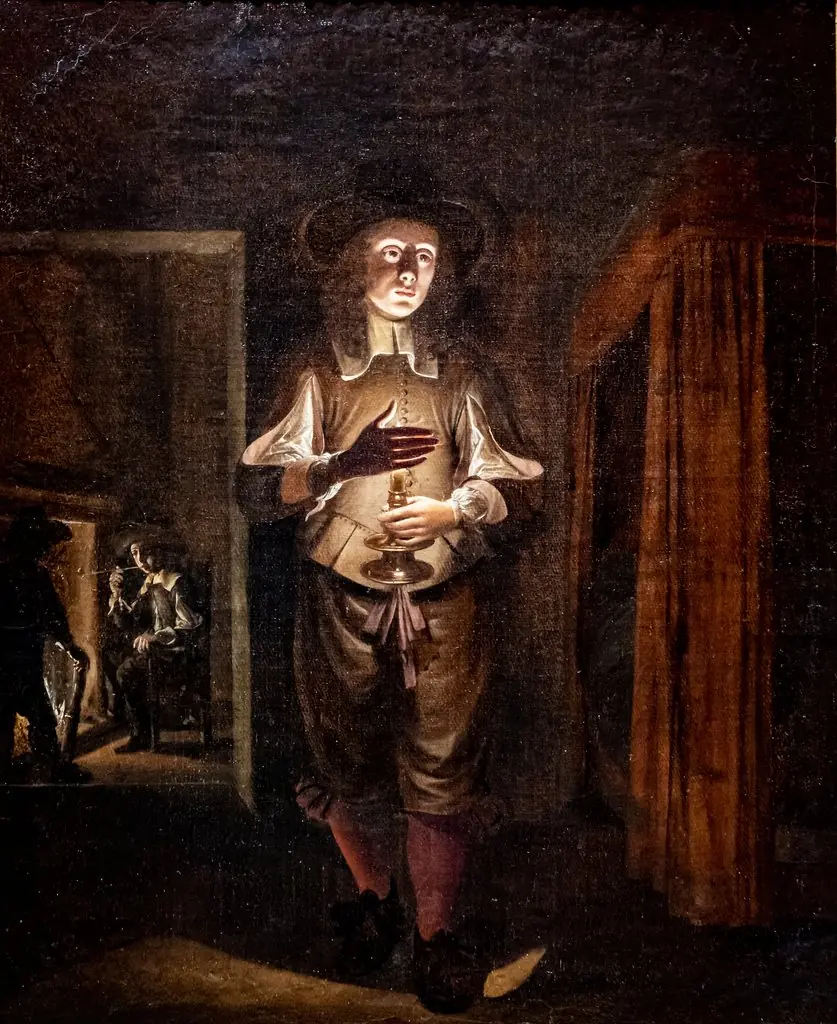
Wolfgang Heimbach (1615 – 1678) was a North German Baroque painter, mostly active in Denmark.

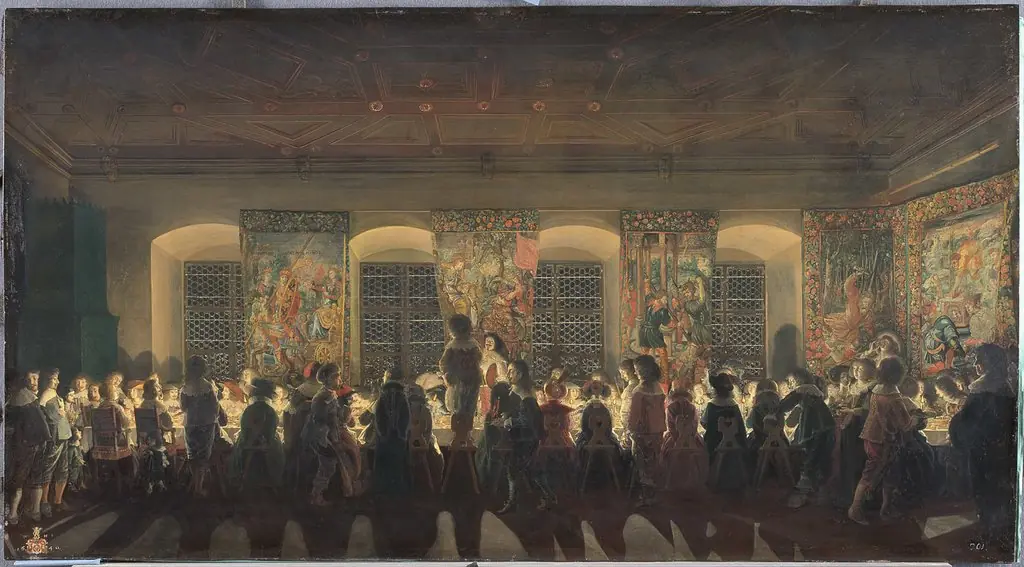
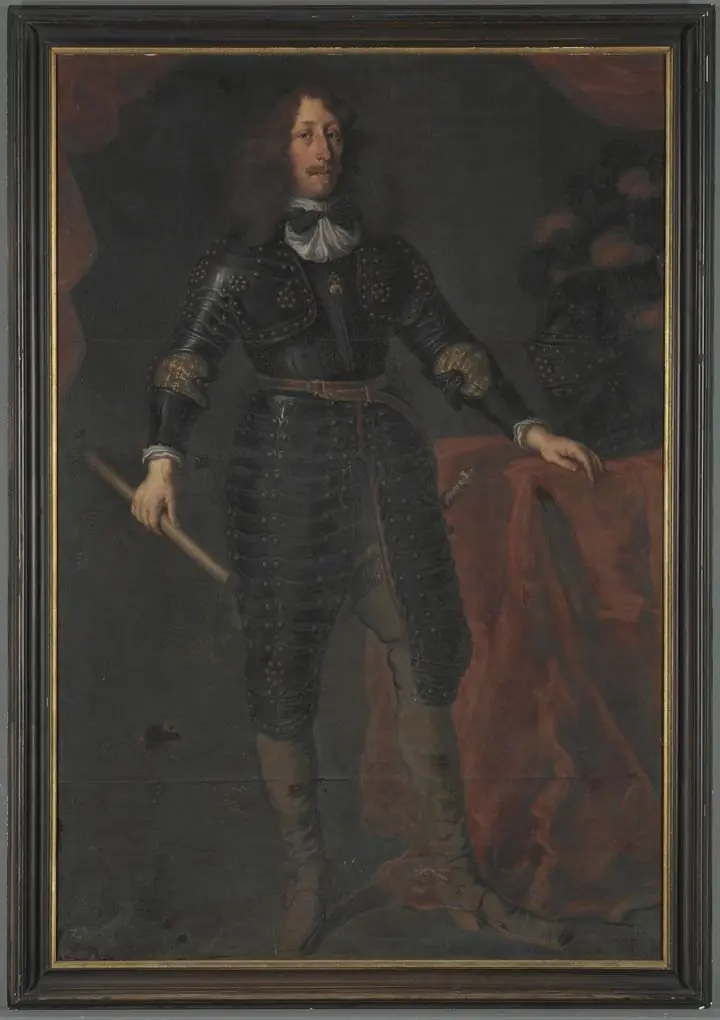 Portrait of duke Philipp Wilhelm, Elector Palatine (1615-1690)
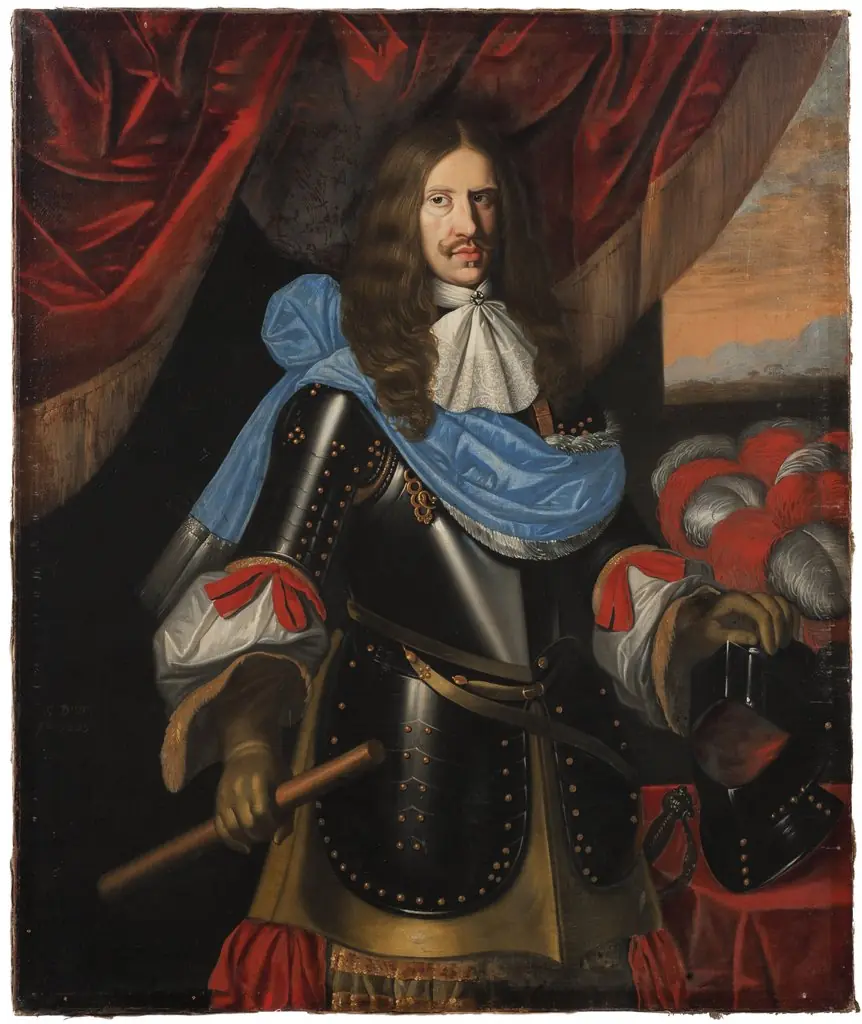 Ludvig VI, 1630-78, lantgreve av Hessen-Darmstadt
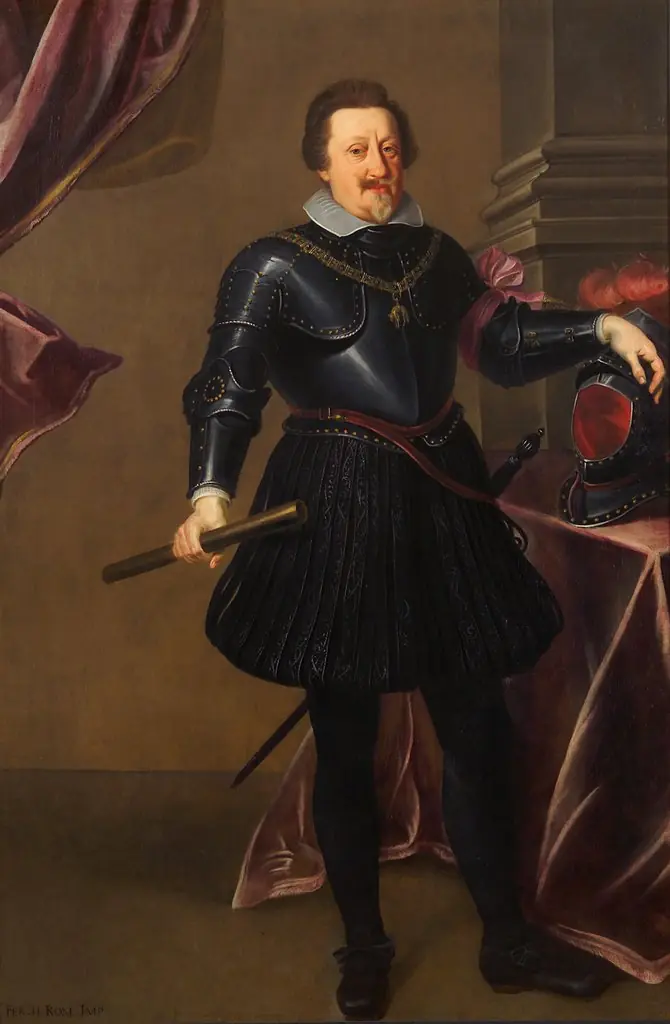 Emperor Ferdinand II. (1578-1637) in black armor, full-length
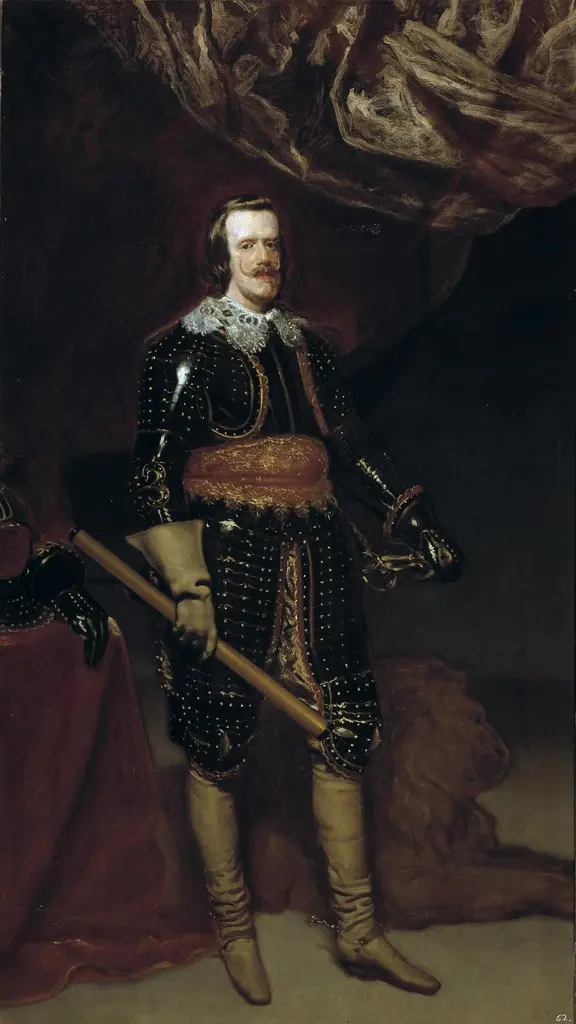 Philip IV in Armour, with a Lion at his Feet
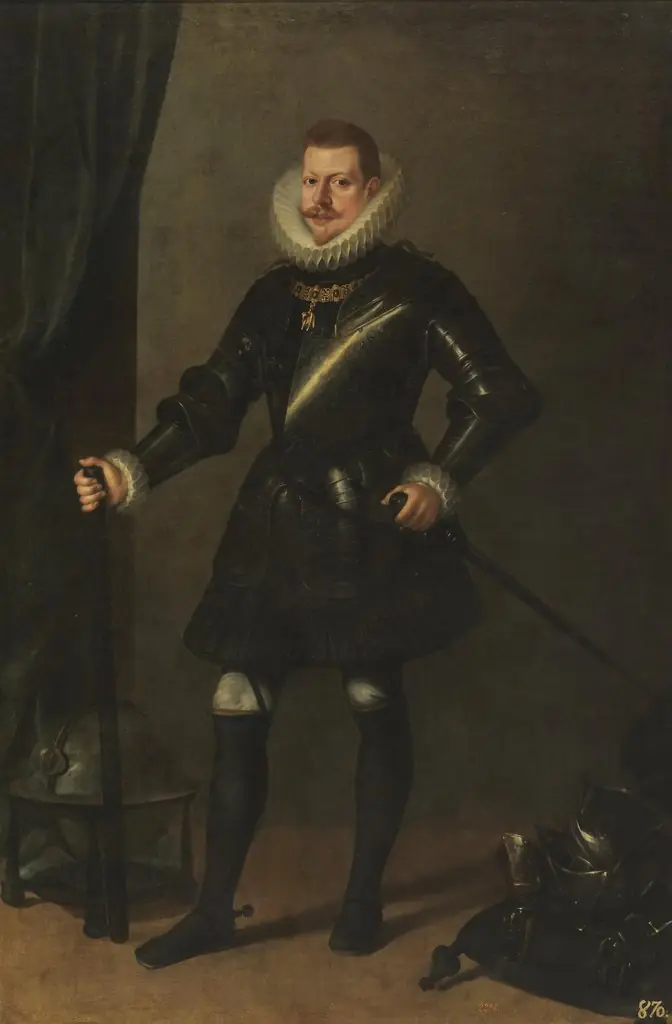 Philip III in Armour
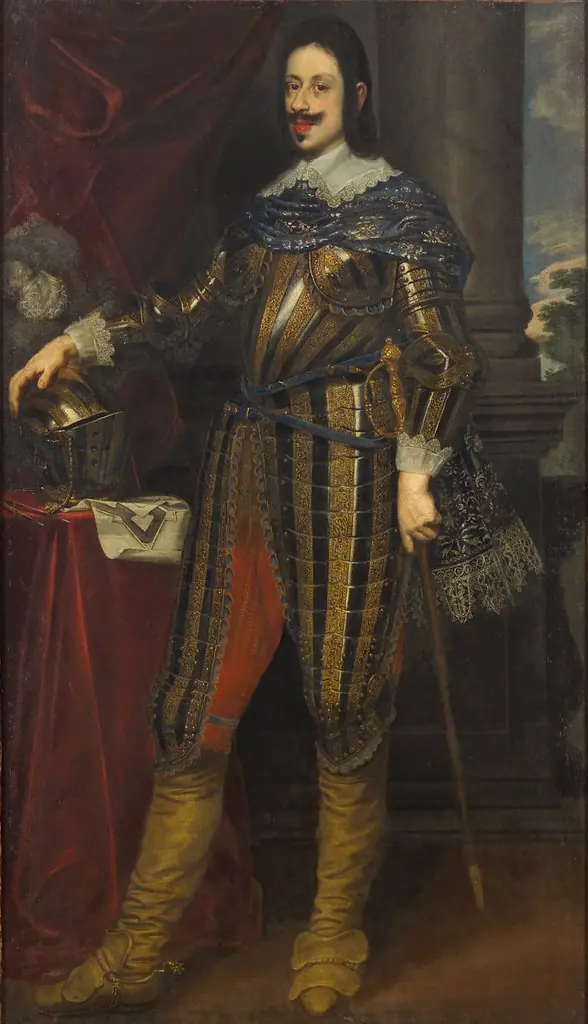 Grand-duke Ferdinand II of Tuscany (1610-1670) in Armour
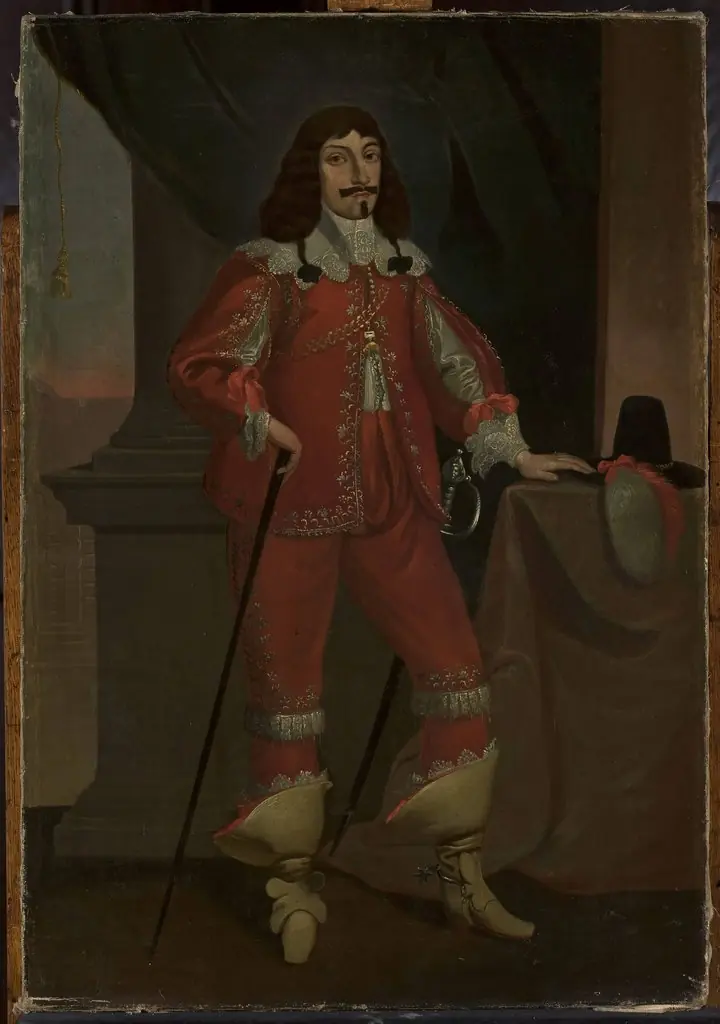 Portrait of John II Casimir Vasa (1609–1672)